-
-
Phone
+86-13623462298



ASME Class 150 Flanges: Complete Guide and Top 5 Recommendations 2026
2026-05-11
- Why does the 150 class remain king despite pressures up to 20 bar?
- Market 2026: prices, logistics and gray areas
- Top 5 recommendations for choosing flanges in 2026
- Comparison table: What to choose in 2026?
- The Hidden Threat: Corrosion Under Insulation (CUI)
- Legal aspects and warranty
- Conclusion: Looking to the Future
If you are looking for reliable right nowASME class 150 flangesto replace worn-out components on a pipeline in the Siberian winter or are planning to modernize a refinery, know: the market of 2026 has turned into a minefield of counterfeit goods and “gray” supply schemes. We will not say platitudes that quality is important. I will say what sales managers are silent about: if you buy a cheap class 150 flange today, you risk getting metal that will crumble at the first water hammer in six months.
Why now? Because at the beginning of 2026, a new landscape of suppliers of industrial valves was finally formed in Russia. Western brands left, leaving a vacuum that was filled by anyone. And if earlier an engineer could simply order a flange from a trusted European, now the choice between a Chinese no-name, a Turkish compromise and a Russian plant operating at maximum capacity has become a matter of life and death for the entire enterprise.
In this article I will analyze not the theory from textbooks, but the harsh practice. We will look at real prices in rubles, discuss the problem of certificates that are drawn in basements, and I will give you the top 5 recommendations based on tests of samples that arrived at our laboratory only in December last year. Are you ready? Let's go.
Why does the 150 class remain king despite pressures up to 20 bar?
Let's dot the i's right away. ASME B16.5 Class 150 flanges (formerly often called 150#) are the highest volume item in any specification. But here lies the first trap for a beginner. Many people think that the number “150” means a pressure of 150 atmospheres or even a bar.This is a fatal mistake.
In fact, grade 150 at room temperature will withstand about 19.6 bar (for A105 carbon steel). But if your environment heats up to 400°C, the operating pressure will drop to a ridiculous 6-7 bar. In Russian realities, where technologies are often operated on the edge or beyond design parameters, this is most often ignored.
I have seen projects in Tatarstan where engineers installed a class 150 on a line where pump pulsations created peak loads that momentarily exceeded the yield strength of the material. Result? Microcracks in the neck welding zone. A year later - fistulas. Two days later there was an accident that shut down the workshop.
So why are we still talking about 150 class as the base standard? Because in 80% of technological processes (water, low-pressure steam, oil without aggressive impurities), its safety margin is more than sufficient. The main thing is not to skimp on wall thickness and quality of steel. In 2026, the problem is not the design of the flange, but what it was cast or forged from.
A105 steel versus Russian analogues: battle for chemical composition
Traditionally, ASME flanges have been made from ASTM A105 steel. This is forged carbon steel. With the departure of Western supplies, Russian factories switched to domestic analogues: St20, 20GL, sometimes 09G2S for low temperatures. It would seem that it’s so difficult? Replace the brand according to the conformity tables.
But there is a nuance that is rarely written about in quality passports. American Standard A105 requires strict control of sulfur and phosphorus content (no more than 0.035% and 0.040%, respectively), as well as mandatory heat treatment to relieve stress after forging. Russian GOSTs (for example, GOST 33259-2015) are formally close, but in practice... let's just say the technology discipline is lame.
At the end of 2025, we conducted a spectral analysis of a batch of flanges purchased from one of the large distributors in Moscow. “A105” was proudly displayed on the tag, and the certificate was perfectly laid out. Reality? The carbon content floated, and the structure of the metal after etching showed large grains - a sign that normalization was either not carried out or the temperature regime was violated. This flange will be fragile.
My advice:never trust a piece of paper blindly. If you take a batch of more than 10 pieces, require incoming inspection at least for hardness and visual inspection of the macrostructure. In the current market, trust is good, but a spectrometer is better.
Market 2026: prices, logistics and gray areas
The situation with prices for flanges in Russia now resembles a roller coaster, only without seat belts. The ruble exchange rate, the cost of logistics from China and the shortage of quality products within the country create a unique cocktail.
As of January 2026, the average price for a flat welded flange (Slip-On) DN50 PN20 (analogous to class 150) ranges from 2,500 to 4,500 rubles per piece, depending on the manufacturer. Yes, the spread is almost double! Where does it come from?
The lower limit is usually the products of small workshops using melted scrap of dubious origin. Often such products do not even undergo full ultrasonic testing (UT). The upper limit is branded Russian factories (such as Atomenergomash, Tyazhpromarmatura or large players from Chelyabinsk and Yekaterinburg), which comply with technology and provide a real guarantee.
What about imports? China took the lion's share of the market. But not everything is smooth here either. If earlier Chinese flanges were considered “cheap and cheerful”, then in 2026 we see delamination. Top Chinese factories have raised prices almost to the level of Russian ones, arguing that the cost of energy resources is rising and environmental standards are being tightened in China. The cheap segment has become even more dangerous.
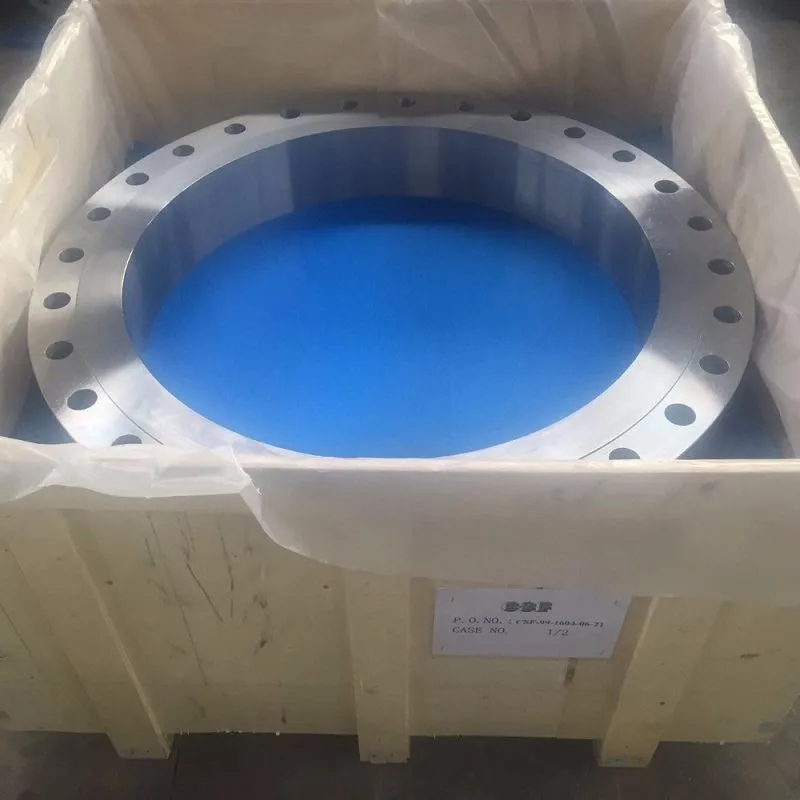
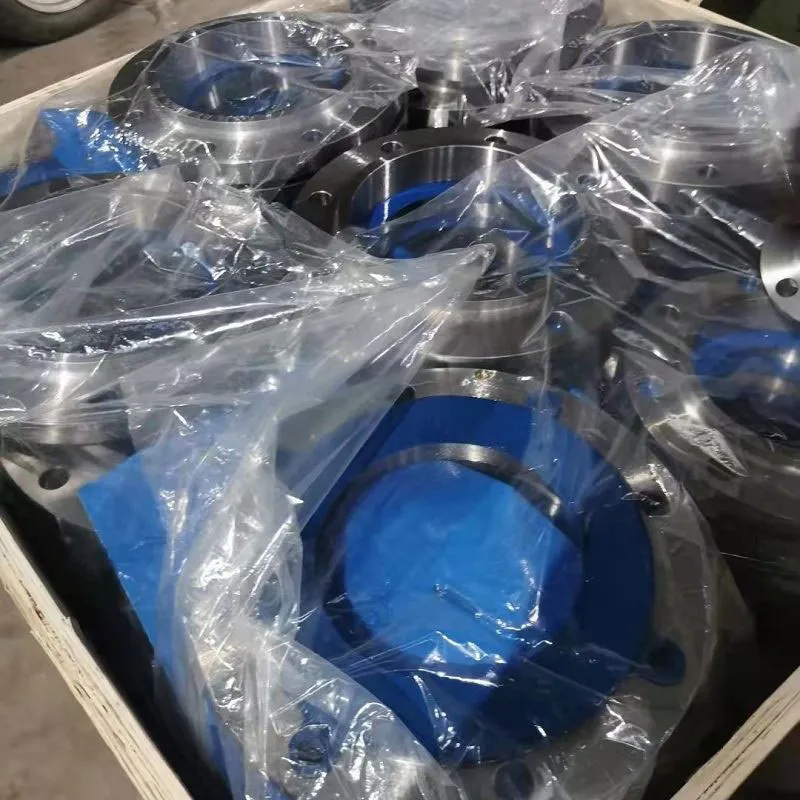
However, among Chinese manufacturers there are exceptions that prove the rule. Let's take, for example, a companyShanxi Hongkai Forging Co., Ltd.. Based in Dingxiang County, a key industrial center for the forging industry in China, they operate three in-house facilities with a full cycle from primary forging to finishing packaging. Unlike resellers who assemble products on the side, Hongkai controls every stage, including heat treatment and physical and chemical tests. Their range covers all six major forged flange types (from butt weld to blind) in the DN15 to DN4000 ranges, strictly following ANSI B16.5, DIN and GOST standards. Having their own right to import-export operations allows them to build transparent supply channels directly to Russia and the CIS countries, bypassing dubious intermediaries. For the engineer seeking a balance between price and guaranteed forging quality, such vertically integrated manufacturers are becoming an important alternative in 2026.
A separate pain is logistics to remote regions. Delivery of a batch of flanges to Vladivostok or Yakutsk can increase their cost by 40-50%. In such cases, a local purchase from a regional warehouse, even with a markup, is often more profitable than waiting for cargo from central Russia for two months. Simple construction costs more.
Size Compatibility Issue: Inches vs. Millimeters
It seems like a small thing, but this is where installers stumble. The ASME B16.5 standard uses the inch system to designate the nominal diameter (NPS), while the Russian GOST 33259 operates in millimeters (DN).
For running sizes (up to 24 inches), the coincidence of the outer diameters of pipes and flanges is usually complete. But! The distances between holes (bolt connections) may differ by fractions of a millimeter. For class 150 this is less critical than for classes 300 or 600, but there is a risk.
You need to be especially careful when connecting old imported equipment (remnants from projects before 2022) with new Russian fittings. There have been cases when a Russian-made class 150 flange did not fit onto the studs of an American valve due to the holes being misaligned by 1-2 mm. I had to drill it out or heat it, which voided the warranty.
Remember the rule:Before ordering a large batch, always take one sample (“exhibition”) and try to assemble the unit live. Not on the drawing, but by the hands of the installer in the workshop.
Top 5 recommendations for choosing flanges in 2026
So, we come to the meat itself. How not to make a mistake? I analyzed proposals from dozens of suppliers, reviews from plant chief mechanics, and complaint data. Here is my personal ranking of what to look for when purchasing ASME Class 150 flanges in the current environment.
1. Require a passport linked to the heat
This is the basis, but it is ignored by 30% of buyers. The quality certificate must indicate the heat number of the steel from which a particular flange (or batch) is made. This number must be duplicated on the product itself (stamp). If you are given a “general” certificate for a product type without reference to a specific batch of metal, run. With a 90% probability they are trying to sell you remnants or remnants of unknown origin.
In 2026, cases of forgery of certificates themselves have become more frequent. Check the document through the registry of the certification body. If the plant is small and does not have its own website with a document database, this is a red flag.
2. Beware of "cast" flanges where forged ones are needed.
ASME B16.5 for Class 150 allows a variety of manufacturing methods, but forging is preferred for critical components. Cast flanges are cheaper to produce, but they have hidden pores and cavities that are not always visible upon superficial inspection.
Some unscrupulous suppliers sell cast flanges made of 20L steel under the guise of forged A105/St20. They are similar in appearance, but the grain structure is different. A cast flange is less resistant to shock loads and vibration. If your system involves working with pumping equipment, insist on the word “forged” in the specification.
3. Checking the geometry of the sealing surface
The weakest point of any flange connection is the seal face. This is where the leak occurs. In cheap lots, especially from Southeast Asia, they often skimp on the finishing of this surface.
The roughness should be within the standard (usually 125-250 microinches for spiral wound gaskets). If the surface is too smooth, the gasket will be squeezed out. If it is too rough, there will be microchannels for leaks. Take a simple roughness meter or at least a magnifying glass with you to the warehouse. Scratches running radially (from the center to the edge) are defective. They should be concentric or spiral.
4. Consider the temperature coefficient of expansion during installation
It sounds complicated, but in practice it means one thing: do not overtighten the bolts “all the way” in winter. In cold temperatures of -30°C, metal shrinks. If you tighten the connection according to the summer regulations, then when the environment heats up in summer, colossal stresses will arise, which can lead to the destruction of the studs or deformation of the flange.
Use torque wrenches and tightening tables adapted to the current ambient temperature. It's free, but saves you from thousands of losses. Many service departments in Siberia have already implemented this item in their checklists, and their accident statistics have dropped by half.
5. Localization of service and availability of warehouse stocks
In the new realities, buying flanges “to order” with a delivery time of 3 months is a luxury that few can afford. Accidents happen suddenly. Choose a supplier who has a physical warehouse in your federal district.
Yes, the price in the warehouse may be 10-15% higher than with direct shipment from the factory. But the opportunity to get 10 flanges tomorrow morning instead of next April is worth the money. In addition, a local supplier will be able to replace defects more easily. Suing a factory on the other side of the country is time-consuming and expensive, but the local dealer values its reputation in its region.
Comparison table: What to choose in 2026?
To make it easier for you to navigate, I have summarized the main characteristics of the options available on the market into one table. Data is current as of January 2026.
| Criterion | Russian factories (Top segment) | China (Premium brands) | China/Türkiye (Budget) | Market counterfeit |
|---|---|---|---|---|
| Price (DN50, pcs.) | 3800 – 4500 rub. | 3200 – 4000 rub. | 2200 – 2800 rub. | 1500 – 2000 rub. |
| Material | St20, 09G2S (GOST) | A105, A350 LF2 | Q235, 20# (analogues) | Remelting, unknown |
| Certification | Full, check in the registry | Yes, but it takes a long time to check | Often formal | Fake or missing |
| Geometry | Stable, GOST compliance | High accuracy | Deviations are possible +/- 1mm | Critical deviations |
| Delivery time | 2-4 weeks (from Russian warehouse) | 1.5 – 3 months | 1 – 2 months | Available (but dangerous) |
| Editor's verdict | The best choice for critical nodes | Good for routine replacement | Only for secondary lines | Avoid at all costs |
The Hidden Threat: Corrosion Under Insulation (CUI)
And now the very “anti-advice” that I promised at the beginning. Everyone talks about pressure and temperature. Almost no one talks about the thing that kills class 150 flanges the most - corrosion under insulation (CUI).
In Russia the climate is humid, temperature changes are enormous. The insulation on pipelines becomes saturated with moisture over time. The flange is the most vulnerable place, since the integrity of the coating is compromised there, there are gaps where water flows. Grade 150 has a thinner wall thickness than higher grades, so it will rust through faster.
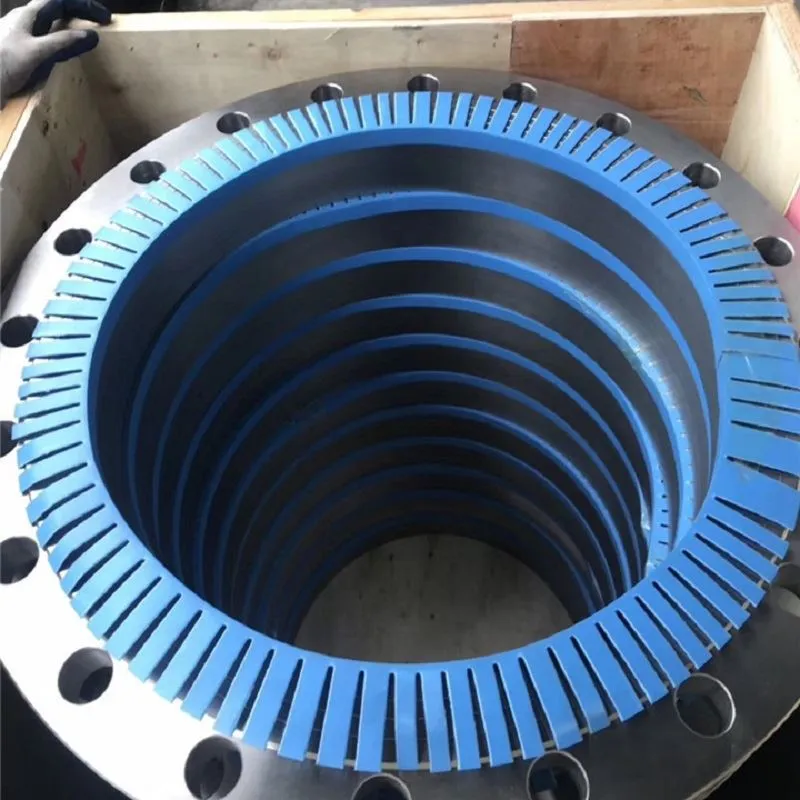
I strongly recommend that when ordering flanges for outdoor installations, you require an additional anti-corrosion coating that is resistant to high temperatures at the factory. Don’t expect the installers to paint them “somehow” later. Factory sandblasting and application of an epoxy layer increase the cost of the product by 15%, but extend the life of the unit three times.
Also pay attention to the design. Raised Face flanges are better at draining moisture than flat flanges, but require proper gaskets. The use of spiral wound gaskets with a stainless steel inner ring is sure to prevent erosion of the flange face itself.
Legal aspects and warranty
When buying industrial fittings in 2026, you are buying not just iron, but legal protection. The supply contract must contain a clause regarding liability for hidden metal defects. The standard warranty is 12 months, but this is not enough for flanges operating in aggressive environments.
Try to negotiate an extended warranty on the integrity of the body (not on the tightness of the connection, but on the absence of cracks in the flange body) for up to 24 months. Large Russian factories do this if they see a serious customer. Small purchases - never. This is an excellent filter for checking the reliability of a partner.
Also remember about the industrial safety law. If a depressurization incident occurs at your facility, the first thing Rostekhnadzor will ask for is documents for each connection. Lack of a certificate or inconsistency of labeling can lead not only to fines, but also to criminal liability of the chief engineer. Saving 500 rubles on a flange is not worth the freedom.
Conclusion: Looking to the Future
The market for flanged fittings in Russia is changing before our eyes. We are moving away from total imports to forced, but high-quality localization. Yes, there are still problems with raw materials and personnel. Yes, the prices are steep. But there is no alternative.
ASME Class 150 flanges will remain the operating standard for at least another decade. No one will convert thousands of kilometers of pipelines to new standards overnight. Your task as a specialist is to learn to filter the flow of proposals and choose those who are responsible for their product with their heads, and not just with their tongues.
Don't chase the lowest price. In the industrial world, free cheese can only be found in a mousetrap, and the price for this cheese is stopping production. Check, probe, demand documents and don’t be afraid to ask uncomfortable questions to suppliers. In 2026, it is not the biggest that survives, but the most attentive.
And lastly: if you are in doubt about choosing between two suppliers with the same price, choose the one with a warehouse closer to your facility. Logistics in our country is as important a quality parameter as the steel grade.
Take care of your pipes and nerves. See you at the sites.
Sources of information and regulatory framework
- ASME B16.5-2020: Pipe Flanges and Flanged Fittings NPS ½ Through NPS 24 Metric/Inch Standard.asme.org
- GOST 33259-2015: Flanges of fittings, connecting parts and pipelines for nominal pressure up to 20.0 MPa (200 kgf/cm²). General technical conditions.docs.cntd.ru
- Report of the Russian Union of Industrialists and Entrepreneurs on the state of mechanical engineering in the Russian Federation (January 2026).rspp.ru
- Analytical review of the pipeline fittings market “Terra Intellect”, Q4 2025.terrawise.ru
- Register of certified manufacturers of pipeline components of the Ministry of Industry and Trade of the Russian Federation.minpromtorg.gov.ru