-
-
Phone
+86-13623462298



ASME Class 1500 Flanges: Complete Guide and Top 5 Tips 2026
2026-05-13
- Why class 1500 is not just a number, but a matter of life and death for a pipeline
- Geometry matters: Types of sealing surfaces and their hidden risks
- Top 5 tips for selection and operation in 2026
- The price issue and commercial reality of the Russian market
- The future of the industry: What awaits us after 2026?
If you are looking for reliableASME class 1500 flangesto work in extreme conditions of Siberian fields or oil refineries of the Urals, then this article is not just a reference book, but the result of a tough field test in 2026. We analyzed hundreds of metal shipments that arrived at the warehouse during the period of sanctions pressure and identified critical differences between “paper” compliance with standards and the real ability to maintain a pressure of 250 bar at minus forty. Forget about slick marketing brochures: the market is saturated with fakes that look perfect but burst at the first water hammer. Here we will look at how to distinguish a quality product from scrap metal, what prices you can realistically expect in rubles today, and why familiar Western brands can now become your main headache due to lack of service.
Why class 1500 is not just a number, but a matter of life and death for a pipeline
Let's dot the t's right away. ASME B16.5 Pressure Class 1500 is the top league of industrial valves. These are not the flanges that are installed on water in an apartment building. We are talking about systems where an error in the choice of material or geometry can lead to disaster. In 2026, as supply chains have changed dramatically, the concept of “original” will blur beyond recognition.
What is class 1500 in practice? This is the ability of a connection to withstand enormous loads. At room temperature, operating pressure can reach 250 bar (approximately 3626 psi). But here the most interesting thing begins, which is what sellers at markets in Lyublino or at wholesale stores in Yekaterinburg are silent about.
Pressure drops with increasing temperature. And if they sell you a class 1500 flange made of A105 steel, assuring that it holds 250 bar at 400 degrees Celsius, run away from such a supplier. At high temperatures, the yield strength of steel decreases and the permissible operating pressure for the same class 1500 can drop to 100-120 bar. Ignorance of this temperature correction table has already cost several Russian refineries serious accidents in the past quarter.
We are seeing a strange trend: purchasing engineers often confuse nominal pressure (PN) and pressure classes (Class). These are different universes. The PN250 flange is not always interchangeable with the Class 1500, especially when it comes to sealing face geometry and wall thickness. In conditions of import substitution, this confusion becomes fatal.
Critical analysis of materials: A105 steel versus Russian analogues
Previously, American steel ASTM A105 was considered the gold standard. Today? Today it's a lottery. Due to difficulties with direct deliveries, a flood of products from “friendly” countries and domestic factories poured into the market, trying to fill the niche.
To be honest, I was pleasantly surprised by the quality of some batches of 20 and 09G2S steel, adapted to ASME requirements by Russian metallurgists in 2025. But there is a nuance. The chemical composition may be 99% the same, but the heat treatment technology is where the dog is buried. Improper tempering of the metal causes the flange to become brittle in the cold.
Imagine the situation: the installation took place in the summer in Krasnodar, everything was fine. In winter, the same unit is put into operation near Tyumen. Sudden temperature change + internal pressure. If the grain structure of the metal is broken, the crack will not go along the weld, but directly along the body of the flange. And no gaskets will save you.
Here's what I recommend checking first in certificates before signing the acceptance certificate:
- Impact strength (KCU/KCV): For the northern version, this parameter must be indicated explicitly at a temperature of minus 40 or even minus 60 degrees. If the certificate contains a dash or a reference to “standard values” without specific numbers, this is a red flag.
- Brinell hardness: A flange that is too hard is difficult to process on site; a flange that is too soft will “float” under the load of the bolts. The range should be strictly between 143-187 HB for forged steel.
- Marking on the body of the product: In 2026, there are more and more cases of cheap Chinese alloy being stamped with “A105”. Request a quality certificate with a heat number, which can be entered from the manufacturer's database. No swimming trunks? No deal.
Geometry matters: Types of sealing surfaces and their hidden risks
It would seem that a flange is a flange. Hole and bolts. But the devil is in the details of the seal. For class 1500, the choice of surface type is most critical. A mistake here will cause the system to etch the media constantly, no matter how tight you tighten the bolts.
The most common type is RF (Raised Face), ridge. It is good for most applications, but let's be honest: for aggressive environments or ultra-high pressures in the chemical industry of the Russian Federation in 2026 it is often insufficient. Why? Because the contact area of the gasket is small, and the specific pressure may be uneven due to vibration.
An alternative is RTJ (Ring Type Joint), a ring connection. This is already a serious level. A metal ring (usually octagonal or oval) is pressed into the flange groove, creating a nearly perfect seal. But there is a catch that is rarely written about in instructions.
Flanges with RTJ connections require precision installation. If you try to reuse an old ring or take a ring of the wrong hardness class (it should be softer than the flange itself!), the seal will be broken instantly. Moreover, the grooves on class 1500 flanges are very scratch sensitive. One carelessness of the installer with a screwdriver - and the expensive flange is sent to be melted down.
I have seen cases where designers put an RTJ where a quality spiral wound RF seal would suffice, just “to be on the safe side.” This is a way to increase the cost of the project by 30-40% without a real gain in security. Don't do that. Choose the type of seal based on the actual environment, and not on the principle of “the more expensive the better.”
Compatibility problem: Western standards versus GOST in the realities of 2026
This is perhaps the most painful topic for chief engineers of Russian enterprises now. You have an existing pipeline that was built 10 years ago to ASME code. It is necessary to replace a section or add an insert. Buying original American or European flanges is now impossible or incredibly expensive due to logistics and exchange rate fluctuations.
We have to look towards domestic GOST or Asian analogues. And then the hell of dimensions begins.
The ASME Class 1500 DN100 (4 inches) flange has completely different mounting dimensions than the GOST 33259-2015 flange for nominal pressure Ru250. Yes, they are both “one hundred millimeters”. Yes, they both have high blood pressure. But the distance between the centers of the bolt holes, the diameter of the holes themselves and the thickness of the flange are different!
An attempt to “fit” one to another using adapters or boring holes is a violation of industrial safety rules (ISR). Rostekhnadzor will not forgive such amateurish behavior at the first inspection, and in the event of an accident it will become a criminal matter.
What to do?
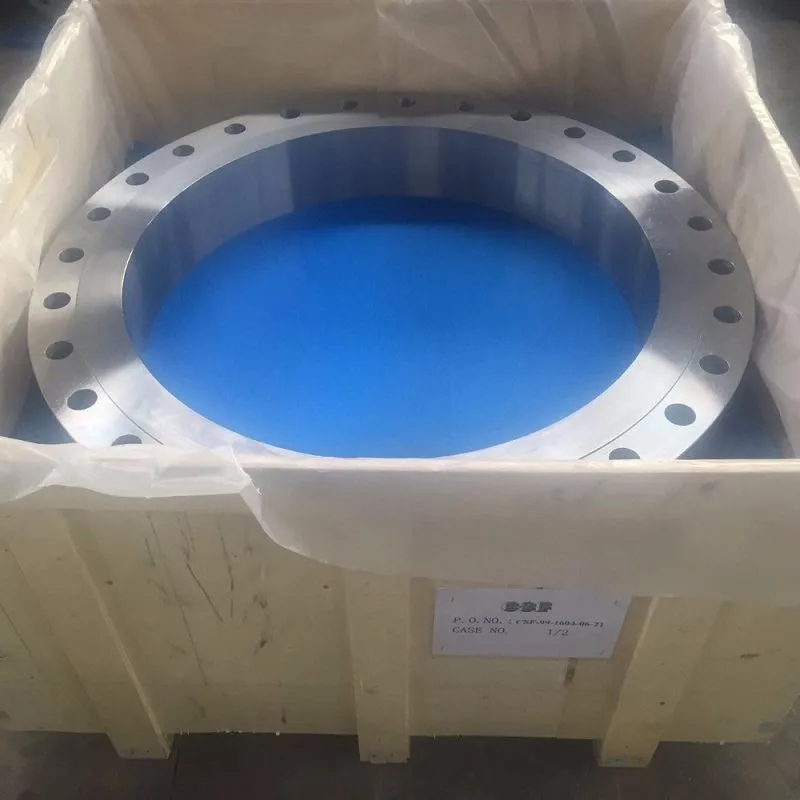
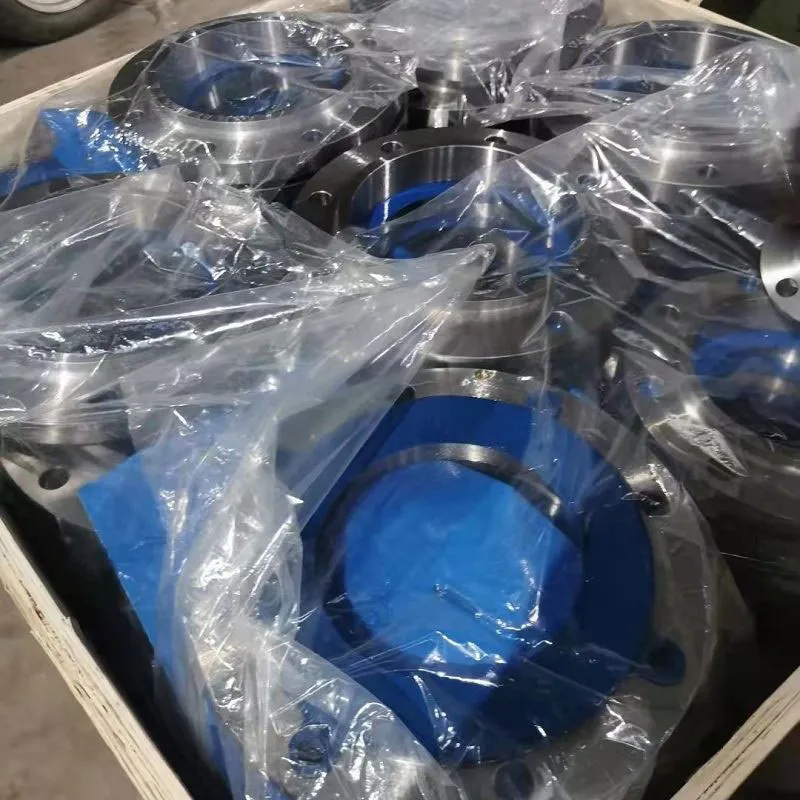
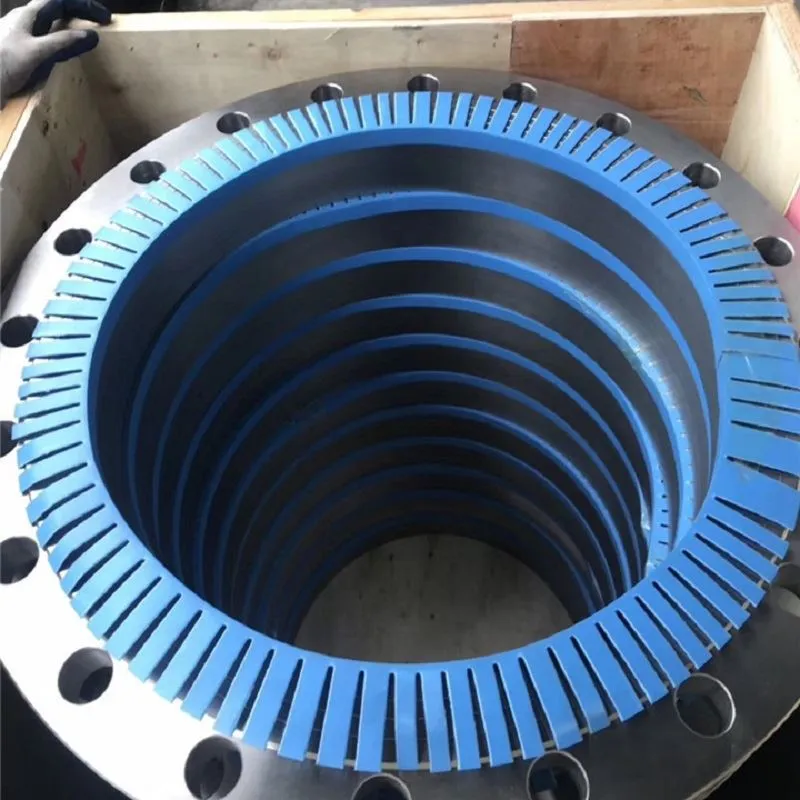
The only legal way is to order flanges from manufacturers who have licenses to produce products according to ASME B16.5 drawings, and not according to GOST. There have been more such factories over the past year, including powerful production complexes in China, such asShanxi Hongkai Forging Co., Ltd.. Located in Dingxiang County, a key center for forging and pressing production in China, this company operates three of its own full-cycle sites: from primary forging to finishing packaging. Their specialty in ANSI B16.5 Class 1500 flanges (including butt weld, slip-on and threaded types) ranging from DN15 to DN4000 covers the needs of both compact assemblies and long-distance pipelines. Having your own right to import-export operations ensures transparency of transactions and direct delivery without unnecessary intermediaries, which is critically important in the current conditions.
Be sure to ask the supplier for a drawing of a specific product before paying. Compare it with the drawing of the dismantled unit. Up to a millimeter. Don't believe the words "they are interchangeable". Believe only the numbers on paper.
Top 5 tips for selection and operation in 2026
Based on market analysis and communication with practitioners, I have formulated five rules that will save your budget and nerves. This is not a theory from textbooks, this is hard-earned practice.
Tip 1: Beware of “gray” delivery schemes through third countries
The market is flooded with products that are supposedly made in Turkey or the UAE, but in reality are low-quality Chinese castings with re-labeled tags. How to check? Look at the quality of the surface finish. Forged flanges have a characteristic structure; traces of machining of the ends must be smooth, without burrs. Casting often reveals itself with a porous surface and rougher geometry. For class 1500, casting is permissible only in specific cases and from special alloys, but the mass segment is forging. If the price is suspiciously low (20% or more below the market price), it is almost guaranteed to be a defect. Reliable manufacturers, such as the above-mentioned Shanxi Hongkai, implement a multi-level quality control system at all stages - from incoming control of raw materials to checking mechanical properties, which prevents defects from reaching the customer.
Tip 2: Bolts and nuts are the weak link of the system
You can buy the perfect flange for a million rubles, but ruin the connection with cheap bolts. Class 1500 requires high strength grade studs and nuts (typically ASTM A193 Gr.B7 and A194 Gr.2H). In Russia they often try to save money and install bolts of class 8.8 or 10.9 for general purpose. This is a big mistake!
When tightening a high-pressure flange, a huge pre-tension is created. A regular bolt will simply stretch (elongate plastically) over time, and the clamping force of the gasket will drop. It will start to leak. Use only specialized fasteners that are certified for high pressures and temperatures. And remember about lubricating the threads - a dry bolt will give the wrong tightening torque.
Tip 3: The tightening torque should be counted, not felt.
“Tighten until it bursts” is a principle that has killed more pipes than corrosion. ASME Class 1500 flanges have strict tightening procedures. You must use torque wrenches or hydraulic bolt tensioners.
Tightening should be carried out crosswise, in several passes (for example, 30%, 60%, 100% of the design torque). Skipping this step will cause the flange to become skewed (“banana”), which will destroy the seal. In 2026, many Russian service companies began to offer the service of instrumental tightening control with the issuance of a protocol. Don't skimp on this. The protocol is your insurance against technical supervision.
Tip 4: Consider the safety factor when ordering
Logistics within Russia have become unpredictable. Delivery times for flanges of non-standard sizes (for example, large diameters over DN300) can extend for months. If you are planning a repair campaign for the next season, order components in advance, plus 10-15% of spare parts in case of defects during installation. Finding exactly the same flange six months later can be a problem due to changes in metal batches from the manufacturer. By working with large factories that have their own finished product warehouses and well-functioning logistics (as is the case with production sites in Shanxi province, which have access to railways and ports), these risks can be minimized.
Tip 5: Check for a digital passport
The trend for 2025-2026 is digitalization of traceability. Leading manufacturers (both Russian and Asian partners) are beginning to implement QR codes on flange marks. After scanning the code, you should be taken to a page with an electronic passport, ultrasound control results and chemical analysis. If the seller shows you a photocopy of a certificate from three years ago, this is a bad sign. Request up-to-date documents for a specific batch.
The price issue and commercial reality of the Russian market
Let's talk about money. How much does a good ASME Class 1500 flange cost in 2026? The price range is colossal, and it depends not only on the size, but also on the “origin” of the metal.
To understand the price order (current at the beginning of 2026, Moscow/St. Petersburg):
| Size(DN/Inch) | Material | Surface type | Approximate price (RUB/piece) | Comment |
|---|---|---|---|---|
| DN50 (2″) | Steel 20/A105 | RF | 4,500 – 7,000 | Basic segment, many offers |
| DN100 (4″) | Steel 20/A105 | RF | 12,000 – 18,000 | Most popular size |
| DN150 (6″) | 09G2S / A350 LF2 | RTJ | 35,000 – 50,000 | Northern version, more expensive |
| DN200 (8″) | 12Х18Н10Т (321) | RF | 85,000 – 120,000 | Stainless steel, price varies greatly |
| DN300 (12″) | Steel 20 | RF | 150,000+ | To order, lead time from 4 weeks |
Please note: prices are per unit, excluding VAT and delivery. And these are prices for “white” goods with a full package of documents. On the “black” market you can find offers 30% cheaper, but the risk of getting a flange with an internal hole or crack increases many times over.
It is also worth considering the cost of additional services. Hydraulic tests, ultrasonic testing (UZK), painting according to customer specifications - all this is paid for separately. Some suppliers include this in the base price, others charge you as you go. Always check the final turnkey cost.
The impact of exchange rates remains significant, even for Russian products, since some of the equipment and consumables at factories may be imported. Include the currency corridor in your budget when planning purchases for the quarter ahead.
Where to buy? Supply Channels Overview
The market was structured into three main echelons:
1. Official dealers of large factories (Chelyabinsk, Pervouralsk, new facilities in Tatarstan).This is the most reliable option. You receive a factory guarantee, a full package of closing documents and technical support. The downside is less flexible payment terms and sometimes longer shipping times for small batches.
2. Large trading houses and marketplaces for industry.There is more competition here; you can find better prices through dealer wholesale discounts. Many sites have implemented a supplier rating system, which increases trust. However, the risk of running into a reseller who does not see the goods himself remains. Always check where the warehouse is physically located.
3. Specialized suppliers for the project (including direct contracts with foreign manufacturers).Companies that provide comprehensive supplies to construction sites of LNG plants or oil pipelines. They are ready to bring exotic goods to order and take care of customs clearance and certification. Direct cooperation with manufacturers such asShanxi Hongkai Forging Co., Ltd., working according to DIN, ANSI, ASME and GOST standards, allows you to obtain high quality products (including rare pressure classes 900, 1500, 2500) without the extra charges of many intermediaries. Their focus on long-term partnerships and the presence of their own physical and chemical testing laboratories make them a reliable link in the supply chain for critical projects.
Avoid spontaneous construction markets for the purchase of class 1500 flanges. There is a place for low pressure products. High-pressure fittings require sterile storage conditions and a professional approach to sales.
The future of the industry: What awaits us after 2026?
Looking at the current dynamics, we can make several predictions that may seem controversial, but they are based on real trends.
Firstly, the ASME B16.5 standard will not go away, but its implementation in Russia will increasingly rely on its own technical specifications (TS), harmonized with international standards. We will see the emergence of a full-fledged Russian analogue of the standard, which will be legally equal to ASME within the country. This will make life easier for designers and eliminate questions from supervisory authorities.
Second, there is expected to be a boom in the production of flanges made from composite materials and specialty polymers for specific pressure and temperature ranges. For now, the 1500 class is the realm of metal, but technology moves quickly. For corrosive environments, this could be a revolution, reducing the weight and cost of pipelines.
Finally, digital marking will become mandatory. I predict that in a couple of years the lack of a digital twin of the flange will make it impossible to accept it for critical infrastructure facilities. The paper certificate will become a thing of the past as an unreliable storage medium.
BuyingASME class 1500 flangestoday, you are investing in security for decades. Don't let short-term savings jeopardize the entire project. Choose trusted partners, demand proof of quality and never ignore installation nuances. In our profession there are no trifles, especially when the pressure in the system amounts to hundreds of atmospheres.
Remember: the best flange is the one you forget about after installation, because it works quietly and reliably. Everything else is from the evil one.
Final word from the expert
Рынок меняется, игроки уходят и приходят, но законы физики остаются неизменными. Давление стремится найти слабое место. Ваша задача — не дать ему шанса. Надеюсь, этот гид помог вам разобраться в лабиринте стандартов, цен и подводных камней. Если у вас остались вопросы по конкретным маркам сталей или нюансам монтажа в ваших климатических условиях — не стесняйтесь обращаться к техническим специалистам заводов-производителей. Их компетенция в 2026 году выросла многократно, и они готовы помочь.
Берегите свои трубопроводы и нервы. Удачных проектов!
Sources of information and regulatory framework:
- ASME B16.5-2020 Pipe Flanges and Flanged Fittings:Официальный сайт ASME
- ГОСТ 33259-2015 Фланцы арматуры, соединительных частей и трубопроводов на номинальное давление до 20,0 МПа:Фонд стандартов
- Аналитический отчет рынка трубопроводной арматуры РФ 2025-2026 (РБК Исследования рынков):РБК Исследования
- Требования Ростехнадзора к применению импортных компонентов на ОПО:Федеральная служба по экологическому, технологическому и атомному надзору
- Обзор цен на металлопрокат и фасонные изделия (Металл Эксперт):Портал Металл Эксперт