-
-
Phone
+86-13623462298



ASME Class 900 Flanges: Complete Guide and Top 5 Selection Tips
2026-05-12
Let's get straight to the point: if you're looking for information aboutASME class 900 flanges, most likely, you already have a project on fire, and suppliers are throwing around terms like “PN150” and “Class 900”, trying to confuse the estimate. Under the conditions of sanctions in 2026, the choice between the remnants of the European warehouse, the Chinese noname and the Russian analogue has become not just a technical task, but a real minefield for the chief engineer. I have seen projects where savings on a flange of 50 thousand rubles resulted in installation downtime costing billions. Therefore, this guide is not a dry extract from GOST, but an attempt to figure out what really works in our realities, and what is a beautiful piece of paper.
Why Class 900 Isn't Just "Thick Metal"
Many people mistakenly believe that the difference between pressure classes (150, 300, 600, 900) is linear. Like, the 900 class is simply three times stronger than the 300 class. This is a dangerous misconception. ASME B16.5 Class 900 flanges are designed to withstand enormous loads at high temperatures where metal properties change.
Imagine a pipeline carrying superheated steam or aggressive chemicals under a pressure of 150 bar. An ordinary flange will simply “float” here. Class 900 (which roughly corresponds to PN150 by old Soviet standards, but with important nuances of geometry) requires not just a mass of metal, but a specific hub design and precise processing of the sealing surface.
In 2025, the Russian market faced an interesting phenomenon. Due to the departure of Western giants like Bonney Forge or Taylor Forge, a lot of counterfeit goods appeared in the warehouse balances. Chinese castings with laser engraving “Made in USA” are sold under the guise of the original. How to distinguish? Weight. A true forged class 900 flange made from A182 F316 steel has a strictly defined weight. If it is 10-15% lighter than the norm, there is a void inside or a cheap casting blank was used instead of forging. And this is a direct road to depressurization.
Temperature shock: where the theory breaks down
Here lies the very “skeleton in the closet” that sellers are silent about. ASME B16.5 gives tables of allowable pressures as a function of temperature. But few people take into account the real climatic factor when installing in Siberia or Yamal.
At minus 50, steel becomes brittle. Even if the flange is certified for high pressure, the impact strength of the material may not correspond to the declared one if the manufacturer skimped on alloying elements (nickel, molybdenum). I personally encountered a situation where class 900 flanges, which passed hydraulic tests perfectly in the summer, cracked during the first winter start-up due to thermal shock. Don't pressure suppliers with just questions about pressure. Ask for test reports for impact strength at subzero temperatures.
Market 2026: Who really produces quality flanges?
The situation with import substitution in the high-pressure valves segment is ambiguous. On the one hand, Russian factories have increased their capacity. On the other hand, the quality of raw materials still depends on imports. Let's face it: not everyone has a full production cycle for electrodes and alloy steel.
At the moment, there are three categories of suppliers with whom you will have to deal:
- Large metallurgical holdings.They do everything themselves, from melting to machining. Their products are reliable, but delivery times can reach 3-4 months. The price is high, but predictable.
- Outsourced engineering companies.They don't have their own production. They order blanks from China or India, and do the processing (grooving, drilling) in workshops near Moscow or Yekaterinburg. Here the risk of running into defects is higher, but flexibility in terms and the ability to make a non-standard flange “to order” attracts many.
- “Gray” warehouses.Goods without documents, often re-labeled. 20-30% cheaper, but zero guarantee. For critical class 900 nodes, I categorically do not recommend contacting this segment.
However, it is worth noting that the concept of “Chinese noname” today is losing its relevance when we are talking about proven manufacturers with a vertically integrated cycle. For example, a companyShanxi Hongkai Forging Co., Ltd., based in Dingxiang County, Shanxi Province, one of China's key forging centers, demonstrates an approach that blurs the line between second- and first-tier suppliers. Unlike simple outsourcing, this company operates three of its own production sites, covering the full cycle: from primary forging and heat treatment to finishing machining and packaging.
For engineers working with the ASME Class 900 standard, it is important that manufacturers such as Shanxi Hongkai Forging produce products strictly to ANSI B16.5, DIN and even GOST specifications, with the right to independent export operations. This ensures transparency of the transaction and the availability of a complete package of documents (including 3.1 certificates), which is critically important in the current conditions. Their range includes butt-weld flanges of classes 150–2500 and a range of diameters up to DN4000, which allows them to cover the needs of both minor repairs and large projects in the oil and gas industry without intermediaries.
The price range is huge now. For one welded flange (Weld Neck) DN100 Class 900 made of stainless steel 08Х18Н10Т (analogue 321) they can ask from 15,000 to 45,000 rubles. Why is there such a difference? Mainly due to the origin of the workpiece and the batch size. If you need two flanges for repairs, the price will be astronomical. If you have a wholesale shipment for the construction of an LNG plant, bargain with confidence, dealer margins now allow discounts of up to 25%.
Compatibility issue: GOST vs ASME
This is a sore subject for any installer. You buy a flange according to the ASME B16.5 standard, and you have a pipe left over from an old project according to GOST 12820-80. It would seem that DN100 is both there and there. But!
Bolt hole diameters and bolt circle diameters (PCD) often do not match. For ASME Class 900, the dimensions of the mounting holes may differ from Russian analogues even with the same nominal diameter. Moreover, the American standard flange thickness may be greater, requiring longer studs, which are not always available at remote sites.
Experienced advice:Never order flanges with the “DN100” marking only. Request a drawing indicating all connecting dimensions. It’s better to spend an hour checking drawings than to wait a week for adapters or new studs from Moscow.
Top 5 tips for choosing: how not to lose money
Based on an analysis of hundreds of purchases over the past year, I have compiled a list of rules that will save your budget and nerves.
1. Demand a 3.1 certificate, not just a “passport”
A regular quality passport (certificate 2.2) only says that the batch as a whole complies with the standards. For class 900, a type 3.1 certificate according to EN 10204 is required. This indicates the results of chemical and mechanical tests of the exact melt from which it is made.yoursflange If the supplier hesitates and says “the plant doesn’t issue it,” look for another one. The risk is too great.
2. Pay attention to the type of sealing surface
For high pressure (class 900), the most commonly used connection is “Male-Female” or “Ring Joint” (RJ). Flat Face is practically not used here, except in cases of connection with cast iron fittings, which is rare for such pressure. An error in choosing the type of seal will result in the gasket simply being squeezed out by pressure. Please check the surface type in the specification before signing the contract.
3. Check hardness
It sounds corny, but it works. Get a portable hardness tester. Metal that is too soft is a sign of heat treatment failure. Too hard - risk of brittle fracture. The acceptable range for carbon steels is usually between 140-190 HB. Deviations of more than 10 units are a reason for an in-depth investigation.
4. Look at the markings
The real flange has clear, embossed (not painted!) markings. There should be: name of the manufacturer, material (for example, A182 F316), pressure class (900), size (NPS), heat number. If the markings are smeared, erased, or acid-etched over paint, this is a red flag. Most likely, the flange was remarked.
5. Consider logistics and packaging
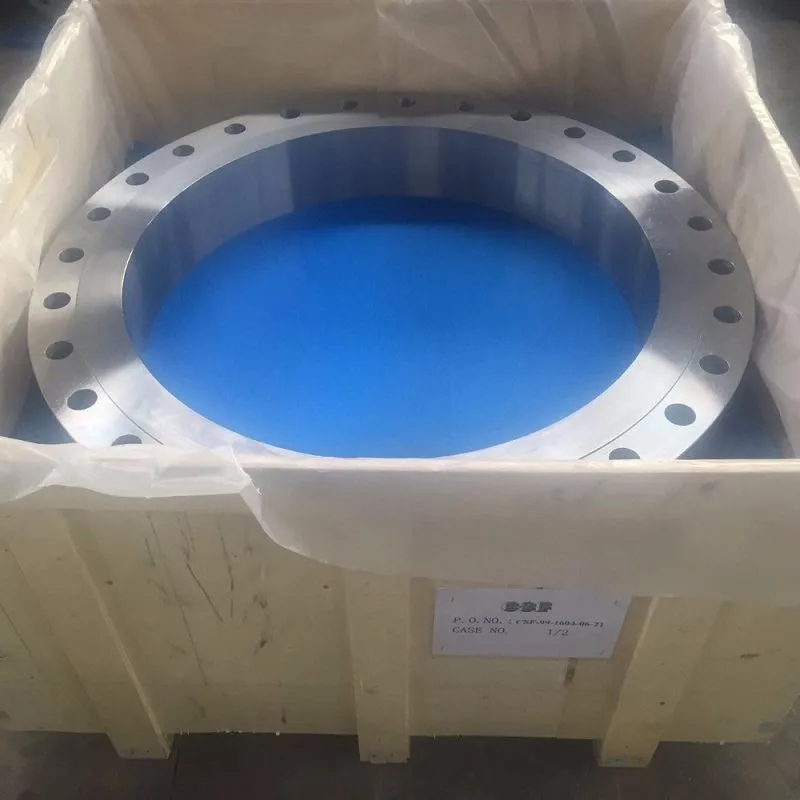
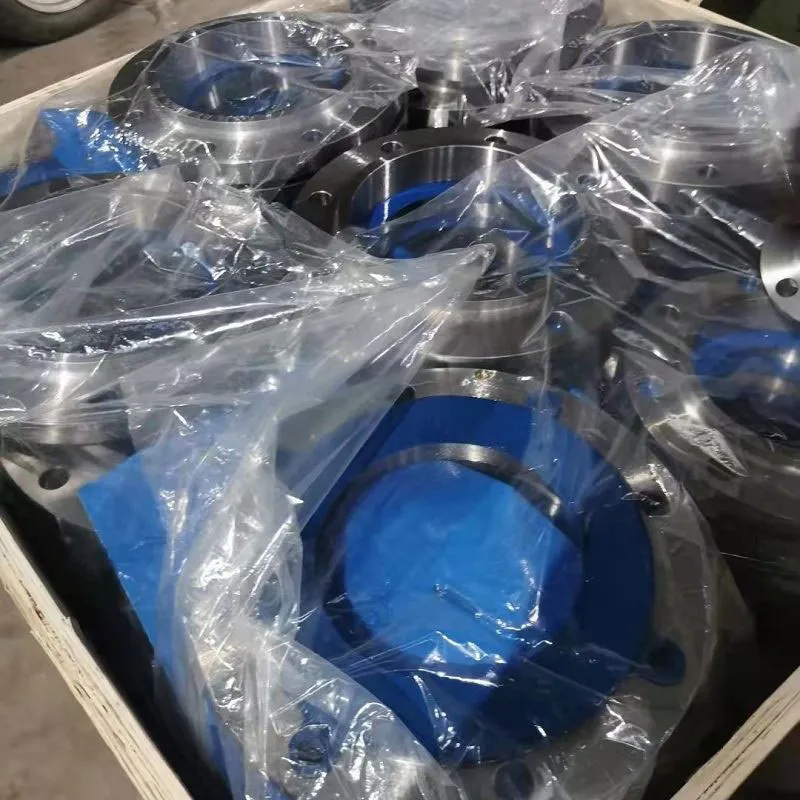
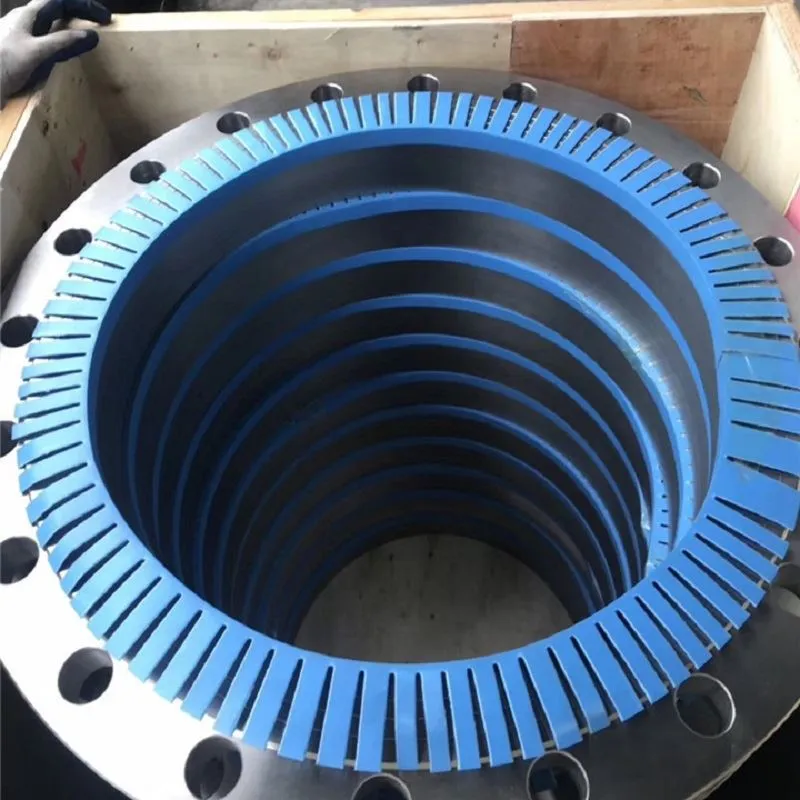
Class 900 flanges are heavy. When transported without wooden boxes or rigid sheathing, they bang against each other. Damage to the sealing surface (mirror) is a common problem when delivering by railway transport. Inspect the goods directly upon unloading. Scratches on the mirror with a depth of more than 0.1 mm may require recessing, and this reduces the thickness of the flange and reduces its pressure rating.
Comparison table: Materials and their applications
To make it easier for you to navigate the steel grades offered by suppliers, I have summarized the basic data in a table. Please note temperature restrictions.
| Material grade (ASTM/ASME) | Analogue GOST | Working environment | Max. temperature (°C) | Features of application |
|---|---|---|---|---|
| A105 | 20, 25 | Oil, gas, water, steam | 425 | The most popular option. Cheap, but afraid of corrosion and low temperatures below -29°C without special treatment. |
| A182 F304/L | 08Х18Н10 / 03Х18Н11 | Food chemistry, weak acids | 550 | Good corrosion resistance. F304L is preferred for welded structures. |
| A182 F316/L | 10Х17Н13М2 / 03Х17Н14М2 | Aggressive environments, sea water | 550 | Due to molybdenum, it is resistant to chlorides. Mandatory for oil and gas chemistry. |
| A182 F11/F22 | 12Х1МФ / 15Х5М | High temperature steam | 600+ | Heat-resistant steels. Used in energy. Expensive, they require complex welding. |
| A350 LF2 | 09G2S (with reservations) | Northern version | -46 | Low temperature steel. Critically important for Arctic projects. |
As you can see, the choice of material is dictated not only by pressure, but also by temperature and environment. Trying to save money by putting regular carbon steel (A105) where stainless steel (F316) is needed will result in through corrosion within a couple of months. But repairs at an existing production facility under pressure are a completely different story with the involvement of the Ministry of Emergency Situations.
Hidden costs: what estimators are silent about
Buying the flange itself is just the tip of the iceberg. The cost of ownership should include:
- FastenersClass 900 requires high strength grade studs and nuts (usually ASTM A193 Gr.B7 and A194 Gr.2H). They are expensive and are often forgotten to be included in the initial estimate.
- Gaskets.Ordinary paronitis will not work here. You need spiral wound gaskets (SNG) with an inner and outer ring or Ring Joint type gaskets (oval or octagonal). The price of one such gasket can reach 30-50% of the cost of the flange itself.
- Installation.Bolts on class 900 flanges must be tightened using a torque wrench in a specific pattern (cross pattern) and force. A qualified installer costs money, but you can’t save money on it.
The future of the market: what to expect in 2026-2027?
It is difficult to predict in the current conditions, but the trends are obvious. First, we will see the final formation of new supply chains through the Middle East and Southeast Asia. This means that delivery times will stabilize, but the price is unlikely to fall to 2021 levels.
Secondly, stricter control is expected from Rostechnadzor. After a number of incidents at industrial facilities, the requirements for incoming control of rolled metal products will become stricter. It is possible to introduce mandatory digital marking for critical pipeline elements.
And most importantly, the development of domestic production of alloy steels. If large factories can fill the need for high-quality blanks for flanges of classes 600 and above, dependence on imports will decrease. In the meantime, we are in a transition period, where the quality of the “Russian” flange directly depends on the honesty of a particular manufacturer.
Personal opinion: is it worth buying a used one?
On forums there are sometimes offers to buy dismantled flanges. My verdict:categorically nofor class 900. These flanges operate in high stress areas. The metal could become tired, develop microcracks or deformation invisible to the eye. Saving 40% is not worth the risk of an accident. Buy only new, with a full package of documents.
In conclusion, an ASME Class 900 flange is not just a piece of iron. This is insurance for your peace of mind. Do not chase the lowest price on aggregators. Choose a supplier who is willing to provide samples, allow you into production, or at least show you a video report of production. Whether it is a large Russian holding or a specialized plant like Shanxi Hongkai Forging with their multi-level quality control system, the main thing is that each product has real responsibility from the manufacturer. In a high-pressure world, trust is confirmed not by words, but by certificates and the weight of metal in your hands.
If you have any questions about specific steel grades or installation nuances in difficult climatic conditions, write in the comments, and we’ll discuss real cases. Theory is theory, and practice, as you know, writes its own laws.
Sources of information and regulatory framework used in preparing the material:
ASME B16.5 Official Page
Federal Agency for Technical Regulation and Metrology (Rosstandart)
Analytics of the Russian rolled metal market 2025-2026
Federal Service for Environmental, Technological and Nuclear Supervision