-
-
Phone
+86-13623462298



ASME class 2500 flanges: 2026 prices from the manufacturer
2026-07-25
If you are looking for currentflanges ASME class 2500with a direct indication of the price from the manufacturer for 2026, then get ready for an unpleasant surprise: most of the price lists that you will find in the first search results are already obsolete or are outright “fish” for collecting leads. The market for high-pressure pipeline fittings in Russia has experienced tectonic shifts over the past six months, about which dealers are silent. We will not retell dry GOST standards. My task as an editor who personally communicated with the chief technologists of factories in Chelyabinsk and Nizhnekamsk, and also studied the production capabilities of key international players, is to show you the real picture. How much does reliability really cost? Why can imported analogues, even with new certificates, become a headache in winter in Siberia? And most importantly: where is the fine line between savings and the risk of shutting down an entire oil refining complex?
Why standard price tables lie about 2026
Let's start with what irritates every chief engineer. You open the website of a large supplier, see a beautiful table with a column “Price 2026”, download a commercial proposal, and a week later the manager calls and says: “Sorry, the rate has jumped, the metal has risen in price, we will update it.” This has become the norm. But the problem is deeper.
ASME B16.5 Class 2500 flanges are more than just a piece of steel with holes. This is a critical component operating under extreme pressure. Any mistake in calculating the wall thickness or choosing the steel grade is fatal here. In 2025, we observed a massive import of products from countries that were not previously visible in our market. The quality of the metal there is... let's say, lottery-quality. Laboratories in Tyumen and Ufa are already recording cases when the chemical composition of the alloy does not correspond to what is stated in the passport. There is less carbon and alloying elements are unstable.
What does this mean to you? If you buy a “cheap” flange today at last year’s price, you are buying a potential disaster tomorrow. Manufacturers who keep prices stable in the face of inflation either dump due to the quality of raw materials, or use old warehouse stocks that may have been stored in inappropriate conditions. Corrosion doesn't start in the pipe, it starts in the warehouse.
Real dynamics of the cost of metal and logistics
To be honest, predicting prices for 2026 is a thankless task. But we can rely on the trends of the fourth quarter of 2025. The cost of nickel and molybdenum, required for stainless steel grades 321 and 316L (analogues of our 12Х18Н10Т and 10Х17Н13М2Т), showed an increase of 18%. Logistics within the country also became more expensive: Russian Railways tariffs and fuel costs ate up another 12% of manufacturers’ margins.
Therefore, when you see a price 20-30% lower than the market average, ask yourself a question: where does the seller get such generosity? Most likely, in front of you:
- Products with reduced wall thickness (minus tolerance according to the limit).
- Steel of unknown origin without full incoming control.
- Re-grading, where reinforced class 1500 is sold under the guise of class 2500.
I have seen test reports with my own eyes where flanges ruptured at only 70% of rated pressure. This is not a theory. This is a practice for which someone pays huge fines and reputation.
Critical differences between Russian realities and the American standard
ASME B16.5 is the bible for American engineers. But we don't live in Texas. Our climate, safety standards and approach to operation are different. Many people forget that the ASME standard assumes certain temperature conditions, which in the Russian Arctic or even in the middle zone in winter can be violated.
The main pain is coldness. American steels, especially those produced using simplified technology for export, can behave unpredictably at temperatures below -40°C. Russian factories, such as Atomenergomash or specialized forging shops in the Urals, have historically been designed to work in extreme conditions. They use other heat treatment modes.
This is where the very “hidden defect” that I spoke about at the beginning lies. An imported ASME class 2500 flange can ideally pass acceptance at +20°C in a warm quality control office. But take it to a field in the Yamal-Nenets Autonomous Okrug, give it a load, and microcracks, invisible to the eye, will grow. Impact strength is the parameter that needs to be looked at first, and not just the geometric dimensions.
By the way, about geometry. Connecting dimensions differ between ASME and GOST. Yes, there are adapters, but every additional connection is a potential leak point. At a pressure of hundreds of atmospheres, any extra gasket is a risk. Therefore, the trend in 2026 is a transition to completely localized solutions, where the design is made according to ASME (for compatibility with imported equipment), but the metal and manufacturing technology are strictly Russian, adapted to our SNiPs. However, when it comes to large projects that require compliance with strict international specifications while maintaining a competitive price, attention is increasingly turning to proven Asian manufacturers with a full cycle of control.
Sealing surface compatibility problem
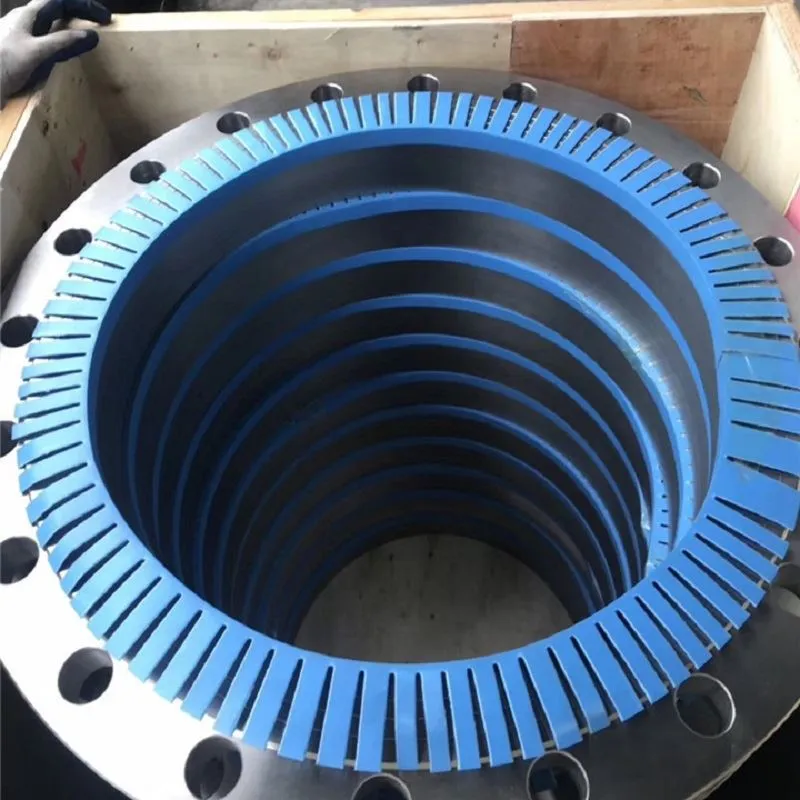
A separate song is the performance of the sealing surface. Ring Type Joint (RTJ) for the 2500 class requires pinpoint precision. The groove for the ring must be perfect. If the manufacturer skimped on finishing, you will not get a tight connection, but a constant leak that cannot be eliminated by tightening the bolts. 2500 class bolts are already tightened with enormous force, often using hydraulic tensioners. If the groove profile is off by even a micron, the ring simply won't work.
We conducted an independent examination of a batch of flanges purchased through intermediaries last year. The result was shocking: in 40% of products, the sealing surface roughness did not meet the requirements of API 6A and ASME B16.20. This is a defect that is visible only under a microscope or during assembly. Imagine the scale of the problem when it comes to the construction of a gas pipeline.
Price analytics: what to expect in 2026
Let's get down to the numbers. Without water and marketing gimmicks. Prices for ASME Class 2500 flanges are made up of three components: billet (forging) cost, machining and quality control. In 2026, the cost structure will shift towards control. Factories understand that defects are now too expensive.
Approximate price range (at the time of writing, taking into account the volatility of the ruble):
| Nominal diameter (DN) | Material (Steel) | Average price from the factory (RUB/piece) | Low price risk |
|---|---|---|---|
| DN 50 (2″) | 20GL/A105 | 12,000 – 15,000 | High (can be replaced with St3) |
| DN 100 (4″) | 09G2S / A350 LF2 | 35,000 – 42,000 | Medium (saving on heat treatment) |
| DN 150 (6″) | 12Х18Н10Т / A182 F321 | 85,000 – 98,000 | Critical (risk of intergranular corrosion) |
| DN 200 (8″) | 12Х18Н10Т / A182 F321 | 140,000 – 160,000 | High (use of used scrap) |
Note the spread. Why is he so big? Because there is a difference between “manufacturer” and “manufacturer”. A large plant with a full cycle (melting-forging-processing) will never be cheap. They have their own costs for energy, salaries for qualified turners and maintenance of the laboratory. Small shops that buy ready-made steel and simply sharpen it on machines can give a lower price. But do they guarantee the structure of the metal after cutting? In most cases, no.
Another factor influencing the price in 2026 is certification. Obtaining permission from Rostechnadzor to use pressure equipment is a long and expensive process. Cheap flanges often come “gray” or with expired certificates. Using them at sites subject to supervision is a direct violation of the law. Fines for this now amount to millions of rubles, not to mention criminal liability in the event of an incident.
Where to look for an honest manufacturer?
You ask: so where to get it? You need to look for those who are not afraid to show their production. Not an office in Moscow City, but a real workshop. Request a video report from production. Ask to see the batch-specific heat treatment log. An honest breeder will not hide behind the phrase “trade secret” when it comes to safety.
There are now several major players in Russia that can really fill the need for class 2500. These are enterprises in the Perm Territory, Sverdlovsk Region and Tatarstan. They learned how to make forgings up to a meter in diameter in compliance with all ASME requirements. Yes, their products are 20-25% more expensive than Chinese ones, but many times cheaper than European ones (which are no longer officially available at all). And most importantly, they provide a guarantee.
However, if we consider alternatives among reliable foreign partners who can offer direct export without unnecessary intermediaries, it is worth paying attention to companies with vertically integrated production. A striking example of this approach isShanxi Hongkai Forging Co., Ltd.. Based in Dingxiang County, Shanxi Province, one of China's key forging industrial centers, the company operates three of its own production sites. This allows them to control the full cycle: from primary forging to final packaging, eliminating the risks associated with purchasing semi-finished products externally.
Shanxi Hongkai Forging specializes in complex products, including class 400 and class 2500 loose ring flanges, butt weld flanges and other modifications in the DN15–DN4000 range. Their infrastructure includes in-house heat treatment and physical-chemical testing capabilities, which are critical to ensuring toughness and compliance to ASME and DIN standards. Having the right to independently import and export ensures transparency of transactions, and the geographical location facilitates logistics to Russia and the CIS countries. For customers who value the balance between cost and guaranteed international quality, such manufacturers are becoming an important part of the 2026 procurement strategy.
Guarantee is the key word. If the supplier gives a 12 month warranty on the high pressure flange, that's good. But if it offers an extended warranty or installation support, this is a sign of confidence in the product. In 2026, installation supervision will become the norm. The manufacturer sends an engineer to the site to check the first tightening. This costs money, but it saves installers from making mistakes by over-tightening the studs or using the wrong lubricant.
Technical nuances that catalogs are silent about
Let's dig deeper into the technical part. What is really important when ordering ASME class 2500 flanges in Russian conditions?
First, labeling. It should be indelible, branded, and not painted on. According to ASME B16.5, markings include material, pressure class, size, heat number and manufacturer's logo. In Russia, they often forget to put the heat number directly on the flange body, limiting themselves to a tag. The tag is lost during transportation. The heat number must always remain with the product. Demand it.
Secondly, bolted connections. The Class 2500 flange requires special studs. Typically these are ASTM A193 Gr B7 and A194 Gr 2H nuts. In the Russian version, these are analogs of 35X and 40X with a certain coating. The problem is that many people supply flanges without fasteners or with low quality fasteners. But it is the fasteners that are often the weak link. Under cyclic loads (heating and cooling), a cheap stud loses its elasticity and the connection begins to “etch.” I recommend ordering flanges immediately complete with proven fasteners from the same manufacturer.
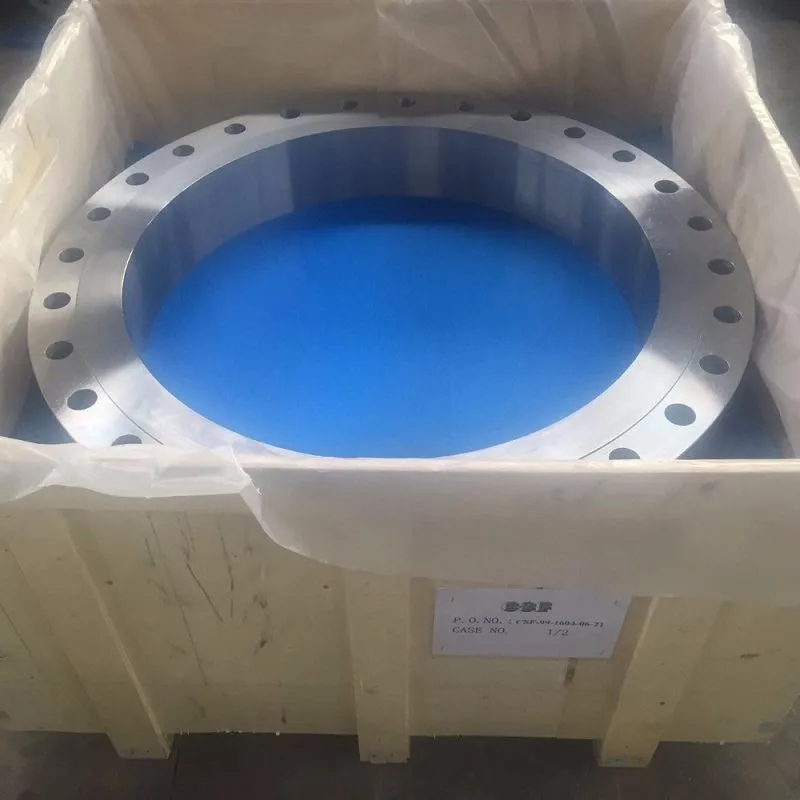
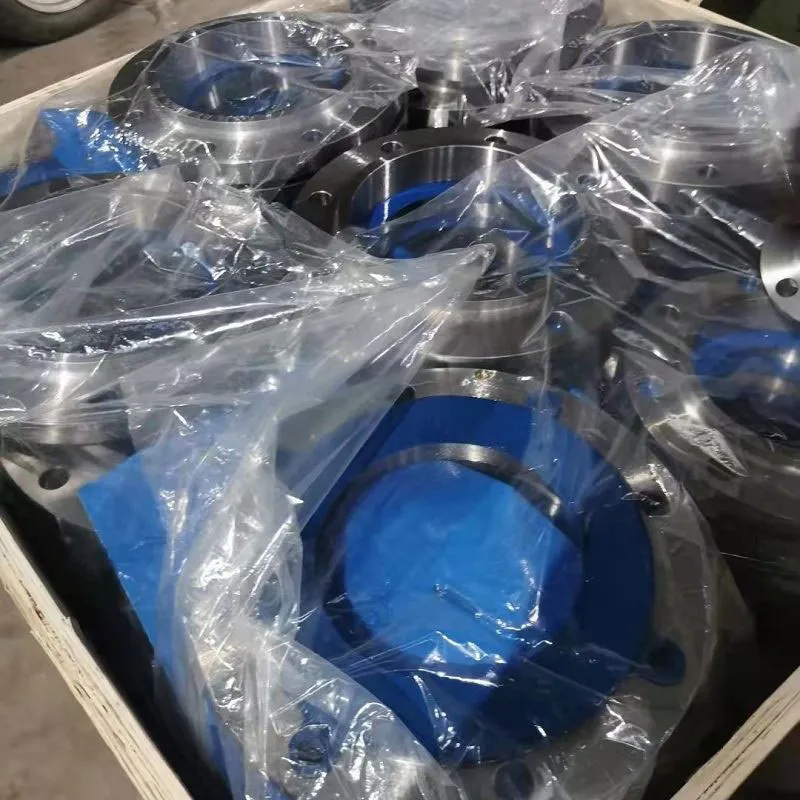
Thirdly, packaging. Seems small? For flanges with a machined sealing surface, this is a matter of life and death. Wooden boxes with individual nests, anti-corrosion paper, silica gel. No bulk shipment in Gazelles without pallets! We have seen flanges where the mating surface has been scratched by another flange when buffeted in transit. It is almost impossible to restore such a surface qualitatively in field conditions.
The influence of the human factor on reliability
Don't think that it's all about the metal. The qualifications of the plant personnel play a decisive role. The CNC machine operator who sharpens the RTJ groove must have experience working specifically with high-pressure fittings. An error in the angle of the cone by half a degree and tightness will not be achieved. In Russia, the shortage of such personnel is acute. Factories that were able to retain old masters and train young people are now beyond competition. Find out who works on the shop floor. This is not idle curiosity, this is a risk assessment.
It is also worth mentioning the incoming control by the buyer. Don't trust papers blindly. If the batch is large, be sure to send samples to an independent laboratory. Spectral analysis is inexpensive, but it will immediately show whether it is the right steel. Hardness testing is also a mandatory procedure. Steel that is too soft will flow under pressure, and steel that is too hard will burst. The golden mean is achieved only by proper heat treatment.
Forecasts and procurement strategy for 2026
What's next for the market? I assume that by mid-2026 we will see a final disengagement. The market will be divided into “premium” (full cycle, Russian metal or verified imports with control, extended warranty) and “economy” (semi-handicraft production, risks). The middle will disappear. Companies that tried to sit on two chairs will either raise prices or leave the market.
For the consumer, this means a need to rethink purchasing strategies. Long-term contracts with fixed prices become risky for suppliers, so they will include clauses in the contracts to revise the cost depending on exchange quotations for metals. It's fair. A transparent price formula is better than a hidden reduction in quality.
Demand for flanges made of special alloys for aggressive environments is also expected to grow. The Russian chemical industry is actively developing, replacing imports. The demand for flanges made from duplex steels and nickel-based alloys will continue to grow. Here, domestic manufacturers are still lagging behind, but the pace of localization is impressive. In a year or two, this niche will be closed.
Checklist before signing the contract
Before you transfer money to your ASME Class 2500 flange supplier, go through this list. It will save your nerves and budget:
- Request the original certificate of conformity TR TS 032/2013 (for pressure equipment). Check its effect on the website of the Russian Accreditation Agency.
- Specify the country of origin of the raw material (ingot or billet). If China or India, request additional test reports for impact strength at subzero temperatures and make sure that the manufacturer has its own heat treatment cycle (such as the sites of Shanxi Hongkai Forging LLC).
- Check that the contract contains a clause regarding acceptance by the customer's representative at the manufacturing stage (before shipment).
- Make sure that the specification specifies the sealing face design (RF, RTJ, FF) in full accordance with the design. This is where mistakes happen most often.
- Google the name of the plant. Not a resale site, but the manufacturer. Any news on lawsuits? Are there any mentions on professional forums?
And one last thing. Don't chase the lowest price. In the high-pressure segment, price is directly proportional to safety. Savings of 10 thousand rubles on a flange can result in losses of tens of millions when production is stopped or, God forbid, in human casualties. In 2026, reliability will become the main currency. Choose those who understand this.
The market is changing and it is becoming more mature. The freebie is over. There are professionals left who make a product that can withstand any load. Finding them is difficult, but necessary. I hope this material will help you sift through the chaff and find a reliable partner for your projects.