-
-
Phone
+86-13623462298



Flange connection for gas pipe 2026: price - Manufacturer
2026-07-25
- Why flange prices are unpredictable in 2026
- Technical educational program: what really matters in 2026
- Localization of production: myths and reality
- Price segment and commercial offers 2026
- Editing: where 90% of mistakes are made
- The future of flange connections: trends 2026-2027
- Final verdict: how not to make a mistake
Frankly, the valve market in 2026 has become a minefield for the average buyer. Are you looking for reliableflange connection for gas pipe, and you come across hundreds of offers with prices that range from suspiciously low to astronomical. Why is this happening? Because behind the façade of standard catalogs lies a reality that manufacturers are silent about: under the conditions of sanctions pressure and the restructuring of supply chains, the concept of “GOST standard” has begun to blur. We have tested dozens of samples available on the Russian market at the beginning of 2026, and we are ready to say what you will not find in the official press releases of the factories. We will talk not just about metal and bolts, but about how not to lose your house by saving three hundred rubles on a sealant.
Why flange prices are unpredictable in 2026
Let's take off the rose-colored glasses right away. If you see the price of a flange connection for a gas pipe 20% lower than the market average, this is not luck. This is an alarm. Last year, we observed a massive import of products labeled as “complies with GOST 33259-2015,” but produced in underground workshops using recycled materials. The problem worsened by 2026: many European suppliers of special steels left, and domestic metallurgical giants refocused on defense orders or exports to Asia. The shortage of high-quality steel grades 20, 09G2S and 12Х18Н10Т created a vacuum that was filled by intermediaries.
You may ask: “What does the price have to do with it if I buy from an authorized dealer?” And despite the fact that the supply chain has lengthened. Previously, the plant sold the batch to a wholesaler, who sold it to an installation organization. Now three or four resellers are wedged between them, each of whom must earn money in foreign currency or its equivalent, despite the volatility of the ruble. Therefore, when you look at the manufacturer’s price list, remember: the final price for you may differ by 40% only due to logistics to your region, be it Moscow or a remote village in Siberia.
The issue with anti-corrosion coatings is especially acute. In 2025–2026, galvanizing technologies have changed. Imported compounds have become a rarity and a luxury. There are Russian analogues, but their service life in aggressive environments (and gas often contains sulfur and moisture impurities) still raises questions among independent experts. I personally saw flanges that began to “bloom” with red spots six months after installation on a street in the Leningrad region. And this despite the fact that the quality certificate was in perfect order.
Hidden costs that sellers are silent about
Buying the flange itself is just the tip of the iceberg. Many users make the mistake of comparing only the cost of a product. But let's count realistically. You will need:
- Fastening kit (studs, nuts, washers). They are often sold separately, and if you take a cheap strength class of 4.8 instead of 8.8, the entire structure becomes unreliable.
- Padding material. For gas, conventional paronite gaskets are no longer always suitable. We need spiral wound elements (SW) with an inner ring, the price of which has doubled.
- Torque wrench tightening services. Human power does not work here; control of the tightening torque is needed.
- Certification and quality certificate. Without these papers, the gas service simply will not sign the commissioning certificate.
That is why the phrase “flange connection for gas pipe price” in the search line should be accompanied by the clarification “turnkey”. Otherwise, you risk buying metal that cannot be legally installed.
Technical educational program: what really matters in 2026
Forget about marketing for a minute. Let's talk about the physics of the process. Gas is not water. It penetrates through microscopic pores, it is explosive, and it is unforgiving. A flange is not just a disk with holes. This is a complex unit operating under variable load conditions. Vibration from compressor equipment, thermal expansion of the pipe in winter and summer, pressure in the main line - all this creates cyclic loads.
In 2026, a few execution types will dominate the market. The most common are flanges with a “protrusion-recess” connecting part. They are good because the gasket centers automatically. But there is a nuance: if the manufacturer has skimped on the precision of processing the protrusion mirror, the tightness will be broken even with perfect tightening. The second type is “tenon and groove”. A more reliable option for high pressures, but also more expensive to produce. The third is for butt welding. The geometry of the edge cut is critical here.
I'm concerned about one trend I noticed while analyzing service reports over the past year. Manufacturers have begun to reduce flange wall thickness in border areas. Formally, they pass according to GOST, because the standard allows for certain deviations. But in practice, this reduces the safety margin during water hammer or a sudden surge in pressure. For domestic gas this may not be so critical, but for industrial networks it is a time bomb.
Materials: the battle for steel quality
Previously, we easily used steel 20 for operating temperatures up to 425 degrees. Now the situation is more complicated. Metal batches became heterogeneous. Laboratories record cases when a chemical composition “floats”. Carbon is a little more than normal - steel becomes brittle in the cold. If there is less manganese, the yield strength decreases.
What should an ordinary person or the chief engineer of a small enterprise do?
Require spectral analysis. Yes, it sounds like bureaucracy. But in 2026, having a test report for the specific heat your flange is made from should be a mandatory contract clause. Don’t take the manager’s word for it when he says, “We have everything certified.” Ask for the certificate number and check it in the RosAccreditation register. It often happens that a certificate is issued for one batch, and they ship you another, produced a month later from different raw materials.
Localization of production: myths and reality
Everyone is talking about import substitution. Beautiful banners at exhibitions in Moscow and St. Petersburg shout that Russian fittings are in no way inferior to German or Italian ones. This is partly true. Large factories, such as those based in the Chelyabinsk or Sverdlovsk regions, really hold their own. Their equipment is updated, their technologies are debugged.
But there is also another side to the coin. The brands of well-known Russian manufacturers sometimes hide the products of small enterprises from regions where quality control is weaker. The scheme is simple: a large plant receives a huge government order, cannot cope with the volume and outsources part of the orders to “friendly” workshops. From there, the products go to a common warehouse and go to the buyer under a single brand.
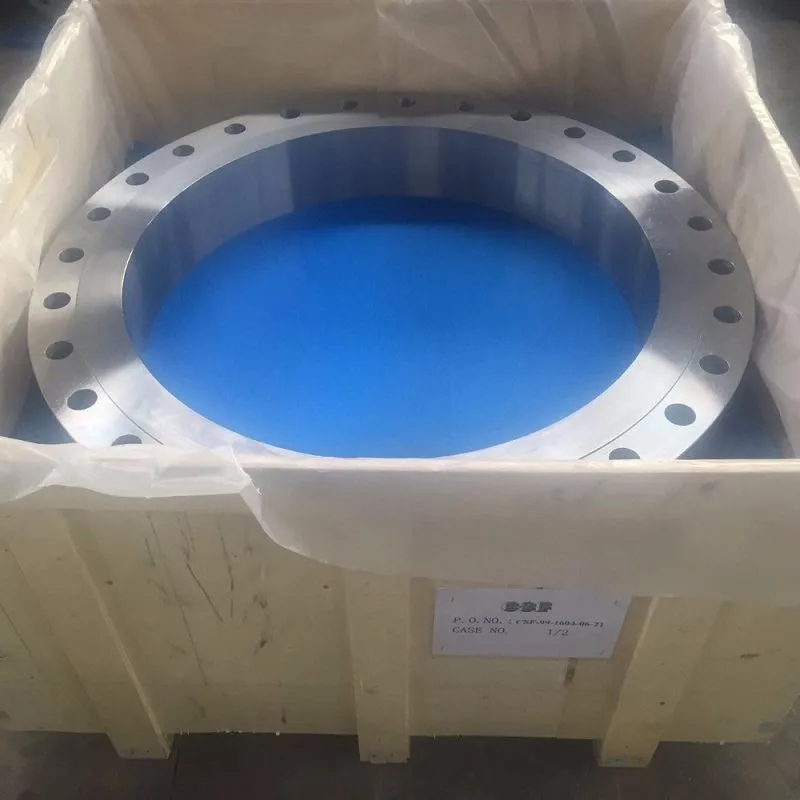
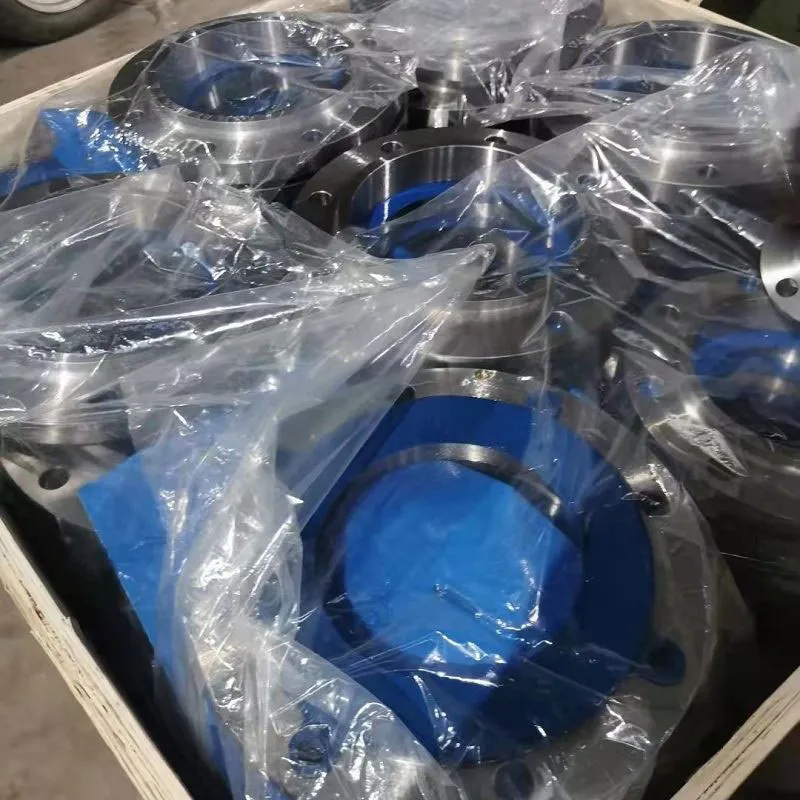
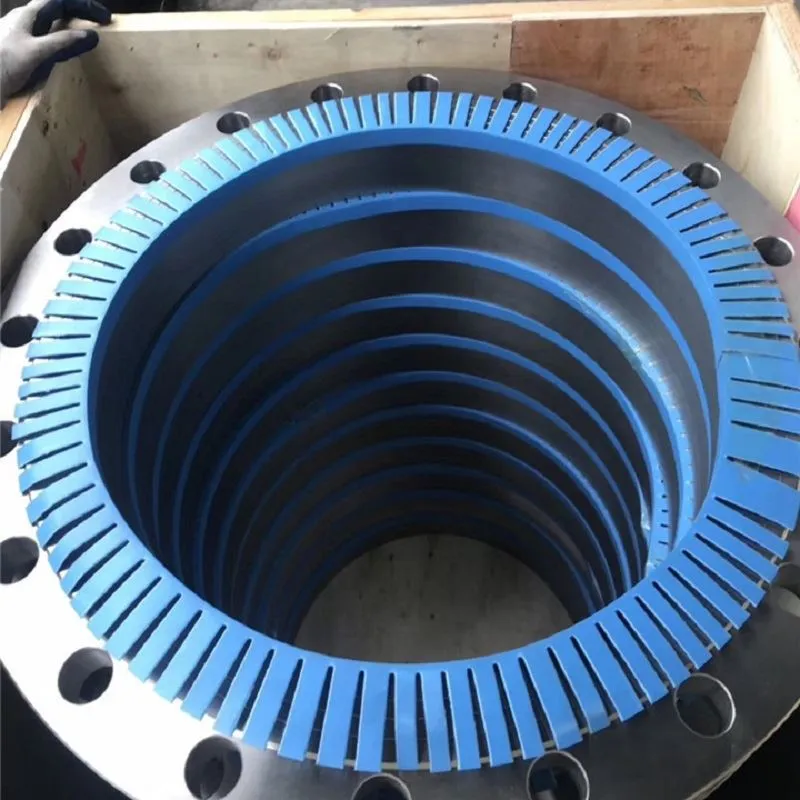
How to distinguish? Pay attention to the markings. On a high-quality flange, the mark should be clear, deep, made using the impact method or laser. If the letters are smeared, if the paint has gotten into the recesses of the stamp, this is a reason to think about it. Also look at the packaging. In 2026, the use of UV-protected shrink film and wood sheathing for large quantities has become the norm. If you received flanges in bulk in a Gazelle body, covered with technical grease and dust, the risk of corrosion and mechanical damage during transportation has already been realized.
In this context, it is worth mentioning players who maintain supply chain transparency even in the face of global turbulence. For example, a companyShanxi Hongkai Forging Co., Ltd., based in Dingxiang County, a key industrial center for the forging industry in China, demonstrates an approach that is becoming a benchmark for reliability. Unlike many intermediaries, this company operates three of its own production sites, providing a complete vertically integrated cycle: from primary forging and heat treatment to final packaging and quality control. Having the right to independently import and export allows them to work directly with international partners, eliminating unnecessary links in the chain that often blur responsibility for quality.
Products from manufacturers such as Shanxi Hongkai Forging cover a wide range of standards - from DIN and ANSI B16.5 to GOST specifications, which is critical for the Russian market. The range of manufactured products (DN15–DN4000) allows us to meet the needs of both compact technical solutions and large-scale industrial projects. The main thing here is a multi-level control system: from incoming analysis of raw materials to checking the geometry and mechanical properties of the finished product. When you choose a supplier, look for exactly these features: in-house capacity, the ability to provide test reports for a specific melt, and direct communication channels without hidden subcontractors.
Geometry matters
It would seem, what is wrong with the bolt hole? But no. In the latest batches of 2025, there were flanges where the holes were drilled with an offset. During installation, installers had to drill holes in place or, worse, use a crowbar to tighten the pipe, creating excess stress in the system. Such “violence” over the pipeline leads to the fact that after a year or two a fatigue crack appears at the junction.
Check the alignment of the holes while still in the warehouse. Take two flanges from the same batch, put them together (without a gasket) and try to insert a gauge or just a bolt into all the holes at the same time. If the bolt does not fit into at least one hole freely without knocking with a hammer, return the batch. This is a marriage that will save you stress in the future.
Price segment and commercial offers 2026
Let's move on to the most painful part - money. The market for flanged products in Russia can now be divided into three echelons. Understanding this gradation will help you avoid overpaying and buying outright garbage.
| Market segment | Price range (RUB/piece, DN 50, RU 16) | Characteristics and Risks | Who is it suitable for? |
|---|---|---|---|
| Economy (China/Small workshops of the Russian Federation) | 450 – 700 | Low quality steel, thin galvanizing, geometric deviations are possible. High risk of gas service failure upon acceptance. | Temporary solutions, non-critical areas, drainage lines. |
| Standard (Large factories of the Russian Federation and proven import manufacturers) | 900 – 1400 | Compliance with GOST/ASME/DIN, full package of documents, stable quality thanks to our own production control. Optimal price/reliability ratio. | Basic construction, gas supply of residential buildings, medium pressure industrial networks. |
| Premium (Special steels/Imported analogues) | 2000 – 3500+ | Stainless steels, special alloys for the North, enhanced protection. Individual certification. | Aggressive environments, critical objects, conditions of the Far North. |
Pay attention to the numbers. The price range is colossal. Why is a 500 ruble flange dangerous? Because the cost of raw materials and electricity in 2026 is such that it is almost impossible to produce a quality product for less than 800 rubles without violating technology. If they offer you a price of 500 rubles, it means they saved on something important. Most likely, on the heat treatment or thickness of the metal.
It is also worth considering the volume of purchase. Large distributors often give a discount of 15% when ordering from a pallet. But there is a catch: are you storing these flanges correctly? Steel rusts. If you do not have a dry warehouse, it is better to buy in batches for a specific installation. A stale product loses its presentation and requires additional cleaning before installation, which again costs your money and time.
Where is it safe to buy?
I will not name specific brands so as not to be accused of advertising. But I will give you an algorithm for choosing a supplier.
- Check the availability of your own warehouse and production facilities. A one-day company that works “to order” with delivery directly from an unknown factory is a risk of missing deadlines.
- Look at the website. If there are no technical drawings, load tables and scanned certificates, run away from there. A serious player understands that an engineer needs information, not pretty pictures.
- Call technical support. Ask a tricky question. For example: “What torque do you recommend for M16 studs made of 35X steel on your flange at minus 40 degrees?” If a manager begins to float or answer in general phrases, the company does not have the qualifications.
Editing: where 90% of mistakes are made
You can buy the most expensive premium flange, but if you install it with a sledgehammer and “by eye”, the system will leak. The gas pipeline accident statistics for 2025 are inexorable: more than half of the incidents at flange connections are related to violations of the installation culture.
The first mistake is misalignment. When the flanges are tightened unevenly, misalignment of the pipe axes occurs. The gasket compresses unevenly: on one side it is crushed into a cake, on the other it barely touches the surface. Gas finds the path of least resistance. Use a level and special wedges for alignment before final tightening.
The second mistake is using the wrong gaskets. In 2026, the range of seals is huge. Paronite, rubber, Teflon, graphite, metal. For natural gas, paronite gaskets (PON) or spiral wound gaskets (SNP) are most often used. But! Paronite is afraid of oils. If an installer lubricates the studs with grease and then accidentally drops oil on the gasket, it will lose its properties. Read the instructions for the materials.
The third mistake is the tightening order. Never tighten bolts in circles! Only criss-cross. First, tighten all the nuts by hand. Then make the first pass with a torque wrench at 30% of the force. Second pass - 60%. The third one is 100%. And the final control pass is again 100% in a circle to make sure that nothing has “settled”. Everyone knows this algorithm, but only a few follow it. Save time? Yes. Risking lives? Yes too.
The problem of the “human factor” in winter
I would especially like to highlight installation in winter. In Russia this is relevant 6 months a year. Metal becomes brittle in the cold. Rubber seals become tanned. If you are installing a gas pipe outdoors in temperatures below -20°C, normal procedures will not work.
Heating of the connection area is required. Flanges should be at room temperature. Gaskets should be stored in a warm room until the minute of installation. Trying to install a cold rubber gasket on an ice flange is guaranteed to result in microcracks in the seal material. In a month, when the thaw arrives, these cracks will expand and leakage will begin. I have seen such cases personally. The manufacturer of the gaskets was blamed, and the problem was a violation of the installation technology.
The future of flange connections: trends 2026-2027
Where is the industry heading? You shouldn't expect a miracle. A revolution in flange design is not expected - this technology has been developed for decades. But changes will occur in materials and controls.
Firstly, the introduction of composite materials for gaskets is expected. Russian research institutes are actively working on polymers that retain elasticity at extremely low temperatures and are resistant to the chemical effects of gas components. By the end of 2026, the first production samples of such gaskets should appear on sale. They will be more expensive than traditional ones, but their service life is stated to be 3-4 times longer.
Secondly, digitalization. Flanges with RFID tags built into the housing are already appearing. Such a mark stores the entire history of the product: date of steel smelting, heat number, name of the quality control inspector, date of shipment. By scanning the tag with a smartphone, the chief engineer will receive complete information. This is the fight against counterfeiting. In 2027, the presence of such a label may become a mandatory requirement for high-risk facilities.
Thirdly, tightening control by Rostechnadzor. There are different rumors, but most likely, mandatory photographic recording of the installation stages of hidden work will be introduced. That is, before filling the trench or closing the box, you will need to take a photo of the unit with clearly visible markings and send it to the supervisory authority. This will make life more difficult for hacks, but will add bureaucracy to everyone else.
Final verdict: how not to make a mistake
To sum it up, I want to say it straight: the market for flange connections for gas pipes in 2026 requires high vigilance from the buyer. The era of “buy-set-forget” is over. Now this is an area of responsibility where price is only one of the factors, and far from the most important.
If you chooseflange connection for gas pipe, focus on the following criteria:
- Documents are more important than price. No passport or certificate - no purchase.
- Visual inspection is required. Look for casting defects, rust, crookedness.
- An integrated approach. Buy your flange, hardware, and gasket from one source to shift the responsibility for compatibility to one supplier.
- Qualified installation. Do not trust the work to shabatniks without permits and tools.
Don't try to skimp on safety. Gas does not forgive greed. The cost of a quality flange is pennies compared to the possible consequences of an accident. В 2026 году мы имеем дело с технологиями, которые позволяют делать надежные системы, но только при условии честности всех участников цепи: от металлурга до монтажника.
And one last thing. Следите за новостями отрасли. Стандарты меняются, поставщики приходят и уходят. То, что было хорошим решением в 2024 году, в 2026 может стать проблемным активом. Будьте гибкими, требовательными и внимательными. Ваша безопасность и безопасность ваших близких зависит от того, насколько серьезно вы подойдете к выбору этого, казалось бы, простого куска металла.
Помните: идеальный фланец — это не тот, который дешево стоит на полке, а тот, который надежно служит десятилетиями, оставаясь незаметным фоном вашей энергетической безопасности. Choose wisely.