-
-
Phone
+86-13623462298




ASME flanges class 400: prices 2026 in Russia - factories
2026-07-24
The pipeline valves market in Russia is experiencing tectonic shifts, and if you are looking for up-to-date data on requestASME class 400 flanges, then the old price lists for 2023 can be safely thrown into the trash. The situation in 2026 has changed dramatically: what was considered a niche imported product for high-temperature circuits just yesterday has today become a battlefield between the remnants of Western warehouses, the Turkish compromise and aggressive Russian import substitution. To be honest, most suppliers still hide the real prices behind the phrases “on request”, but we dug deeper. In this article, we will not just list the plants, but will analyze why buying a class 400 flange now is a high-stakes lottery, where not only the project budget is at stake, but also the safety of the entire plant.
Why the 400 class is the new hot spot in 2026
Let's be honest. For a long time, engineers in Russia have been accustomed to working with GOST standards. DIN was also in use. But ASME B16.5 Class 400 has always occupied a specific niche. This is not the most popular class, like 150 or 300, but also not exotic like 2500. Class 400 is often the choice for specific process lines, where the pressure fluctuates and the temperature requires a safety margin that class 300 does not provide, but where the redundancy of class 600 comes at a cost.
In 2026, the situation was aggravated by geopolitics. Previously, you could simply order a batch from a European manufacturer, receive an EN 10204 3.1 certificate and forget about problems. Now? Now each such flange is a story with a detective plot. Parallel imports work, but they are expensive. Very expensive. Logistics through third countries adds 40 and sometimes 60 percent to the cost of metal. And the worst thing is not the price. The worst thing is the risk of running into a fake.
You will be surprised, but in warehouses in the Moscow region and the Leningrad region there are tons of metal with the ASTM A182 F316 stamp, which turns out to be an ordinary Chinese alloy with a low molybdenum content. For the 150 class this may go unnoticed. For a 400 class operating under serious pressure, this is a ticking time bomb. I have personally seen inspection reports where new flanges cracked during hydraulic tests simply because the metal structure did not correspond to the stated heat treatment.
Market reality: quality deficit or honesty deficit?
The problem is not that Russia doesn’t know how to forge steel. They know how. The problem is that ASME standards require a certain production culture, which our factories have adopted for decades through cooperation with Western partners. Now this connection is broken. What do we see in 2026?
- Turkish trace:Many distributors offer products from Turkey as a direct replacement. Yes, the geography is closer. Yes, logistics are easier. But in the last two years, the quality of Turkish box office production, according to many independent laboratories, has become poor. They save on alloying additives.
- Chinese dragon:The Celestial Empire flooded the market with volume. The prices are ridiculous. But try to find a real certificate for a batch of ASME Class 400 flanges from China that will pass Rostekhnadzor’s inspection without any questions. The chances are approaching zero. Often documents are drawn in the seller's office, and not on the factory floor.
- Russian answer:Our giants, such as OMZ or individual forging centers in the Urals, have learned to make an analogue. But there is a nuance here. They make according to GOST or TU. Converting dimensions and tolerances to the ASME grid is mathematically possible, but legally slippery. Will this flange be considered equivalent in an international insurance company audit? Big question.
Pricing analytics 2026: how much security really costs
Talking about a specific price in rubles today is a thankless task. The exchange rate is volatile, energy prices fluctuate. However, we can talk about ranges and trends that have formed by the beginning of 2026. If you see an offer well below market, run. These are either scammers or metal that has not passed inspection.
The cost of an ASME Class 400 flange depends on the diameter, material (carbon steel A105 or stainless steel F316/F316L) and type of sealing surface. RF (Raised Face) is cheaper than RTJ (Ring Type Joint). But let's look at the numbers to understand the order.
For small diameters (DN 50 - DN 80) made of carbon steel A105, the minimum entry threshold is now about 15,000 - 20,000 rubles per unit for wholesale purchases. This is if you take the Russian analogue or certified China. An original American or European flange, if it can be found in stock at all, will cost 3-4 times more due to logistics and risks.
As the diameter increases, the price rises nonlinearly. The DN 200 Class 400 flange is already a serious product. Here the mass of the metal plays a decisive role. Prices can reach 150,000 rubles and more per piece. What if we are talking about stainless steels for aggressive environments? Here the price tag easily goes beyond 300,000 rubles. And this is not the limit.
Why so expensive? Because the price includes not only steel. Guarantee included. There is an opportunity to make a claim. The work of the laboratory is planned, which will confirm the chemical composition. A cheap flange has no history. The expensive flange has a passport that protects the chief engineer from jail in the event of an accident.
Hidden costs that managers are silent about
When you buy flanges, you are only buying the beginning of the story. In 2026, after-sales support became a critical factor. Many online platforms sell goods “as is”. They returned the money and forgot about it. But what happens when the installer discovers that the hole for the stud does not match?
ASME B16.5 has tight hole tolerances. If the hole spacing “floats away” even by a millimeter, the flange becomes a useless piece of metal. Russian factories sometimes do this by using old dies that are worn out. Checking the geometry before paying is a mandatory ritual. And this check costs money. Either yours, or included in the price of a supplier who values its reputation.
It is also worth considering the cost of certification. If your facility is subject to industrial safety examination, you will need a package of documents, properly certified. Obtaining duplicate certificates or conducting an independent examination of a batch of metal is another +10-15% to the project budget. Ignoring this expense item means building a house on sand.
Review of manufacturers and suppliers in the Russian Federation: who holds the brand
The market is heterogeneous. There are players who simply resell, and there are those who really control production. In the conditions of 2026, trust must be earned through deeds. Below is an analysis of the main sources of supply of class 400 flanges to the Russian market.
| Supplier type | Benefits | Risks | Price segment |
|---|---|---|---|
| Large Russian plants (OMZ, ChTPZ, etc.) | Stable metal quality, availability of our own laboratories, work in accordance with GOST with the possibility of adaptation to ASME. | Long production times (from 45 days), bureaucracy, inflexibility in small batches. | High / Medium+ |
| Specialized import distributors | Availability in warehouse, original certificates (if the product is legal), wide range. | Huge markup, risk of counterfeit goods disguised as originals, dependence on exchange rates. | Very tall |
| Trading houses with products from Asia | Low price, fast shipment, willingness to work with small wholesale. | Critical problems with the quality of the alloy, fictitious certificates, lack of a real guarantee. | Low |
| Local forging shops | Flexibility, the ability to produce custom solutions, personal contact. | Unstable quality of heat treatment, lack of a full-fledged quality management system. | Medium |
Pay attention to the table. It shows that things don't come cheap. If you are offered an ASME Class 400 flange at the price of a regular GOST product, this is a red flag. The technology of forging and subsequent heat treatment for high pressure requires energy and time. There are no miracles.
How to check a supplier in current realities
Don't believe the words. Believe the papers and the facts. Before entering into a contract in 2026, I recommend requesting the following:
- Scan of the material certificate (Mill Certificate) for this particular heat. Check the heat number on the product itself. It must match.
- Photos of a real warehouse. Ask to show the game via video link. Fraudsters often use stock photos.
- Reviews from other industrial enterprises. Not from the supplier’s website, but through professional communities on Telegram or industry forums.
- Willingness to conduct an independent examination at your own expense. If the supplier is confident in the product, he will not be afraid to send a sample to the laboratory.
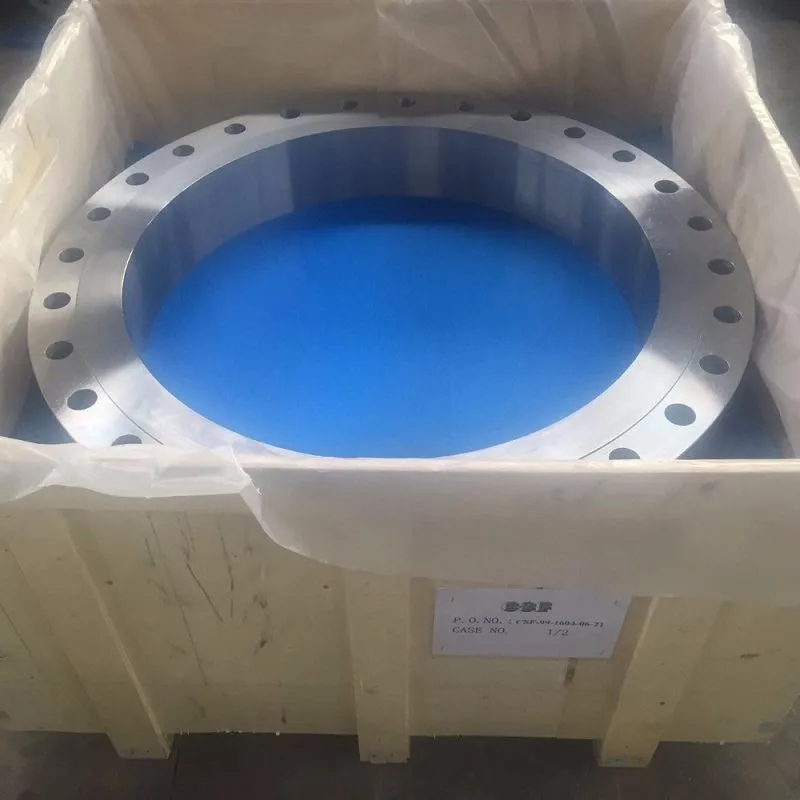
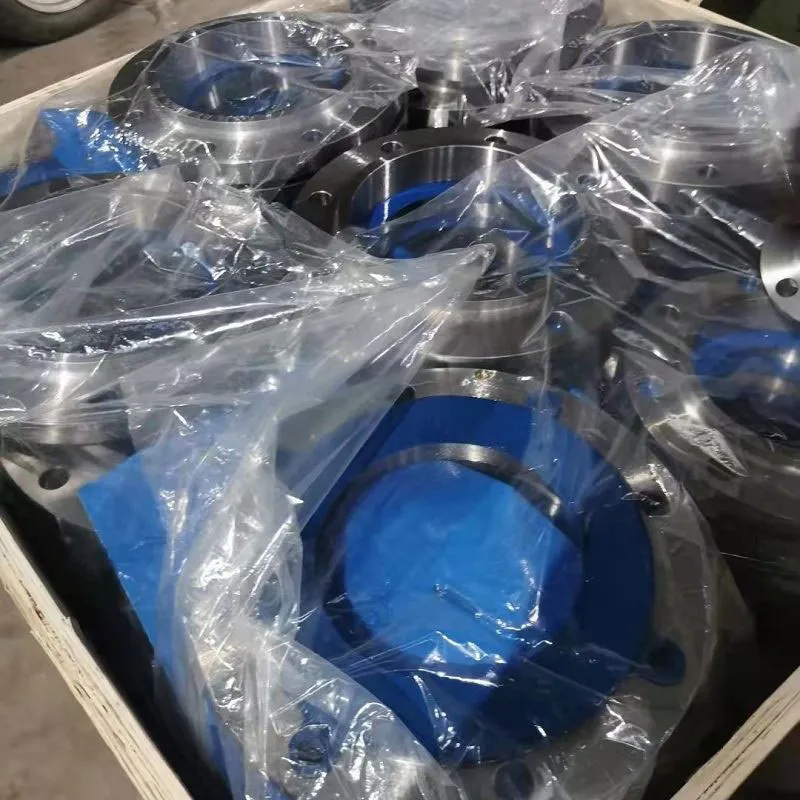
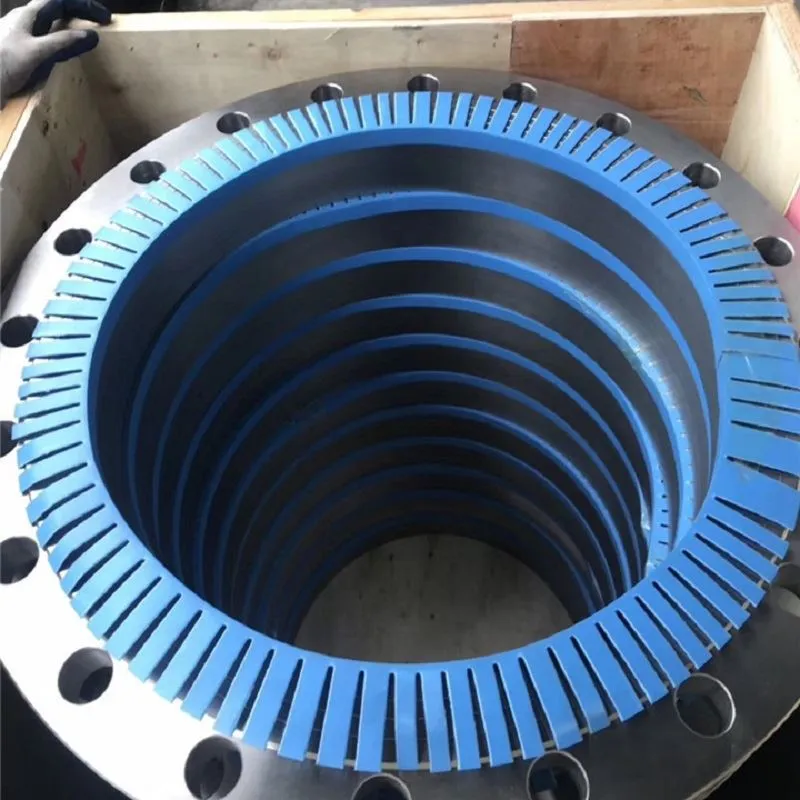
However, when talking about China, we cannot put everyone under the same brush. The Chinese market is indeed oversaturated with intermediaries selling air, but the most powerful vertically integrated production clusters are also concentrated there. A striking example of this approach isShanxi Hongkai Forging Co., Ltd.. This company is based in Dingxiang County, Shanxi Province, the historical center of forging and pressing production in China. Unlike typical trading houses, Shanxi Hongkai operates three of its own production sites, providing a full cycle from primary forging and heat treatment to finishing machining and packaging.
Why is this important in the context of finding a reliable Class 400 flange supplier? Because quality control here is built into the process and is not a formality. The company has the right to independently export, which eliminates unnecessary links in the supply chain and makes interaction transparent. Their range includes all main types of forged flanges (butt weld, lap, threaded, etc.) strictly according to ANSI B16.5, DIN and GOST standards, covering ranges from DN15 to DN4000. The presence of their own laboratories for physical and chemical tests allows them to provide real certificates for smelting, and not “drawn” papers. For Russian customers seeking a balance between price and guaranteed quality bypassing European sanctions, such manufacturers with their own infrastructure and experience in supplying to the CIS become strategically important partners.
Technical nuances: what to look for when accepting
An ASME Class 400 flange is more than just a disc with holes. This is a complex piece of engineering. Even if the documents are in order, visual and instrumental control is required. What are the main mechanics complaining about this season?
The first is the quality of processing of the sealing surface. For Class 400, the RF (raised) or FF (flat) design is often used. The roughness must be strictly within the limits specified in the standard (usually 125-250 microinches for RF). A surface that is too smooth does not hold the gasket; a surface that is too rough allows the medium to pass through. Chinese manufacturers often skimp on finishing, leaving risks from the cutter.
The second is labeling. According to the ASME B16.5 standard, the mark must contain: manufacturer's name, material (for example, A105), pressure class (400), size (NPS), heat number. The absence of any of these elements renders the flange illegitimate. In Russia, there is often a practice when the mark is applied with paint or a weak blow, which is erased during the first sandblasting. The real mark must be deep and clear.
Third is the geometry of the hub and the thickness of the flange. The 400 class assumes certain dimensions that differ from the 300 and 600 classes. A mistake here is fatal. If you install a thinner flange, it will be crushed by the pressure. If it is thicker, stress will arise in the pipeline due to misalignment. Use calipers and gauges. Don't be lazy.
Problem of compatibility with Russian pipelines
Another sore point is the connection with pipes. In Russia, the main stock of pipes is GOST. The outer diameters of pipes according to GOST and ASME may differ. For example, a DN 100 pipe according to GOST has one outer diameter, and NPS 4 according to ASME has a different one (albeit close). When welding an ASME flange to a GOST pipe, mismatched edges may occur.
This requires either boring the pipe, or using adapter rings, or ordering flanges with internal boring for a specific GOST. Smart suppliers in 2026 are already offering the service of “tailoring” the flange to the customer’s pipe. This costs extra money, but saves you headaches during installation. Be sure to check this point when ordering. A standard ASME flange may simply not fit on your Russian pipe without a gap that cannot be welded.
Forecast and procurement strategy for the coming year
What's next for the ASME Class 400 flange market in the second half of 2026 and into 2027? My forecast is pessimistic in terms of prices, but optimistic in terms of the quality of the domestic product.
Imports will continue to rise in price. Logistics chains are becoming more complex and sanctions are becoming stricter. There is no point in hoping for a return of European brands in the near future. The only way is to develop domestic production. Russian metallurgists are forced to master technologies that were previously purchased. This is a painful process that comes with marriage, but it is inevitable.
I expect the emergence of new GOSTs, which will actually be a copy of ASME, but adapted to the Russian raw material base. This will make life easier for designers. For now, we are in a transitional period of chaos.
The strategy for the buyer is simple:
- Don't chase the lowest price. In the high-pressure segment, savings of 10% can lead to millions lost in repairs.
- Enter into long-term contracts with proven Russian factories or direct foreign manufacturers with their own quality control base.
- Enter incoming control of 100% of batches. No “trust” deliveries without verification.
- Consider switching to class 300 or 600, if the project allows it, to get away from the scarce niche of class 400. Sometimes it is easier to recalculate a pipeline to a neighboring pressure class than to look for a rare standard size.
Final word
ASME Class 400 flanges in 2026 are not just a product. This is an indicator of the maturity of your approach to security. The market is full of mines, but it is also full of opportunities for those who are willing to work thoughtfully. Factories are working, metal is pouring, but the responsibility is now entirely on you. Do not entrust the selection of suppliers to sales managers. Study certificates, touch metal, ask awkward questions. This is the only way to build a reliable system that will last for decades, and not until the first water hammer.
Remember: the price of a flange is negligible compared to the cost of plant downtime or an environmental disaster. Choose wisely. And may your pipelines be sealed and your nerves strong.