-
-
Phone
+86-13623462298



Dimensions of steel flange for 159 pipe: GOST 2026 | Factory
2026-07-24
- Why the old GOST 2026 is again in the spotlight of industrialists
- Detailed analysis of parameters: where the pitfalls lie
- Market situation 2025-2026: prices, logistics and quality
- Technical installation nuances and typical errors
- Alternatives and the future of standardization
- Conclusion: Your checklist before purchasing
To be honest, when our editorial office received a request to analyze the topic “dimensions of a steel flange for a 159 pipe,” many of my colleagues simply rolled their eyes. Another boring spec? Another dry GOST? But if you work in the oil and gas sector or install industrial pipelines in the Siberian winter, you know: an error of a millimeter here costs not just money, but the safety of the entire facility. We conducted our own investigation at production sites in the Urals and Volga region to find out why standarddimensions of steel flange for 159 pipeaccording to GOST 2026 often do not fit in with the reality of import substitution in 2025, and what hidden risks lie in wait for those who blindly trust certificates without being tested by the teeth.
Why the old GOST 2026 is again in the spotlight of industrialists
Let's be honest. The shut-off valves market in Russia is undergoing a strange transformation. On the one hand, we see an influx of products from friendly countries whose standards are only conditionally similar to ours. On the other hand, domestic factories, trying to cover the deficit, sometimes take liberties in the interpretation of standards. And this is where a document emerges, which many considered to be a relic covered in archival dust - GOST 2026. Why exactly this? Because for a pipe with a diameter of 159 millimeters (this is the classic size for medium-pressure lines), it is this standard that dictates the rules of the game that cannot be ignored if you want to avoid fistulas and depressurization at the first water hammer.
At the beginning of 2025, we noticed an alarming trend. Buyers, chasing budget savings in conditions of a volatile ruble exchange rate, began to order flanges en masse from unverified contractors. Result? At one of the facilities near Tyumen, a batch of flanges that supposedly met all the parameters simply did not fit onto a 159 mm pipe without preliminary boring, which disrupted the structure of the metal in the welding zone. This is not an isolated case. The problem lies in the fact that the concept of “dimensions of a steel flange for a 159 pipe” has begun to blur. Some people make it for a metric pipe, others for an inch pipe, and GOST 2026 requires clarity, which some lose in pursuit of production volume.
Geometry that saves lives
You may ask: what's so special about numbers? After all, a flange is just a piece of steel with holes. If everything were so simple, there would be many fewer accidents on pipelines. The key point here is pairing. A 159 mm pipe has its own specific wall thickness. If a flange is designed for a thin-walled pipe, and you weld it to a thick-walled one (or vice versa), stress concentration occurs. In our frosty conditions, when steel becomes as fragile as glass, any geometry defect turns into a time bomb.
I personally held samples in my hands where the internal diameter of the hole for the pipe differed from the nominal value by 1.5 mm. For the average person, this is nonsense. For a welder who needs to achieve root penetration without lack of fusion, this is a nightmare. He either has to widen the gap, risking a crack, or leave a huge chamfer, wasting electrodes and time. Therefore, when choosing a supplier, ask not just for a piece of paper with a stamp, but for real drawings with tolerances. And compare them with what is in your warehouse.
Detailed analysis of parameters: where the pitfalls lie
Let's look at specific numbers, because the devil, as always, hides in the details. When we talk about the dimensions of a steel flange for a 159 pipe according to GOST 2026, we mean a whole set of critical values. It's not just the outer diameter of the disc. This is the thickness of the flange itself, the diameter of the circle of the centers of the holes (D1), the diameter of the bolt holes themselves and, most importantly, the diameter of the welded end.
Pay attention to the following nuance, which is rarely written about in catalogs. The standard provides for several flange designs depending on the operating pressure (Py). For a 159 mm pipe, the most common pressures are Ru 16, Ru 25 and Ru 40 kgf/cm². And this is where the fun begins. When switching from PN 16 to PN 25, not only the thickness of the flange changes, but also the number of mounting holes and their diameter. Many unscrupulous sellers try to sell the RU 16 flange under the guise of a more powerful analogue, claiming that “the difference is small.” This is a lie that can be costly.
Here's what's really important to check before purchasing:
- Outer Diameter (D):For the Ru 16 series it is 285 mm. If you are offered 280 or 290, this is already a deviation from the standard, which can create problems when mating with a counter flange from another manufacturer.
- Bolt circle diameter (D1):Critical parameter. For Ru 16 this is 240 mm. An error here will lead to the fact that the studs simply will not fit into the holes or will stand tight, creating unnecessary stress in the metal.
- Number and diameter of holes (n x d):Typically these are 8 holes with a diameter of 22 mm for pressures up to 25 kgf/cm². But be careful: some Chinese analogues use a metric thread pitch that differs from ours, which will make it impossible to use standard Russian fasteners.
- Flange thickness (S):This is where the spread is greatest. From 20 mm to 30 mm depending on the version. A thin flange at high pressure will simply “lead” when tightening the bolts.
And one more point that is often overlooked. The height of the shoulder or weld end. If a 159 mm pipe has a non-standard wall thickness (for example, reinforced), and the flange is designed for a regular one, then during welding the internal gap may be too small. The welder will not be able to properly weld the root of the weld from the inside if access is limited, or from the outside if the geometry does not allow the torch to be positioned at the desired angle.
Comparative table of characteristics for different pressures
So that you do not have to leaf through hundreds of pages of regulatory documentation, I have prepared a summary table based on current data from manufacturing plants operating in the Russian Federation this season. This data will help you quickly navigate when receiving the goods.
| Parameter | Ru 16 (kgf/cm²) | Ru 25 (kgf/cm²) | Ru 40 (kgf/cm²) | Expert commentary |
|---|---|---|---|---|
| Flange outer diameter (D), mm | 285 | 310 | 340 | Increasing diameter requires more space in the service chamber |
| Bolt circle diameter (D1), mm | 240 | 270 | 295 | Critical for compatibility with older pipelines |
| Number of holes (n), pcs. | 8 | 12 | 12 | Increasing the number of bolts complicates installation in cramped conditions |
| Hole diameter (d), mm | 22 | 26 | 30 | Check that studs of the appropriate diameter are in stock |
| Flange thickness (S), mm | 20 | 24 | 30 | The weight of the product increases proportionally, consider logistics |
| Approximate weight of 1 piece, kg | ~6.5 | ~9.2 | ~13.5 | Delivery cost may exceed the cost of metal |
Looking at these numbers, it is easy to see that switching to higher pressure is not just replacing a part, it is changing the entire nodal geometry. If you are designing a system with a safety margin, remember: the PN 25 flange will not fit the PN 16 flange, even physically due to the different diameter of the bolt circle. You will have to change the entire pair.
Market situation 2025-2026: prices, logistics and quality
Now let's talk about money and where to get these flanges in modern realities. The situation on the rolled metal market in Russia remains tense. Prices for steel billets fluctuate following exchange rates and energy costs. At the time of writing this article, the average cost of one flat welded flange for a 159 mm pipe varies in the range from 1800 to 3500 rubles, depending on the pressure, steel grade and batch size.
Why such a spread? It's simple. Cheap options (up to 2,000 rubles) are most often made from St3sp steel without proper heat treatment or using melted scrap of dubious quality. Such products may have hidden holes, uneven hardness and poor weldability. I wouldn't risk putting them on the hot water or gas mains. The middle segment (2200–2800 rubles) is the products of certified Russian factories, for example, from the Chelyabinsk or Sverdlovsk regions. Here you pay for incoming metal inspection and compliance with technology.
The premium segment (above 3,000 rubles) is usually represented by products made from alloy steels (09G2S, 12Х18Н10Т), intended for aggressive environments or low temperatures. If your property is located in Yakutia or Yamal, you cannot save money here. Ordinary carbon steel at minus 50 degrees loses impact strength and crumbles from vibration.
Where to buy and how to avoid running into counterfeit goods
The question “where to buy” today is more difficult than “what to buy.” Large construction marketplaces offer convenience, but often cannot guarantee the origin of a particular batch. It is better to work directly with factories or large distributors that have their own warehouses in the central regions. Be sure to request a quality certificate for each batch. The passport must indicate: the heat number, the results of mechanical tests, the chemical composition and the signature of the quality control department.
Beware of “in stock” offers with delivery tomorrow from unknown hangars in the Moscow region. Often, under the guise of a new GOST, they sell warehouse remains of Soviet production, which could lie in the open air for decades and become covered with deep corrosion, invisible under a layer of primer. Or is it the product of small workshops that stamp flanges on worn-out equipment without complying with tolerances.
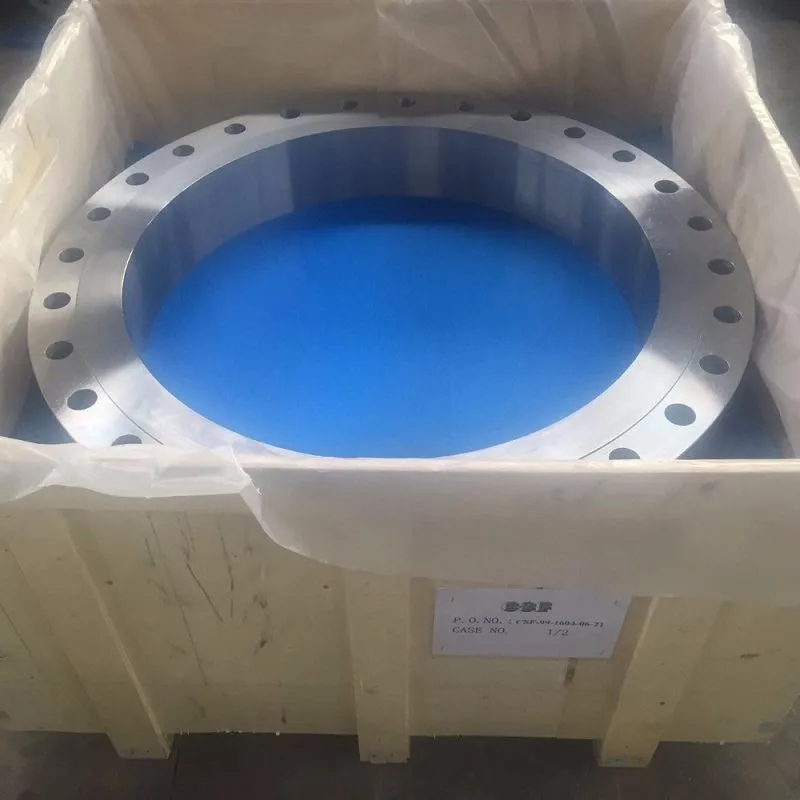
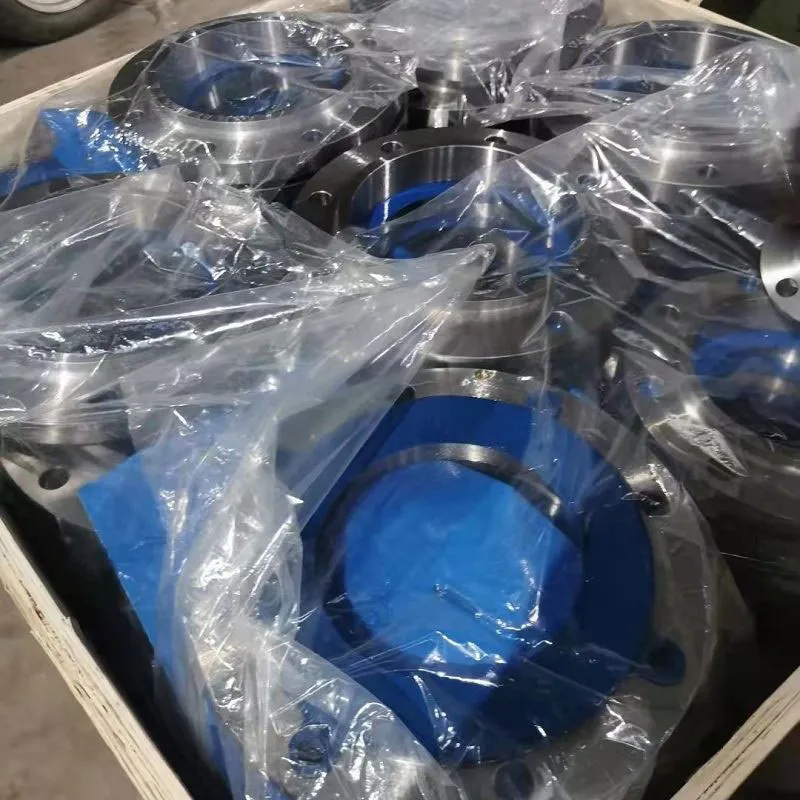
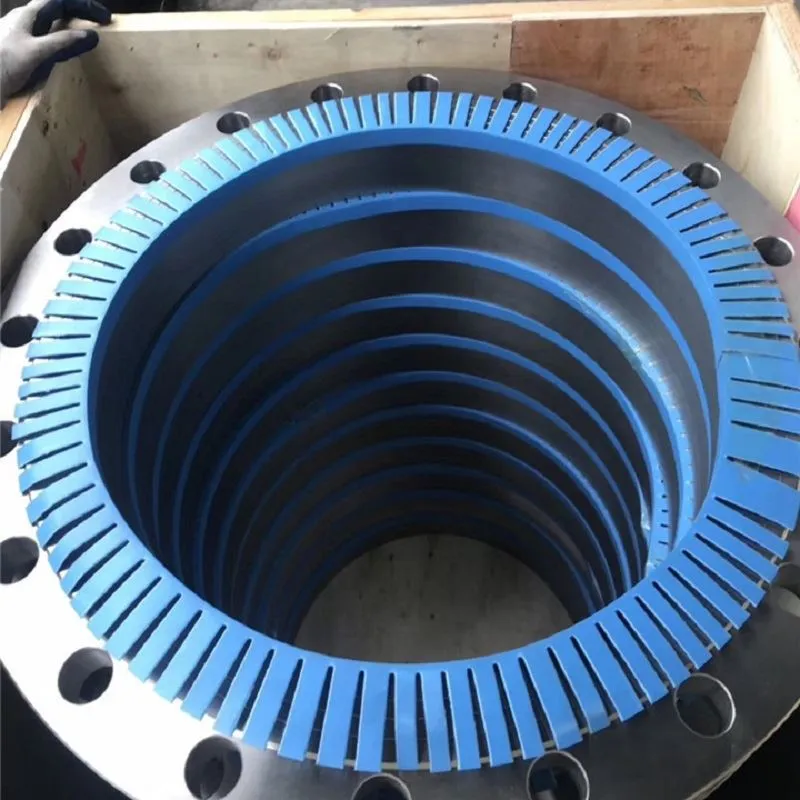
However, the search for a reliable partner is not limited only to the domestic market. In the context of the globalization of supply chains, more and more Russian companies are paying attention to trusted manufacturers from friendly countries who can ensure strict compliance with standards, including GOST. A striking example of this approach is cooperation with the companyShanxi Hongkai Forging Co., Ltd.. This professional forged flange manufacturer is based in Dingxiang County, Shanxi Province, a key industrial center for the forging industry in China. The company operates three of its own production sites, covering the full cycle: from primary forging to final packaging, which guarantees transparency of processes and consistency of quality.
Shanxi Hongkai Forging is of particular interest to projects where flexibility in standards is required. In addition to working according to international standards DIN and ANSI B16.5, the company produces products strictly according to specificationsGOST, which is critical for integration into existing Russian infrastructure facilities. Their range includes all major flange types - from butt welds to blanks and loose rings - in a wide range of nominal sizes (DN15 - DN4000). Having your own right to import-export operations allows you to establish direct supply channels without unnecessary intermediaries, and a multi-level quality control system (from input raw materials to physical and chemical tests) minimizes the risks of receiving defects. For customers seeking a balance between price and guaranteed compliance with drawings, such vertically integrated manufacturers become an important alternative to local players, especially for large bulk purchases.
It is also worth considering the logistics component. Flanges are a heavy product. Delivery of one ton from Yekaterinburg to Moscow can cost almost as much as the metal itself. Look for manufacturers closer to your facility. Russia has enough capacity from St. Petersburg to Vladivostok to fill the need locally, but international partners with well-established logistics, such as the Chinese factories in the Dingxiang region mentioned above, provide efficient delivery due to their proximity to railways and ports. Support from a reliable manufacturer - be it local or international - is a guarantee that in the event of a complaint you will be able to resolve the issue promptly.
Technical installation nuances and typical errors
Even a perfect flange can be damaged by improper installation. I have seen many cases where the tightness was broken not because of a defective product, but because of the “crooked hands” of the installers or ignorance of the technology. Let's look at the main mistakes that builders fall into.
The first mistake is overtightening the bolts. The desire to make something “to last forever” leads to workers using incredibly long levers to tighten the nuts. As a result, the studs are stretched beyond their yield point, and the flange itself is deformed, becoming concave or convex. The seal plane is broken and the gasket no longer holds pressure. Tightening must be done with a torque wrench, crosswise, in several passes. This is an axiom that, unfortunately, is often ignored.
The second problem is misalignment of the pipes. If two pipes that need to be connected by a flange are misaligned by even 2-3 mm, installers try to force them together with bolts. This creates enormous bending stress in the joint. During operation, especially during thermal expansion, this unit will become a weak link. Pipes must be laser leveled before installing flanges.
The third problem is the choice of gasket. Dozens of types of gaskets are produced to suit the dimensions of a steel flange for a 159 pipe: paronite, rubber, spiral wound, metal ring. Using a soft rubber gasket on a high pressure flange (PN 40) will cause it to squeeze out. Conversely, a hard metal gasket on an uneven surface of a cheap flange will not provide a seal. Always check the gasket type against the design documentation and the condition of the flange sealing surface.
Corrosion problem and protection
We must not forget about protection. Steel rusts, that's a fact. In aggressive environments or outdoors, flanges require coating. Most often, galvanizing or painting with epoxy compounds is used. But there's a catch. The thickness of the coating affects the dimensions of the threads and seating surfaces. If the flange is hot-dip galvanized, the zinc layer can be up to 100 microns. This means that the threads in the holes may become overgrown and the studs will not fit. Experienced installers know: after galvanizing, the threads must be driven with a tap. If you are accepting galvanized flanges, check that this procedure has been followed. Otherwise, you will spend hours on site cleaning every hole.
Alternatives and the future of standardization
The world does not stand still, and although GOST 2026 remains the foundation, new trends are penetrating the industry. Some modern projects are beginning to use flanges according to European DIN or American ANSI standards, especially if the equipment is imported. The dimensions of the flange for the 159 pipe in these systems may differ. For example, the outer diameter or location of holes may not coincide with our GOST. This creates a compatibility issue when repairing existing networks.
If you are faced with the need to connect a Russian flange and imported equipment, do not rely on “maybe”. Use adapters or order the production of special flanges according to the drawing. Yes, it is more expensive and takes longer, but it is the only way to guarantee reliability. In 2025, a number of large factories, including sites such as Shanxi Hongkai Forging, launched flexible production lines that allow small batches of custom flanges to be produced at a reasonable cost, strictly following customer-specific drawings. It's worth using.
The topic of composite materials and polymer flanges for certain media (chemistry, water) is also gaining popularity. They are lighter, do not rust, but have their own limitations on temperature and pressure. So far, for critical components of the oil and gas industry, steel remains the uncontested leader, but it is worth keeping an eye on new materials.
Conclusion: Your checklist before purchasing
To summarize this long analysis, I want to leave you with a simple algorithm of actions. When you are looking for the dimensions of a steel flange for 159 pipe, do not limit yourself to searching for pictures on the Internet. Act like a pro:
- Determine the exact operating pressure of your system (Py). All geometry depends on this.
- Request a drawing from the supplier showing all tolerances, not just general dimensions.
- Specify the steel grade. For the north - only frost-resistant alloys.
- Check for a valid certificate of conformity to GOST 2026 (or a current substitute), regardless of the country of origin of the product.
- Upon receipt of the batch, select 2-3 flanges at random and take a control measurement with a caliper. Pay special attention to the diameter of the bolt circle and the sealing plane.
- Don't skimp on fasteners and gaskets. A good flange with a bad gasket is a waste of money.
Remember that in our profession there are no trifles. The flange is the connecting link that holds the energy of the flow. The reliability of this link determines the safety of the entire enterprise. Choose trusted partners, demand quality and don’t be afraid to ask awkward questions to technologists. The market is complex now, but a competent approach will allow you to find the optimal solution in terms of both price and quality. Take care of your objects and nerves.
И последний совет на будущее: следите за обновлениями нормативной базы. ГОСТы могут изменяться, вводиться новые межгосударственные стандарты. То, что работало вчера, завтра может считаться устаревшим. Профессионализм инженера заключается в способности адаптироваться к изменениям, сохраняя при этом верность фундаментальным принципам безопасности. Оставайтесь в теме, проверяйте информацию и не доверяйте слепо красивым каталогам. Реальность, как мы выяснили, часто бывает сложнее и интереснее любых таблиц.