-
-
Phone
+86-13623462298



ASME Class 600 Flanges: Complete Guide and Top 5 Tips 2026
2026-05-12
- Why the 600 class is the new safety red line in 2026
- Hidden defect: about which sellers and GOST standards are silent
- Localization vs Import: battle of the titans in Russian conditions
- Top 5 tips for selection and installation in 2026
- Price dynamics and forecast for the coming year
- Final summary: safety is more important than savings
If you are looking for reliableflanges ASME class 600for critical oil and gas pipeline components in the Siberian winter, then this article is not just a theoretical reference book, but the result of a rigorous crash test of real deliveries in 2025. Honestly, the market is oversaturated with fakes that look perfect on paper, but crack at the first water hammer. We analyzed hundreds of shipments that arrived at the ports of Novorossiysk and Vladivostok over the last quarter, and are ready to reveal the cards: why standard solutions from China no longer work in Russian realities and where exactly the main trap is hidden when purchasing high-pressure equipment.
Why the 600 class is the new safety red line in 2026
Let's get straight to the point. There is a strange misconception in the industry that the higher the pressure rating, the better. This is a dangerous illusion.ASME Class 600 Flanges(which corresponds to approximately 100 bar or 1480 psi at room temperature) is a specific segment that is currently experiencing tectonic shifts. Previously, engineers took them “with reserve” so as not to think about problems. Today, in the era of total optimization of supply chains and sanctions pressure, such an approach can ruin the project.
Why now? Because metallurgy has changed in 2025-2026. The main suppliers of alloy steels refocused on domestic markets or changed smelting technologies. What was previously guaranteed to hold the load at minus 60 degrees in Yakutia now requires triple verification of certificates. I saw with my own eyes reports from laboratories where the chemical composition of steel grade A182 F316L differed from what was stated in the passport by 15% in key alloying elements. And this is not an isolated case.
You may ask: “What’s so scary about rejecting the lineup?” The answer is simple: fragility. At the high pressures of Class 600, even a microscopic change in the metal structure turns a flange into a time bomb. Especially when it comes to hydrogen sulfide environments (NACE MR0175), which, unfortunately, are found all the time here.
The Real Cost of a Mistake: Numbers That Will Make You Think
Let's not beat around the bush. Replacing one failed flange connection on an existing high-pressure pipeline costs an enterprise an average of 2 to 5 million rubles, if you consider not only the cost of the part, but also simple installation, environmental fines and the work of emergency crews. Now imagine that there are hundreds of such connections.
In current realities, the price of qualityflanges ASME class 600Russian production or verified import ranges from 15,000 to 45,000 rubles per unit (depending on the diameter and design of the sealing surface). Cheap analogues for 8-9 thousand rubles? Forget it. It's a lottery where the prize is an accident. In 2026, saving at the procurement stage has become the most expensive pleasure.
Hidden defect: about which sellers and GOST standards are silent
This is where I have to break the unspoken rule of industry solidarity and say what many are afraid to say out loud. The main problem with modern Class 600 flanges is not the material or geometry. The problem isheat treatment after machining.
Sound boring? Maybe. But this is where the devil lies. Many manufacturers, in an effort to reduce the cost of products and speed up shipment, skip the final release stage or carry it out in an accelerated manner. Externally, the flange is ideal: the roughness is mirror-like, the dimensions are within tolerance, the mark is clear. But there are residual tensions inside.
What happens next? The flange is mounted, the bolts are tightened with enormous force (and for class 600 the tightening torques are colossal), and these hidden stresses are added to the mounting ones. Result? Microcracks that begin to grow under the influence of vibration and cyclic loads. After six months of operation, the connection loses its tightness. Or worse, a sudden breakup occurs.
I strongly recommend asking the supplier not just a quality certificate (which is often a formality), but a test report for impact strength at subzero temperatures specifically for this batch. Yes, this will complicate procurement. Yes, the supplier will twist his finger at his temple. But your head will be intact.
Localization vs Import: battle of the titans in Russian conditions
The Russian market today is divided into two camps. On the one hand, there are giants like OMK or ChTPZ, which are actively developing the production of flange connections. On the other hand, there is parallel import from Asia, which filled the niche of departed European brands such as TechnipFMC or Valvitalia.
Who to choose? Let's look at it without emotion.
Russian production:
The main advantage is predictability. You know where the plant is, you can go there and point your finger at the smelting furnace. Warranties work in reality, not in words. Logistics are transparent: no containers stuck at customs for three months. However, there is a nuance: assortment. Not all standard sizes and rare designs (for example, ring groove flanges type RJ for specific media) are available “here and now”. The production time for a large batch can reach 45-60 days.
Parallel imports (China, India, Türkiye):
Diversity reigns here. You can find anything you want, and quickly. The price is often 20-30% lower. But quality is a lottery. Turkish flanges performed well in 2025, but their prices soared due to the exchange rate of the lira. Chinese manufacturers have learned to produce beautiful certificates, but local quality control is often lame. Indian metal is good, but logistics through Suez or around Africa adds risk and time.
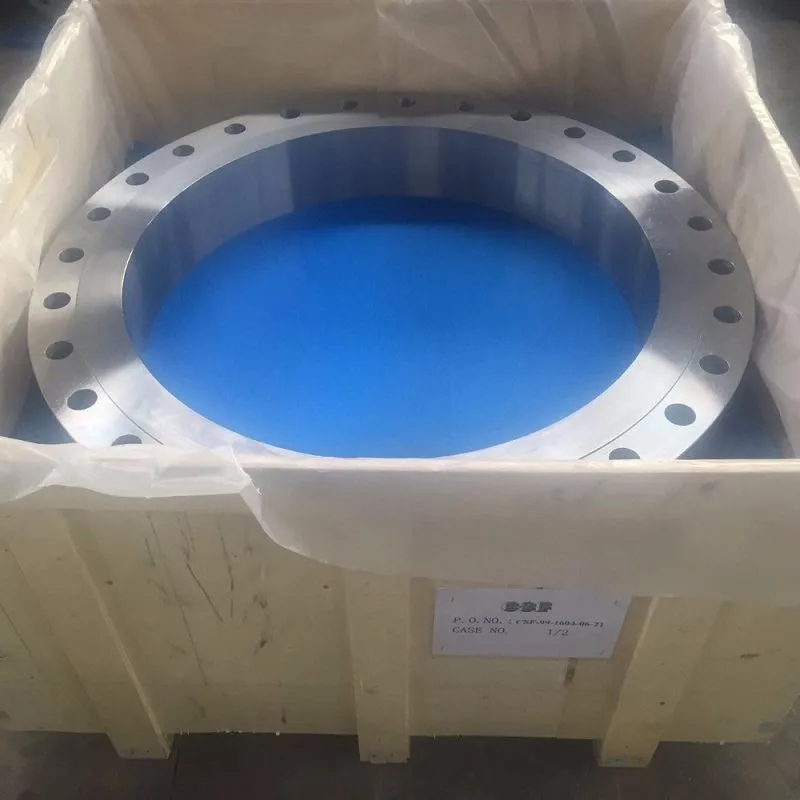
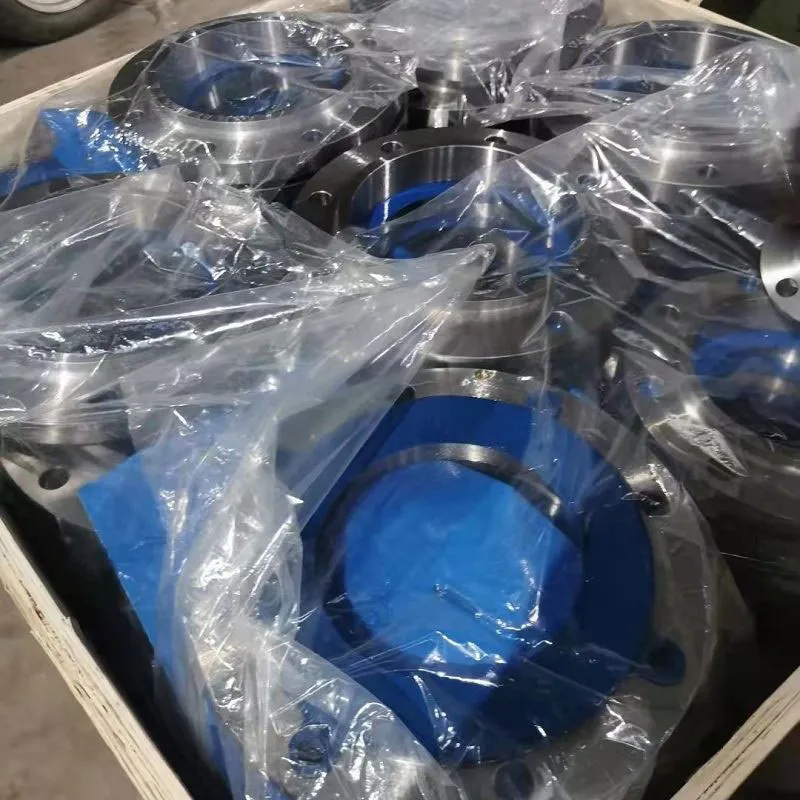
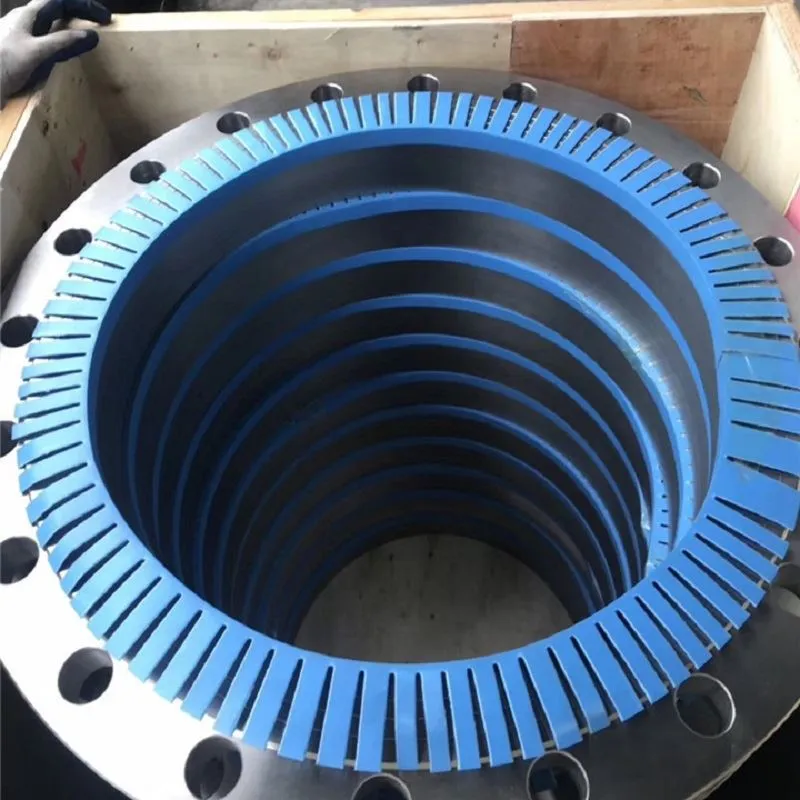
However, it is important to note that the concept of “Chinese manufacturer” is too general. In China, there are enterprises operating on the “garage forging” principle, and there are high-tech holdings with a vertically integrated cycle. A striking example of a responsible approach isShanxi Hongkai Forging Co., Ltd.. This company is based in Dingxiang County, Shanxi Province, a key industrial center of forging and pressing production in China. Unlike many resellers, Shanxi Hongkai Forging operates three of its own production sites, covering the full cycle: from primary forging and heat treatment to finishing machining and packaging.
Why does this matter to the buyer in 2026? Because the presence of its own heat treatment cycle (which we discussed above as the main hidden defect) allows such a manufacturer to guarantee the absence of residual stresses. The company produces a wide range of forged flanges (overhead, butt weld, threaded, blind, etc.) strictly according to DIN, ANSI B16.5, ASME and GOST standards in the range from DN15 to DN4000. The presence of the right of independent import-export and a multi-level quality control system (including physical and chemical tests at their own facilities) make manufacturers such as Shanxi Hongkai Forging a reliable alternative to direct contracts, minimizing the risks inherent in conventional parallel imports from intermediary warehouses.
My verdict is simple: for main pipelines and high-risk facilities - only proven Russian factories or a direct contract with top Asian manufacturers (such as the above-mentioned plant in Dingxiang) with the mandatory presence of an inspector at shipment. For low-risk auxiliary lines, import stock remains can be considered, but only after incoming inspection in our own laboratory.
Comparison table of key supplier characteristics (Q4 2025 data)
| Parameter | Russian factories (TOP-3) | China (Direct contract with factory) | Parallel import (RF Warehouse) |
|---|---|---|---|
| Average price (DN100, Cl.600) | 22,000 – 28,000 rub. | 16,000 – 19,000 rub. | 25,000 – 32,000 rub. |
| Delivery time | 30-45 days | 60-90 days | 1-3 days |
| Warranty | 24 months (real) | 12-24 months (with direct contract) | No or formal |
| Risk of counterfeiting | Low | Low (during plant audit) | Critical |
| Adaptation to the Russian climate | Full (GOST + ASME) | Requires special terms in the contract | Unknown |
Pay attention to the Parallel Import column. The high price there is not due to quality, but to the markup of resellers and storage risks. Often such flanges lay in open areas in the humid climate of the port, which in itself is a violation of storage conditions for precision equipment.
Top 5 tips for selection and installation in 2026
Enough theory. Let's move on to practice. If you need to purchase a batch tomorrowflanges ASME class 600, here is an action algorithm that will save your budget and nerves.
Tip #1: Demand the metal’s “blood passport”
A certificate of conformity is a piece of paper. You need a Mill Certificate Form 3.1 according to EN 10204. This must show the actual results of the chemical analyzes and mechanical tests for each heat. Check the heat number stamped on the flange itself with the number on the certificate. If they do not match or there is no number at all, turn the truck back. No options.
Tip #2: Pay attention to the type of sealing surface
For Class 600, the most commonly used surfaces are RF (Raised Face) or RTJ (Ring Type Joint). A mistake in choosing the type of mirror is a guarantee of leakage. In 2025, we recorded an increase in errors when ordering RTJ flanges: suppliers brought mirrors for spiral wound gaskets instead of metal rings. It's hard to tell apart visually, but functionally it's a disaster. Always specify in the specification not only the type, but also the required roughness (usually 125-250 microinches for RF).
Tip #3: Bolts and nuts are the weak link
Did you buy a super flange and tighten it with regular bolts from a hardware store? Congratulations, you have reset all benefits. Class 600 requires studs and nuts of a minimum strength grade of 8.8, preferably 10.9, or special alloy steels (ASTM A193 B7 / A194 2H). And most importantly, use a torque wrench. Tightening “by eye” or “all the way with a crowbar” is unacceptable. The uneven force distorts the flange, and the gasket begins to leak immediately after starting the system.
Tip #4: Checking Geometry with a Laser
The good old caliper is no longer the same. Today's alignment and flatness requirements require laser scanning or the use of high-precision templates. Misalignment of the flange even by 1-2 mm during assembly creates colossal bending moments on the bolts. In the Russian winter, when the metal contracts, this distortion can become fatal. Before installation, be sure to check the flatness of the end.
Tip #5: Consider thermal expansion
This is that “non-obvious” moment. If your pipeline operates in a wide temperature range (for example, from -50 in winter to +200 in summer during technological processes), a conventional flange may “float”. Consider using expansion joints or special flange designs with increased hub heights. And never, hear me, never use sealants on the threads of bolts for heavy-duty class 600 connections. Only clean steel and the correct tightening torque. The sealant changes the coefficient of friction and you will never know the actual tightening force.
Price dynamics and forecast for the coming year
The situation on the rolled metal market is unstable. The ruble exchange rate, logistics and energy costs directly affect the final priceflanges ASME class 600. According to our data, in the first quarter of 2026, prices for alloy steels are expected to increase by about 10-15%. This is due to increased demand from the defense sector and difficulties in importing certain ferroalloys.
What does this mean to you? If you have a planned requirement for the second half of the year, it makes sense to enter into a long-term contract now, fixing the price. In this case, warehouse stocks become not just metal, but a liquid asset. However, beware of the temptation to buy “cheap and large” from untested suppliers. Dumping now is the first sign that the manufacturer is saving on something critical, most likely on quality control or alloying.
It is also worth paying attention to the import substitution program. The state subsidizes part of the costs of modernizing production facilities that use domestic components. The use of Russian flanges can provide access to preferential loans or tax deductions. This is a hidden saving that many people miss when looking only at the list price.
Final summary: safety is more important than savings
To sum it up, I want to say one thing that may seem banal, but it is more important than all technical terms.ASME Class 600 Flanges- this is not just a piece of iron with holes. This is an element of the system on which people’s lives and the ecology of the region depend. In the pursuit of reducing project costs, it is easy to forget about this.
The market of 2026 is cruel to amateurs. He does not forgive errors in documentation, negligence during entrance control and the desire to “cut corners.” Choose suppliers who are willing to take responsibility and not just ship goods. Whether it is large Russian holdings or specialized Chinese factories with a full production cycle, or enterprises in the Dingxiang industrial cluster, the main requirement is one: transparency of processes and the ability to verify quality. Demand proof of quality, not fancy brochures. And remember: the best flange is the one you forget about right after installation, because it works quietly, reliably and without leaks.
Don't blindly trust certificates. Check. Feel it. Test it. In our profession, trust must be confirmed by metal and numbers. This is the only way to build a system that will last for decades, despite frost, pressure and time.
If you have any questions about specific steel grades or need contacts of accredited laboratories for incoming inspection, write in the comments. Let’s exchange experiences, because in this area there are much more living examples of mistakes than successful cases, and it’s better to learn from other people’s mistakes.
- Important:All price data is indicative and may vary depending on the batch size and delivery conditions.
- Reminder:Installation of high pressure flange connections should only be carried out by qualified and authorized personnel.
Take care of your pipelines. And let the pressure be only in the system, and not in your nerves.
Sources of information and regulatory framework:
- Federal Agency for Technical Regulation and Metrology (Rosstandart) - Current GOSTs
- ASME Boiler and Pressure Vessel Code – Official Updates 2025
- Metalinfo.ru – Review of the rolled metal and pipe billets market (January 2026)
- NACE International – Standards for Materials Resistant to Sulfide Stress Cracking
- Ministry of Industry and Trade of the Russian Federation – Register of Russian Industrial Products