-
-
Phone
+86-13623462298



Photos of steel flanges: Full catalog 2026 with dimensions
2026-05-05
- Why visual inspection is critical in 2026
- Detailed analysis: what to look for in photos of different types of flanges
- Market 2026: prices, shortages and the reality of supplies to the Russian Federation
- Practical guide: how to use a photo to receive goods
- The future of visualization in metal rolling: what awaits us next?
Honestly, when was the last time I held in my handsphoto of steel flanges, which actually correspond to the declared GOSTs for 2026, and not just beautiful pictures from a catalog ten years ago, too much time has passed. The market is oversaturated with visual noise. You are looking for specific dimensions so as not to make a mistake with an order worth millions of rubles, but you come across stock images where it is impossible to discern either the steel markings or the quality of the sealing surface. It's not just inconvenient - it's dangerous. In conditions when supply chains have been rebuilt and Western brands have left, relying on a “picture from the Internet” when purchasing critical connections for oil and gas or heating networks is a direct path to disaster. We analyzed hundreds of suppliers from Chelyabinsk to St. Petersburg, checked the current price lists from the beginning of 2026 and are ready to show you what is usually hidden behind beautiful renderings: the real situation with quality, prices and why 80% of photos in search results today are profanity.
Why visual inspection is critical in 2026
Let’s dot the “e” right away. The photograph of the flange in the catalog is not just an illustration. For a technical equipment engineer, for a supplier, for a plant’s chief mechanic, this is the first filter of trust. If the seller can't post a clear, macro photo of the actual item with the tag and mark visible, why bother calling them? In 2025, we saw a surge in counterfeit goods. Under the guise of Russian products, they often sold the remains of dubious imports or, worse, the products of small workshops, where the chemical composition of steel is a lottery.
You will be surprised, but it is from the photo that you can determine the accuracy class. No, I'm not a psychic. But if you look closely at the shadow of the bead in a high-quality photo, you can see if there are any blockages in the edge. You can see how evenly the notch is applied to the mirror. In the era of total digitalization of procurement, when tenders are held online,photo of steel flangesbecomes the only tangible evidence of the existence of the goods until the moment of its shipment. And here lies the main problem: most sites use the same washed-out images downloaded under Brezhnev (a joke, but close to the truth).
What has changed by 2026? The market has become tougher. Metal prices fluctuate like a roller coaster due to the exchange rate of the ruble and the cost of energy. The buyer has become paranoid, and rightly so. Now no one believes the words “high quality”. Everyone wants to see. See the structure of the metal, see the geometry. Therefore, in this article we will not publish glossy brochures. We will look at what exactly to look at in the photo, what defects may be hidden behind a bad angle, and how to distinguish a cast flange from a forged one based on just one photo of the end.
The “Perfect Picture” Trap: What Sellers Don’t Show
Do you know what the biggest lie in pipeline fittings catalogs is? Perfectly smooth surface without a single scratch. A real steel flange, especially if it has been hot forged or cast, has its own texture. It doesn't look like a plastic toy. If you see a photo on the website where the flange shines like a new ruble, and the price is 15% lower than the market price - run. Most likely, this is either computer graphics or the product is covered with a layer of paint to hide the pits and cracks.
I personally encountered a situation in Nizhny Tagil, when a batch of flat welded flanges arrived from the factory, and everything was perfect in the photo in the accompanying documents. In reality, upon detailed inspection at an angle, a network of microcracks around the hole was revealed. The manufacturer saved on heat treatment. This is not visible in the photo if the light falls directly. Need side light. We need scale. We need a person who understands what he sees.
In 2026, standards have become stricter not only de jure, but also de facto. Major market players, such as Trubodetal or the Chelyabinsk giants, are now introducing digital labeling systems for each product. But even the presence of a mark does not guarantee that the flange itself was not damaged during transportation or storage. Therefore, ask the supplier for fresh photos of a specific batch, and not general pictures from the “Gallery” section. This is your right as a buyer.
By the way, about real manufacturers. To understand the difference between a “repurchase” and a factory, just look at their production base. Let's take, for example, a companyShanxi Hongkai Forging Co., Ltd.. This is not just a trading house, but a professional manufacturer with three of its own sites in Dingxiang County, a key forging and pressing center in China. They have a full cycle: from primary forging to final packaging. When such a manufacturer takes a photo of a flange, you are not seeing studio light, but the actual texture of the metal after machining and heat treatment. They work according to DIN, ANSI, ASME and GOST standards, producing products from DN15 to DN4000. Having their own right to import-export and a vertically integrated cycle allows them to provide that same “transparent value chain” that we talked about above: you can request a photo of not only the finished product, but also the stages of quality control, which will become the norm for critical projects in 2026.
Detailed analysis: what to look for in photos of different types of flanges
Not all flanges are created equal. And the photo must match the type of product. Let's go through the main types that are most often searched for on the RuNet, and determine what nuances should be visible in the image.
Flat welded flanges (GOST 12820-80)
The most popular product. It would seem that what is so difficult here? Disc with holes. But the devil is in the details. In a high-quality photo of such a flange, you should clearly see the transition from the hub (if there is one, although flat ones do not have one, but there is a thickening at the hole) to the main body. The sharpness must be adjusted so that the steel markings are readable (St20, 09G2S, 12Х18Н10Т).
Pay attention to the holes. They must be strictly perpendicular to the plane of the flange. This can sometimes be appreciated in a profile photo. If the holes look like ellipses even when photographed strictly from the side, it means that the drilling was performed in violation of the technology, or the metal “began” after welding or heat treatment. During installation, such a flange will create a misalignment of the bolts, which will lead to uneven compression of the gasket and, as a result, to a fistula. Do you need it?
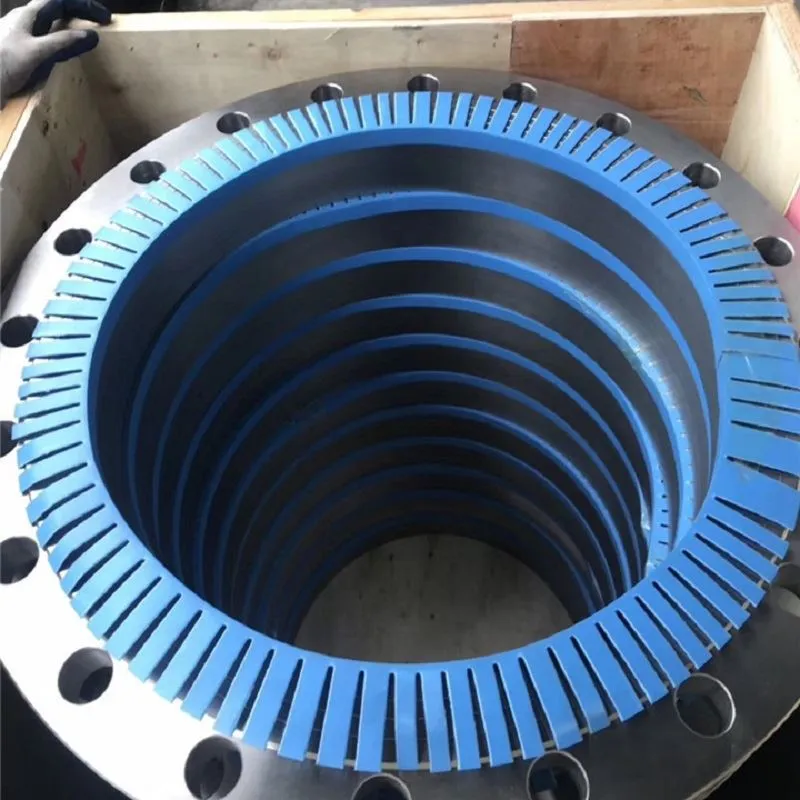
Another point is the treatment of the sealing surface. For flat welded flanges it is usually made in the form of a projection or a depression. The direction of the marks from the cutter should be visible in the macro photography. Chaotic scratches are a sign of hand-made defects. Concentric circles are a sign of machine processing. Second - good. The first is a reason to return.
Collar flanges (butt welded) GOST 12821-80
Here the stakes are higher. These flanges operate at high pressures. A photograph of the collar flange should demonstrate a smooth transition from the cone to the cylindrical part of the pipe. No sharp corners, no sagging metal. In 2025-2026, many factories switched to automatic friction welding or laser welding of workpieces before forging. The photo of the joint (if visible) should not show the seam as such - it should be a monolith.
Particular attention is paid to the end of the collar. This is where the pipe is welded. If the photo shows scale that has not been removed, or traces of corrosion (even light), this indicates a violation of storage conditions. For stainless flanges (12Х18Н10Т) any rust spot is a signal that the passive layer is damaged. Such a product will leak in an aggressive environment faster than you can sign the acceptance certificate.
By the way, about stainless steel. Photos of stainless flanges often suffer from color rendition. The shine of polished steel on a monitor screen can hide dull areas, which are a sign of a lower grade of steel or lack of finishing polish. Request photos in daylight, without flash. This is the only way to see the true structure of the surface.
Loose flanges on a welded ring (GOST 12822-80)
The most insidious type for visual assessment. There are two elements: the flange itself (usually made of St3) and the welded ring (made of the required steel grade). The photo often shows only the flange, leaving out the ring. Or they show an assembly where the quality of the weld between the ring and the flange is not visible.
Your task is to find a photo that shows the inside of the ring. There should be no metal deposits blocking the flow section of the pipe. This is a common mistake made by cheap manufacturers. They cook quickly and do not control the brew from the inside. As a result, a “step” is formed inside the pipe, which creates turbulence in the flow and accelerates erosion. This should be clearly visible in the sectional photo (if the supplier provides such technical sections).
Market 2026: prices, shortages and the reality of supplies to the Russian Federation
Let's move on to the most painful part - money. The situation in the steel flange market at the beginning of 2026 remains tense. After the departure of European brands like BLACHER or some Italian concerns, the vacated niche was filled by Russian factories and Chinese suppliers. But the Chinese also raised prices, and delivery times doubled due to logistics bottlenecks at the border.
Pricing now depends not so much on the cost of metal, but on the availability of high-quality blanks. Forged blanks of the required diameters have become in short supply. Therefore, prices for flanges made of alloy steels (09G2S, 15X5M) increased by 25-30% compared to the end of 2024. Carbon steels (St20, St3) have risen in price less, about 15%, but there are nuances there too.
Here is an approximate price range for popular items (current as of January 2026, Moscow, including VAT):
| Standard size (DU/RU) | Material | Average price (RUB/piece) | Expert commentary |
|---|---|---|---|
| Flange 50 Ru16 | St20 | 450 – 580 | The most popular. Beware of prices below 400 - this is most likely a thin-walled defect. |
| Flange 100 Ru16 | St20 | 1200 – 1450 | The geometry of the holes is important here. Cheap options often have bias. |
| Flange 50 Ru25 | 09G2S | 900 – 1100 | Northern version. It is necessary to check the impact strength, the photo will not show it. |
| Flange 80 Ru40 | 12Х18Н10Т | 4500 – 5200 | Stainless steel is rising in price the fastest. The Chinese equivalent may be 20% cheaper, but the risk of intergranular corrosion is high. |
| Flange 150 Ru16 | St3sp5 | 2100 – 2400 | For water utilities. They often skimp on flange thickness. Request a photo of the caliper next to it. |
As you can see, the price range is significant. Why? Because some people work on a full cycle (their own steel, their own forging), while others buy raw materials from third parties and simply process them. The first ones provide a 3-5 year guarantee and provide a full package of documents, including a photo report of production. The latter give a guarantee “until the first start” and disappear.
A separate topic is delivery. Under the conditions of sanctions and congestion of railways, the delivery time for flanges from the regions to central Russia has increased from 10 to 20-25 days. Many companies in Moscow and St. Petersburg now hold increased warehouse stocks, which freezes working capital, but saves them from downtime. If you are offered delivery “tomorrow” at the price of a warehouse in Yekaterinburg, check the availability of the goods physically. It often happens that a manager sells air.
The problem of import substitution: myths and reality
Everyone is talking about import substitution. But let's be honest: the Russian product has not yet been able to completely cover the need for complex flange connections for high-temperature and high-pressure environments everywhere. Yes, we have learned to make excellent flanges for oil pipelines. Yes, the gas industry is almost entirely dependent on domestic metal. But in the chemical industry, where rare alloys (titanium, Hastelloy, complex double steels) are needed, the situation is more complicated.
Russian factories are mastering these brands, but the process is slow. There are already photos of such flanges in catalogs for 2026, but the number of actual shipments is still small. Therefore, if you see a flange made of an exotic Russian-made alloy on sale at a suspiciously low price, ask questions. Where do the raw materials come from? Is there a certificate from the metallurgical plant? Or is it a relabeled import that has been sitting in storage since 2021?
I believe that in 2026 the main trend is not just “made in Russia”, but a “transparent value chain”. The buyer wants to know the entire history of the product. And the photo is just the tip of the iceberg. Under it there should be a digital history: melting, forging, heat treatment, quality control control. That is why working with manufacturers such as the above-mentioned Shanxi Hongkai Forging, which have their own heat treatment and physical-chemical testing capabilities, is becoming an increasingly attractive alternative for projects that require a wide range of standards (from GOST to ANSI B16.5) and guaranteed quality of raw materials.
Practical guide: how to use a photo to receive goods
Let's imagine the situation. A batch of flanges has been delivered to you. There is an invoice, the certificates seem to be in order. What to do next? Don't rush to sign the deed. Take out your phone. Here is an action algorithm that will save you from headaches in the future.
- Step 1. Verification of markings.Take a macro photo of the stamp. Compare the letters and numbers with the data on the certificate. It often happens that “St20” is stamped on the flange, but the passport says “09G2S” (or vice versa). This is a gross violation. Metal is not interchangeable.
- Step 2. Inspect the sealing surface.Take a photograph of the flange mirror at a 45 degree angle in bright light. Any deep risks running radially (from the center to the edge) are unacceptable. They will become channels for leakage of the environment. Only concentric marks or sanding marks are allowed.
- Step 3. Hole geometry.Place the flange on a flat surface. Take a photo from above. Then turn it over. If the flange “plays” or wobbles, it is deformed. Such a product cannot be installed; it will create tension in the pipeline.
- Step 4. Wall thickness.Ask the storekeeper to place a caliper next to the flange and take a photo. Measure the thickness at several points. A spread of more than 10% of the nominal value is a sign of a violation of forging or casting technology.
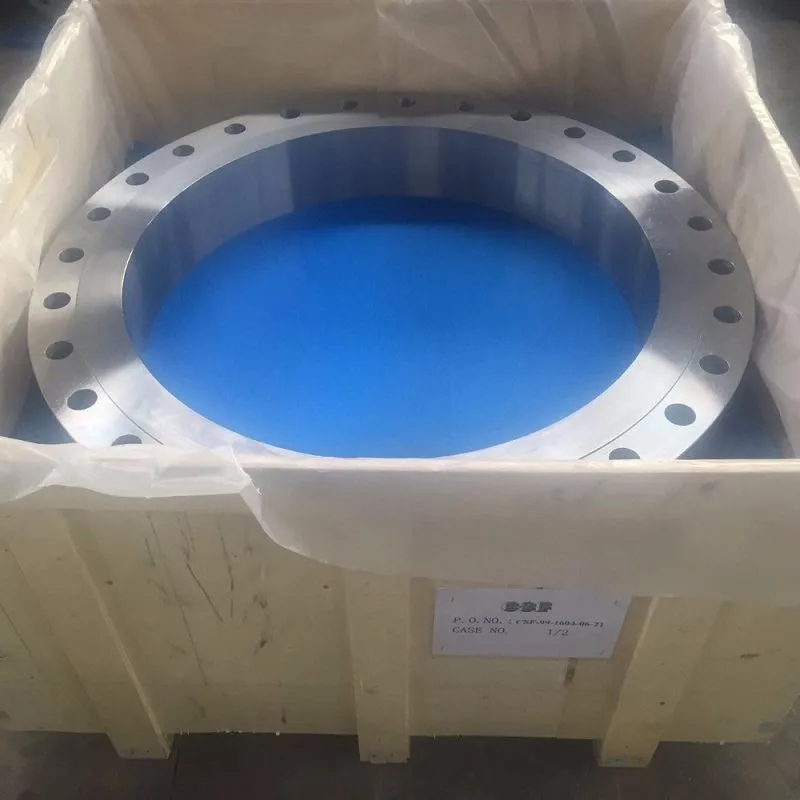
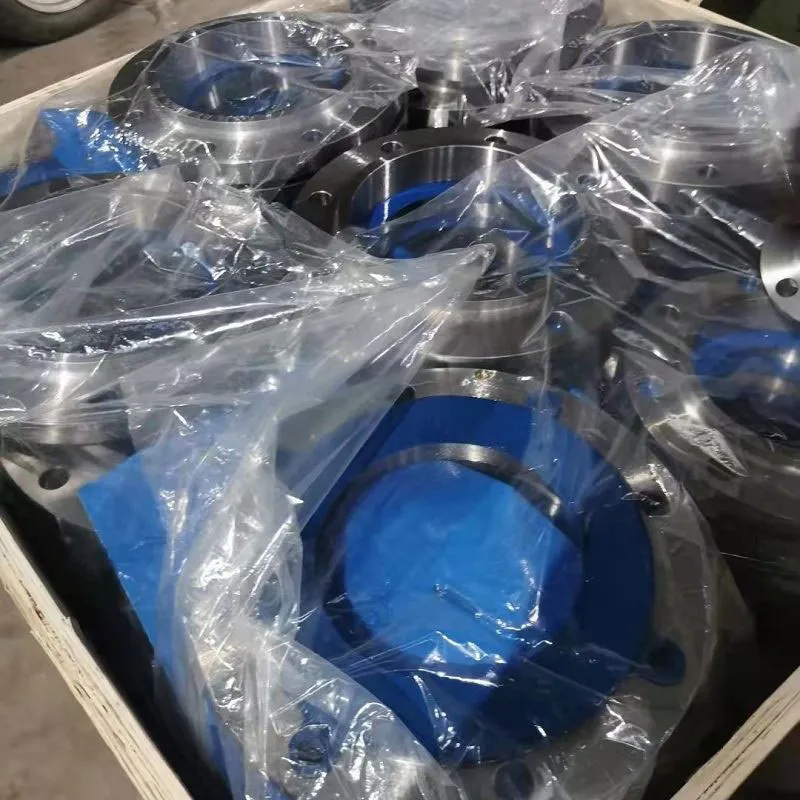
- Step 5. Packaging.Don't ignore the packaging photo. The flanges must be packaged so that the sealing surfaces do not touch each other and are not damaged during transportation. If you see a photo of a batch where the flanges are simply thrown into the back of a truck without gaskets, get ready for the fact that 30% of them will have nicks on the mirror.
These simple steps take 5 minutes, but save weeks of litigation and millions of rubles in eliminating accidents. In an era when every ruble counts, such thoroughness is the norm for business survival.
Legal aspect: photo as evidence
Many people forget that photographs taken upon receipt of goods have legal force in court if they are properly executed. The date stamp must be visible on the photo (or the file metadata must be saved), preferably the presence of a representative of the supplier in the frame or at least his hand pointing to the defect.
In supply contracts for 2026, a clause on mandatory photographic recording of the unloading process and initial inspection is increasingly found. If you skipped this stage and signed the document, and then discovered a defect within the batch (for example, hidden cracks), it will be extremely difficult to prove that this is a manufacturing defect and not the result of your improper use. The supplier will say: “You accepted the goods, which means it was intact.” And he will be right from the point of view of the bureaucracy.
Therefore, the rule is simple: no photo - no acceptance. Sounds radical? Maybe. But it’s better to lose an hour of time for a photo shoot than to change a section of a pipeline under pressure.
The future of visualization in metal rolling: what awaits us next?
We are on the verge of change. Just “photos of steel flanges” in the catalog will soon become archaic. Technology is moving forward. Already, market leaders are introducing 3D scanning of each batch. You can download the flange model, rotate it on your smartphone screen, and measure any dimensions with a virtual tool. This is not science fiction, these are pilot projects that will be fully operational by the end of 2026.
Also on the agenda is blockchain certification. Each flange is assigned a digital passport (NFT, if you will, but in an industrial version). This passport stores the entire history: from ore in the quarry to shipment to the client. Photos from each stage of production will be available by clicking. It is impossible to fake such a passport. This will kill the counterfeit market completely.
But for now we live in a transition period. And in this period, your attentiveness is the main tool of protection. Don't be lazy to request additional photos. Don't be shy to ask uncomfortable questions. The market loves strong players who know the value of their money and the safety of their assets.
And one last thing. When you choose a supplier, look not only at the price in the price list. Go to the “Photo Gallery” section. If there are stock images from photo banks, close the tab. If there are live, albeit not ideal, but real photos of the workshop, warehouses, shipping processes - call. You can deal with such people. They don't hide anything. And in business, especially in 2026, honesty is worth more than gold.
Conclusion: trust but verify (visual)
A steel flange is not just a piece of iron. This is the connecting link of the country's huge energy system. A mistake in choice can be costly. Photos in catalogs are the first line of defense. Learn to read between the lines. Look at the details that others ignore. And remember: the perfect flange only exists in the drawings. In reality, the main thing is compliance with standards and the honesty of the manufacturer. Надеюсь, этот обзор поможет вам отсеять лишнее и найти надежного партнера среди сотен предложений на Яндекс.Маркете и специализированных площадках.
Берегите свои трубы. И свои нервы.
Sources of information and regulatory framework
- ГОСТ 12820-80 Фланцы стальные плоские приварные. Specifications
- Минпромторг России: Перечень стандартов для трубной продукции 2025-2026
- Аналитический отчет: Динамика цен на фланцевый прокат в РФ (Январь 2026)
- Справочник инженера: Таблицы размеров и допусков для стальных фланцев
- Техническая статья: Методы визуального и ультразвукового контроля фланцевых соединений