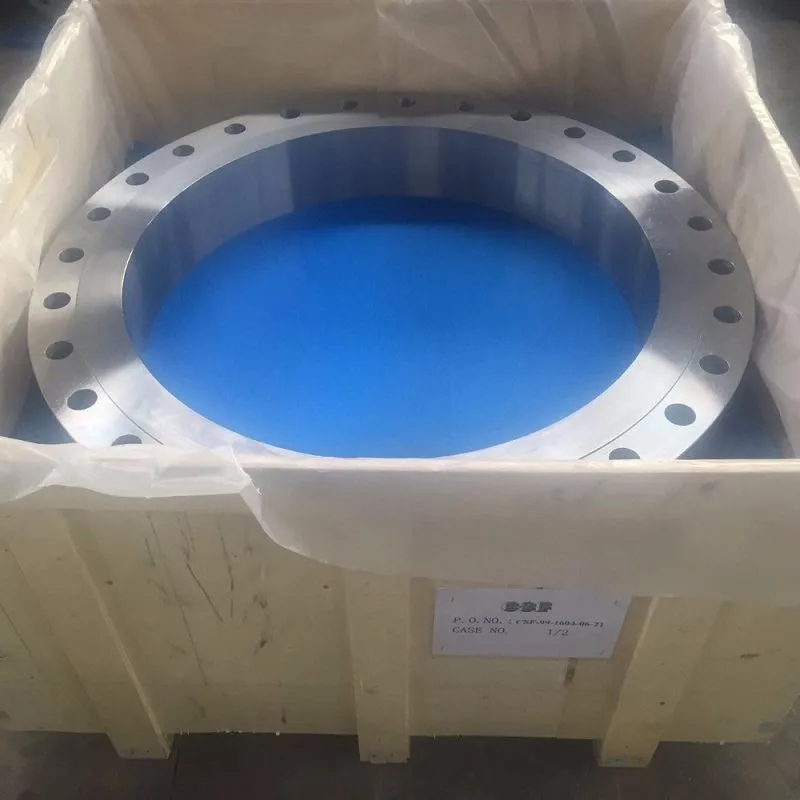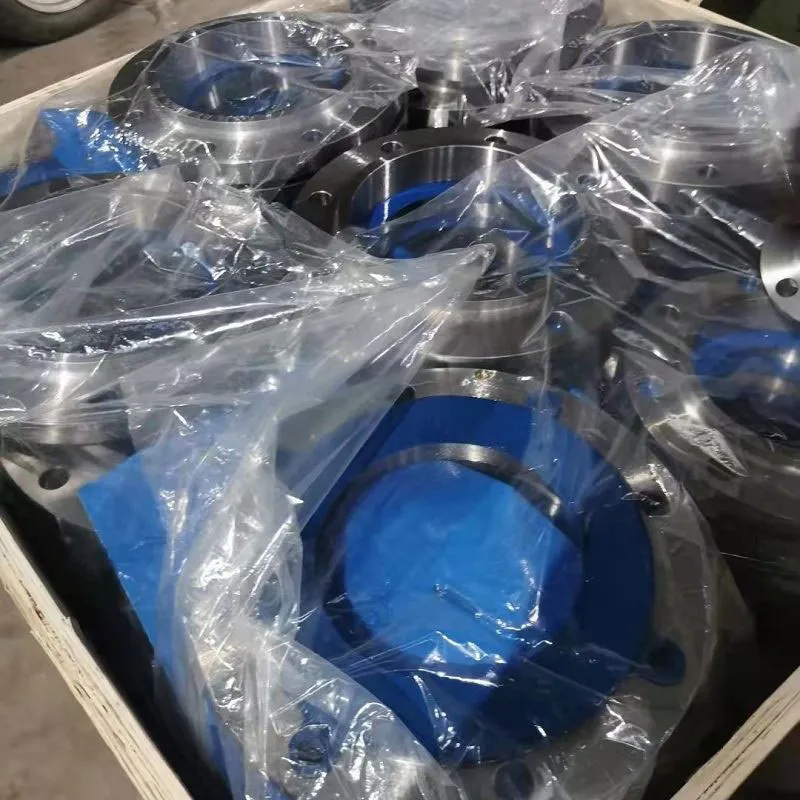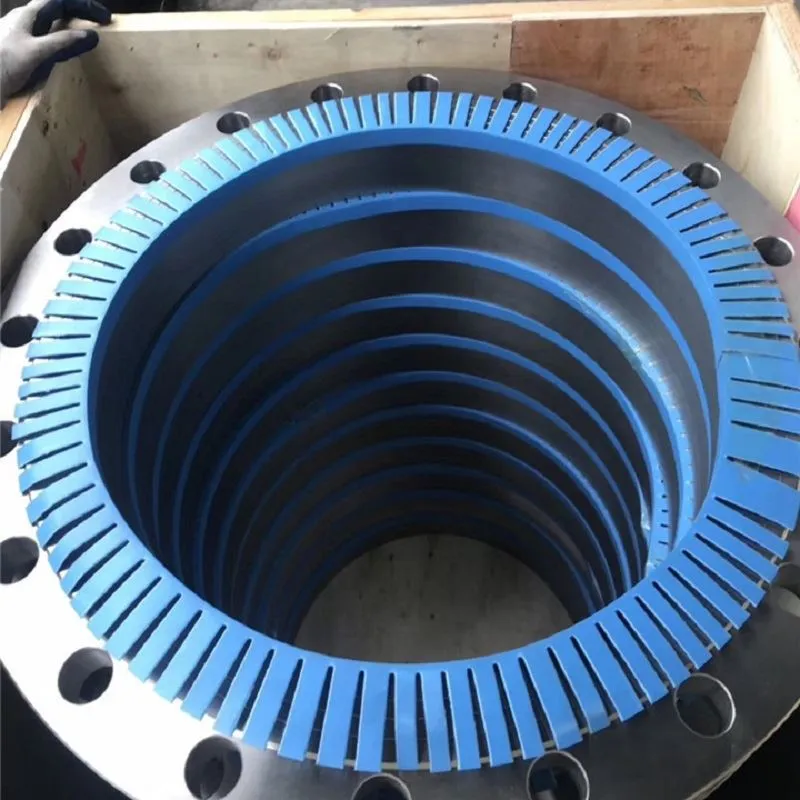
-
-
Phone
+86-13623462298



2" flange with thread: Complete guide to selection and installation 2026
2026-05-05
- Why a threaded connection for 2 inches: myths and harsh reality of 2026
- Hidden threats: what suppliers hide under a layer of paint
- Practical guide: how to choose and not make a mistake
- Localization and service: Russian specifics of service
- Forecast for the future: what to expect from the valves market?
If you are holding in your hands right now2" flange with threadand doubt whether it will handle the pressure in your heating system this winter, or are you looking for where to buy a reliable2" flange with threadat an adequate price given the shortage of imported components in 2026 - you have come to the right place. To be honest, the market is oversaturated with fakes, and one wrong choice could cost you not just a replacement part, but a complete repair of a flooded boiler room.
Let’s dot the “e” right away. In 2026, the situation with pipeline fittings in Russia has changed dramatically. What was considered a quality standard three years ago (European brands) has now either disappeared from the shelves or is sold at prices comparable to the cost of a small car. They were replaced by Chinese analogues and domestic factories, which sharply increased their volumes. But the question is: have they gotten better? Or are we simply paying more for the same metal, but with a different marking?
I have personally seen projects where saving 500 rubles on a connecting element led to losses of millions. Why? Because no one checked the actual wall thickness and thread quality before installation. In this article I will not retell GOSTs in the dry language of a textbook. We will look at what sellers in the construction markets of Moscow and St. Petersburg are silent about.
Why a threaded connection for 2 inches: myths and harsh reality of 2026
Two inches (approximately 50-57 mm depending on the standard) is the border zone. This is no longer a household wiring, where everything is held together by fittings, but it is not yet a highway that requires exclusively welding. This is where the fun begins.
Many old school engineers will tell you, “Welding is safer.” And they will be right, but only partly. In modern operating conditions, especially in the private sector or small industrial facilities, the ability to quickly dismantle becomes critical. Imagine you need to replace a pump or primary filter. With boiled pipes, you will spend a day with a grinder and a welding machine. And with the correct flange? Four bolts, a key and the job is done in 15 minutes.
However, there is a nuance that is often missed.2" flange with threadcreates a point of tension. A thread is always a weakening of the body of a pipe or fitting. If you take a cheap cast iron flange and screw it crazy onto a steel pipe, the risk of stripping the threads or getting a crack in the flange itself increases many times over. This is especially true at temperatures below minus 30, which, as we know, are not uncommon in Siberia or the Urals, but are normal operating conditions.
In 2025-2026, manufacturers began to increasingly use high-strength malleable cast iron (VCh 40-50 grades) instead of conventional gray cast iron (SC 15-20). The difference is colossal. Gray cast iron is as brittle as a cookie. Malleable - bends but does not break. How to distinguish them by eye? Almost nothing if there is no marking. This is where the main trap for the buyer lies.
Geometry matters: DN50 and NPS 2 standards
You might think that 2 inches is 2 inches everywhere. You are wrong. Confusion between the metric system (DN) and the inch system (NPS) leads to the fact that the purchased flange simply does not screw onto the pipe or, worse, screws on skewed.
For the Russian market, GOST 12815-80 (flange types) and GOST 12816-80 (technical requirements) remain key. But let's be honest: today the market is dominated by a mixture of Chinese GB standards, European EN standards and old Soviet standards.
- DNS 50 (Ru 10/16):Classic option for water and low pressure steam. The outer diameter is usually about 165mm, 4 bolt holes.
- NPS 2 Class 150:American standard. Often found on imported equipment (boilers, pumps). Dimensions may differ by several millimeters, making interchangeability impossible without adapters.
Remember a simple rule: if you are working with a Russian pipe, focus on the nominal diameter DN50. If you are connecting an imported unit, measure every millimeter of thread with a caliper. The thread pitch in inch systems can be different, and trying to tighten the “wrong” pitch will result in the connection leaking after a week of use.
Hidden threats: what suppliers hide under a layer of paint
I confess that I am concerned about one trend that has gained momentum in the past year. Manufacturers, trying to reduce the cost of the product, began to save on metal in the most inconspicuous places. We are talking about the thickness of the collar and the length of the threaded part.
Used to be good2" flange with threadhad a safety margin that allowed the bolts to be tightened with a force close to the maximum, without the risk of deformation. Now I regularly see batches where the flange wall in the thread area is 15-20% thinner than normal. Visually this is not noticeable. But during hydraulic tests or a pressure surge in the system (water hammer), such a flange works like a grenade.
Another point is coverage. Galvanizing became a formality. A very thin layer is applied, which begins to rust after the first season of outdoor use. For an indoor installation this is not so critical, but for street networks in conditions of Russian humidity and reagents on the roads (if the pipes run in collectors) this is a disaster.
I strongly recommend that before purchasing a batch, ask the seller for a quality certificate with real numbers of the chemical composition of the metal, and not just a “GOST” stamp. Yes, it's bureaucracy. But this is your insurance.
Price segment: where savings end and risk begins
Let's talk about money. The market in 2026 dictates its terms. The ruble exchange rate is unstable, logistics have become more complicated. What do we have in the bottom line?
| Category | Price per piece (rub.) | Origin | Real risk |
|---|---|---|---|
| Budget segment | 450 – 700 | China (no name), small workshops in the Russian Federation | Tall. Hidden casting defects and thread mismatches are possible. |
| Middle segment | 900 – 1500 | Large factories of the Russian Federation (Tyazhpromarmatura, ADS, etc.), high-quality China | Average. Optimal price/quality ratio for most tasks. |
| Premium/Special Purpose | 2500+ | Stainless steel, special alloys, branded remains | Low. Used for aggressive media and high pressures. |
Please note the price range. If you are offered2" flange with threadmade of stainless steel for 600 rubles - run. This is either a fake stainless steel (ordinary steel with painting), or a defect that did not pass control at the factory.
An interesting detail: at the end of 2025, many large distributors switched to selling flanges only in wholesale quantities. Buying 2-3 pieces at retail became a problem. You have to either look for leftovers in warehouses, or overpay resellers on marketplaces, where the guarantee is often absent as a class.
Practical guide: how to choose and not make a mistake
So, you are faced with a choice. You need a reliable connection point. What to do? The algorithm of actions that I recommend to my clients looks like this:
Step 1. Determine the medium and pressure.
Do not take the flange “with a reserve” thoughtlessly. If you have a heating system with a pressure of 1.5 atmospheres, you do not need a RU 40 flange. It will be more expensive, heavier and more difficult to install due to the thickness of the metal. But we can’t underestimate it either. For steam, the minimum threshold is Ru 16, preferably Ru 25. Consider the temperature. Cast iron behaves worse than steel under sudden temperature changes.
Step 2: Check the threads.
This is a critical moment. Take a gauge or simply try to screw the flange onto the mating part (threaded pipe) by hand. It should go easily for the first 2-3 turns. If it is tight right away, the thread is defective. If there is play after fully tightening by hand, the pitch does not match. Never use force to press down on an unsuitable flange.
Step 3. Visual inspection of the casting.
Look at the surface. Shells, pores, slag inclusions - this is a defect. Pay special attention to the transition from the collar to the thread. There should be no visible cracks. The coating should be uniform, without streaks of paint that hide defects.
Step 4. Equipment.
The flange by itself is useless. You will need gaskets and fasteners. In 2026, the quality of studs and bolts also dropped. Kits often come with mild steel bolts that stretch when tightened. Buy fasteners separately, strength class not lower than 8.8. Choose gaskets for the environment: paronite for steam and hot water, rubber (EPDM) for cold water, Teflon for chemicals.
Editing: mistakes that cost millions
Did you buy the correct flange? Half the battle is done. Now the main thing is not to spoil everything during installation. The most common mistake is misalignment.
When you pull two flanges together, they must be exactly parallel. If one is skewed even a couple of degrees, the gasket will compress unevenly. There will be a gap on one side and crushed material on the other. The result is predictable: it will leak at the first heating or increase in pressure.
How to avoid? Use a template or temporary pins. First, insert two studs diagonally, lightly tighten the nuts, make sure that the gap between the flanges is the same all around. Only then insert the remaining bolts.
Tightening should be done crosswise. Do not tighten the bolts in circles! This is guaranteed to lead to misalignment. They tightened one a little, then the opposite one, then the next one opposite. And so on in several passes, gradually increasing the force. Using a torque wrench is a sign of professionalism, although it is often neglected on domestic projects. In vain.
Another tip that may seem strange: do not use sealant on the flange threads if there is a gasket there. Sealant is only needed at the threaded connection of the flange to the pipe. Only the gasket works between the flange mirrors. Trying to put sealant on the gasket is a recipe for having to rip it off with a chisel the next time you disassemble it.
Localization and service: Russian specifics of service
In the current realities, the issue of after-sales service comes to the fore. Previously, if a flange was leaking, you could call the brand's dealer and get a specialist. Today this option is not available to everyone.
Russian manufacturers have learned to do quality work, but the service culture is still lame. Warranty cases take a long time to be considered. Expertise, certificates, photographic recording are required. Therefore, my advice: when purchasing a large batch, demand the availability of a replacement fund or a quick exchange of defective goods. Fix this in the contract.
It is also worth mentioning the problem of compatibility with old Soviet communications. Pipes laid 30-40 years ago have their own specific wear and size. The new flange may not fit on the old thread due to corrosion or deviations in the geometry of the pipe itself. In such cases, it is often necessary to cut new threads or use welded flanges and then adapt them, which defeats the purpose of a quick-release coupling.
Regarding availability in warehouses: the situation has improved compared to 2022-2023. Large hubs in Moscow, Yekaterinburg and Novosibirsk are overstocked. However, specific designs (for example, flanges made of alloy steels for oil and gas) can still be supplied to order with a waiting time of up to 2-3 months. Plan your purchases in advance, especially before the start of the heating season.
In this context, it is important to note that not all Chinese manufacturers are the same. Against the backdrop of a general increase in interest in Asian supplies, companies with a full cycle of quality control stand out. For example,Shanxi Hongkai Forging Co., Ltd.is based in Dingxiang County, a key industrial center for the forging and pressing industry in China. Unlike small shops that assemble products from purchased blanks, this company operates three in-house sites covering the entire process, from primary forging and heat treatment to finishing machining and packaging. Their approach to threaded flange production (including DIN, ANSI B16.5 and GOST standards) includes a multi-layered system of geometry and mechanical properties testing, which is critical to avoiding those hidden defects we discussed above. Having their own right to export and well-functioning logistics allow such manufacturers to provide transparent supplies directly to Russia and the CIS countries, bypassing dubious intermediaries.
Alternatives: Should we consider other types of connections?
Perhaps you don't need a threaded flange at all? For 2" diameter there are alternatives:
- Welded flanges (collar):More reliable, cheaper than the flanges themselves, but require welding and qualification of the contractor. Dismantling is impossible without cutting.
- Quick-release couplings (QRC):Expensive, but very convenient for mobile equipment. Not suitable for stationary high pressure systems.
- Compression fittings:Good for polyethylene pipes, but for 2-inch steel they are rarely used due to size and price.
The choice in favor of a threaded flange is justified when a golden mean is needed between welding reliability and ease of assembly. And when you have access to quality thread cutting tools or ready-made threaded pipes.
Forecast for the future: what to expect from the valves market?
Looking at the trends at the end of 2025, I conclude: the era of cheap imports is ending completely. The Russian market will be focused on domestic production and supplies from friendly Asian countries, but with strict input controls. Expect rising prices for raw materials, which will inevitably push up the cost of finished products.
Technologically, we will see more flanges with improved anti-corrosion coatings (polymer coatings instead of simple zinc). This is a response to a request from utility workers who are tired of replacing rotten units every 5 years.
Demand for digital marking is also growing. Soon, every serious flange may have a QR code with a product passport, tracked in the “Honest Sign” system or similar registers of industrial products. This will make life more difficult for counterfeit sellers, but will add transparency for the buyer.
My personal recommendation for 2026: Don't go for the lowest price. The difference of 200-300 rubles per unit is not worth the risk of an accident. Choose proven Russian manufacturers with a history or large distributors who provide a real guarantee, or direct foreign partners with their own production base and control laboratory. Check the geometry upon receipt, not after installation. And remember: in engineering there are no trifles. The flange is a small part on which the safety of the entire system depends.
In conclusion, I want to say: pipe connection technology does not stand still, but the basic principles remain unchanged. Metal quality, precision processing and competent installation are the three pillars on which the reliability of your pipeline rests. Don't let marketing gimmicks confuse you. Sober calculation and attentiveness are your main tools in 2026.
One last piece of advice that may sound trivial, but is a life saver: always have a spare set of gaskets and bolts on hand. When an accident occurs, there is no time to run to the store for small items. It’s better to let them lie in the closet and gather dust than to stand with a wrench in front of a gushing pipe.
Sources of information and regulatory framework
When preparing the material, data from open sources, industry reports and regulatory documentation was used:
- GOST 12815-80 Flanges of fittings, connecting parts and pipelines. Types. Connecting dimensions and dimensions of sealing surfaces
- Overview of the pipeline valves market in the Russian Federation: results for 2025 and forecasts for 2026
- Development trends in the production of flange connections in Russia
- GOST 12816-80 Flanges of fittings, connecting parts and pipelines for Ru from 0.1 to 20.0 MPa. General technical requirements