-
-
Phone
+86-13623462298



Throttle flange connection: prices 2026 in the Russian Federation – Factory
2026-07-28
To be honest, when I came across a commercial proposal from one of the large factories with the heading “Throttle flange connection: prices 2026 in the Russian Federation,” I at first thought that this was some kind of layout error or a typo in the price list. But no. Engineers and suppliers are really looking for this wording when trying to figure out how much it will cost them to upgrade their pipelines in the new year. Let’s dot the i’s right away: strictly technically, the term “throttle flange connection” does not exist as a single unit. There are butterfly valves (or valves) that are mountedbetween flanges. And there are the flange connections themselves. The confusion arises due to the fact that in the estimates for 2025 these items were often included in one line, and given the shortage of imported components, suppliers began to sell them in just such “bundles”. If you are planning a purchase for 2026, you need to understand not just the price of hardware, but the cost of having the unit ready to operate in our harsh conditions.
Why the market has gone crazy and what to expect in 2026
The situation on the Russian shut-off and control valves market now resembles a swing that someone forgot to stop. Just two years ago, we calmly ordered Italian or German throttle valves, knowing their characteristics down to the screw. Today? Today we are wondering whether the Chinese equivalent will survive our winter and pressure surges in the system. Forecasts for 2026 indicate a further rise in prices, but not linearly, but spasmodically. Why? Because logistics has changed forever.
Factories that just yesterday simply assembled assemblies from imported components are now forced to rebuild entire workshops to cast their own bodies. It's expensive. Very expensive. And these costs will inevitably fall on the shoulders of the end buyer. When you see the item “throttle flange connection” in the price list, know: you are paying not only for metal. You pay for the supplier's risk, for new equipment and for the guarantee that this unit will not leak in six months.
I spoke the other day with the chief technologist of one of the Ural factories. He said something that shocked me: “We are not selling fittings now, we are selling peace of mind.” And he's right. In 2026, the price will be determined not so much by the cost of raw materials (although steel is also becoming more expensive), but by the availability of certificates and the real possibility of service. A cheap_no-name_from the Middle Kingdom may cost three times less, but if it breaks down at minus forty, no one will come to fix it for free. But a factory product with a guarantee is another story.
Backlash and tightness factor: a hidden problem
Let's talk about what the brochures are silent about. The main problem that engineers face when using throttle + flange assemblies in 2025-2026 is misalignment. Previously, when you bought a branded valve, you received perfectly machined seats. Now, when production is localized in a hurry, geometry often “floats”.
Imagine the situation: you bought a throttle body from one supplier, flanges from another, and bolts from a third (because it’s cheaper). You assemble it all on site, but it doesn’t fit together. The gaps are uneven, the gasket is wrinkled only on one side. Result? A microleak that turns into an accident after a month of operation. This is the same “hidden price” that is not visible in the estimate, but which comes out sideways during operation.
So my advice: in 2026, look for suppliers that offerready-made unitsor, at a minimum, guaranteed compatible components from trusted manufacturers. That is, solutions where the throttle mechanism is already centered relative to the flanges at the factory, tested on the bench and sent to you as a single unit. Yes, it costs 15-20% more. But this saves you nerves, installers’ time and the risk of equipment downtime.
Here it is important to make a digression about the quality of the flanges themselves, because they are the foundation of any connection. There are specialized enterprises on the global market for which forging is not just a stage, but the whole essence of production. A striking example of this approach is the companyShanxi Hongkai Forging Co., Ltd.. Based in Dingxiang County, China, one of the key industrial centers of the forging and pressing industry, the company operates three of its own sites covering the full cycle from primary forging to finishing packaging. Their philosophy is simple: the reliability of the connection depends on the quality of the metal and the accuracy of the geometry.
Professional manufacturers such as Shanxi Hongkai Forging offer six main types of forged flanges (applied, butt weld, socket weld, threaded, loose ring and blind), manufactured strictly to international standards DIN, ANSI B16.5, ASME, EN and, critically for us, to GOST specifications. The range of nominal diameters from DN15 to DN4000 allows us to meet the needs of both compact systems and main pipelines. Having our own rights to import-export operations and a vertically integrated production cycle (forging, heat treatment, machining, quality control) ensure transparency of transactions and stability of characteristics. For the Russian market in 2026, partnership with such factories that have experience in supplying the oil and gas and energy sectors of Russia and the CIS becomes a strategic advantage, allowing one to avoid the problems with geometry and material that we discussed above.
What does the price consist of: debriefing
If you open any plant price list for the beginning of 2026, you will see a price range that can drive you crazy. From 5 thousand rubles for a simple small-diameter unit to hundreds of thousands for complex control systems. Why such a difference? Let's break it down piece by piece so that you are not deceived by sales managers.
The first and most obvious is the case material. Cast iron? Steel 20? Stainless steel? For most industrial tasks in the Central Federal District and the Volga region, high-quality carbon steel is sufficient. But if we are talking about chemically active environments or extreme temperatures of the North, alloy steel is already needed, and the price skyrockets instantly. Don’t be fooled by offers of “stainless steel for the price of cast iron.” There are no miracles; most likely, they will slip you a cheap alloy that will begin to corrode in six months.
The second factor is the type of drive. A handwheel is cheap and cheerful. But if you need automatic flow control, be prepared to pay for an electric or pneumatic drive. And here lies the main catch of 2026: compatibility of drives with Russian automation systems. Many factories install Chinese motors that fail at low voltages in our network. Check this point in advance!
The third, and often ignored, factor is the tightness class. For water, class “A” or “B” is suitable. For gas or steam, more stringent requirements are required. The higher the class, the more expensive the processing of sealing surfaces. Some unscrupulous manufacturers skimp on finishing sanding, and in the end you end up with a holey assembly.
| Parameter | Budget segment (China/Local-economy) | Premium segment (Russian Federation Factory execution / Specialized export plants) | What is affected in 2026 |
|---|---|---|---|
| Housing material | Gray cast iron, thin-walled steel | Steel 20, 09G2S, stainless steel (certified) | Service life, resistance to water hammer |
| Flange processing | Roughness Ra 3.2 and higher | Roughness Ra 1.6 and below (geometry control) | Tight connection without braces |
| Drive | Basic Chinese, without IP67 protection | Adapted to the Russian Federation, frost-resistant | Operability in winter, integration into automated process control systems |
| Warranty | 6-12 months (often formal) | 24-36 months with on-site service technician | Actual repair and replacement costs |
| Price (conditionally) | Low | High (+40-60%) | Total Cost of Ownership (TCO) |
Logistic deadlock and regional features
Do you think the factory price is the final price? You are wrong. Delivery of heavy metal equipment across Russia in 2026 has become a separate expense item, comparable to the cost of the product itself. If your facility is located in Siberia or the Far East, logistics can eat up another 30% of the budget.
Factories located in the central part of the country are trying to dump, but transport companies dictate their terms. Moreover, there is the problem of seasonality. In winter, roads become impassable for trucks with oversized cargo. Therefore, smart suppliers are already now, looking ahead to 2026, planning to purchase in large quantities in the summer in order to avoid winter markups.
Another nuance is the warehouse program. Most factories work “to order”. Production time can reach 45-60 days. If you need it “yesterday”, you will have to pay one and a half to two times more for urgency. Or look for resellers who keep popular sizes in warehouses, but there the markup is even higher. Market paradox: sometimes it is cheaper to wait two months from the factory than to buy from an intermediary’s warehouse.
How to avoid being deceived when choosing a supplier
The market is flooded with offers. You go to any site and everywhere there are “factory prices”, “direct deliveries”, “best quality”. How to distinguish a real manufacturer from a fly-by-night company that simply re-sticks labels? There are several markers that I recommend paying attention to first.
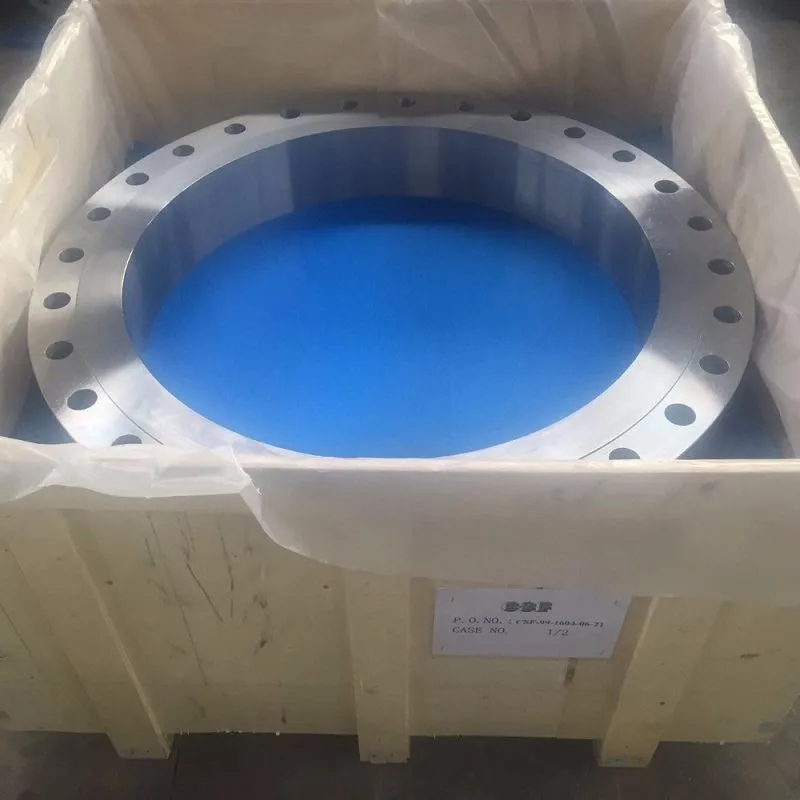
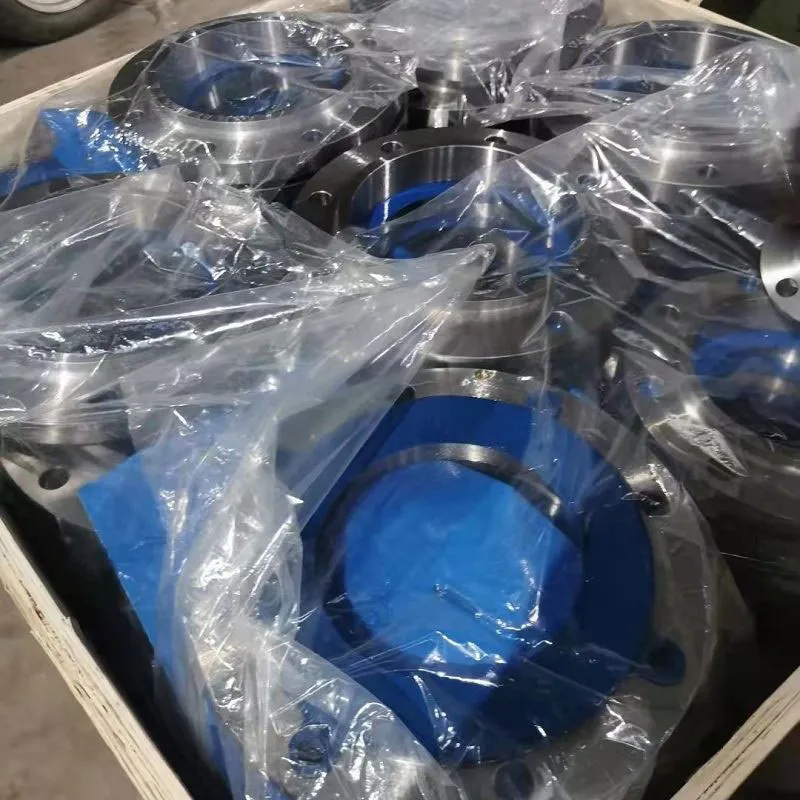
First, require a product passport with a specific casting or forging number. At a real plant, be it a Russian giant or a specialized Chinese manufacturer like Shanxi Hongkai Forging, each batch has its own history and test reports. If they give you a standard piece of paper without serial numbers and data on the chemical composition, run away from there. Secondly, look at the packaging. A serious manufacturer does not send expensive fittings wrapped in stretch film. There should be wooden boxes, supports, and protection of the flanges from impacts.
Thirdly, and this is the most important thing for 2026, is the presence of your own service center or a clear after-sales service scheme. Call them. Ask: “What happens if your drive breaks in a year?” If they start mumbling about “sending it to China for repairs” without specific deadlines and guarantees, this is a bad sign. Repairs must be carried out here in the Russian Federation by certified specialists, or the supplier must have a spare parts warehouse in Russia.
I have heard stories where companies purchased a batch of throttle valves at a super price, and after three months the supplier simply disappeared from the radar, changing the name of the LLC. And there are people left with pipes that cannot be closed. Risking such volumes in the current economy is career suicide for a chief engineer.
Technical nuances of installation: where the dog is buried
Even the highest quality assembly can be killed by improper installation. And here the topic of “throttle flange connection” comes up again. Often installers, seeing familiar flanges, pull them “as always.” But modern throttle valves require a special approach to bolt tightening torque.
If they overtightened it, the body was deformed and the disk jammed. If they didn’t do enough, they got a whistle at the outlet and a loss of pressure. Instructions for products manufactured in 2026 increasingly require the use of torque wrenches and compliance with the tightening pattern (crosswise). Ignoring these rules will void the warranty. Factories now monitor this very strictly, requiring photo reports from facilities when a warranty case occurs.
Also pay attention to the length of the flange distance. Standards are changing. What fit the old GOST standards may not fit into the new pipeline without alteration of adjacent sections. Always take a drawing with current dimensions before ordering. It’s better to spend an hour checking than to then cut the pipe with a grinder in the cold.
Price forecast and procurement strategy for 2026
What awaits us in numbers? Analysts predict an increase in prices for rolled metal and components in the region of 10-15% in the first half of 2026. This is due to rising costs of energy and logistics within the country. However, a stabilizing effect is also possible due to the saturation of the market with high-quality domestic analogues and products of reliable foreign partners with representative offices in the Russian Federation. Competition between manufacturers is starting to heat up in earnest.
My advice to CFOs and procurement leaders: don't wait until the last minute. If the budget has been approved, fix prices with contracts now. Many factories are ready to give a 5-7% discount for prepayment and a long-term contract for the entire 2026. This is more profitable than buying at_spot_prices in the spring, when the renovation season and rush begin.
It is also worth considering the option of framework agreements with several suppliers. Don't put all your eggs in one basket. Let one plant supply small diameters, another - medium diameters, and a third - complex units with drives. This will reduce the risk of supply disruptions.
Ecology and energy efficiency: a new trend
In a surprising twist, in 2026 energy efficiency also begins to influence prices. New generation throttle valves are designed with minimal hydraulic resistance in mind. Yes, they are more expensive to manufacture (the disk profile is more complex, the polishing is better), but they save energy on the pumps.
For large enterprises with a continuous cycle, these savings pay for the difference in price in 6-8 months. So, when looking at the price tag, consider not only the purchase cost, but also the operating cost. A cheap, “rough” valve will “strangle” the flow, causing the pumps to wear out. An expensive, aerodynamically perfect model will save resources. In terms of electricity tariffs, this becomes a critical factor.
In addition, environmental safety requirements are becoming more stringent. Leaks of even technical fluids are now seriously fined. Class “A” tightness becomes not a whim, but a legal requirement. Factories that cannot ensure such tightness of their flange connections due to low production standards and poor surface treatment are gradually being washed out of the market for large orders.
Final summary: to take or not to take?
Returning to our original request about “orifice flange connection”. Is it worth pursuing this formulation? I think it’s worth it, but only if it means a comprehensive solution from a reliable partner. The market of 2026 does not forgive mistakes and handicrafts.
If you are offered just a piece of pipe with a disc and two hoops at a bargain price, refuse. Save pennies, lose millions on repairs and downtime. If you are offered an engineering product with a passport, warranty, service and confirmed quality of materials (whether it is Russian or a specialized foreign manufacturer with a history), pay. This is an investment in the stability of your production.
Remember that behind each such connection there are real people who will service it. Make their life easier by purchasing a quality product. And then, when frost hits in January 2026, your system will work like clockwork, and you will be able to calmly drink coffee without running around the workshop with an adjustable wrench. This is the real meaning of a professional approach to procurement.
In conclusion, I would like to say: do not be afraid to ask difficult questions to suppliers. Ask about metal, about drives, about actual operating practices in your region, about the availability of your own production facilities and quality control laboratories. An honest factory representative will always find arguments and provide documents. The scammer will begin to play around. Choose those who tell the truth, even if it is not always pleasant. Good luck with your shopping!