-
-
Phone
+86-13623462298



Threaded rods for flanges: prices 2026 – Factory
2026-07-28
- Why stiletto heel prices are unpredictable in 2026
- Technical nuances: what is hidden behind the markings
- Market analytics: who produces and where to buy in 2026
- Logistics and storage: where money is lost
- Legal aspects and liability
- The future of the market: what to expect at the end of 2026 and in 2027
- Conclusion: Looking to the Future
Honestly, when was the last time I saw a price list forthreaded rods for flangesback in early 2025, I had the impression that the market had finally stabilized after all the geopolitical storms we had experienced. But the reality of 2026 turned out to be much more cynical and interesting. We are used to thinking that fasteners are just “hardware”, an essential product that should always be at hand at an adequate price. However, if you are currently looking for a reliable supplier or trying to understand why the cost of a shipment increased by 15% in a quarter, you need to look deeper than just the numbers in the estimate. Factories that only yesterday guaranteed shipment within three days are now reviewing their supply chains, and the quality of steel supplied from new sources raises questions even among experienced suppliers in Moscow and St. Petersburg.
Why stiletto heel prices are unpredictable in 2026
Let's be honest: no one likes surprises in estimates, especially when it comes to large industrial projects. You plan the budget, approve the project, and a month later the purchasing manager comes with the news thatthreaded rods for flangeshave risen in price, and not just like that, but structurally. What's the matter? Is the ruble exchange rate to blame again?
Partly yes. But only partly. The main problem in 2026 lies not so much in the currency, but in the change in the very approach to the production of high-strength fasteners within the country. Previously, we depended on European steel grades and German thread cutting equipment. Now the situation has changed. Russian factories have switched to domestic alloys or import raw materials from Asia, but metal processing technologies require time to adapt.
I personally spoke with the chief technologist of one of the largest factories in the Ural region. He admitted to me on condition of anonymity: “We have learned to make studs that hold the load. But so that they do not rust after five years in the aggressive environment of oil refining, we have to change the heat treatment modes. And these are energy costs. And this is the price."
That is why, when you see the headline “Threaded rods for flanges: prices 2026 – Factory” on the Internet, you should immediately ask the question: which factory exactly? And what kind of steel is used there? A cheap stud can cost you millions of rubles in losses due to pipeline downtime. This is not an exaggeration.
Hidden cost formation factors
Many buyers make the same mistake: they look at the price per kilogram or per piece, ignoring the strength class and coating. In 2026, the price spread became colossal. You can find an offer for 200 rubles per unit and 450 rubles for an externally identical part. What's the catch?
- Raw material quality:Using recycled scrap or custom steel grades reduces cost but critically affects yield strength.
- Thread accuracy:Thread cutting on outdated machines produces microscopic defects, which, when vibrated, lead to self-unscrewing. New CNC lines are expensive, and this is included in the price.
- Anti-corrosion coating:Galvanizing, hot-dip galvanizing or Teflon coating - the difference in price can reach 40%, but in the conditions of the Russian winter and reagents you cannot save here.
Please note that I am not saying that cheap fasteners are evil. Sometimes it is quite suitable for temporary structures. But for flanged pressure connections, compromise is not an option.
Technical nuances: what is hidden behind the markings
If you open any GOST or modern technical specification, you will see a lot of numbers and letters. 8.8, 10.9, 12.9. For the uninitiated person, this is just a set of symbols. But for a professional, this is the language spoken by the security of your facility. Let's figure out what's really important when choosingthreaded rods for flangesin current realities.
Strength Class 8.8 is the standard for most general construction applications. Medium carbon steel, quenched and tempered. It works well for static loads. But if your facility is a chemical plant or a gas pipeline, where water hammer and thermal expansion are possible, you need class 10.9 or even 12.9.
This is where the fun begins. In 2026, a lot of counterfeit products appeared on the market, labeled as 10.9, which in fact reaches a maximum of 8.8. How to check this without a laboratory? Almost nothing visually. But there are indirect signs.
Firstly, the color. A real high-strength stud after heat treatment has a specific dark gray tint if it is not galvanized. If the metal looks too light or, on the contrary, has iridescent discoloration of an uneven color, this is a reason to be wary.
Secondly, packaging and documentation. A serious factory will never send a batch without a quality certificate, which shows the real results of random tests. If you are offered “just hairpins” in a plastic bag without papers, run away from there. The risk is too great.
Nuts and washers compatibility problem
You will be surprised, but often the problem is not in the hairpin itself, but in what it works with. A flange connection is a system. A stud, two nuts, two washers (often spring) and a gasket. If you bought an expensive 12.9 class stud and used regular 8 class nuts, then when tightened the nut will simply “float”. The thread will break and the connection will not create the required clamping force on the gasket.
In Russia, the practice of using old stocks of nuts is still common. Be careful! The threads on the new style studs may have tolerances that differ from Soviet standards. This is especially true for imported equipment, which is now serviced by Russian fasteners. The thread pitch may be the same, but the thread profile may be different. This leads to the fact that the nut is screwed on with force or, worse, has a backlash.
I strongly recommend that before bulk purchasing, take a sample stud and several nuts from different batches and try to assemble the assembly by hand. If winding is difficult after the first three turns, this is a defect or incompatibility.
Market analytics: who produces and where to buy in 2026
The fastener market in Russia has undergone a serious transformation. Giants like Severstal-Metiz continue to dictate terms, but many medium-sized players have appeared who are trying to occupy a niche through flexibility and service. Who offers the best conditions forthreaded rods for flanges?
Let's face it. Large factories operate with huge volumes. If you need a truckload of stilettos, this is the place to go. But if you are a small installation organization and you need 500 pieces urgently, a large plant may not even answer the call. Their conveyor belt is not set up for small retail.
This is where specialized trading houses and distributors come into the picture. They buy metal in bulk, store it in their warehouses in Moscow, Yekaterinburg, Novosibirsk and ship it in small quantities. Yes, their price per kilogram will be 10-15% higher, but you get service: cutting to size, coating, delivery to the site.
In 2026, the trend towards localizing production in the regions also gained momentum. Factories in Tatarstan and Bashkortostan are actively developing areas for the production of oil and gas fasteners. They are closer to the consumer in these regions, which reduces logistics burden and, as a result, the final cost for the customer.
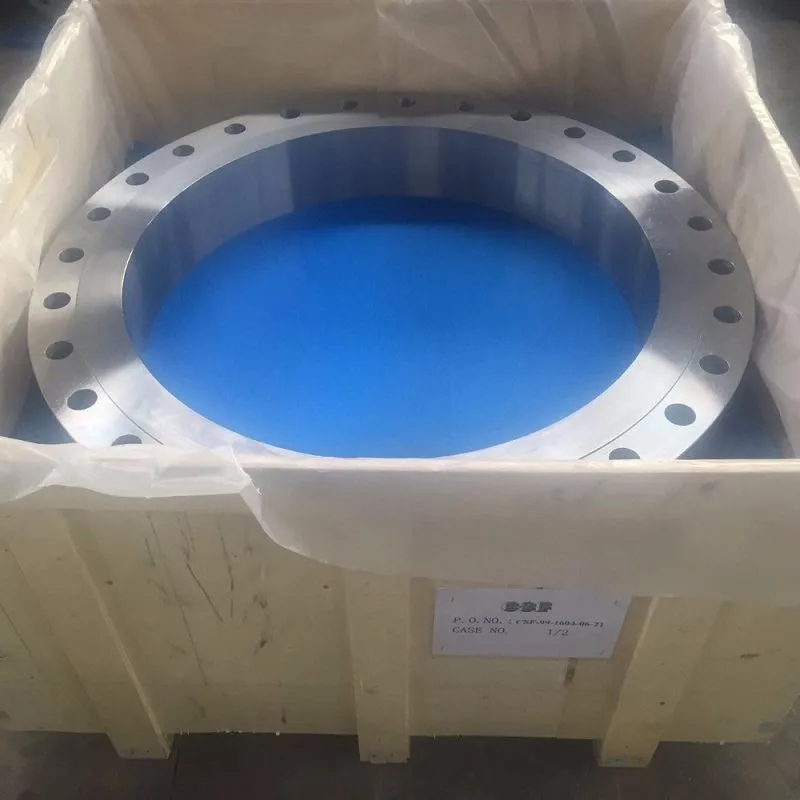
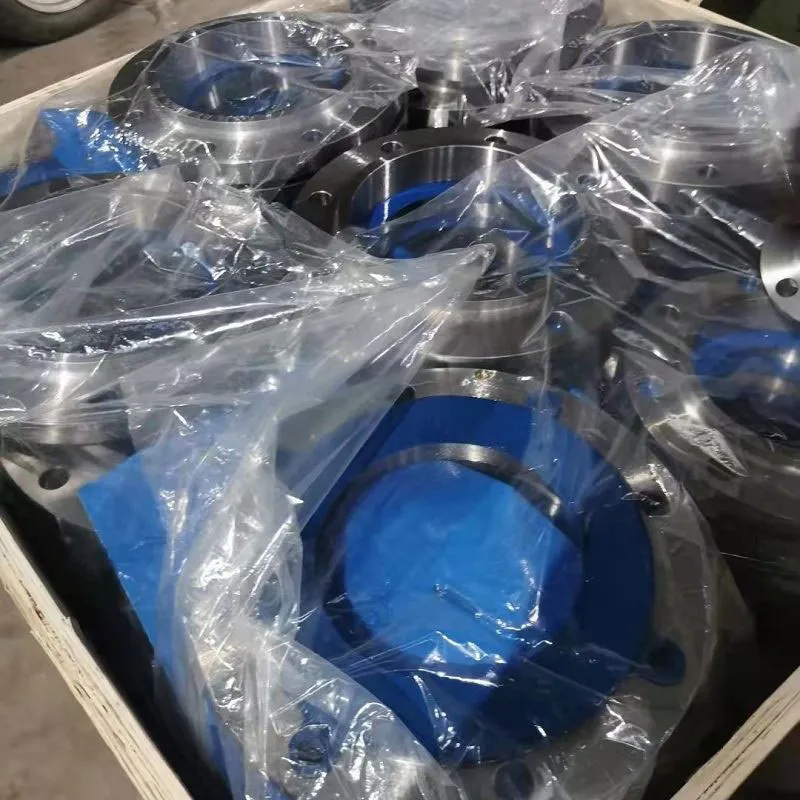
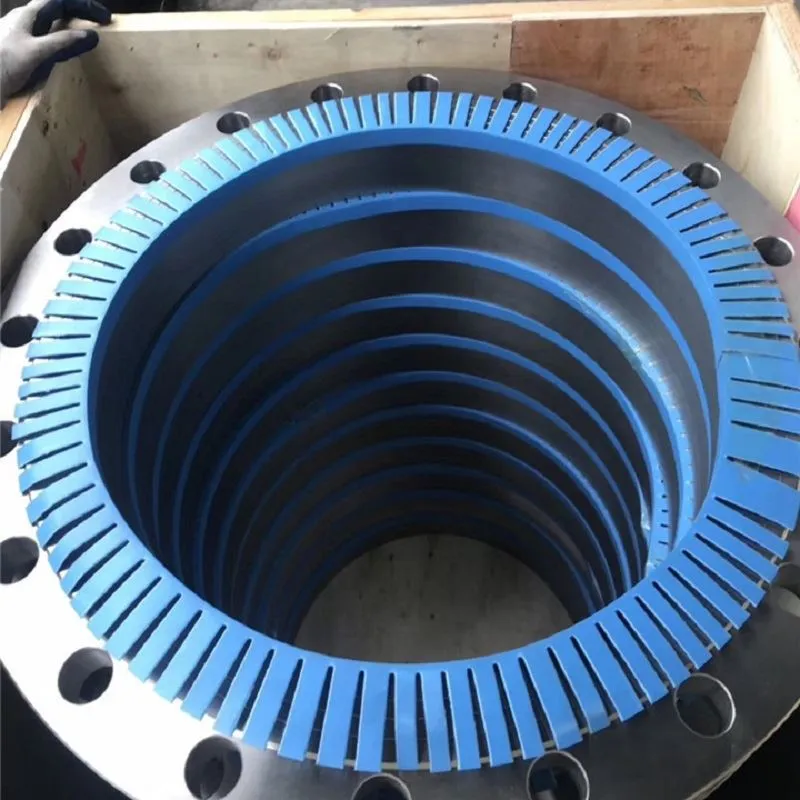
However, there is also another side to the coin. Not all new production facilities have a full quality control cycle. Some people simply buy a rod and cut a thread, saving on heat treatment. That's why brand reputation matters more than ever in 2026. In search of reliable partners, many Russian companies look to international experience, where vertical integration and strict control are the norm. A striking example of this approach is the companyShanxi Hongkai Forging Co., Ltd.. Based in Dingxiang County, a key industrial center for the forging industry in China, the manufacturer operates three in-house facilities covering the entire cycle from primary forging to final packaging. Although their primary specialty is forged flanges (including butt weld, loose and blind flanges to DIN, ANSI, ASME and GOST standards from DN15 to DN4000), their manufacturing philosophy demonstrates a level of responsibility that is sorely lacking in today's market. Having their own rights to import-export operations, a multi-level quality control system at all stages and a powerful production base allow such players to guarantee the stability of product characteristics, which is critical for the oil and gas and energy industries. Focusing on long-term partnerships and strict adherence to technical requirements, such enterprises show how modern engineering infrastructure should work, be it the production of flanges or related fasteners.
However, there is also another side to the coin. Not all new production facilities have a full quality control cycle. Some people simply buy a rod and cut a thread, saving on heat treatment. That's why brand reputation matters more than ever in 2026.
Comparative table of offers on the market (indicative data)
To make it easier for you to navigate, I have summarized the data by main types of suppliers. Please remember that prices are market averages as of early 2026 and may vary depending on order volume and region.
| Supplier type | Price segment | Delivery time | Minimum quantity | Quality guarantee |
|---|---|---|---|---|
| Large hardware plant | Low / Medium | 14-30 days | From 1 ton | High (GOST, passport) |
| Specialized distributor | Medium/High | 1-3 days | From 10 kg | High (input control) |
| Construction hypermarkets | High | In stock | 1 piece | Average (often without passports) |
| Regional small workshops | Low | 3-7 days | From 50 kg | Variable (requires checking) |
As you can see, the choice depends on your task. For emergency repairs, it is better to overpay the distributor, but receive the material tomorrow. For planned construction a year in advance, it is more profitable to conclude a direct contract with the plant.
Logistics and storage: where money is lost
It would seem that they bought the studs, brought them to the site, and installed them. But no. A huge percentage of defects and losses occur precisely at the stage of storage and transportation. In Russia, climatic conditions dictate their own rules.
Imagine the situation: you ordered a batch of galvanized studs in the summer. They arrived in perfect condition. But the facility was mothballed until spring. The studs lay for six months under a tarpaulin on the street. In the spring, installers discover that the zinc coating is damaged in places, and corrosion has begun in areas of damage.
Why did this happen? Because galvanization does not last forever. When stored outdoors, especially under conditions of temperature changes and high humidity (which is normal for the Leningrad region or the Far East), condensation accumulates between the threads. Electrochemical corrosion begins.
My advice: never store critical fasteners outside. Even under the film. The ideal option is a heated warehouse or at least a dry container. If this is not possible, pack the studs in sealed stretch film with silica gel inside. This is pennies compared to the cost of replacing a rusted connection on an existing pipeline.
It is also worth mentioning mechanical damage during transportation. Hairpins are long products. If loaded carelessly, they are often bent. It is almost impossible to bend a straight pin back without losing the properties of the metal. Heating will correct the geometry, but will kill the hardening. Therefore, when accepting the goods, be sure to check every tenth hairpin from the lot for straightness, simply by rolling it on a level table.
Legal aspects and liability
In light of the tightening of industrial safety requirements in the Russian Federation, the issue of documentation becomes critical. If an accident occurs at your facility due to depressurization of a flange connection, the first thing the Rostekhnadzor commission will ask is: “Where is the quality certificate for the fastener?”
The lack of a certificate of conformity or quality passport is not just a bureaucratic formality. This is a direct violation of the rules for operating hazardous production facilities. In 2026, fines for such violations have increased many times over. Moreover, insurance companies may refuse to pay if it turns out that uncertified fasteners were used.
Therefore, when choosing a supplier, require a complete package of documents. Don’t believe the words “we have everything according to GOST.” Require paper. The document must indicate:
- Steel grade.
- Strength class.
- Results of mechanical tests (yield strength, tensile strength).
- Data on protective coating (zinc thickness, adhesion).
- Metal heat number (for traceability).
If the supplier hesitates and says that “the documents will come later” or “the certificate is general for the entire batch of metal, and not for the products” - this is a red flag. Insist on your own or look for another partner.
The future of the market: what to expect at the end of 2026 and in 2027
Forecasting the market in our conditions is a thankless task, but some trends are already clearly visible. Firstly, a further increase in energy prices is expected, which will inevitably push up the cost of metalworking. Heat treatment is an energy-intensive process. This means that there will be even fewer cheap high-strength studs.
Secondly, pressure will increase towards import substitution not only in name, but also in technology. The launch of new lines for the production of alloy steels for fasteners is expected within the country. This should reduce dependence on imported raw materials, but it will take time to reach design capacity.
Thirdly, digitalization of procurement. More and more large customers are switching to electronic platforms, where the price is determined during an auction. This is good for transparency, but bad for quality. The one who gives the lowest price wins. How can we give a lower price for metal? Only by saving on quality. Customers will have to learn to draw up technical specifications in such a way as to cut off dumping, unscrupulous suppliers at the admission stage.
Personally, I see the risk that in a couple of years we will be faced with the problem of “metal fatigue” on facilities built during the period of maximum savings in 2024-2025. Studs that are working at their limit or have defects may show up unexpectedly. Therefore, I recommend that those involved in operations begin auditing critical connections now.
Practical recommendations for choosing
To summarize this long conversation, I want to give you some specific tips that will help you save your budget and nerves:
- Don't chase the lowest price.A 10% difference in the cost of fasteners is negligible compared to the risk of an accident. Look for the best balance between price and proven quality.
- Work with trusted partners.It is better to have one reliable supplier who knows your requirements than to search for a new one on the exchange every time.
- Ask for samples.Before entering into a contract for a large quantity, request samples and have an independent laboratory test done. It costs money, but insures against millions of losses.
- Monitor storage conditions.Proper storage extends the life of the fastener and preserves its properties.
- Study the documentation.Papers are more important than a manager's words. No passport - no goods.
Marketthreaded rods for flangesin 2026 is a minefield where you can either save or lose everything. But if you approach the issue head-on, rely on facts rather than marketing promises, and understand the physics of the processes, then you can find reliable solutions even in the most difficult conditions.
Remember: a flange connection rests on the engineer’s word of honor and the quality of a few centimeters of steel. Don't let yourself and your colleagues down. Choose wisely.
Conclusion: Looking to the Future
We live in an era of change, and Russian industry is adapting to it faster than many expect. The production of fasteners is becoming more technologically advanced, and the requirements are becoming stricter. Yes, prices are rising. Yes, we have to look for new ways. But we essentially have no alternative to a high-quality domestic product, and this stimulates development.
Next time you choosethreaded rods for flanges, remember this article. Think about what's behind each number on the price list. Consider the safety of people who will work near your equipment. And make the right choice.
After all, technology is not just about machines and formulas. This is a responsibility. And in 2026, this value becomes the main currency in the industrial fasteners market.