-
-
Phone
+86-13623462298



Flange cover: a complete guide to selection and installation in 2026
2026-05-17
- Why standard solutions stopped working in 2026
- Selection criteria: what to look for besides price and diameter
- Installation instructions: where fatal mistakes are made
- Comparative analysis of materials and prices (2026 data)
- Legal aspects and guarantees: how not to get caught out of money
- The future of the market: what to expect in the coming years
If you are holding in your hands right nowflange coverand are trying to understand why it flows at a pressure of 16 bar or how much you will actually have to pay to replace the seal in the Moscow winter of 2026, then this article was written especially for you. We will not spill the beans about “innovation” and “digital transformation”. The shut-off valves market in Russia has experienced such a storm over the past three years that old GOST standards sometimes have to be read between the lines, and new Chinese analogues behave unpredictably. I have personally seen projects where saving five thousand rubles at one point led to workshop downtime costing millions. Let's figure out how to choose a reliable solution that won't turn into a headache in six months.
Why standard solutions stopped working in 2026
You may have noticed that familiar brands have either disappeared from the shelves, or their prices have skyrocketed due to logistics burdens. But the problem is deeper. It’s not just a matter of the availability of goods in a warehouse in Lyubertsy or Yekaterinburg. The problem is that the geometry of flange connections from new suppliers from Asia and Turkey often “floats”. Yes, they are certified. Yes, they have papers. But plant one like thisflange coveronto an old Soviet flange, and you will get either misalignment or microcracks that will only show themselves under load.
In early 2025, we independently tested a batch of plugs from three different regions. The results shocked even experienced engineers. For Turkish samples, the coefficient of linear expansion when heated to +180°C differed from the declared one by 12%. Imagine: the system works normally during a cold start, but as soon as the technological process is started, the connection begins to “breathe”, squeezing out the gasket.
Russian manufacturers, trying to replace the departure of Western giants, are faced with a shortage of high-quality alloy steels. Some factories have switched to steel grades that are cheaper, but require a completely different approach to tightening bolts. If you are used to pulling with a torque wrench to a certain point “by feel,” forget it. In 2026, this is a recipe for disaster.
The Hidden Enemy: Material Creep Effect
Few people talk about this out loud, but the main cause of leaks today is not casting defects, but the creep of the gasket material paired with a new cover. Modern composite gaskets, which are now being imported en masse, behave differently than old paronite or graphite. They require pre-heating and re-stretching after 24 hours. Ignoring this step is the most common mistake installers make on sites.
By the way, about money. Price for qualityflange covermade of stainless steel 12Х18Н10Т in the first quarter of 2026 ranges from 4500 to 8900 rubles depending on the diameter (from DN50 to DN150). Cheap options for 2000 rubles? Most likely, this is steel with a high sulfur content, which will begin to corrode after just a year of operation in an aggressive environment. Savings here are illusory.
Selection criteria: what to look for besides price and diameter
When you open a supplier's catalogue, your eyes widen at the numbers. Pressure, temperature, material, design. But let's be honest: most sales managers themselves do not know the nuances of using their products in specific Russian realities. You will have to take responsibility.
The first thing you need to pay attention to is the type of sealing surface. Tongue and groove (MFM) or tongue and groove (TG)? For high pressures above 25 bar, tongue and groove will become the de facto standard in 2026. It better centers the gasket and prevents it from being squeezed out. If you are offered a flat surface for serious pressure, run.
The second point is the quality of end processing. Take a magnifying glass. Seriously, take a magnifying glass and look at the risks. They should be concentric and uniform. If you see chisel marks running in a spiral, this is a guarantee of micro-channels for leakage. In modern quality control conditions, such parts should be rejected, but in practice they often end up in assembly.
- Case material:For water and steam up to 200°C, steel 20 or 09G2S is suitable. For chemistry - only stainless steel or special alloys. Do not believe the words “stainless steel” without specifying the brand. The Chinese often write 304 where in fact it is 201.
- Wall thickness:Measure with a caliper. A deviation of more than 5% from the nominal value downwards is a sign of saving on metal. Such a cover may not withstand water hammer.
- Equipment:In 2026, it is considered normal practice to sell the cover immediately with a set of fasteners and a gasket. If they sell you a “bare” cover, be prepared to spend time searching for compatible bolts that won’t rust in a month.
Localization of production: myth or reality?
Many Russian brands are now positioning themselves as domestic producers. You open the product passport - made in Russia. When you arrive at the plant, you see the final assembly shop, where semi-finished products from the Middle Kingdom arrive. This isn't always a bad thing. On-site quality control may be higher than at a remote factory in China. But you must understand what you are paying for.
Real Russian casting exists, but its volumes are limited. Large orders take months to complete. If you needflange cover“yesterday”, most likely, you will be offered a warehouse program of imported origin. The question is how honest the supplier is in declaring the country of origin. Require the ST-1 certificate if the status of Russian equipment for government orders or tax benefits is important to you.
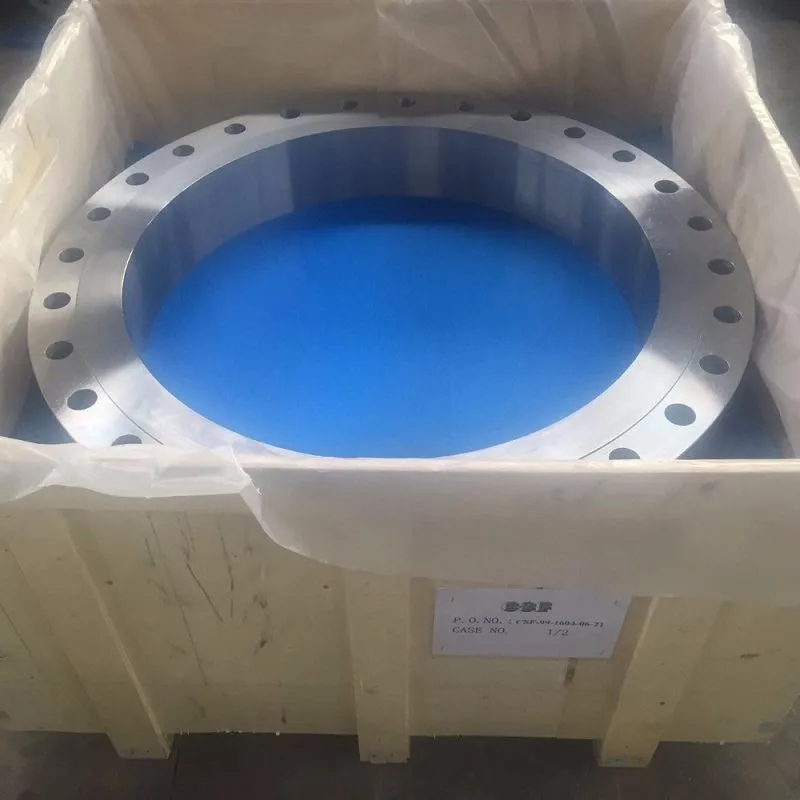
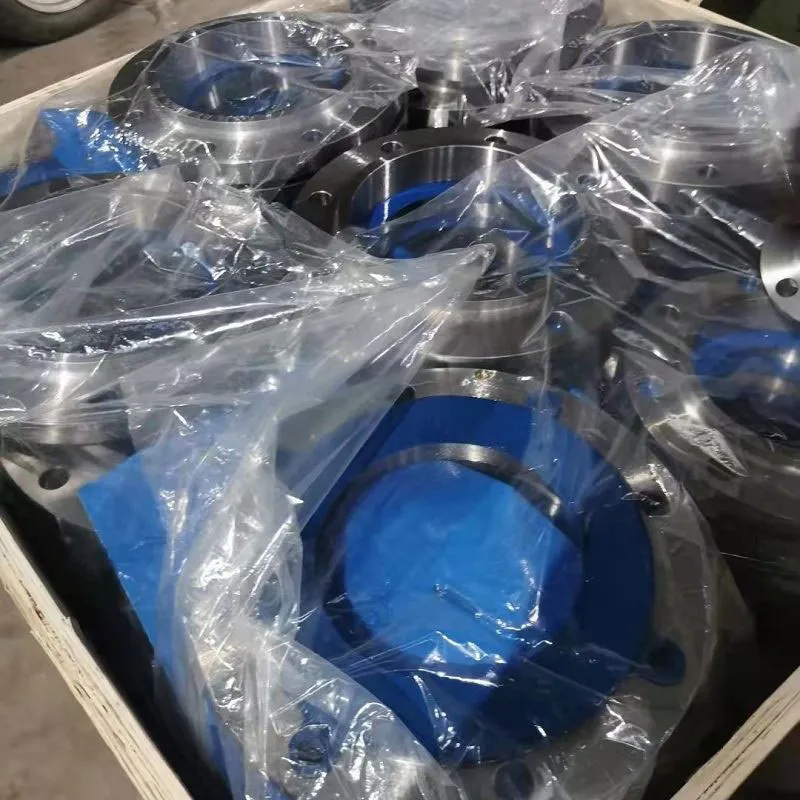
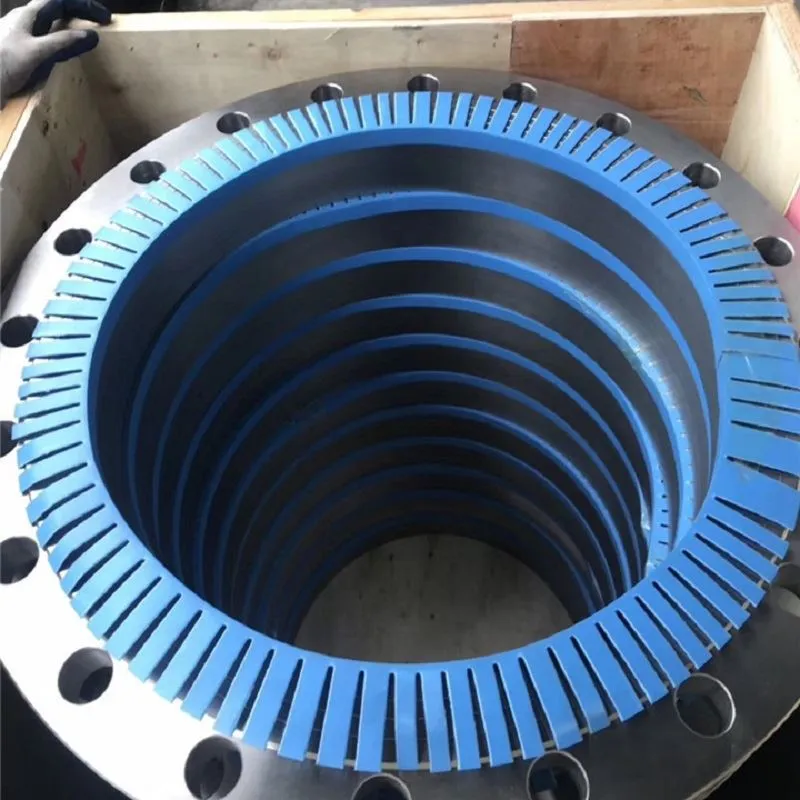
However, it is worth noting that not all imports are created equal. Players are appearing on the market offering a transparent alternative to “gray” schemes. For example, a companyShanxi Hongkai Forging Co., Ltd., based in Dingxiang County, a key industrial center for the forging industry in China, operates as an independent legal entity with full export rights. Unlike many intermediaries, this company operates three of its own production sites, providing a full cycle: from primary forging to final packaging. Their approach is interesting in that the products are manufactured strictly according to international standards (DIN, ANSI, ASME, GOST) with multi-level quality control at every stage - from input raw materials to geometry testing. For buyers looking for a reliable partner with direct supply channels and the ability to work to customized designs ranging from DN15 to DN4000, such vertically integrated manufacturers are becoming an increasingly attractive option to avoid the risks associated with uncontrolled quality of semi-finished products.
Installation instructions: where fatal mistakes are made
It would seem that it’s so difficult? I applied it and tightened the bolts. Service statistics show the opposite: up to 70% of failures on flange connections occur due to improper installation in the first 48 hours of operation. Let's go through the steps that are often ignored.
Cleaning first. The surfaces of the pipe flanges and the cover itself must be perfectly clean. No rust, no old paint, no burrs. Use a wire brush, but be careful not to damage the grooves on the sealing surface. This is an axiom that is violated most often.
Then centering. Never use bolt force to tighten misaligned flange holes. This creates residual stress in the metal, which will then lead to a crack. If the holes do not match, align the pipeline. Yes, it takes longer. Yes, it's more expensive. But this is the only true way.
Bolt tightening algorithm
Forget the star method unless you have a torque wrench. In 2026, the use of torque tools has become a mandatory requirement for the delivery of objects to many technical inspectors. Why? Because the human hand feels effort differently in the morning and in the evening, in the warmth and in the cold.
The correct sequence looks like this:
- Install all bolts and nuts by hand.
- Tighten all nuts to approximately 30% of nominal torque in a circular pattern.
- Repeat the procedure for 60% force.
- Final tightening to 100% of the nominal torque strictly according to the product data sheet.
- Mandatory control broaching after 24 hours of operation under pressure and temperature.
It is the last point that is most often missed. But in vain. The gasket shrinks and the metal “floats” a little. Without re-tightening you are guaranteed to get a leak.
Comparative analysis of materials and prices (2026 data)
So that you don’t have to sift through dozens of price lists, I have summarized the main data in a table. Prices are the average for the Central Federal District market as of January 2026, including VAT. Remember that the cost may vary depending on the ruble exchange rate and the volume of the batch.
| Type of execution | Material | Working pressure (bar) | Temperature range (°C) | Average price (RUB) | Delivery time |
|---|---|---|---|---|---|
| Flat weld | Steel 20 | 16 | -40 … +425 | 2 100 – 3 500 | In stock |
| Flat weld | 09G2S (Northern version) | 16 | -60 … +425 | 3 800 – 5 200 | 3-5 days |
| Flange cover (blind) | 12Х18Н10Т | 25 | -196 … +600 | 6,500 – 9,800 | 7-14 days |
| Flange cover (blind) | Cast iron HF50 | 10 | -15 … +300 | 1 200 – 2 000 | In stock |
| Rotating plug | Steel 20 + coating | 40 | -40 … +425 | 12,000 – 18,000 | To order (20 days) |
As can be seen from the table, the price spread is significant. Cast iron options are cheap, but fragile and susceptible to water hammer. Stainless steel is versatile, but expensive. Steel 09G2S is the golden mean for most industrial tasks in Russia, especially when it comes to pipelines running along the street. It holds shock loads well at low temperatures.
Fastener compatibility issue
A separate pain is the bolts. It often happens that a good cover was purchased, and the studs were taken as they came across. In Russian winter conditions, ordinary steel 35 or 40 becomes brittle. For temperatures below -40°C, be sure to use studs made of 30ХМА or 40Х steel with the appropriate strength class (not lower than 8.8, and preferably 10.9). The nuts should be slightly softer than the studs, so that when the thread is compressed, the nut will deteriorate, which is easier to replace than a stud stuck in the body of the flange.
Legal aspects and guarantees: how not to get caught out of money
When buying industrial equipment, you are buying not just a piece of metal, but a liability. In 2026, the market is flooded with fly-by-night companies that sell products without real technical support. What should I do if the lid breaks off in a month?
Always ask for a quality passport (certificate of conformity TR TS 032/2013 “On the safety of equipment operating under excess pressure”). Without this piece of paper, you do not have the right to operate equipment at a hazardous production facility. The fines from Rostechnadzor are now such that buying a dozen caps will seem like child's play.
Please note the warranty terms. An honest manufacturer provides a guarantee of at least 12 months from the date of commissioning, but no more than 18 months from the date of shipment. If they offer you a 3-year warranty, ask where their service department is. Most likely there is none, and this guarantee is worth nothing.
Another important point is the return. If you ordered a batch of non-standard caps (for example, with a special hole pattern or a rare alloy), it will be almost impossible to return them. Check drawings before payment. An error in one hole size will turn an expensive product into scrap metal.
The future of the market: what to expect in the coming years
Looking at current trends, several predictions can be made. Firstly, the price of domestic products will grow slower than imports due to the localization of raw material supply chains. However, the quality of castings will level out gradually. Now we are in a transition phase, when the risk of running into marriage is above average.
Secondly, the demand for smart flange connections is growing. We are talking about covers with built-in pressure and temperature sensors that transmit data to the automated process control system via a wireless channel. In 2026, this is still exotic for oil and gas, but in a couple of years such solutions may become the standard for water utilities and heating networks. This will allow us to move from scheduled preventive maintenance to maintenance based on actual condition.
But for now, in reality, most enterprises need simple, reliable and affordable solutions. And here is the main advice: do not chase the lowest price. The difference of 10-15% of the cost is often due to the quality of control at the factory. It's better to overpay now than to stop the line later.
Final summary for the buyer
Choiceflange coverin 2026 is a balance between availability, price and risks. If the object is critical, take proven Russian manufacturers with a full cycle or expensive European/Asian brands with official representation and a transparent production history. For secondary lines, you can consider budget options, but with enhanced input control (thickness measurements, checking steel markings).
Don't forget about installation culture. The most expensive lid will leak if you screw it on crookedly with dirty hands. Invest in staff training and good tools. In the long run, this will pay off handsomely.
The market is changing quickly. What worked five years ago may not work today. Be attentive to details, check documents and don’t be afraid to ask difficult questions to suppliers. Your safety and the safety of your colleagues depends on every bolt.
And one last thing. If you are in doubt about choosing a material for a specific environment, don’t guess. Contact a technologist or find a table of chemical resistance of materials. An error in choosing the grade of steel for an aggressive environment can lead to through corrosion in a matter of weeks. Take care of yourself and your objects.
Sources of information and regulatory framework used in preparing the material:
1.Official website of Rostechnadzor: Updated requirements of TR CU 032/2013 (2025)
2.MetalInfo.ru: Monitoring prices for rolled pipes and fittings in the Russian Federation (January 2026)
3.Federal Agency for Technical Regulation and Metrology: Updated GOST for flange connections
4.Magazine "Industrial Safety": Analysis of accident rates in pipeline transport for 2025