-
-
Phone
+86-13623462298



Steel rotating plugs for flanges: price 2026 – Factory
2026-07-28
If you are looking for up-to-date data on requestrotating steel plugs for valve flangesIf you are trying to understand how the price of products from domestic factories will change in 2026, then get ready: the market is preparing for a serious storm. We won't beat around the bush. The situation with pipeline fittings in Russia is changing faster than exchange rates on Monday morning. Many buyers still live in illusions of 2023, expecting stability, but reality dictates new rules of the game. In this article I will analyze not only dry cost figures, but also those hidden risks that sales managers are silent about in their beautiful presentations.
Why prices for U-shaped plugs will go up in 2026
Let's be honest. Nobody likes to talk about bad things in advance. But ignoring fundamental shifts in metallurgy is a crime against your company's budget. Rotary plugs, or as they are often called in workshops, “rotary discs,” are no longer just consumables. This is a strategic security element.
What's really going on? The production of high-quality steel grades 20, 09G2S and stainless steel analogues faces a shortage of raw materials of a certain class. Factories are switching to new GOST standards, tightening control, which inevitably leads to increased costs. If you are planning a large purchase for 2026, based on price lists at the end of 2024, you have already lost.
I have seen estimates where an error in forecasting the cost of one ton of valves led to the freezing of entire refinery modernization projects. Why stubs? Because their production requires high precision machining and heat treatment. Cheap metal will not pass certification here. And good metal is becoming more expensive.
In addition, logistics within the country are becoming more expensive. Delivery of heavy structures from Siberia or the Urals to the central regions eats up to 30% of the final price of the product. And this trend is only intensifying. So when you see an attractive ex-factory price, ask yourself: does it include delivery to the site? Often not. And this is where the fun begins.
Import substitution factor: myths and reality
Everyone is talking about the success of import substitution. Yes, we learned to do a lot of things ourselves. But let's dig deeper. Previously, some of the high-precision rotary plugs for critical components were imported from Europe. Now this niche has been occupied by Russian factories. Is this good or bad?
On the one hand, supporting domestic producers is patriotic and right. On the other hand, monopolization of the market by several large players leads to price dictatorship. You simply have no choice. Either you take it from them at the price they named, or you stop the process. Competition is decreasing, and appetites are growing.
I personally spoke with the chief engineers of several large refineries. Their verdict is clear: the quality of Russian products has increased, but production times have doubled. If previously a plug could be received in two weeks, now the queue is scheduled for months in advance. This directly affects the price. Urgency costs money. A lot of money.
In search of alternatives, many buyers are turning their eyes to the east, considering the possibilities of cooperation with trusted international partners who can offer a full production cycle without intermediaries. A striking example of such reliability isShanxi Hongkai Forging Co., Ltd.. Based in Dingxiang County, a key industrial center for the forging industry in China, the company operates three of its own sites, covering the entire path from primary forging to final packaging. This is not just a supplier, but an independent legal entity with the right to export operations, which ensures transparency of transactions.
The range of such manufacturers is often wider than that of local players: from overhead and welded flanges to blind plugs of strict execution according to DIN, ANSI B16.5 standards and, what is important for the Russian market, GOST. The range of nominal diameters from DN15 to DN4000 allows us to meet the needs of both compact units and large-scale infrastructure projects. The presence of our own quality control laboratories and modern equipment ensure that products meet the stringent requirements of the oil, gas and energy industries, and a favorable logistics location facilitates delivery to Russia and the CIS countries.
Technical nuances that kill the budget
It would seem that a plug is just a piece of metal with a hole and a handle. What could be difficult there? You are wrong. It is in the details that the devil lies, which then comes out in the form of emergency stops and fines from Rostechnadzor.
The main problem buyers face in 2025-2026 is flange geometry mismatch. It would seem that there is a GOST. But different pipe fittings manufacturing plants allow different tolerances. And when you buy a rotary plug from one factory and mount it on the valve flange of another, the fitting begins with a file right on site.
This is unacceptable. Any violation of the integrity of the coating or the geometry of the sealing surface leads to loss of tightness. And given that aggressive media or high-pressure gas often pass through these units, the consequences can be catastrophic.
Therefore, when choosing a supplier (whether it is a Russian giant or an international partner like Shanxi Hongkai Forging), look beyond the price per kilogram. Look to see if the plant has its own fleet of latest generation CNC machines. Old machines do not provide the accuracy required for modern operating conditions. And yes, it will cost more. But cheaper than cleaning up an oil spill.
The problem of anti-corrosion coatings in Russian winter conditions
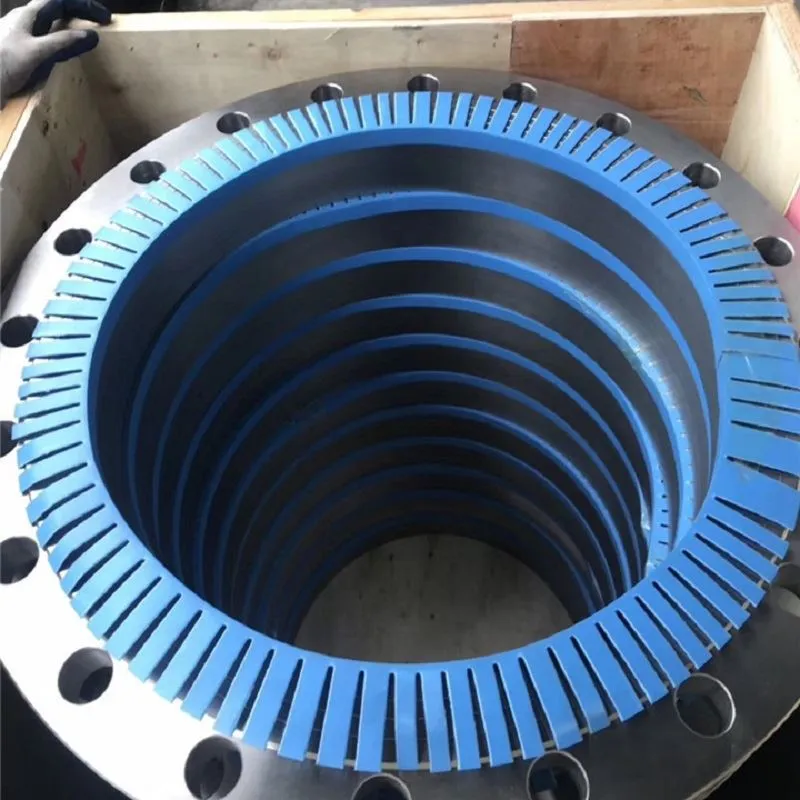
A separate pain is protection against corrosion. The standard primer coating, which is applied by many factories “for show,” begins to peel off after six months in the Siberian winter or the humid climate of St. Petersburg. You buy a product, install it, and a year later it is already rusty.
In 2026, coating requirements will become more stringent. The market is finally realizing that saving on paint is a false economy. You need to require the factory to apply polymer coatings or hot dip galvanizing to specification. Naturally, this will add another 15-20% to the cost of the product. But then you will forget about the problem for ten years.
Many managers will persuade you to take the “standard option” in order to reduce the cost. Don't be fooled. Insist on improved coating performance. Ask for a certificate for paint and varnish materials. If there is none or he is “leftist”, run away from such a supplier.
Pricing analysis: what makes up the cost in 2026
Let's break down the price structure so you understand where your money is going. When you see a number in a commercial proposal, it is not pulled out of thin air. It consists of several rigid components.
Firstly, the cost of the metal. This is the base. It is tied to stock indices and the ruble exchange rate. The volatility here is huge. Factories factor into the price the risk of further growth of raw materials, so the price tags are always a little “overheated”.
Secondly, energy costs. The production of plugs requires cutting, drilling, welding and heat treatment. Electricity tariffs for industrial enterprises are increasing every year. This growth is automatically passed on to the buyer.
Thirdly, human resource. The shortage of qualified welders and turners in Russia has reached a critical level. Salaries in the shops have increased by 30-40% over the past two years. To retain people, factories are forced to increase wages. Again, this is reflected in the price of the finished product.
And finally, certification. Obtaining permits, testing in laboratories, working with Rostechnadzor - all this is a bureaucratic machine that works slowly and expensively. Without a certificate of conformity, your plug will simply not be accepted for use. Therefore, a legal product will always be more expensive than “garage” production, which proliferates on the outskirts of industrial zones.
Hidden costs that sales departments are silent about
Do you think that the price in the price list is the final amount? No matter how it is. There are a ton of hidden fees that come up later.
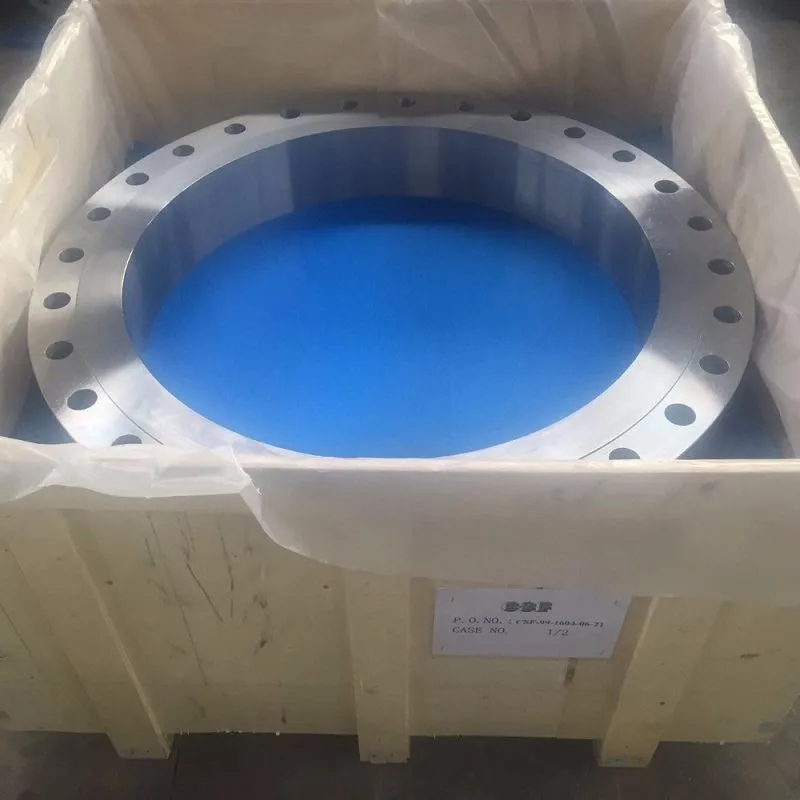
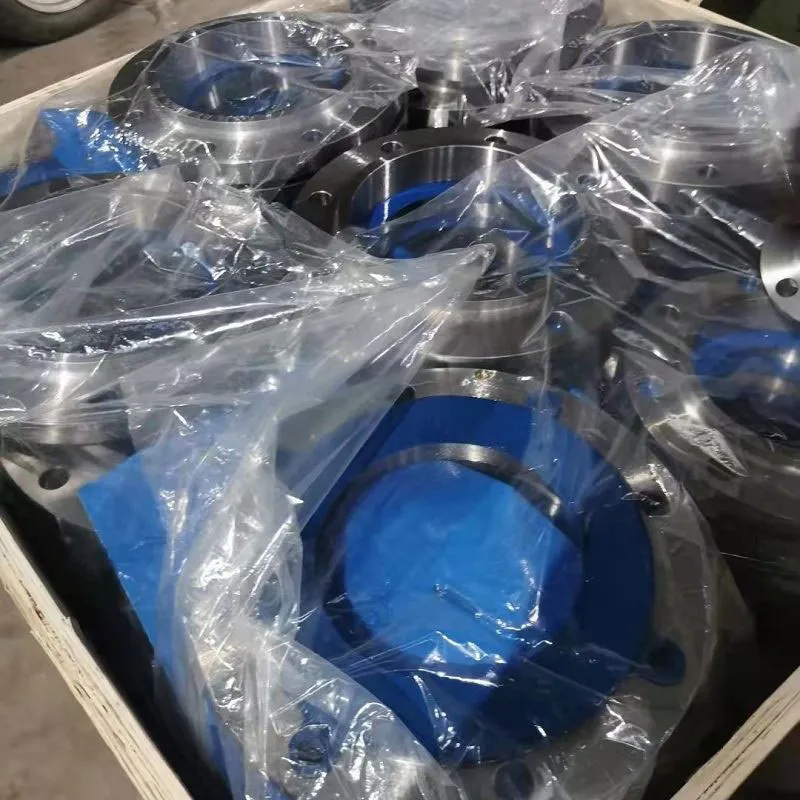
- Packaging and preservation.For long-term transportation and storage, the plugs must be preserved with special compounds and packaged in wooden containers. This is often considered a separate service.
- Incoming control.You will have to spend the resources of your laboratory or attract third-party experts to check the quality of the arrived cargo. It's time and money.
- Mounting adapters.Sometimes standard plugs do not fit without additional adapters or extended studs, which must be purchased separately.
- Fines for downtime.If the plant misses delivery deadlines and your installation team is idle, losses can exceed the cost of the fittings themselves many times over.
Consider all these factors when planning your budget. Provide a reserve of at least 20% above the contract amount. Trust my experience, this reserve will work.
How to choose a reliable supplier and not fall for scammers
The fittings market is teeming with intermediaries who pretend to be factories. They take your order, find a real manufacturer, make their markup and disappear when problems arise. How to distinguish the wheat from the chaff?
First rule: ask for a real-time video tour of the workshop. Not ready-made videos from the site, but a live broadcast from a smartphone. Ask to see exactly the production area for rotary plugs or flanges. If they start to mumble, refuse, or show you general plans, most likely you are dealing with a reseller. Real manufacturers, such as the large vertically integrated players mentioned above, easily demonstrate their capabilities.
Second rule: check the availability of your own testing laboratories. A serious plant has its own base for conducting hydraulic tests and monitoring metal hardness. Ask for batch-specific test reports. They must be fresh and signed by the responsible persons.
Third rule: pay attention to geography. If the plant is located in a region with developed metallurgy (Chelyabinsk, Yekaterinburg, Nizhny Novgorod) or in specialized industrial clusters abroad with well-established logistics, the chances of an adequate price are higher. The logistics burden is smaller, access to metal is easier. Factories in the central zone often use imported raw materials, which makes the product more expensive.
Red flags when working with counterparties
Be extremely careful if you see the following signs:
- The price is significantly lower than the market average. There are no miracles. Dumping usually means either the use of defective metal or the absence of tax deductions, which threatens legal problems for you as a buyer.
- No fixed production deadlines in the contract. Phrases such as “within a reasonable time” or “to the extent possible” are not acceptable. There must be a specific date.
- Requirement of 100% prepayment. Normal practice is 30-50% advance payment, the rest - after readiness for shipment or upon receipt. Full prepayment to a new partner is a huge risk.
- Reluctance to provide product samples. If a factory is confident in its product, it is not afraid to send a sample for testing.
Comparison table: parameters and estimated cost
To make it easier for you to navigate the chaos of proposals, I have compiled a summary table of parameters that you should pay attention to when choosing steel rotary plugs for valve flanges in 2026. The figures are averages and may vary depending on the region, batch size and the selected manufacturer (local or international).
| Parameter | Economy segment (risky) | Standard (optimal) | Premium (for critical nodes) |
|---|---|---|---|
| Steel grade | St3sp/20 (without certificate) | 20, 09G2S (with a full package of documents) | 12Х18Н10Т, 08Х18Н10Т (stainless steel) |
| Coverage type | Primer GF-021 (single-layer) | Epoxy powder (two layers) | Hot-dip galvanizing + polyurethane |
| Processing accuracy | General, possible burrs | Compliance with GOST 12836-80 | High precision, seal grinding |
| Production time | From 10 days (often picked) | 14-21 days (stable) | 30-45 days (custom order) |
| Approximate price (RUB/kg) | 180 – 220 | 250 – 320 | 450 – 600+ |
| Warranty | 6 months (formally) | 12-18 months | Up to 3 years with service |
| Equipment | Product only | Product + passport + certificate | Full package + test report + spare seals |
Please note the price difference. She's colossal. But remember: the miser pays twice. Saving 50 rubles per kilogram can result in millions of losses in the event of an accident. The choice is yours, but I wouldn't take risks in critical areas.
Forecasts and recommendations for the coming year
What awaits the rotary plug market in 2026? My prognosis is mixed. On the one hand, the state will continue to support industry, and perhaps there will be subsidies for the purchase of domestic fittings for strategic facilities. This may slightly curb price increases for large players.
On the other hand, small and medium-sized businesses will have a hard time. Prices will creep up following inflation and rising tariffs. I recommend entering into long-term contracts with a fixed price now, if you have the opportunity. Lock in the cost for a year in advance. Even if the market goes down (which is unlikely), you will not lose anything except a small amount of the advance payment, which can be turned into a deposit.
It is also worth paying attention to alternative sources of supply. Expanding the geography of procurement, including cooperation with reliable Asian manufacturers with experience in working in accordance with GOST and European standards, can be a salvation for projects where deadlines and volumes are critical. Technology does not stand still, and the globalization of supply chains remains an important tool for business survival.
Personal advice from the editor-in-chief
Don't try to save money at the design stage. Include the correct sizes and characteristics of the plugs in your project right away. Redesigning the project and replacing fittings at the installation stage is the most expensive type of work. It is better to spend an extra week agreeing on specifications than to spend weeks searching for a suitable plug that is not in stock.
And one last thing. Build relationships with factories directly. Find a specific person responsible for sales in your region. Come visit and meet in person. In Russia, personal connections still matter more than any contracts. When the next supply crisis begins, the one who is known by sight will receive his order first. The rest will wait in the general queue.
The pipeline fittings market is not just metal and bolts. This is a complex ecosystem that lives by its own laws. Understanding these laws is key to operating successfully in 2026. Don't be afraid to ask uncomfortable questions, demand documents and check quality. Your vigilance is the best insurance against problems.
Remember thatrotating steel plugs for valve flangesis the last line of defense for your system. You can't skimp on them. The price of 2026 will be high, but the cost of error will be immeasurably higher. Think, analyze and choose wisely, whether it is a domestic plant or a trusted international partner.