-
-
Phone
+86-13623462298



Sketch of flange connection 2026: prices and GOST - Factory
2026-07-28
- Why standard solutions in 2024 won't work in 2026
- Pricing for flange connections: what determines the cost in 2026
- GOST vs. Reality: which standard to choose?
- How to correctly create a task for a plant: step-by-step algorithm
- Regional specifics of supplies and service
- The future of the industry: trends 2026–2030
- Conclusion: why saving on a project is dangerous
If you are looking for currentflange connection sketchfor the 2026 project, then get ready for the fact that old drawings from the archives of the 2010s can cost you millions of rubles in losses. To be honest, the pipeline fittings market in Russia is undergoing a transformation that not a single analyst predicted five years ago. We are used to thinking that a flange is just a piece of metal with holes, but under the conditions of sanctions, when Western brands have left, and Asian analogues do not always pass quality control, every millimeter on the drawing matters.
Why do I start this article with such pessimism? Because the situation with GOST standards and real production now resembles a minefield. You order steel according to specifications, receive a certificate, install the unit, and six months later there is a fistula or depressurization. And the metal is not always to blame. Often the problem lies in the fact thatflange connection sketch, which lies on your table, was made for equipment that no longer exists in nature, or for tolerances that modern machines simply cannot achieve without tripling the cost.
Why standard solutions in 2024 won't work in 2026
Let's dot the i's right away. Many engineers and buyers still live in the illusion that they can download any drawing from the Internet, send it to any plant in Chelyabinsk or Tatarstan and get the perfect product. This is a dangerous misconception. In 2025–2026, we are witnessing a fundamental shift in the logic of production.
Previously, when European DIN standards and American ASME standards were widely represented on the market, Russian factories simply copied them, adapting them to GOST. Nowadays, raw material supply chains have changed. Steel comes from other sources, with a different chemical composition. What used to be easy to cook now requires preheating. What was sharpened in one pass now “sits” the cutter.
And this is where the main problem arises:flange connection sketch, developed for old metallurgy, becomes the cause of defects. If you don't take the new realities into account when designing, you will end up with a part that formally fits the dimensions on paper, but does not hold pressure in real use. This is especially critical for the oil and gas sector and the chemical industry, where the cost of mistakes is measured not in rubles, but in human lives and environmental disasters.
I have personally seen projects where an attempt to save money on revising design documentation led to the fact that entire sections of pipelines had to be cut out and replaced six months after launch. Why? Because no one checked the compatibility of the new flange material with the old sealing scheme. It would seem like a small thing. But it’s precisely these “little things” that are now ruining budgets.
Hidden risks of using outdated drawings
What exactly could go wrong? The list of problems is longer than it seems at first glance.
- Inconsistency of mechanical properties.New rolled products may have a different hardness. A flange made according to an old sketch without taking this factor into account may deform when tightening the bolts, creating leaks.
- Problems with anti-corrosion coatings.Modern requirements for ecology and durability dictate the use of new types of coatings. An old sketch may not provide the necessary allowances for the thickness of a modern galvanizing or polymer layer.
- Changing the geometry of the sealing surface.This is the most insidious moment. Factories switching to new equipment sometimes cannot maintain the ideal cleanliness of the “peak-to-valley” surface according to the old standards, but can do better according to the new ones. If your sketch rigidly fixes the old roughness parameter, you will either not find the artist or get a defect.
Think about it: when was the last time you checked whether your GOST is relevant for the grade of steel that will actually be offered to you in the warehouse? Most likely never. But in vain.
Pricing for flange connections: what determines the cost in 2026
Talking about money is the most unpleasant, but the most necessary. If you are expecting to see a fixed price list here, then I will disappoint you: it does not exist and cannot exist. The market is too volatile. However, there are clear factors that shape the price, and understanding these levers will help you avoid overpaying.
First and foremost:raw materials. The price of rolled steel in Russia continues to fluctuate depending on logistics and export duties. In 2026, we see an upward trend in the cost of low-alloy steels, which have traditionally been used for high-pressure flanges. Factories shift these risks to the customer.
Second factor -processing complexity. Everything is simple here: the more accurately you need to performflange connection sketch, the more it costs. But there is a nuance. Many customers require tolerances that are excessive for their application. “Just in case,” as they say. This is a direct road to inflating the estimate. A competent engineer must be able to explain to a plant technologist where pinpoint precision is needed and where standard quality is sufficient.
The third, often ignored factor isquality control. Do you want a certificate with an expanded set of tests (ultrasonic inspection, color flaw detection, chemical analysis of each heat)? Get your wallet ready. In conditions when the reputation of the plant is more important than short-term profit, conscientious manufacturers include the cost of quality control in the price of the product. Cheap flanges without papers are a lottery that you will most likely lose.
Estimated price range (at the beginning of 2026)
To give you at least an approximate idea of the order of the numbers, we will present average market data. Remember that these are ex-factory prices excluding delivery and VAT, which in Russia also tends to change the rules of the game.
| Flange type (according to GOST/drawing) | Nominal diameter (DN), mm | Pressure (Py), kgf/cm² | Material | Approximate price per piece, rub. |
|---|---|---|---|---|
| Flat weld flange | 50 | 16 | St20 | 850 – 1 200 |
| Flat weld flange | 100 | 16 | St20 | 2 100 – 2 800 |
| Collar flange | 50 | 40 | 09G2S | 3 500 – 4 200 |
| Collar flange | 150 | 40 | 09G2S | 12,000 – 15,500 |
| Loose flange on welded ring | 200 | 10 | St3sp5 + ring 09G2S | 8,500 – 10,000 |
| Stainless steel flange (welded) | 50 | 16 | 12Х18Н10Т | 6,000 – 7,500 |
Please note the price range. Why is he so big? Because one plant can operate on Soviet equipment with high energy intensity and low productivity, while another can operate on modern automated lines, but with expensive depreciation. In addition, the price greatly depends on the batch. Ordering one DN 150 flange will be disproportionately expensive due to the machine setup. Wholesale usually starts from 10–20 pieces, but everyone’s conditions are different.
There is one more point that is rarely written about in open sources.Seasonality. In winter, especially during severe frosts in Siberia and the Urals, logistics become more expensive, and some types of work (for example, hot-dip galvanizing outdoors) become impossible or require special conditions, which impacts the price. Plan your purchases in advance, prices are more stable in summer.
GOST vs. Reality: which standard to choose?
The issue of standardization in Russia has always been a painful one. We have GOST, we have OST, we have technical specifications for factories, and we have foreign standards that are de facto used at many facilities built with the participation of foreign contractors.
For most typical tasks in 2026, the basic document remainsGOST 33259-2015“Flanges for fittings, connecting parts and pipelines for nominal pressures up to 20.0 MPa (200 kgf/cm²). Design and dimensions." This is a modern standard, harmonized with European standards. It replaced the good old GOST 12815-80.
Why is it important to switch to the new GOST? Because it takes into account modern methods of strength calculations and more stringent requirements for surface quality. If you doflange connection sketchaccording to GOST 12815-80 today, you run the risk that the supervisory authority specialists responsible for acceptance of the object simply will not sign the act. They will require compliance with current regulations.
However, there are exceptions. If you are renovating a facility built in the 1980s or 1990s and do not plan to replace the entire pipeline, you will have to make flanges strictly according to the old drawings to ensure fit. Here a conflict arises: it is technologically more profitable to do it according to the new standard, but structurally it is necessary to repeat the old seal profile.
In such cases, the only correct solution is to develop individualTU (Technical conditions). Yes, this is extra bureaucracy and time (from 2 weeks to a month for approval), but this legalizes the production of a non-standard product. The plant will not be able to say “we cannot do this” if it has approved specifications in its hands, which specify permissible deviations.
The "Analog" trap
Now it is fashionable to talk about import substitution. You will be offered “complete analogues” of DN/ANSI or DIN flanges. Be careful. The word “analog” in the mouth of a sales manager often means “similar in size,” but not necessarily “similar in properties.”
For example, the American flange class 150 and the Russian flange Ru 20 have similar connecting dimensions, but different wall thickness and neck height. If you simply superimpose one sketch on top of another, you may end up with a situation where the bolts don't fit into the holes or the gasket doesn't fit into the sealing area. Always request an interchangeability table and carry out control measurements before serial ordering.
Moreover, some Russian factories have begun to produce products according to their own internal standards, which only partially overlap with GOST. This is normal for the market, but requires increased care from the customer. Always request a working drawing before paying an invoice.
How to correctly create a task for a plant: step-by-step algorithm
Let's say you decide to order a batch of flanges. What do you need to send to the manufacturer to get exactly what you need, and not what you get? Experience suggests that 90% of problems arise due to incomplete technical specifications.
Here is a checklist that will save your nerves:
- Working drawing or reference to GOST.Do not simply write “DN 100 flange”. Attach a file with dimensions. If you use GOST, indicate the specific type of design (for example, design 1, 2, 3... this affects the presence of a protrusion or depression).
- Steel grade.This is critical. St20, 09G2S, 12Х18Н10Т, 10Г2ФБУ - each grade has its own characteristics of weldability and operating temperature range. If you do not specify a brand, the factory will supply the cheapest one, which may not be suitable for your environment (for example, hydrogen sulfide).
- Quality control requirements.Write down right away: do you need a quality certificate? Is an ultrasonic testing protocol necessary? Is labeling required for each product? If this is not in the application, they will bring you a “pig in a poke”.
- Coating.Primer, zinc, paint? How thick is the layer? For northern performances it is a matter of life and death for metal.
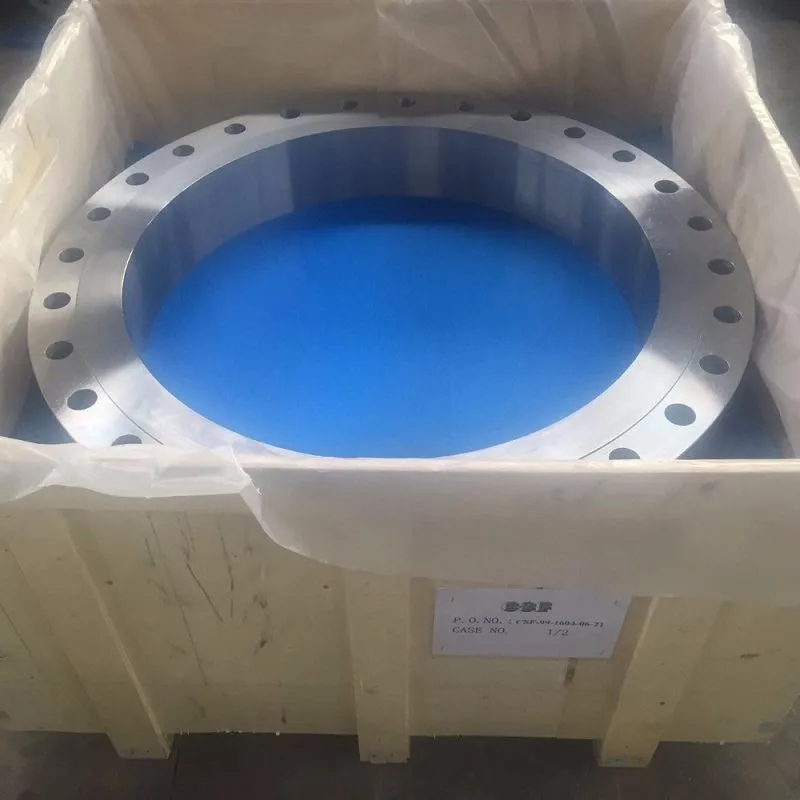
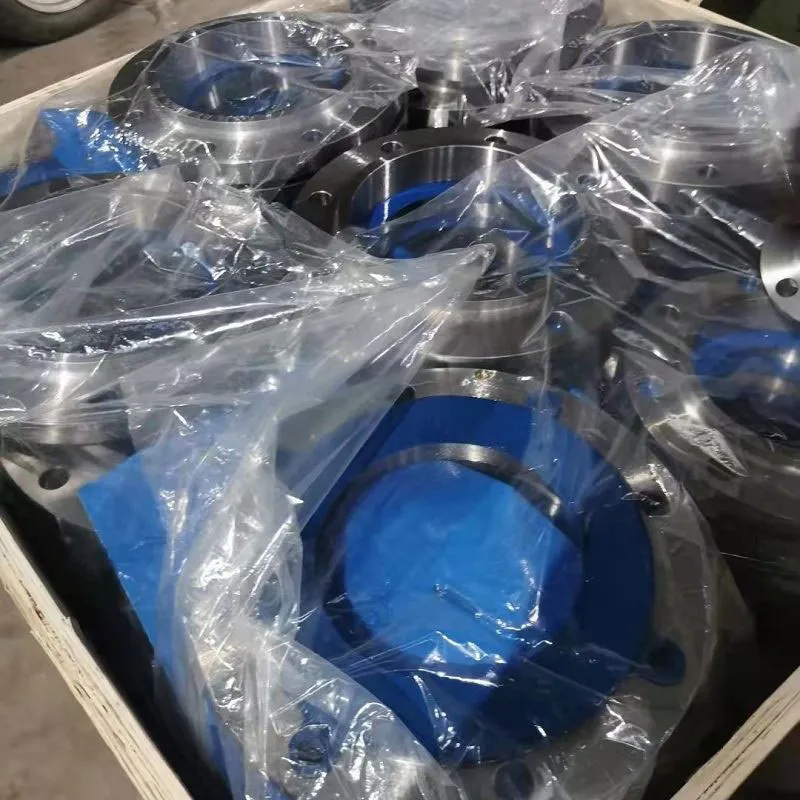
- Package.Flanges are heavy products. Without wooden pallets and screeds, they will arrive to you with chamfers knocked down and sealing surfaces scratched. Require the type of packaging to be specified in the contract.
And most importantly:approval of the sketch. Never put an order into production without the design sketch being approved by the factory. Let their technologists look at yoursflange connection sketchand they will say: “Listen, we cannot withstand this transition radius on our machine, let’s change it to 5 mm, this will not affect the strength.” This is a normal operating situation. It is better to change a drawing on paper than to remake a batch of metal.
Regional specifics of supplies and service
Russia is huge. Logistics from one end of the country to the other can cost more than the product itself. Where to look for a manufacturer?
Traditionally, metalworking centers are located in the Urals (Chelyabinsk, Yekaterinburg, Perm) and in the Volga region (Tatarstan, Samara). Large metallurgical plants and machine-building plants are concentrated there. It is profitable to order there if your construction site is located in the central part of Russia or the Urals.
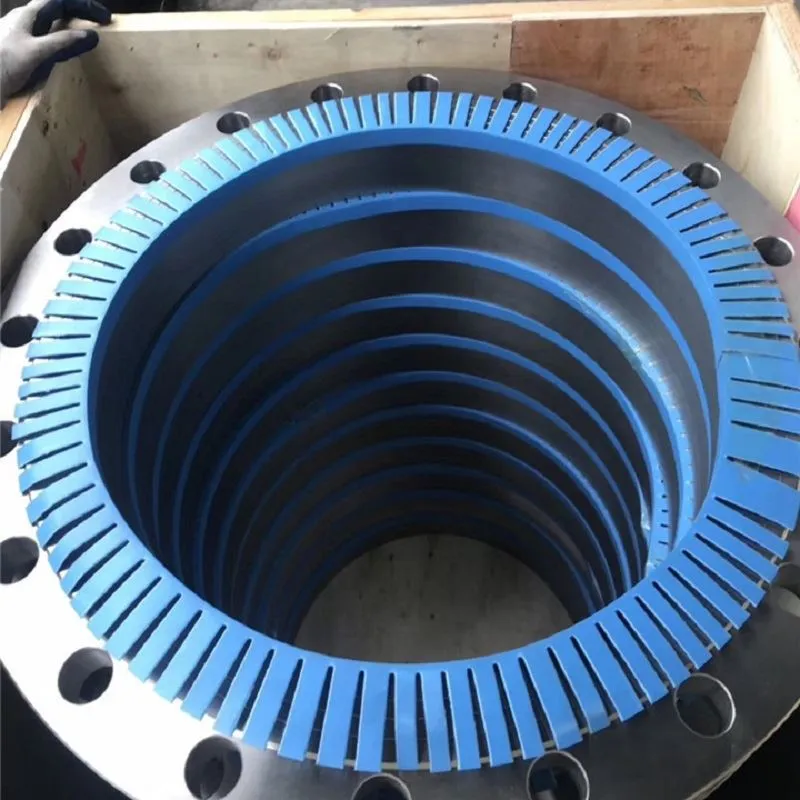
If the object is in the Far East, it is more logical to look towards local manufacturers or supplies from China. However, it is important here to distinguish simple resellers from real full-cycle manufacturers. For example, a companyShanxi Hongkai Forging Co., Ltd., based in Dingxiang County (Shanxi Province), one of the key industrial centers of the forging and pressing industry in China, is an example of a vertically integrated enterprise. Unlike trading houses, this company operates three of its own production sites, covering the full cycle: from primary forging and heat treatment to finishing machining and packaging.
This approach is critical for 2026 projects where strict compliance with international standards (DIN, ANSI B16.5, ASME, EN, GOST) and custom drawings is required. Shanxi Hongkai Forging Co., Ltd. specializes in six main types of forged flanges (overhead, socket weld, threaded, butt weld, loose and blind) in a wide range of nominal sizes from DN15 to DN4000. Having our own right to import-export operations ensures transparency of transactions and direct interaction without intermediaries, which is especially important when working with complex items, such as flanges of pressure classes 900, 1500 and even 2500. The geographical location in the Dingxiang industrial cluster also provides logistics advantages, ensuring reliable delivery both to Russia and the CIS countries, and to other regions of the world.
A separate story is Moscow and St. Petersburg. There are many trading houses here that position themselves as manufacturers. In fact, they are often resellers. It is convenient to work with them for small wholesale quantities (“you need 10 pieces tomorrow”), but for large projects in 2026 it is better to go directly to the plant, be it a Russian giant or a specialized enterprise like Shanxi Hongkai Forging. This will give you the opportunity to control the production process, come for inspection and negotiate flexible payment terms.
By the way, about payment. In current conditions, many factories require 100% prepayment or a 70/30 scheme. This is a protection mechanism against non-payments. Trading houses can sometimes offer a deferment, but will include risks in the price. Choose based on your financial stability.
Service and warranty: myths and reality
The warranty period for flanges is usually 12-24 months from the date of commissioning, but not more than 36 months from the date of shipment. However, it is extremely difficult to obtain compensation under the guarantee. The plant will always find a reason to refuse: “installation conditions are violated”, “pressure is exceeded”, “improper tightening of bolts”.
To protect yourself, require installation supervision or at least detailed installation instructions from the manufacturer. If the plant offers the services of its specialist in tightening flange connections, agree. Yes, it costs money. But if an accident occurs a year later, it will be much easier to prove the manufacturer’s guilt if the installation was carried out by their people.
The future of the industry: trends 2026–2030
Where is the flange connection market heading in Russia? Making forecasts is a thankless task, but some trends are already obvious.
Firstly,digitalization. Leading factories are beginning to implement digital twin systems. In the future, you will be able not just to receive a PDF drawing, but a 3D model of the flange, integrated into the overall BIM model of your facility. This will avoid collisions at the design stage.Flange connection sketchwill become part of a single information space.
Secondly,new materials. The development of Arctic projects requires steels that operate at extremely low temperatures (-60°C and below). The usual 09G2S can no longer cope here. Demand for special cold-resistant grades and composite coatings that protect against icing and corrosion in aggressive environments will grow.
Thirdly,standardization of fasteners. One of the eternal problems is the mismatch of studs and nuts with flanges. Tightening control over packaging is expected. It is possible that standards will emerge for the supply of assembled flange assemblies (flange + fasteners + gasket), which will relieve installers of the headache of selecting compatible elements.
Finally, the topic cannot be ignored.ecology. The production of flanges is an energy-intensive process. Under pressure from international (and domestic) requirements, factories will be forced to modernize wastewater treatment plants and reduce their carbon footprint. This will inevitably lead to higher costs, but will provide access to government-funded green projects.
Conclusion: why saving on a project is dangerous
To summarize, I want to say one simple thing: the flange is not an element that you should skimp on. The price difference between a high-quality product from a reliable factory with a full cycle of control and a cheap analogue “without family and tribe” can be 20–30%. But the cost of eliminating an accident, a simple installation or a fine from Rostechnadzor will exceed this savings hundreds of times.
When you pick upflange connection sketch, помните, что за этими линиями стоит безопасность людей и экология региона. В 2026 году подход к закупкам должен быть взвешенным, профессиональным и дальновидным. Не гонитесь за самой низкой ценой в таблице. Ищите партнера, который готов нести ответственность за свой продукт, будь то локальный производитель или международная компания с проверенной репутацией.
Проверяйте документы, требуйте образцы, выезжайте на производство. В эпоху турбулентности личный контроль остается самым надежным инструментом обеспечения качества. Надеюсь, эта статья помогла вам разобраться в лабиринте ГОСТов, цен и технических нюансов. Удачных вам проектов и герметичных соединений!