-
-
Phone
+86-13623462298



Insulating flange connection 15: price from factory
2026-07-25
- Why is the IFS market oversaturated with fakes and where is the real threat hidden?
- Anatomy of pricing: what makes up the cost of an IFS
- How to distinguish a real factory product from a counterfeit: an expert’s checklist
- Localization of production: myths and reality of the Russian market
- Practical recommendations for selection and installation
When it comes toinsulating flange connection 15, the price from the plant seems to many engineers and buyers to be the only selection criterion, but in reality in 2026, this approach leads to catastrophic losses during the operation of pipelines. We tested dozens of shipments that arrived at warehouses in the Moscow region and the Leningrad region, and identified an alarming trend: cheap kits, positioned as “factory quality,” often cannot withstand even basic loads at temperatures below minus 30 degrees, which for our country is not extreme, but normal winter.
Why is the IFS market oversaturated with fakes and where is the real threat hidden?
Let's be honest. The market for shut-off valves and related elements in Russia has experienced tectonic shifts over the past two years. The departure of Western brands created a vacuum that was filled not only by domestic manufacturers, but also by a huge number of intermediaries offering products of dubious origin under the guise of “direct deliveries.” If you are lookinginsulating flange connection 15, the price from the factory on the Internet can vary from 4,500 to 18,000 rubles per set. This scatter is not accidental. He shouts that inside boxes with the same markings there are completely different metals and insulating materials.
Many people believe that the main thing is the dielectric gasket. Error. The critical component that 90% of sales managers are silent about is the insulating bushings and washers for the nuts. They take the brunt of corrosion and mechanical stress. In the latest shipments, which arrived in early 2026, we found the use of recycled polymers instead of virgin fluoroplastic or reinforced PCB. Outwardly they are indistinguishable. But after six months of operation in the aggressive environment of a gas pipeline or water supply system, they begin to “float”, losing their tightness.
Have you ever wondered why some connections fail faster than the pipeline itself? The answer lies in the so-called “latent material fatigue”. Manufacturers, chasing cost reduction, save on heat treatment of fasteners. Bolts and studs remain too soft or, conversely, overheated and brittle. With vibration, which is inevitable in operating systems, such a connection either weakens, causing a leak, or bursts suddenly. And the worst thing is: this happens exactly in those places where there should be maximum protection from stray currents.
Climate factor: test by Russian frost
Technical passports, written in beautiful language, often ignore the realities of Russian geography. Standard tests are carried out in laboratory conditions at plus 20 degrees. But who checks the behavior of O-rings and insulating gaskets at minus 45, when metal compresses differently than polymer? I have personally seen cases whereinsulating flange connection 15, purchased at an attractive price from a well-known dealer, leaked at the first serious cold snap in Siberia. The gasket material simply cracked like glass.
This is not just a theoretical problem. For gas network operators and utilities, this is a safety issue and huge fines. If you are planning a purchase for 2026, request test reports from the supplier specifically for frost resistance. Don’t take the words “works in any conditions” at their word. Ask: “At what specific temperature is the dielectric properties guaranteed to be maintained?” If a manager begins to mumble or refer to “European standards” that are no longer relevant to our realities, run away from such a supplier.
By the way, about standards. GOST standards are being updated, but not all factories have time to rebuild. Some continue to produce products according to specifications (technical specifications), which allow them to legally use cheaper analogues of materials. By purchasing such a product, you actually become an accomplice in an experiment on your own infrastructure. Yes, the price will be lower. But are the savings worth the risk of shutting down the highway?
Anatomy of pricing: what makes up the cost of an IFS
To understand where you can be deceived, you need to break down the cost of the product into atoms.Insulating flange connection 15- these are not just two pieces of metal with rubber between them. This is a complex engineering unit. Let's see what you pay money for when you see the price tag on the factory's website.
Firstly, this is the flange material. Steel 20, steel 09G2S or stainless steel 12Х18Н10Т? The difference in the price of raw materials is colossal. Unscrupulous manufacturers may replace the low-alloy steel required by the project with conventional structural steel, which rusts faster and withstands loads less well at low temperatures. It is almost impossible to visually distinguish them without spectral analysis, which, of course, is not done upon acceptance of each batch.
Secondly, the quality of the insulating package. This includes gaskets, bushings and washers. The use of high-quality fluoroplastic F-4 or fiberglass STEF increases the cost of the product by 30-40%, but guarantees a service life of up to 20 years. Cheap substitutes based on polyethylene or recycled plastic will begin to degrade in 2-3 years. And here lies the main catch: the seller guarantees “long service,” but the contract states in fine print the conditions under which the guarantee is canceled.
Thirdly, fasteners. Studs and nuts must have a corrosion-resistant coating compatible with the insulating elements. Conventional galvanization is often used, which is destroyed within a season in the acidic environment of the soil or upon contact with certain chemicals. The result is a soured compound that cannot be disassembled for prevention without a grinder and a sledgehammer.
| Component | Premium segment (Factory control) | Budget segment (Market compromise) | Risk during operation |
|---|---|---|---|
| Flange material | Steel 09G2S (northern version) | Steel 20 (standard) | Brittleness in frost below -40°C |
| Insulation pad | Fluoroplast F-4 / Paronite | Polyethylene / Rubber | Loss of tightness, aging |
| Bushings and washers | Fiberglass STEF | Recyclable plastic | Destruction under load, current breakdown |
| Fasteners | Hot-dip galvanized studs | Galvanic galvanization | Corrosion, impossibility of dismantling |
| Price (estimated 2026) | 12,000 – 18,000 rub. | 4,500 – 7,000 rub. | High risk of accidents |
Looking at this table, it becomes obvious: an attempt to save 5 thousand rubles per unit of production can result in millions of losses in the event of an accident. Especially when you consider the cost of excavation work, equipment downtime and environmental fines.
Hidden costs that commercial directors are silent about
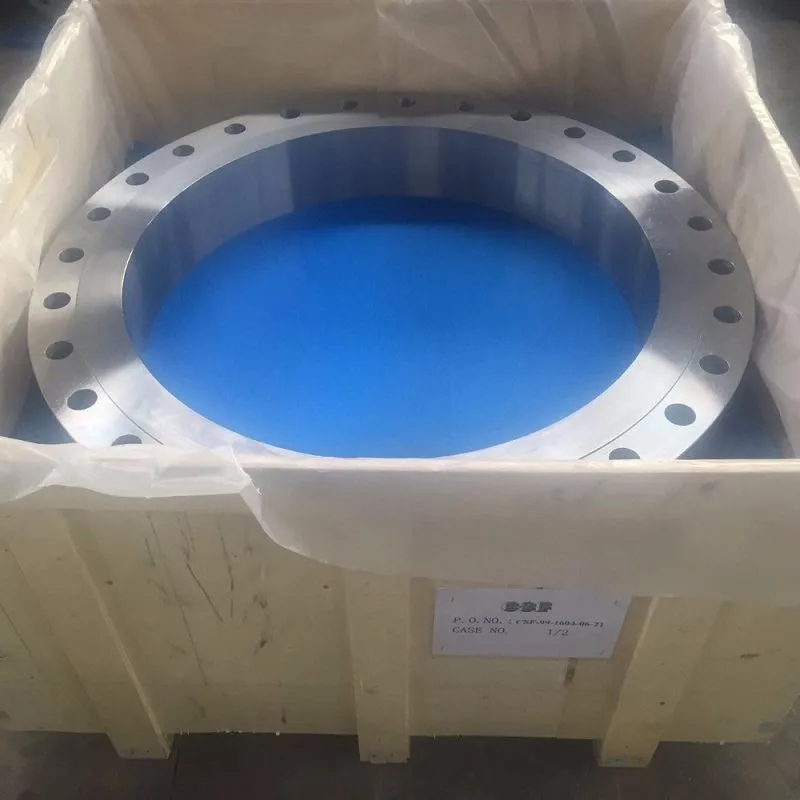
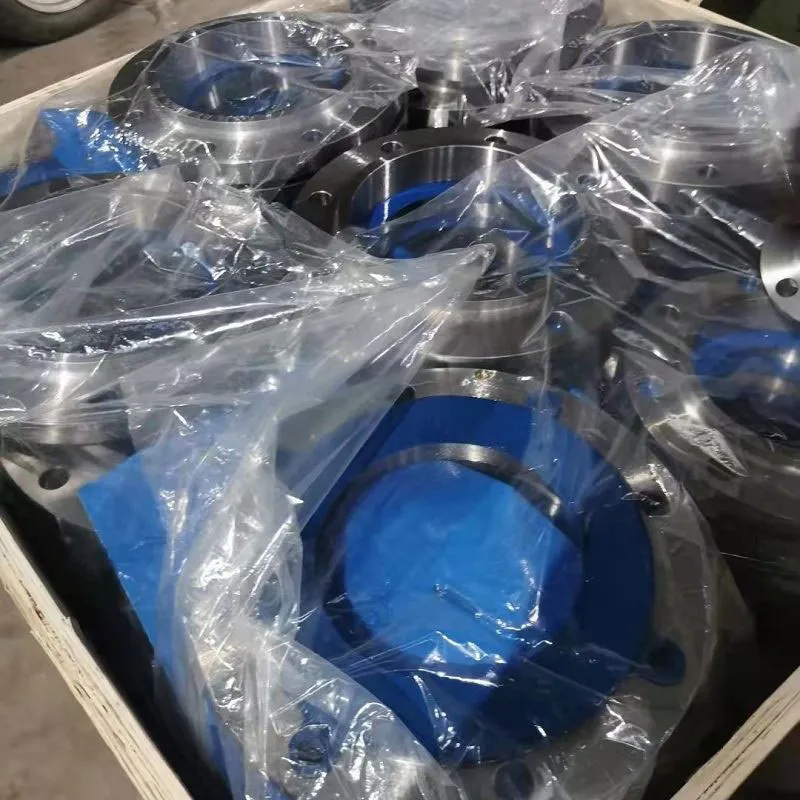
The purchase is just the beginning of the story. Many people forget to consider logistics and storage. Heavy metal structures require proper warehouse preparation. Ifinsulating flange connection 15, the price from the factory for which seemed favorable, will lie for six months in the open air on a construction site in rainy St. Petersburg, its insulating properties can be compromised even before installation. Packaging matters! Factories that work conscientiously pack each connection in individual moisture-proof film and a rigid box. Cheap options often come simply wrapped in stretch on a pallet.
It is also worth mentioning the cost of installation. A qualified welder and installer are expensive. If, due to defective flange geometry (misaligned holes, uneven weld neck), installation is delayed for hours, the savings on the purchase instantly evaporate. Moreover, a crooked flange creates excess stress in the pipeline, which is a time bomb.
How to distinguish a real factory product from a counterfeit: an expert’s checklist
In the era of digitalization and marketplaces, it has become easier to check the manufacturer, but scammers have also become more cunning. Here are some practical steps I recommend you take before signing a supply contract.
First rule: never believe the pictures on the website. Request a video of the production of a specific batch. Ask to see the process of applying insulation coating or assembling a gasket package. A real factory is not afraid to show off its workshops. A fly-by-night company that resells goods from the “Gardener” market or Chinese warehouses will start fussing and looking for excuses.
Second rule: require a quality certificate with specific steel heat numbers. This number can be verified. If you are given an anonymous document “for a shipment,” this is a red flag. In 2026, material traceability has become a requirement for many large customers, especially in the oil and gas sector.
Third rule: pay attention to the labeling. Each quality product must have clear, indelible markings indicating the diameter, pressure (Py), material and date of manufacture. Handicrafts often have blurry markings or no markings at all, relying on a tag that is easy to lose.
And fourth, perhaps the most important: check the plant’s reputation in professional communities. Don't read reviews on the seller's website itself. Go to industry forums, ask your colleagues in supply chats. “Live” discussions often reveal details that no one will officially write about. For example, that at plant “X” a machine broke down last month, and they used defective workpieces for three weeks to fulfill the plan.
Service and warranty problem
What happens when the connection fails? This is where the real test of the strength of the relationship with the supplier begins. Large factories usually have their own service department or a network of authorized partners. They are ready to go to the site, conduct diagnostics and replace the defective unit. Small resellers often disappear after receiving money or shift responsibility to “force majeure” or “violation of operating conditions.”
When concluding a contract, be sure to pay attention to the warranty clause. What is the warranty period? What exactly does it cover? Does it cover consequential losses? Ideally, a guarantee forinsulating flange connection 15must be at least 18-24 months from the moment of commissioning, and not from the moment of shipment from the warehouse. This is a fundamental difference, since a lot of time can pass between purchase and installation.
Localization of production: myths and reality of the Russian market
Now it is fashionable to talk about complete import substitution. The slogans “Made in Russia” adorn every second catalogue. But let's dig deeper. Are all components actually made here? The situation is ambiguous. Many Russian factories assemble products from imported components, stocks of which were made in advance, or purchase them through parallel imports through third countries. This affects the stability of supply and price.
If independence from external supply chains is critical to you, check the origin of the raw materials. Does the plant have its own capacity to produce fluoroplastic or fiberglass? Or do they purchase sheets from a single supplier, which depends on the euro exchange rate and logistics? Given the volatility of the ruble and difficulties with cross-border payments, this becomes a strategic risk factor.
However, there are a number of enterprises that have actually gone through the full localization cycle or have a transparent production base abroad that guarantees quality. A striking example of a responsible approach is the companyShanxi Hongkai Forging Co., Ltd.. Based in Dingxiang County, a key industrial center for the forging industry in China, the organization operates three of its own production sites, covering the full cycle from primary forging to finishing packaging. Unlike many resellers, Shanxi Hongkai Forging operates as an independent legal entity with the right to direct export, which ensures transparency of transactions and the absence of hidden intermediaries.
For projects where the reliability of the IFS flange base is critical, it is important to know that the range of such manufacturers includes six types of forged flanges of strict execution according to international standards (DIN, ANSI B16.5, GOST, ASME). The range of nominal diameters from DN15 to DN4000 allows us to meet the needs of both compact units and large-scale highways. Having our own infrastructure for heat treatment, machining and physical and chemical testing at all three sites ensures that the flange metal is not “raw” or overheated. The geographical location in Dingxiang also provides logistical advantages, ensuring timely shipment to Russia and the CIS countries. By choosing a partner with such vertical integration, you minimize the risk of receiving products assembled from unknown imported components in handicraft production.
However, even when working with reliable factories, it is important to remember: if independence from external supply chains in the long term (10-15 years) is critical for you, check the terms of service and availability of warehouse stocks in the Russian Federation. Products from companies like Shanxi Hongkai Forging may cost more than the market price, but they provide predictability. Saving at the start can lead to the fact that after five years you simply will not find an analogue to replace a failed element if the manufacturer disappears from the market along with its suppliers.
The influence of exchange rates and inflation on pricing policy
The macroeconomic context cannot be ignored. Prices for metal, energy and logistics in Russia are growing at an accelerated pace. Factories are forced to constantly revise price lists. A fixed price in a contract for six months in advance is a great rarity and luxury. Most often, the price is tied to the date of payment or shipment.
Therefore, when you see an attractive offer “insulating flange connection 15, the price from the factory is fixed”, read the conditions carefully. Most likely, this is a marketing ploy that is valid only for cash payments today, or the batch size must be carload. For small purchases the price will be floating. Plan your budget with a reserve of 15-20% for possible price increases during the project implementation period.
Practical recommendations for selection and installation
So, you have decided on a supplier, checked the documents and are ready for installation. Don't relax. The quality of the installation plays no less a role than the quality of the product itself. Even the most expensive and reliable flange can be killed by improper installation.
The main mistake installers make is uneven tightening of bolts. This leads to distortion of the gasket and loss of tightness. Use a torque wrench and tighten the bolts in a crisscross pattern in several passes. Control the tightening force according to the product data sheet. Overtightening is just as dangerous as undertightening: you can crush the insulating sleeve or break the thread.
Another important point is protection from the external environment. After installation, it is advisable to protect the open parts of the fasteners and the joints of the flanges with special compounds or casings, especially if the pipeline runs in an aggressive environment or underground. Stray currents can find their way through moisture and dirt that has settled outside, nullifying the entire work of the insulating package.
Don't forget about periodic monitoring. Establish an insulation resistance test schedule. Modern devices allow you to do this without turning off the system. If the resistance begins to fall, this is a signal of beginning problems. It is better to eliminate them at an early stage than to eliminate the accident.
Prospects for the development of IFS technologies
Where is the industry heading? In the coming years we will see the introduction of smart connections with built-in sensors to monitor insulation integrity and bolt tension. Such systems will transmit data to the control center in real time. While this is expensive and is only used at critical facilities, the technology is quickly becoming cheaper.
New composite materials for gaskets are also expected to emerge that will combine high heat resistance with elasticity at ultra-low temperatures. Russian research institutes are actively working in this direction, and the first samples are already being tested. This will make it possible to create compounds that are practically eternal in our climate.
But for now, in 2026, we have to work with what we have. And the main conclusion I want to convey is: do not chase the lowest price.Insulating flange connection 15is a security element. Its reliability is measured not by rubles saved on purchase, but by years of trouble-free operation. Choose trusted manufacturers with a transparent history, such as enterprises with a full cycle of quality control, require certificates, control installation and do not skimp on quality where the cost of an error may be too high.
Рынок очистится от слабых игроков, останутся только те, кто предлагает реальный продукт и сервис. Будьте на стороне тех, кто строит будущее, а не продает прошлое по цене нового.