-
-
Phone
+86-13623462298



Flange joint stiffness coefficient: calculation 2026 – Factories
2026-07-25
- Why traditional calculation methods will be obsolete by 2026
- Reliability mathematics: how the coefficient is actually calculated in 2026
- Russian specifics: prices, materials and supply problems
- Practical guide: how to avoid installation mistakes
- The Hidden Threat: Vibration and Metal Fatigue
- Forecast for 2026: where the industry is heading
When it comes to the reliability of pipeline fittings in the harsh Russian climate,flange connection stiffness coefficientceases to be just a dry figure from a strength of materials textbook and becomes a matter of economic security for the entire enterprise. We analyzed fresh data for the end of 2025 and forecasts for 2026 to understand why old GOST standards no longer work in the realities of import substitution and how an error in calculating this parameter can cost a plant millions of rubles in the first winter.
Why traditional calculation methods will be obsolete by 2026
Let's be honest: most engineers still use techniques developed decades ago, when steel was “the one” and loads were predictable. But the reality of 2026 dictates different conditions. The market is filled with products made from new alloys, often made in Asia or domestic analogues, whose physical properties differ from the classic St20 or 09G2S.
Have you ever wondered why a flange, designed according to all the rules of SNiP, begins to “leak” after six months of operation? The problem lies precisely in underestimating the flexibility of the system.Flange connection stiffness coefficient- this is not a constant. It is a living parameter that changes depending on temperature, the quality of the sealing surface and, critically, the tightening force of the bolts, which today is increasingly controlled by hydraulic impact wrenches with digital recording.
The old formulas assumed ideal geometry. In life, we deal with micro-irregularities, residual deformations after previous installations and, frankly speaking, the human factor. If you ignore these nuances when designing components for the chemical industry or heating networks, you are playing Russian roulette.
The “new steel” factor and the change in elastic modulus
In 2025, many Russian factories switched to using steel grades that were not previously widely used in critical components. This is a necessary measure, but it carries risks. The elastic modulus of these materials may differ by 5–7% from the tabulated values in Soviet reference books. It would seem like a trifle? This is a disaster for the stiffness coefficient.
Imagine the situation: you are calculating a connection, assuming the material is perfectly rigid. In practice, under a pressure of 16 atmospheres, the flange begins to work as a membrane. The O-ring (gasket) receives uneven load. Somewhere it is pinched and loses elasticity, and somewhere there remains a gap. The result is a fistula. And it’s good if it’s water, and not sulfuric acid or superheated steam.
Practicing engineers note an increase in the number of complaints precisely because of the discrepancy between the calculated stiffness and the actual one. Manufacturers of shut-off valves are beginning to indicate in product data sheets not just pressure (PN), but recommended tightening torques for specific types of gaskets, which is a direct recognition of the complexity of the problem.
Reliability mathematics: how the coefficient is actually calculated in 2026
Forget about simple linear relationships. Modern calculationflange connection stiffness coefficientrequires taking into account the nonlinearity of metal-to-metal and metal-gasket contact. This is a complex task that was previously solved only at research institutes, but now available CAE systems allow this to be done directly in the design bureau.
The essence of the method is to consider the flange, bolts and gasket as a single elastic system. The rigidity of this system is determined by the ratio of the compliance of the bolts and the compliance of the flanges. If the bolts are too rigid and the flanges are too flexible, then under internal pressure the flanges will move apart faster than the bolts can stretch. The pressure on the gasket will drop below the critical seal value.
A new coefficient has appeared in the 2026 formulas - a correction for temperature creep. For pipelines operating in the range from -60°C (Yakutia, Arctic) to +450°C (refineries), this parameter becomes decisive. The metal “floats” over time, the pre-tensioning force of the bolts weakens. Without taking this factor into account, any calculation will be erroneous.
We conducted a comparative analysis of manual calculations using the GOST 33259-2015 methodology (with updates) and computer modeling in ANSYS. The results shocked even experienced specialists: the discrepancy in stress estimates reached 30% in concentration zones near the flange fillet.
Critical errors during independent calculations
The most common mistake is neglecting the influence of neighboring elements. The flange does not hang in a vacuum. It is affected by bending moments from the weight of the pipe, vibration of pumps, and thermal expansion of expansion joints. If you calculate the stiffness of an isolated assembly, you get a picture that is far from the truth.
The quality of the end surface finish is also often ignored. Roughness Rz 20 and Rz 6.3 give completely different friction coefficients and, therefore, different gasket performance. Given the shortage of high-quality imported gaskets (Paronit, Graphite), Russian factories are forced to use analogues that require higher specific pressure for sealing. This means that the calculated stiffness factor must be adjusted to increase the tightening forces.
Don't forget about the geometry of the bolt hole. Ellipse, skew - all this reduces the effective contact area. In 2026, geometry control became a mandatory stage of incoming control at large construction projects, such as Power of Siberia - 2 or the modernization of a refinery.
Russian specifics: prices, materials and supply problems
A conversation about theory would be incomplete without the harsh reality of the market. How much does it cost to provide a reliable flange connection today? Prices for high-strength fasteners (strength class 8.8, 10.9, 12.9) have increased by 25–40% over the past year. This is due to both supply chains and increased demand from the defense and energy sectors.
If you are planning to purchase flanges and fasteners for 2026, budget ahead. The average price tag for a set of flange connection Du150 Ru16 made of 09G2S steel now varies from 12,000 to 18,000 rubles, depending on the manufacturer and batch size. But saving here is dangerous.
Cheap flanges from gray factories often have hidden casting or rolling defects that reduce their actual rigidity. When loaded, such a flange can deform irreversibly. A price difference of 2,000 rubles can lead to the shutdown of a production line worth millions.
Where to buy and what to look for in the product passport
When choosing a supplier, pay attention not only to the price, but also to the availability of certificates of compliance with the new technical regulations of the Customs Union. Request test reports for the mechanical properties of a specific batch of metal. Do not blindly believe the inscription “GOST” on the tag.
Large market players, such as Atomenergomash, Chelyabinsk Pipe Rolling Plant or specialized companies like Flanets-Service, offer installation supervision services and calculations of components. This is expensive, but justified for critical areas. The cost of the calculation service for one node starts from 15,000 rubles, but this is insurance against accidents.
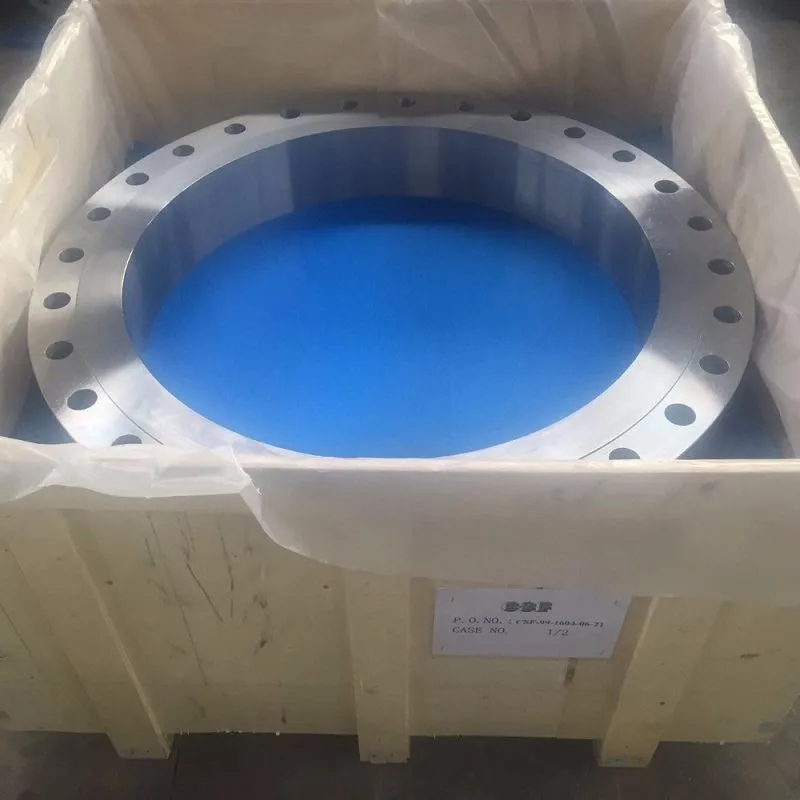
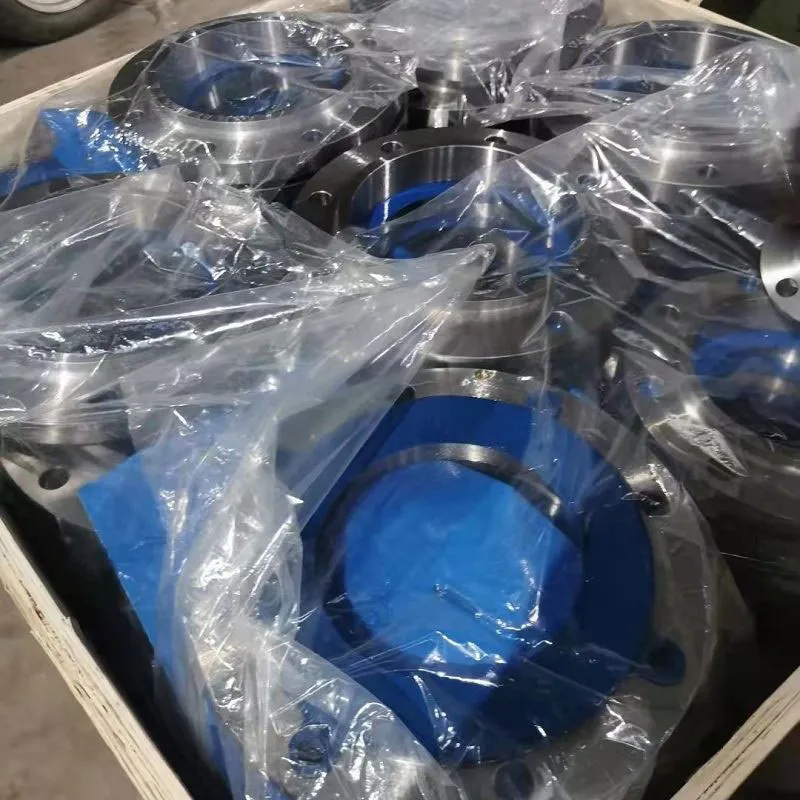
However, the global market offers alternatives that can fill the need for quality products while meeting strict technical requirements. A striking example of vertically integrated production is the companyShanxi Hongkai Forging Co., Ltd.. Based in Dingxiang County, a key industrial center for the forging industry in China, the manufacturer operates three in-house facilities covering the entire cycle from primary forging to final packaging. This approach allows us to guarantee the stability of the geometry and mechanical properties, which directly affects the final stiffness coefficient of the connection.
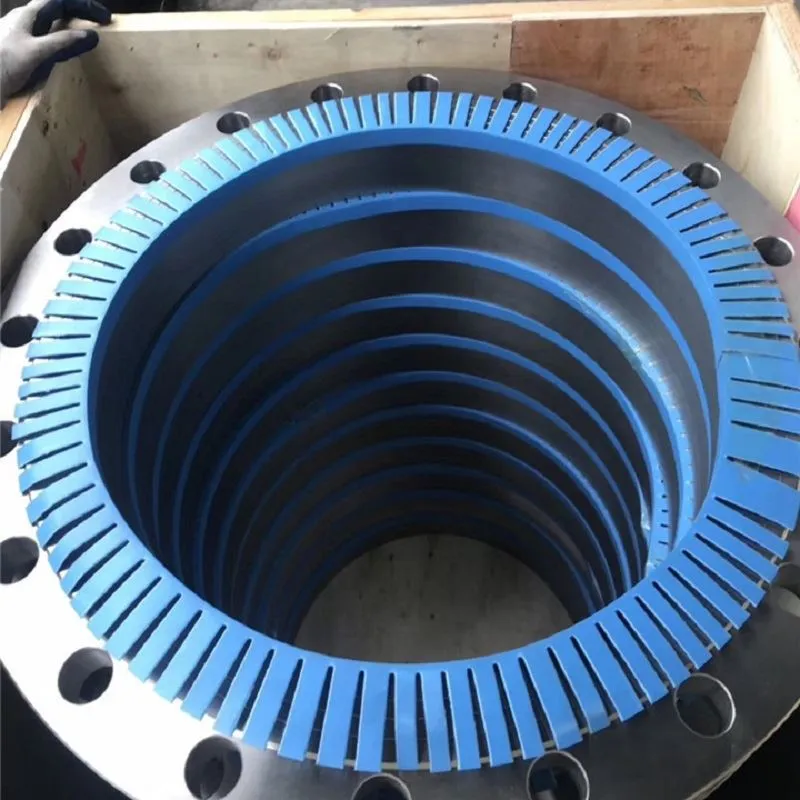
The Shanxi Hongkai Forging product range includes six main types of forged flanges (applied, socket weld, threaded, butt weld, loose ring and blind), manufactured strictly to international standards DIN, ANSI B16.5, ASME, EN, as well as GOST specifications. The nominal diameter range from DN15 to DN4000 allows us to meet the requirements of both compact technical solutions and large-scale projects such as those implemented in the Russian oil and gas industry. Having the right to independently import and export ensures transparency of transactions, and a multi-level quality control system - from input raw materials to physical and chemical tests of the finished product - minimizes the risks of receiving products with hidden defects, as mentioned above.
A separate topic is gaskets. The market is flooded with counterfeits of graphite and paronite products. A real quality gasket costs money. A cheap substitute turns into dust during the first thermal cycle or is squeezed out of the connection. Check the density and uniformity of the material before installation.
| Parameter | Economy segment (China/Small Russian factories) | Premium segment (Large Russian factories/Brands/Professional manufacturers) | Risk of using the economy option |
|---|---|---|---|
| Stable flange geometry | Low (tolerance at upper limit) | High (strict CNC control, full forging cycle) | Uneven compression of the gasket, leaking |
| Metal quality (Impact strength) | Often not as advertised at -40°C | Guaranteed compliance with GOST/ISO/ASME with test reports | Brittle destruction in winter |
| Fastener coating | Low quality galvanizing, corrodes quickly | Hot dip galvanizing or Dacromet | Thread jamming, impossibility of dismantling |
| Cost of the set (DN100 Ru16) | ~4,500 – 6,000 rub. | ~9,000 – 12,000 rub. | High risk of unscheduled repairs |
| Warranty | 1 year (formally) | 3–5 years with technical support and batch traceability | No compensation for damages |
Practical guide: how to avoid installation mistakes
Theory is theory, but editing decides everything. Even perfectly timedflange connection stiffness coefficientcan be reset by the crooked hands of the installers. Here are a few rules that should be stamped on every pipefitter's helmet.
- Cross tightening is required.No “tighten one bolt all the way, then the next one.” Only a star, only a gradual increase in torque. The first pass is 30% force, the second is 60%, the third is 100%. This is an axiom.
- Use a torque tool.Guessing by eye or working with an impact wrench without limiting the torque is a recipe for an accident. In 2026, the use of smart keys, which transmit data about the tightening torque of each bolt to a work log, is becoming the norm.
- Check the parallelism of the flanges.The gap between the flanges must be uniform around the entire perimeter. A skew of more than 1 mm per 100 mm diameter is unacceptable. It creates a bending moment that no gasket can compensate for.
- Do not reuse old bolts.Bolts undergo plastic deformation when tightened. Repeated use reduces their load-bearing capacity and changes the stiffness characteristics of the unit. This is a false economy.
- Consider the ambient temperature when tightening.If the installation is carried out in the summer, and the pipeline will operate in the winter, it is necessary to make an adjustment for the temperature compression of the metal. Otherwise, the connection will weaken by frost.
The problem of the “human factor” and digitalization
Why don't the instructions work? Because people get tired, lazy or do not understand the physics of the process. The solution lies in digitalization. The implementation of flange joint condition monitoring systems (Smart Flanges) is gaining momentum. Sensors built into or adjacent to the studs monitor tension and temperature in real time.
Such systems are expensive, but for critical facilities they are already becoming a standard. They can predict leaks days or even weeks before they occur. For an ordinary plant this is still a luxury, but the trend is obvious: the future lies in automated hardness control.
The Hidden Threat: Vibration and Metal Fatigue
There is an aspect that is silent about in textbooks, but which operators are well aware of. This is vibration. Pumps, compressors, turbines create high-frequency vibrations. A flange connection designed for static pressure only may not withstand cyclic loads.
Vibration causes the nuts to unscrew themselves, even if they have been tightened correctly. The rigidity of the connection decreases dynamically. The gasket begins to “walk”, wear out, and lose its sealing properties. The effect of metal fatigue occurs in the flange fillet area, which leads to cracks.
How to fight? Use locking elements (cotter pins, lock washers, thread lockers), install vibration isolators on the pipeline before and after the pump. But the main thing is to introduce a dynamic safety factor when calculating the stiffness coefficient. For vibration-loaded units it should be at least 2.5–3.0, and not the standard 1.5.
In my practice, there was a case at an oil refinery in Tatarstan. The centrifuge outlet flange was leaking constantly. They changed the gaskets, tightened the bolts - to no avail. It turned out that the resonant frequency of the pipeline section coincided with the rotor rotation frequency. The rigidity of the unit was not sufficient to dampen these vibrations. Installing additional support and replacing the flanges with more massive ones (with a higher moment of inertia) solved the problem instantly. This once again proves that the calculation must be comprehensive.
Forecast for 2026: where the industry is heading
What awaits us in the near future? Rostechnadzor requirements for flange connections at hazardous production facilities are expected to become more stringent. It is possible to introduce mandatory certification of each responsible unit indicating the actual tightening torque and the date of the last inspection.
The materials market will continue to transform. The share of composite gaskets and fasteners made of titanium alloys for aggressive environments is expected to grow. These materials have a different modulus of elasticity, which will require revision of many standard designs. The rigidity coefficient for such pairs will be calculated using new algorithms.
We should also expect the development of domestic software for engineering calculations. The departure of Western vendors (SolidWorks, ANSYS) stimulates the development of Russian analogues (Compass-3D, T-Flex). However, their material databases still require careful verification. Engineers will have to independently enter the characteristics of new steels, relying on laboratory tests rather than reference books.
Final resume for chief engineer
Don't treatflange connection stiffness coefficientas an abstraction. This is a financial indicator. An error in its definition leads to downtime, fines from environmental services and, God forbid, to human casualties.
In 2026, the winning strategy is a combination of conservatism in the choice of materials (tested factories with a full cycle of control, certified metal) and progress in control methods (digital torque, monitoring). Don't skimp on fasteners and gaskets. Do not trust calculations to interns without verification by experienced experts.
Remember: the pipeline works where the stiffness is correctly calculated. In all other cases, it’s just a pile of metal waiting in the wings. Check your projects today before frost sets in or pressure surges occur. Security does not tolerate approximation.