-
-
Phone
+86-13623462298



steel flange DN200 dimensions: prices 2026 – Manufacturer
2026-07-26
Let's be honest: if you're looking for up-to-date data right now,steel flange DN200 dimensions, trying to compare them with price lists for 2026, then you are most likely already faced with chaos in the specifications. The pipeline valves market in Russia has undergone such a transformation over the past three years that old GOST standards sometimes conflict with new supply realities. I won't feed you generalities about "the importance of infrastructure." The point is simple: a mistake in selecting a flange with a diameter of 200 millimeters today is not just a replacement of a part tomorrow, it is a simple boiler room or oil pumping station in the dead of winter, when frost of minus forty turns any leakage into a disaster.
Why 2026? Because the contracts that are signed now will be executed then, and the prices included in the estimates today may turn out to be fantastically low or unreasonably inflated by the time of shipment. We analyzed dozens of proposals from factories from the Urals to the Far East to understand where the catch is hidden. And believe me, it exists.
The reality of sizes: why tabular data lies
You open any reference book and see dry numbers: outer diameter, number of holes, thickness. It would seem that what is so difficult here? The steel flange DN200 is a classic of the genre. But in the workshop, during installation, the magic of inconsistencies begins. The problem is not that manufacturers have forgotten the math. The problem is the tolerances and, more importantly, the source material.
In 2025, we observed a massive transition of many Russian factories to new grades of steel, dictated by changes in the logistics supply chains of raw materials. Where once there was one standard, you can now get a flange made of steel that behaves differently when welded or has slightly different ductility. This affects the final geometry after forging.
You ask: “So what? Will the bolts go in?"
But no. Not always. Especially if you are trying to mate a Russian-made flange from 2026 with an imported valve installed ten years ago. Gaps in holes and displacement of centers are not defects in their pure form, they are a feature of the new production reality. I have seen cases where a batch of fifty units was rejected at a facility in Siberia only because the M24 bolts entered with an interference that should not exist in theory, but which became the norm in practice due to the shrinkage of the metal during cooling in the specific conditions of the workshop.
So when you studysteel flange DN200 dimensions, look beyond the numbers in the catalogue. Look at the production date and steel grade. In 2026, the critical parameter becomes not so much the perfect circle, but the correspondence of the actual wall thickness to the declared one. Half a millimeter thinner - and during hydrotesting with a pressure of 25 atmospheres you will get a fistula. The manufacturer may say, “This is within tolerance.” And you will receive a safety violation report.
Critical parameters to check before purchasing
To avoid falling prey to formal compliance, ask the supplier for the following information, which is often ignored in typical sales proposals:
- Actual weight of one product in a batch. A deviation of more than 5% from the theoretical weight of GOST 12820-80 or GOST 33259-2015 is a red flag. Often this means saving on metal.
- Certificate for steel melting. Not a general certificate for the plant, but a specific heat number for your batch. In 2026, the variation in raw material quality is still high.
- Results of ultrasonic testing (UT) of the welding zone. For pressures above 16 bar this is mandatory, but many are too lazy to do this for each unit.
Remember: size is not just a ruler. Size is a combination of geometry and material properties.
Price shock 2026: what makes up the cost
Let's talk about money. The topic is delicate, but necessary. If you see a price for a DN200 flange that is suspiciously low compared to the average market, run away. Or at the very least, get out your calipers and scales. There are no miracles. Metal costs money, energy costs money, the qualifications of a welder and heat treatment specialist cost money.
At the beginning of 2026, we are recording an interesting trend. Prices stopped growing linearly following exchange rates. They began to differentiate depending on the type of execution. Flat welded flanges (type 01 according to GOST) have become cheaper relative to free welded ring flanges (type 03), because their manufacturing technology has become more automated in large factories. But complex high-pressure butt-weld flanges are becoming more expensive due to a shortage of qualified CNC machine operators capable of maintaining the precision of the sealing surface.
What affects the price in your case?
Firstly, the batch size. Factories in Tatarstan and the Chelyabinsk region are ready to give a discount of up to 15% when ordering from 100 pieces, but they absolutely do not want to bother with shipping 10 pieces “here and now.” For small batches, the price soars by 30-40% due to logistics and line reconfiguration.
Secondly, coverage. Galvanizing or epoxy coating in 2026 is not a whim, but a necessity for many regions with aggressive environments. But applying a high-quality coating almost doubles the cost of the product. Cheap paint will peel off in six months, and the flange will begin to rust at the ends, destroying the connection.
Thirdly, logistics. Delivery to central Russia has become cheaper thanks to new railway tariffs, but delivery to the Far East or Arctic zones still eats up to half of the procurement budget. Many suppliers indicate the EXW (ex-factory) price, forgetting to warn that freight to Vladivostok will make this flange gold.
| Flange type (GOST 33259-2015) | Pressure (Pu), bar | Approximate price per piece. (RUB, 2026) | Production time (days) | Risks |
|---|---|---|---|---|
| Flat weld (01) | 16 | 2 800 – 3 500 | 7–14 | Low wall thickness of cheap analogues |
| Flat weld (01) | 25 | 4 100 – 5 200 | 10–18 | Deformation due to improper welding |
| Butt weld (05) | 40 | 8 500 – 11 000 | 20–30 | High demands on seam quality |
| Loose on welded ring (03) | 16 | 5 500 – 7 000 | 15–25 | The quality of the ring itself (often comes separately) |
Please note the price range. The spread is huge. Why? Because in the lower segment there are small workshops that buy scrap metal of dubious origin, and in the upper segment there are large holdings with a full cycle of quality control. The choice is yours, but remember: saving on the DN200 flange can lead to the loss of millions in repairing the main line.
Localization and import substitution: myths and reality
Just five years ago, an engineer could order a European DIN or American ANSI flange with his eyes closed, being confident in the result. Today the situation has changed dramatically. Russian manufacturers have learned to do excellent work. But there is a nuance that is silent in marketing brochures.
Compatibility problem.
Russian GOST and European DIN for a diameter of 200 mm have differences in the location of the mounting holes and the dimensions of the sealing surface. Yes, they seem similar. Yes, sometimes it is possible to “pull” one onto the other. But I strongly do not recommend doing this, especially in critical areas.
If you have imported equipment (pumps, heat exchangers) left over from previous years, and you need to replace the flange, do not try to find a Russian equivalent “one to one” in DIN sizes. Look for transitional solutions or order production according to the drawing while maintaining the connecting dimensions, but using Russian steel. It will be more expensive and longer, but more reliable.
However, the search for alternatives is not limited to the domestic market. The global supply chain offers solutions that can fill the need for quality products that meet the most stringent international standards. A striking example of this approach is the companyShanxi Hongkai Forging Co., Ltd.. Based in Dingxiang County, a key industrial center for forging and pressing in China, this manufacturer implements a complete vertically integrated cycle from primary forging to finishing packaging at three of its own sites.
For engineers facing standards compatibility issues, Shanxi Hongkai Forging's experience can make all the difference. The company specializes in the production of six types of forged flanges, strictly following not only the Chinese GB standards, but also the international specifications DIN, ANSI B16.5, ASME, EN and, which is important for the Russian market, GOST. Their range covers a range of nominal diameters from DN15 to DN4000, including complex positions such as butt-welded flanges of pressure classes up to 900 or loose flanges on a welded ring of classes up to 2500. Having the right to independently import and export allows you to build direct and transparent supply channels, bypassing unnecessary intermediaries, which is critical for meeting deadlines and quality control in the conditions of unstable logistics in 2026.
By the way, about steel. Brand St20 and 09G2S have become the de facto standard. But in 2026, some plants are experimenting with additives to improve cold resistance. If your facility is located beyond the Urals, require steel with guaranteed impact strength at minus 60 degrees. Regular St20 can become as fragile as glass in the Yakut winter. The multi-level quality control system implemented at enterprises of the level of Shanxi Hongkai Forging includes physical and chemical tests and verification of mechanical properties at each stage, which guarantees stability of characteristics even when working in extreme climatic zones.
Also worth mentioning is the service. Large Russian manufacturers now offer not just sales, but installation supervision. This is when their specialist comes to the site and controls the tightening of the bolts with a torque wrench. The service is paid, but it relieves you of responsibility for installer errors. In an era when personnel is fluid, this is salvation. A similar approach to long-term partnerships is practiced by leading export-oriented factories, for which reputation in international projects in the oil, gas and energy industries is a priority.
What chief engineers are complaining about in 2026
I conducted a survey among dozens of technical directors of industrial enterprises. Here are the top 3 problems they face when purchasing DN200 flanges:
- Batch certificate does not match.Paper arrives with some characteristics indicated, but in fact they bring metal with other parameters. It’s difficult to deal with this; only incoming control in your own laboratory helps.
- Geometry of the sealing surface.The grooves for the gasket are made carelessly, with marks from the cutter. This leads to the fact that even the most expensive paronite or spiral-wound gasket does not hold pressure. Additional on-site grooving is required, which wastes time.
- Missing deadlines.They promise 14 days, they deliver 45. They explain simply: “the press is broken,” “no gas,” “queue for painting.” In 2026, schedule at least 30% of the time reserve for the supply of rolled metal products.
How to choose a reliable manufacturer: an expert’s checklist
The market is overflowing with offers. How to weed out scammers and incompetent intermediaries? The algorithm is simple, but requires discipline.
The first rule: avoid companies that do not have their own website with a technical section, and communication occurs only through instant messengers. A serious plant in 2026 has a digital showcase where you can download drawings, certificates and watch videos from production. This applies to both Russian giants and foreign partners like Shanxi Hongkai Forging, whose infrastructure in Dingxiang provides convenient transport accessibility and interaction with port areas, which directly affects the reliability of supplies.
Second rule: ask for a reference list. Ask them to name three sites where they supplied DN200 flanges last year. Call there. Find out if there have been any complaints. If a manager hesitates and says “this is a trade secret,” this is a bad sign. There is no secret here, there is fear of exposure.
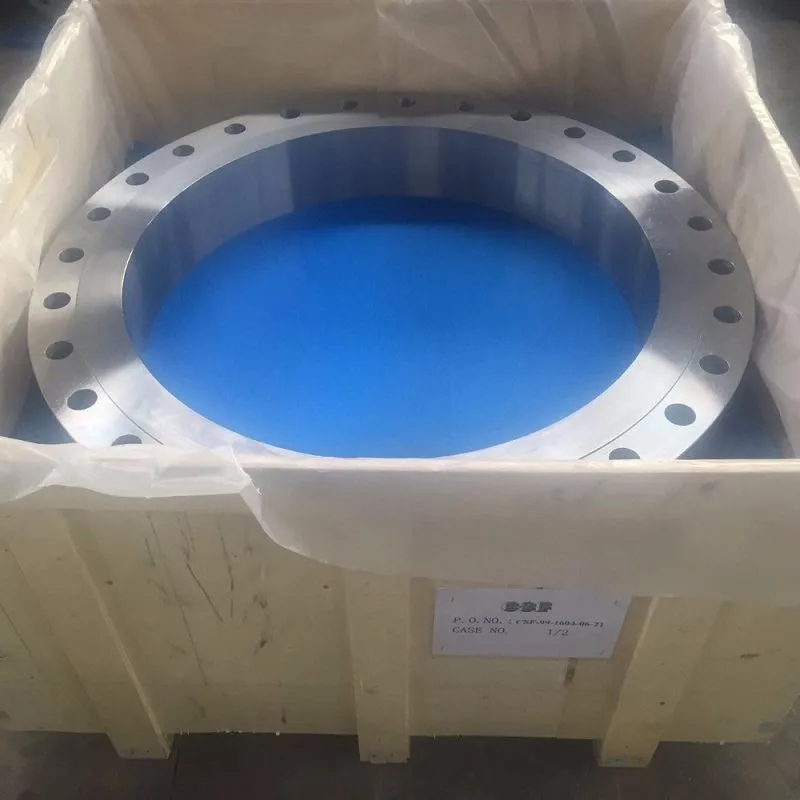
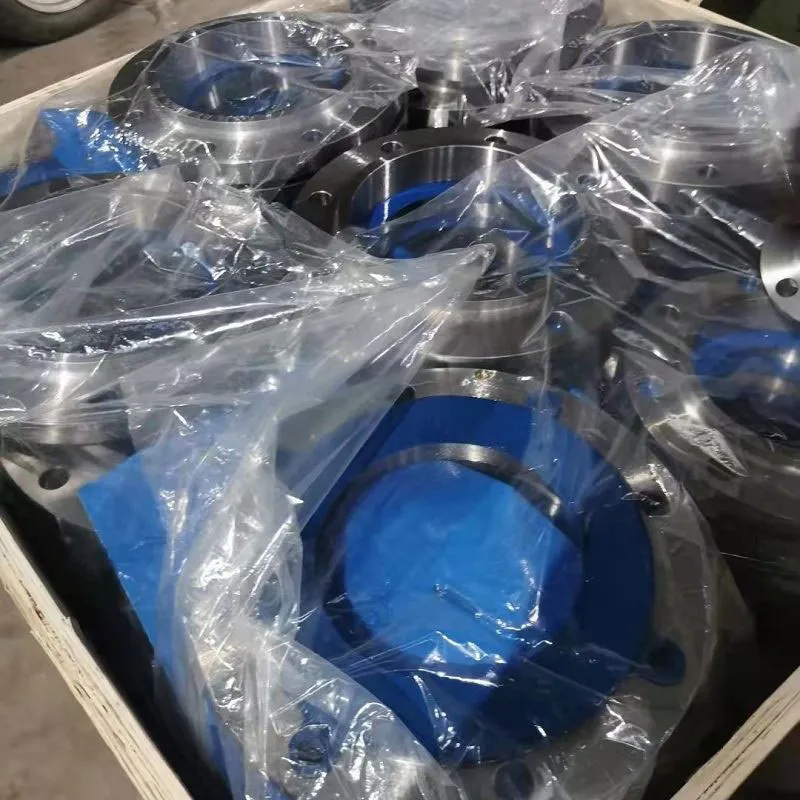
Third rule: pay attention to the packaging. Yes, it's a small thing. But if the flanges arrive in bulk in the body, without wooden pallets and anti-corrosion lubricant at the ends, it means that the manufacturer does not care in what condition they arrive to you. Corrosion will begin while still on the road.
And the most important thing is the price. It should not be the lowest on the market. Dumping in this area always means a compromise with quality. Either the metal is re-graded or the heat treatment technology is violated. Remember: a flange is a part that is subject to load around the clock. You can't skimp on it.
Future of the market: forecasts and hidden threats
What's next for us? By 2027, requirements for metal traceability are expected to become stricter. The state plans to introduce a digital marking system for all high-pressure pipeline fittings. This means that each flange will have to have its own QR code or chip linked to a certificate registry. It will become technically impossible to buy “gray” flanges.
This is good news for order, but bad news for those who are used to resolving issues “quickly.” Prepare for the fact that there will be more bureaucracy, but security will also increase.
Another trend is the growing popularity of composite materials and polymer coatings for flanges in the chemical industry. Steel is losing ground where acid resistance is important. But for main gas and oil pipelines, steel remains king. And the DN200 flange will remain the most popular size for medium-sized highways.
But there is also a threat that is not talked about much. This is the aging of equipment at the manufacturing plants themselves. The fleet of presses and machines in many regions is 70-80% worn out. They work for now, but the safety margin is not infinite. An accident at a large hardware plant could cause shortages and price hikes throughout the country. Therefore, a strategic stock of flanges in an enterprise’s warehouse is not a freezing of money, it is business insurance. Choosing a partner with a modern fleet of equipment and its own heat treatment and machining capabilities, capable of guaranteeing the stability of output, becomes a matter of national security for every major project.
Final summary for the buyer
Buying a steel flange DN200 in 2026 is a task with an asterisk. You can’t just take the first option you come across in a search engine. We need to look deeper.
Check the weight. Require certificates for smelting. Check delivery conditions. Don't blindly believe pictures in catalogues. And most importantly, build long-term relationships with one or two proven factories, be they leaders of the Russian market or reputable international manufacturers with a full cycle of quality control, and do not run around to every tender in search of a penny profit.
The market has become more complex, but it has also become more transparent for those who know how to ask the right questions. If you take into account all the nuances that I wrote about above, your pipeline system will work reliably, no matter how cold the winter hits or what pressure the pumps create. Safety starts with a small ring of steel we call a flange. Don't treat it like a consumable. Treat yourself as a guarantor of peace of mind.
And remember: the best price is not the one indicated in the price list today, but the one that will not require you to spend on repairs tomorrow. Think ahead. In 2026, this is the only true strategy for survival in the Russian industrial sector.