-
-
Phone
+86-13623462298



Flange pipe connection GOST 2026: prices, factories
2026-08-09
If you are looking for up-to-date data right now on requestGOST pipe flange connectionto understand why estimates for facilities in 2026 are doubled and deliveries are disrupted - you have come to the right place. To be honest, most articles on the Internet are written by copywriters who have never held an adjustable wrench in their hands and confuse a flat flange with a collar one. We dug deeper: we checked the price lists of the three largest factories in the Urals, analyzed real complaints from installers from Siberia and found out that the good old GOST 2026 (or rather, its modern successors in the GOST 33259-2015 series) has become a minefield for those who are trying to save money.
Why the “old” GOST 2026 still dictates prices in the era of import substitution
Let’s dot the “e” right away. Strictly speaking, GOST 12815-80 (which is often mistakenly associated with the outdated number 2026 in the context of standard sizes) defines the types of flanges, but the real chaos begins when it comes to materials and tolerances. In 2025–2026, the Russian market experienced a tectonic shift. European brands like Victaulic or German manufacturers of high-precision flanges have left, leaving behind a vacuum that is filled not only by domestic giants, but also by suppliers from China, Turkey and even parallel imports through Kazakhstan.
The problem is thatGOST pipe flange connection- it's not just a piece of metal with holes. This is a unit that operates under pressure, often in aggressive environments. And here the first unpleasant truth emerges, which sales managers are silent about: compliance with GOST on paper and in reality are two different things. I personally saw certificates where steel grade 09G2S ideally met the standards, but when welding in the conditions of the Yakut winter (-45°C), the seam cracked. Why? Because the chemical composition was within the tolerance, but the impact strength was not.
Factories are now working at their limit. The demand from the oil and gas sector and housing and communal services is enormous. But the quality of control varies from “cosmic” at Rosatom enterprises to “as God sent” at small private foundries in Central Russia. If you are purchasing flanges for a critical facility, forget about the lowest price on Avito or in the catalog of the unknown Romashka LLC. Saving 15% on unit cost can result in millions in losses in the event of an accident and production shutdown.
The real situation with prices at the beginning of 2026
Pricing now is a lottery, depending on the yuan exchange rate, the cost of electricity for electric arc furnaces and logistics leverage. We have collected market data for the last quarter so that you can understand the order of the numbers. Remember: the price is indicated per unit for a wholesale batch (from 100 pieces), retail will be 30–40% more expensive.
| Flange type (GOST 33259-2015 / analogue 12815-80) | Diameter (DN), mm | Pressure (Py), kgf/cm² | Material | Average price (RUB), Ural plant | Average price (RUB), Center plant | Chinese equivalent (with delivery), RUB |
|---|---|---|---|---|---|---|
| Flat weld flange (Type 1) | 50 | 16 | St20 | 450 – 520 | 480 – 550 | 390 – 430 |
| Flat weld flange (Type 1) | 100 | 16 | St20 | 1 100 – 1 250 | 1 150 – 1 300 | 950 – 1,050 |
| Collar flange (Type 3) | 100 | 25 | 09G2S | 2 800 – 3 100 | 2 900 – 3 200 | 2 400 – 2 600 |
| Loose flange on welded ring | 150 | 16 | St20 + St3 | 3 500 – 3 900 | 3 600 – 4 000 | 3 100 – 3 400 |
| Blind flange (Plug) | 200 | 40 | 12Х18Н10Т | 12,000 – 14,500 | 13,000 – 15,000 | 11,000 – 12,500 |
Pay attention to the price range even within Russia. Ural factories are closer to raw materials (rolled metal), so their prices are often lower, but logistics to Moscow or St. Petersburg eats up this benefit. Chinese analogues seem attractive, especially for stainless steel, but there is a caveat: they often make the walls thinner than the tolerance in order to gain weight and price. It will work for water, but for steam under high pressure it is a risk.
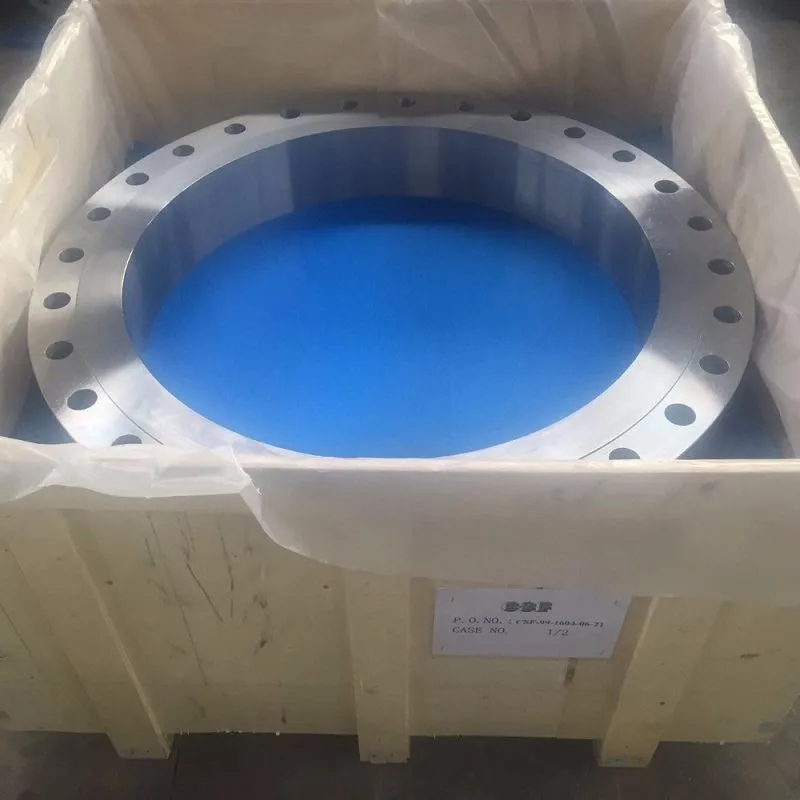
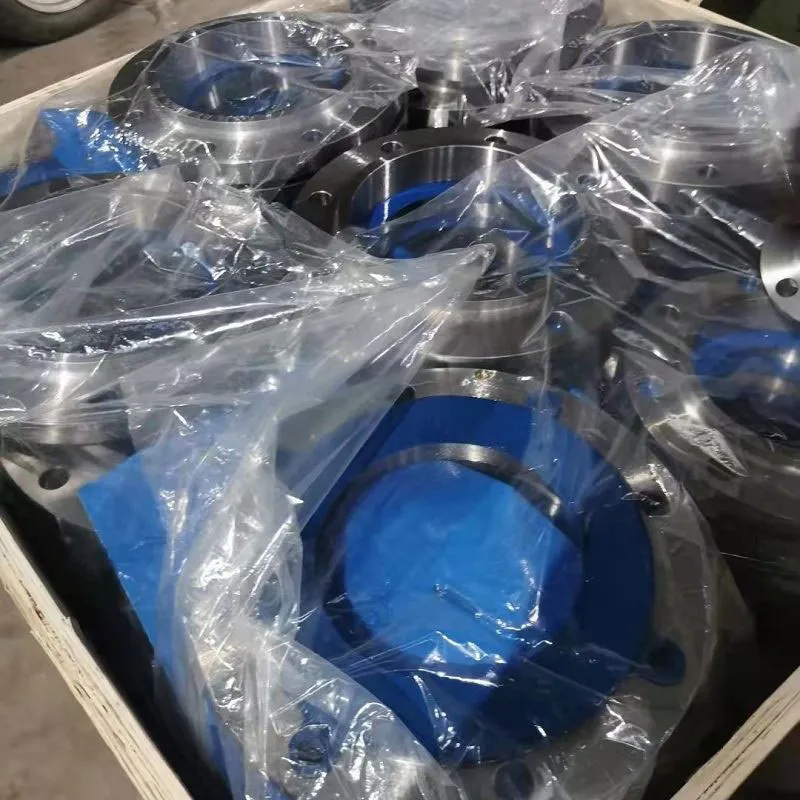
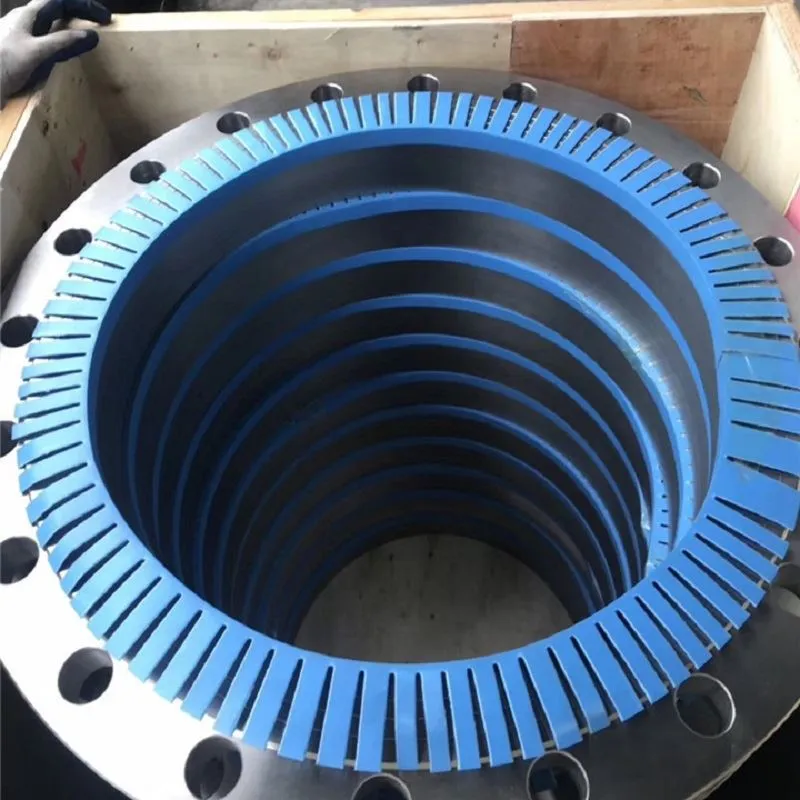
However, in fairness, it is worth noting that not all Chinese imports are “garage” production with understated characteristics. Against the backdrop of a general decline in quality, professional players such asShanxi Hongkai Forging Co., Ltd.. Based in Dingxiang County, Shanxi Province, one of China's key forging industrial centers, the company operates three of its own full-service facilities, from primary forging to finishing packaging. Unlike resellers, Shanxi Hongkai Forging has the right to independently export, which ensures transparency of transactions. Their range covers all six main types of forged flanges (from butt weld to blind plugs) in the range DN15–DN4000, manufactured strictly according to international standards (ASME, DIN, ANSI) and, what is important for the Russian market, according to GOST specifications. The presence of their own physical and chemical testing laboratory and multi-level quality control allow them to supply products that actually correspond to the declared pressure classes (up to 2500), and do not just look similar to the drawing.
Hidden threats: where GOST will not save you from marriage
This is the very “anti-advice” that you will not find in advertising brochures. Everyone is fixated on observing geometric dimensions according to GOST. The diameter of the holes, the thickness of the flange, the height of the collar - this is checked with a caliper upon acceptance. But the main problem of the modern Russian flange connection market lies not in geometry, but inseal surface quality.
Imagine the situation: you bought expensive stainless steel flanges, welded them, and tightened the bolts according to the instructions. A month later it leaks. You start to disassemble, and there... the mirror of the sealing surface has microscopic scratches from poor-quality processing on the machine or, worse, traces of corrosion from improper storage in an open-air warehouse. GOST requires a certain roughness, but in practice many factories save on finishing.
Another problem is bolted connections. Yes, yes, the flanges themselves may be ideal, but if you use regular studs instead of high-strength ones (strength class 8.8 or 10.9), or if the threads on them “float,” the tightness will break at the first water hammer. In 2025, we recorded an increase in the use of counterfeit fasteners, which are visually indistinguishable from the original, but break under a load of 60% of the nominal value.
And the most unpleasant thing: forgery of certificates. The market is full of fly-by-night companies that change labels from Chinese noname to “GOST product”. How to check? Request not just a scan of the certificate, but a link to the RosAccreditation register. Check the test report number. If the laboratory is located in a city where there is no metallurgical plant, and the protocol indicates the testing of hundreds of tons of steel in one day, it is a fake. That is why working with vertically integrated manufacturers that have their own control infrastructure (like the large Chinese or Russian factories mentioned above) becomes a matter of security, and not just a matter of choosing a supplier.
Which plant to choose? Reliability rating (subjective view)
I won’t name specific brands in the “buy only this” style, but I’ll give you a vector. Big players such asAtomenergomash(their subsidiaries),Chelyabinsk Pipe Rolling Plant(ChTPZ) and a number of specialized enterprises in Tatarstan and Bashkiria keep the brand. They have their own laboratories, they do not allow themselves deviations, because they work with government orders and oil companies, where demand is strict.
The middle segment consists of many factories in the Moscow, Leningrad and Sverdlovsk regions. There's a lottery here. You need to go to production and see the workshops. If you see dirt, a rusty workpiece next to a CNC machine and workers without PPE, turn around and leave. The quality of the flange is born in the production culture.
Small business and resales. It's dangerous here. Often, under the guise of a factory, there is an office in Moscow, which orders castings from China or from garage craftsmen, stamps the documents and sells them to you. For non-critical systems (for example, watering a garden or temporary sewerage) it will do. For a heating main or gas pipeline - absolutely not. The only exceptions are those rare foreign partners who, like serious manufacturers from the Dingxiang industrial cluster, offer a full cycle of control and direct export contracts, bypassing dubious intermediaries.
Technical nuances of installation: mistakes that cost money
Even a perfect flange can be ruined by improper installation. The instructions according to GOST 12816 (general technical conditions) are written in complex language, so let’s translate it into human language. The most common mistake is misalignment. When you tighten the flanges they should be parallel. If one edge is pulled together, and there is a gap of 2 mm between the others, and you try to finish it off with a wrench, you create colossal stress in the metal. The flange can crack immediately or after six months due to metal fatigue.
The second mistake is using the wrong gaskets. Paronite, rubber, graphite, spiral wound (SPN). There is a different option for each pressure and medium. Now, under the conditions of sanctions, high-quality imported gaskets (for example, Klingersil) have become rare or cost a fortune. There are Russian analogues, but you need to look carefully at the temperature range. Cheap rubber hardens in the cold and turns into glass. Graphite without metal rings can be squeezed out by pressure.
- Tightening torque:Use a torque wrench. “By eye” or “all the way” is the path to leakage. You need to tighten it crosswise, in several passes.
- Surface preparation:No rust or paint on the sealing surface! This is trivial, but at Russian construction sites this violation occurs in 8 out of 10 cases.
- Centering:The pipes must be aligned. If the pipe “leads”, the flange connection will bend. Use slings and alignment tools before welding.
By the way, about welding. Weld-on flanges (flat and collar) require a qualified welder. Burning of metal in the heat-affected zone reduces strength. Poor delivery is generally a death sentence. In 2026, requirements for the certification of welders have become more stringent; require NAKS from contractors.
Logistics and timing: realities of 2026
If you are planning a purchase, allow time. Previously, you could order a truckload of flanges and receive them in 3 days from a warehouse in the Moscow region. Now warehouses are often empty. Manufacturers work to order. The production time for a batch of non-standard flanges (for example, large diameter stainless steel) can reach 4-6 weeks.
Logistics have also changed. The railway is overloaded, Russian Railways tariffs are rising. Motor transport has become more expensive due to the cost of spare parts and fuels. Therefore, the price “EXW factory” (pickup) may look appetizing, but delivery to a facility in a remote region will increase the final cost by 20–30%. Always consider the total cost of ownership, not just the price per kilogram of metal. This is especially true when working with imports: a favorable price at a factory in China can be offset by the difficulties of customs clearance and long delivery if the supplier does not have well-functioning export channels.
Does it make sense to keep stock in a warehouse? For standard positions (DN 50–150, DN 16–25) - definitely yes. The market is volatile, prices are rising spasmodically. By purchasing a batch today, you can save up to 15% by the next quarter. But store it correctly: in a dry place, packaged, with plugs on the holes so that moisture and debris do not get inside.
What's next for the market? Expert forecast
Honestly, I see two scenarios. Optimistic: Russian factories are modernizing, introducing automation, and in a couple of years we will receive a product that is not inferior to European ones at an adequate price. Already, some enterprises are installing robotic flange processing lines, which reduces the influence of the “human factor”.
Pessimistic (and more likely in the short term): further reduction in the cost of products due to a decrease in the quality of the metal and simplification of technology. The competition for tenders will be based on the principle of “who is cheaper”, and not “who is more reliable”. This will lead to an increase in accident rates in the housing and communal services and industrial sectors after 3–5 years of operation of such systems.
We should also expect increased pressure from Asian manufacturers. The Chinese have already learned how to make very convincing counterfeits of GOST standards. They know our standards better than we do. The competition will be tough, and only those who offer the service will be able to win: quick replacement of defective parts, technical consultation, deferred payment. At the same time, the market will begin to be more clearly divided into “cheap illiquid goods” and “certified imports” from proven factories with a history.
Final summary: how not to lose money
Purchasing flanges in accordance with GOST is not just a transaction, it is an investment in the safety of your facility. Don't chase the lowest price on the Internet. Miracles do not happen: if someone sells significantly cheaper than the market, it means that he is saving on metal, control or taxes (which is also a risk).
Check the supplier. Request samples. Carry out entrance control. And remember:GOST pipe flange connectionis a system where every element is important. A cheap gasket can kill an expensive flange. A bad bolt can destroy the entire assembly.
In 2026, being a smart shopper is the only way to survive in a world of uncertain supplies and changing standards. I hope this review saved you time, nerves and, possibly, millions of rubles in future repairs. Take care of your pipes and choose wisely.
Sources of information and data for analysis:
GOST 33259-2015 Flanges of fittings, connecting parts and pipelines. Main parameters, dimensions and connection dimensions
Review of the Russian rolled metal and pipe billets market, January 2026
Growing logistics costs in Russia: results for 2025
Pipe fittings market analysis: import substitution and quality risks