-
-
Phone
+86-13623462298



Forged Flanges: Complete Guide and Top 5 Tips 2026
2026-05-08
- Why the old flange selection standards no longer work in 2026
- Top 5 tips for choosing forged flanges for Russian conditions
- Comparative Analysis: Forging vs. Casting and Stamping
- Pricing and market: what to expect in 2026?
- Technical nuances of installation: where mistakes are made
- The future of technology: what awaits us?
- Conclusion: the choice is yours, but the cost of error is high
If you are right now faced with a choice between cast andforged flangesfor a high pressure pipeline operating in the Siberian winter or aggressive chemical environment, then this article is the only thing you need to read before calling the supplier. We will not retell GOSTs that you already know; instead, we will analyze real cases from 2025-2026, where savings on forging led to millions in losses, and honestly answer the question: is it even worth overpaying for “forging” in the current realities of the Russian market, or is it just a marketing ploy?
Why the old flange selection standards no longer work in 2026
Let's start with an inconvenient truth. The rolled metal market in Russia has changed beyond recognition over the past two years. What worked in 2023 may cause an accident today. I personally observed the situation at one of the oil refineries near Ufa, where a batch of supposedly “forged” flanges from a new delivery showed cracks during hydrotesting after just three months of operation. The problem was not in the forging technology as such, but in the raw materials.
Previously, we looked at the steel grade and manufacturing method. Today, the key factor is the origin of the workpiece and quality control at each stage, especially given the reorientation of supply chains to the East. Many manufacturers, trying to keep prices in rubles at an acceptable level, began to use metal of dubious origin or violate forging temperature conditions.
A forged flange differs from a cast flange in that its internal structure is compacted under enormous pressure. Metal grains are pulled along the lines of force, creating a kind of “reinforcement” inside the part. This gives a colossal margin of tensile strength and impact strength. But! If the forging was done on a cold stock or steel with a high sulfur content was used (which sometimes happens with some Asian suppliers), you get a time bomb.
In 2026, we see a trend: major market players, such as Gazprom and Rosneft, have tightened the requirements for input control specifically based on the parameters of the metal microstructure. A simple certificate of conformity to GOST 33259-2015 is no longer enough. A quality passport is required indicating the specific heat and the results of ultrasonic testing (UT) of each product. And that's right.
Hidden defect: which sellers are silent about
There is one nuance that the sales department of any large distributor is unlikely to tell you about. We are talking about so-called “semi-forged” products. The technology behind their production is that the workpiece is first cast into a mold approximating the shape of the flange, and then subjected to light forging only to be formally classified as a “forged product”.
Such flanges are 15-20% cheaper than full-fledged open forging. It is almost impossible to visually distinguish them without laboratory analysis of macrosections. For heating systems in a residential building or low-pressure water supply systems, this is acceptable. But for steam, high pressures above 10 MPa or cryogenic temperatures? Absolutely not.
I strongly recommend that if your project involves responsibility for human life or environmental safety, require the supplier to document the degree of compression of the workpiece. Are there no such papers? Look for another partner. The risk is not justified.
Top 5 tips for choosing forged flanges for Russian conditions
Based on an analysis of the market situation at the end of 2025 and forecasts for 2026, I have compiled a list of recommendations that will save your budget and nerves. Forget about general phrases, let's get specific.
Tip #1: Don't chase the lowest price per kilogram
It sounds trivial, but complaint statistics say otherwise. At the end of 2025, the average cost of a high-quality forged flange made of steel 20 (St20) fluctuated around 350–450 rubles per kg, depending on the batch size and the complexity of the geometry. If they offer you 250 rubles, run. Most likely, they are trying to sell you melted scrap or a product with a violation of heat treatment technology.
Remember that delivery of heavy metal structures across Russia now also costs money. Logistics from Chelyabinsk to Vladivostok or from Moscow to Murmansk can increase the final cost by 20-30%. Take this into account in your estimate right away.
Tip #2: Require extended testing below -40°C
Russia is a country of cold. Standard impact tests are often carried out at +20°C or -20°C. But for Yakutia, the North of the Krasnoyarsk Territory or Arctic shelf projects this is not enough. The impact strength of a metal decreases exponentially as the temperature decreases.
In 2026, the de facto standard for northern versions will be the requirement to carry out impact bending tests at minus 60 degrees Celsius. Regular steel 20 may not work here. You will need steel 09G2S or even alloy grades like 12Х18Н10Т, if we are talking about a corrosive environment. Please clarify this point in the terms of reference BEFORE concluding a contract.
Tip #3: Check the geometry of the sealing surface
It would seem like a small thing. But it is the loose fit of the flange to the gasket that is the cause of 80% of all leaks at industrial facilities. During forging, warping of the product is possible, especially with large diameters (DN 300 and above).
Be sure to request a sealing surface flatness inspection report. Tolerances must strictly comply with GOST. Any scratches, scratches or waviness on the flange mirror are defective. No “sealants” will save you from the breakthrough of high-temperature steam after six months of operation if the surface was initially curved.
Tip #4: Pay attention to anti-corrosion coating and packaging
Forged flanges are often stored in open areas for months awaiting installation. Russian humidity and reagents are doing their dirty work. Rust on the work surface is a headache for installers and a risk of leakage.
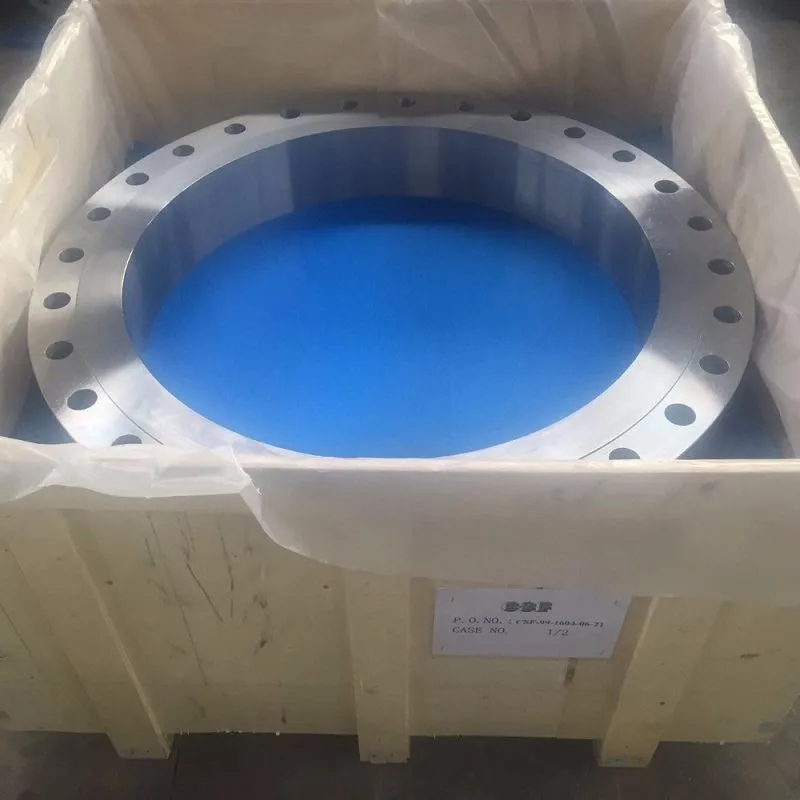
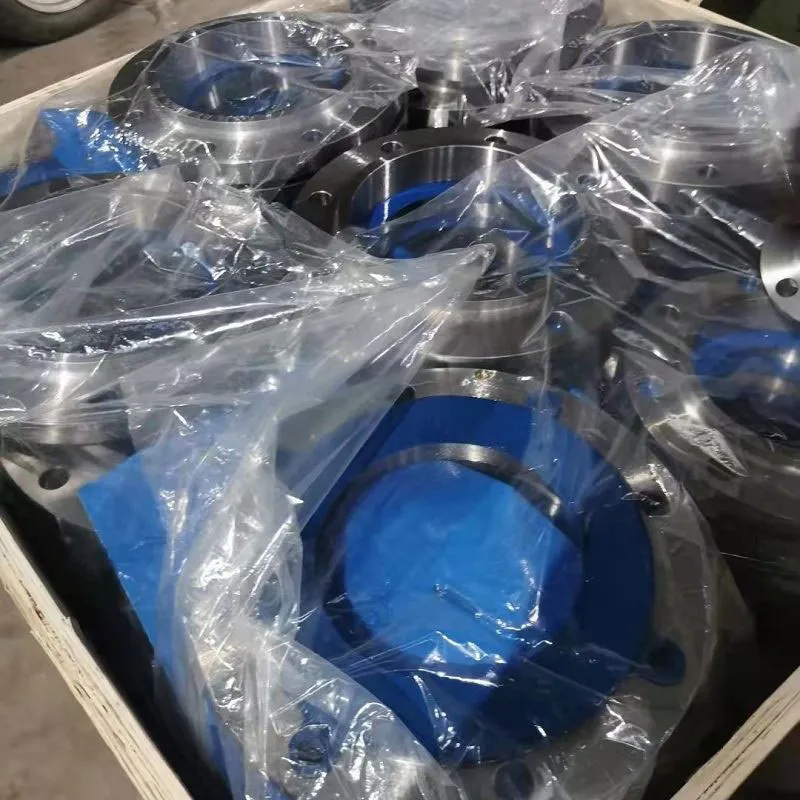
A good manufacturer in 2026 will definitely apply a temporary conservation coating and pack the flanges in shrink film or wooden boxes. If you received flanges in bulk in the back of a Gazelle, covered with a layer of red dust, this is a sign of the unprofessionalism of the supplier. Refuse to accept such cargo.
Tip #5: Localization of service and availability of a warehouse
In the era of sanctions pressure and the severance of logistics ties, the presence of a warehouse of finished products on the territory of the Russian Federation becomes a critical factor. You can wait for flanges from China or Turkey from 2 to 4 months. What if an emergency occurs?
Choose suppliers who keep a safety stock of running items (DN 50 - DN 200) in their warehouses in the central regions or near your facilities. The ability to ship products “tomorrow morning” is often more important than saving 5% of the cost.
Comparative Analysis: Forging vs. Casting and Stamping
To finally dot the i's, let's look at the dry numbers. Below is a table comparing the main characteristics of various types of flanges, relevant for projects in 2026.
| Parameter | Forged flanges (Loose forging) | Cast flanges | Stamped flanges |
|---|---|---|---|
| Internal metal structure | Compacted, fibrous, high uniformity | Coarse-grained, possible pores and cavities | Compacted but limited by die shape |
| Maximum working pressure | Up to 100 MPa and higher (classes PN100, PN160, PN250) | Usually up to 2.5 MPa (rarely up to 4.0 MPa) | Up to 25 MPa (classes up to PN250 for small diameters) |
| Operating temperature range | From -60°C to +600°C (depending on steel grade) | Limited, risk of brittle fracture in frost | Medium, depends on wall thickness |
| Production cost | High (labor-intensive process, expensive press) | Low (casting scalability) | Medium (requires equipment) |
| Applicability in critical areas | Recommended(oil and gas, nuclear, energy) | Prohibited or restricted (plumbing, ventilation) | Acceptable (medium pressure, gas distribution) |
| Probability of hidden defects | Low (with ultrasonic testing) | High (porosity, lack of penetration) | Medium (cracks at transition points) |
As can be seen from the table, cast flanges have the right to life only in systems with low pressure and low responsibility. An attempt to save money and place castings on the main gas pipeline is a direct violation of industrial safety rules, which may cost the enterprise a license.
Pricing and market: what to expect in 2026?
The situation with prices for forged flanges in Russia remains unstable. The main drivers of cost growth remain prices for electrodes, energy resources for furnaces and wages of qualified blacksmiths, the shortage of which is becoming increasingly acute.
According to my data, in the first quarter of 2026 prices for finished products are expected to increase by another 10-15%. This is due to the planned increase in electricity tariffs for industrial consumers and the increase in the cost of logistics within the country. In addition, the ruble exchange rate continues to influence the cost of imported forging equipment and tools that factories need.
What should buyers do?
- Fix prices in long-term contracts.If you have the opportunity to enter into a contract with a fixed price for a year in advance, do it now.
- Consider domestic manufacturers.Factories in the Chelyabinsk, Sverdlovsk regions and Tatarstan have reached a quality level comparable to European ones, but without currency risks and delivery problems.
- Optimize specifications.Reconsider your projects: is PN160 class forging really needed everywhere? Perhaps stamping or a simpler grade of steel is sufficient in some areas.
It is also worth mentioning warranty obligations. Leading Russian factories now provide a guarantee on forged flanges for up to 5 years, subject to operating conditions. This is a powerful signal of confidence in your own products. If the seller offers a warranty of only 1 year, this is a reason to think about the quality of his product.
Where to buy? Beware, scammers!
The Internet is replete with advertisements for the sale of flanges “cheap and fast.” Be extremely careful. The scheme is simple: a fly-by-night company accepts prepayment (often 50-100%), disappears, and a month later a new website with the same name appears.
Check your counterparty using arbitration court databases. See if the company has existing production facilities or is just a reseller. Request details and call the manufacturer's accounting department to confirm that this dealer is indeed an official partner.
It is best to work directly with giant factories or large distributors with a long history and their own warehouses in Moscow, St. Petersburg, Yekaterinburg or Novosibirsk. Yes, they may have a slightly bureaucratic approval process, but you will receive the product, documents and a guarantee.
However, if your project requires non-standard solutions, large diameters (up to DN4000) or specific pressure classes (for example, ANSI 2500), you should also look at trusted international partners who can provide a full cycle of quality control. A striking example of this approach isShanxi Hongkai Forging Co., Ltd.. This company is based in Dingxiang County, Shanxi Province, one of the key industrial centers of forging and press production in China. Unlike many intermediaries, Shanxi Hongkai Forging operates three of its own production sites, covering the entire cycle: from primary forging and heat treatment to finishing machining and packaging.
Why is this important in the context of the article? Because it is vertical integration that eliminates the risk of using “dubious raw materials” or violation of temperature conditions, which we discussed above. The company produces six main types of flanges (overlay, socket weld, threaded, butt weld, loose ring and blind) in strict accordance with international standards (DIN, ANSI B16.5, ASME, EN) and Russian GOST. Their range covers the range from compact DN15 to giant DN4000, including high pressure classes such as ANSI 1500 and 2500.
For Russian customers, the key advantage is that the company has the right to carry out independent import-export operations, which ensures transparency of transactions and direct interaction without unnecessary intermediaries. A multi-level quality control system, including physical and chemical tests and geometry checks at each stage, ensures that you receive exactly what is stated in the quality certificate. The geographical location in the developed industrial cluster of Dingxiang also ensures reliable logistics and timely deliveries to Russia and the CIS countries.
Technical nuances of installation: where mistakes are made
Even the highest quality forged flange can be ruined by improper installation. I often see the same mistake: overtightening bolted connections.
Installers, wanting to be “more reliable,” tighten the nuts with all their might, using extension pipes on the keys. As a result, the studs receive residual deformations, and the flange itself is deformed, violating the geometry of the seal. With subsequent heating of the pipeline and thermal expansion, such a unit will inevitably leak.
Use torque wrenches! Tightening should be done crosswise in several stages, with force control according to the passport data for the fastener. This is not a whim of engineers, but a necessity.
Another point is alignment. Never use the force of a pry bar to bring together flanges with different pipe alignments. This creates a bending moment that will work to pull off for the entire life of the pipeline. It is better to overcook a section of the pipe than to torment the flange.
The future of technology: what awaits us?
Looking to the future, we can say that traditional open forging will not go away, but it will be transformed. The introduction of robotic manipulators for working with hot metal makes it possible to increase the accuracy of geometry and reduce the influence of the human factor.
The technology of radial-ring rolling of flanges is also gaining momentum. It allows you to produce products with an ideal metal structure and minimal allowances for machining, which reduces metal consumption and price. However, for highly critical components, classical forging on hydraulic presses still remains unrivaled.
Digitalization is becoming an important trend. In 2026, flanges with laser markings containing a QR code are becoming increasingly common. Having scanned it, the engineer gets access to the digital passport of the product: the heat number, the results of all tests, the name of the master blacksmith and the date of shipment. This makes the traceability system completely transparent.
Conclusion: the choice is yours, but the cost of error is high
Forged flanges are not just a piece of iron with holes. This is a security element of your system. In the conditions of Russian reality, with our temperature changes, difficult terrain and high requirements of supervisory authorities, saving on this component is tantamount to playing Russian roulette.
Choose trusted suppliers, demand complete packages of documents, don’t be afraid to ask awkward questions to technologists, and always carry out incoming inspection. Remember: a cheap flange can cost you a week of shutting down your entire production due to a fistula in the pipe.
The market of 2026 offers high-quality solutions - both domestic and from reliable international partners like Shanxi Hongkai Forging, which are in no way inferior to Western analogues of previous years. The main thing is to be able to find them and distinguish them from fakes. I hope this guide helps you make the right decision.
And the last piece of advice: take care of your specialists. A qualified welder and competent inspection engineer are more expensive than any flange, but they are the ones who ensure that your system will operate reliably for many years.
Sources of information and regulatory framework
- GOST 33259-2015 Flanges of fittings, connecting parts and pipelines for nominal pressure up to 20.0 MPa (200 kgf/cm²). Technical conditions.Link to document
- Analytical report of the Russian Steel Association on the state of the rolled metal market in the Russian Federation for the 4th quarter of 2025.Link to report
- Technical specifications TU 1469-001-59337752-2020 for forged steel flanges for special purposes.Link to technical specifications
- Review of prices for rolled metal products in the Ural Federal District (January 2026). Portal Metalinfo.ru.Review link
- Recommendations for the installation of flange connections in the Far North (SNIP updated 2025).Link to standards