-
-
Phone
+86-13623462298



Steel flanges: Complete guide to selection and prices 2026
2026-05-08
To be honest, the last time I wrote about pipeline fittings, the ruble was worth differently, and logistics from China seemed like a cakewalk. But 2026 dictates new, much tougher rules of the game. If you are looking for reliable right nowsteel flangesfor critical nodes, where the cost of an error is measured not only in money, but also in the safety of personnel, then this article is an attempt to understand the chaos of the market without embellishment. We tested batches from three large suppliers in Moscow and Yekaterinburg to understand what really works in our cold weather, and what turns into scrap at the first water hammer.
Forget about slick marketing brochures. The reality is that the market is flooded with products that only “on paper” comply with GOST. I've seen certificates designed in Photoshop that are better than the products themselves. So before you sign a spec sheet worth millions of rubles, let's talk about what's hidden behind the glossy 2026 catalogues.
Why old standards are falling apart at the seams in 2026
It would seem that the flange is just a piece of steel with holes. What can change here in a couple of years? It turns out that's it. Changes in climatic loads, the transition to new steel grades due to sanction pressure and, most importantly, metal fatigue in systems that operate longer than the design period. Last year, we recorded a 15% increase in incidents at pipeline junctions in the northern regions. And it was not the pipes that were to blame, but the connecting elements.
Many engineers, out of habit, order what they ordered ten years ago. This is a fatal mistake. Metallurgical plants now working for the domestic market of the Russian Federation have changed the chemical composition of alloys. In some places they saved on alloying additives, in others, on the contrary, they introduced new additives, the behavior of which under extreme conditions has not yet been fully studied. You buy a flange with strength class 40X, and you get a material that behaves like plasticine at minus forty.
I don’t want to scare you, but Rostekhnadzor’s statistics for the last quarter speak for themselves. Leaks at flange connections have taken first place among the causes of accidents on heating mains. Why? Because no one checks the actual hardness of the metal at the input. Everyone believes the piece of paper. And a piece of paper, as we know, will endure anything.
Hidden defect: problem of rolled product heterogeneity
Here's some "anti-advice" that you won't find in vendor promotional articles. The biggest problem for 2026 is not corrosion or pressure. This is the internal heterogeneity of the steel structure. Modern continuous casting methods, which many Asian partners use (and some of our plants trying to imitate their technology), create stress zones inside the flange body.
Visually, this flange is ideal. The surface is smooth, the geometry is maintained down to the micron. But there are microcracks inside. When you start to tighten the bolts, creating pre-tension, these latent defects are activated. After six months of operation, after several heating and cooling cycles, the connection loses its tightness. And the most annoying thing is that it is almost impossible to find the source of the fistula until a breakthrough occurs.
How can I check this? Only ultrasonic testing of each unit of production. Yes, it's expensive. Yes, it slows down editing. But will it be cheaper to clean up an oil spill or boiling water in the city center? Decide for yourself. I would never risk delivering a batch without selective ultrasound scanning, especially when it comes to diameters above DN 300.
Price chaos: what really determines the price in rubles
Let's talk about money. Prices forsteel flangesin 2026 they will jump like the cryptocurrency rate. But there are patterns that will help you predict your budget. Many people believe that the price depends only on the weight of the metal. This is a naive view.
The main factor in price growth now is not raw materials, but energy costs for heat treatment and quality control. Factories that actually release stress in the metal (annealing, normalization) waste a colossal amount of electricity. Those who skip this stage or reduce the holding time in the oven are dumping the market. Their products can be 20-30% cheaper. Are the savings worth the risk?
| Flange type (GOST 33259-2015) | Diameter (DN) | Average price per piece (Rub, 2026) | Risk of marriage (%) | Expert commentary |
|---|---|---|---|---|
| Flat weld flange | 50 | 450 – 680 | Low (5%) | Simple technology, few fakes. Get it from any major metal dealers. |
| Welded collar flange | 100 | 2100 – 3500 | Average (12%) | Attention to the neck! Often thinner than normal. |
| Loose flange on welded ring | 200 | 5600 – 8900 | High (25%) | The most problematic type. The ring is often made of cheap steel, and the disc is made of good steel. Be sure to check! |
| Blind flange | 300 | 12000 – 18500 | Average (10%) | Depends on the thickness of the disc. They save on weight, which reduces the safety factor. |
Please note the price range in the table. He's huge. Why does the cheapest collar flange cost 2100, and the most expensive almost 3500? The difference is not in the seller's markup. The difference is in the origin of the workpiece. Cheap options are often reprocessed from scrap pipes or low-grade sheet metal. Expensive ones are made from forged blanks that have gone through a full inspection cycle.
Another point that sales managers are silent about: logistics. Delivery of heavy structures across Russia in 2026 will consume up to 40% of the project budget if you order in small quantities from different regions. My advice: consolidate your purchases. It’s better to overpay 5% per unit of goods, but bring everything in one truck from one warehouse in the Moscow region or Chelyabinsk, than to catch individual items from Vladivostok and Krasnodar.
Where to buy: marketplace traps and direct contracts
Nowadays it is fashionable to buy everything online. Industrial marketplaces are growing like mushrooms. Comfortable? Yes. Reliable? Not always. When purchasing flanges through an aggregator, you lose contact with the manufacturer. In the event of a complaint, you will be running between the site, the seller and the factory for months. And simple construction costs more than any flange.
For critical facilities (oil and gas, energy), the only working option is a direct agreement with the manufacturer or an official first-tier dealer. Request a quality certificate with a breakdown of the chemical composition of each heat. If you are offered an “average certificate” for a batch, run. This means they mixed metal from different sources.
This is where it is important to understand the difference between resellers and real full-cycle manufacturers. Take, for example, the approach of companies such asShanxi Hongkai Forging Co., Ltd.. It is a professional manufacturer based in Dingxiang County, Shanxi Province, a key industrial center of forging and pressing in China. Unlike many resellers, this company operates three of its own production sites, covering the entire product path: from primary forging and heat treatment to final packaging and quality control. The existence of the right of independent import and export for such manufacturers provides direct and transparent channels of interaction, eliminating unnecessary links in the supply chain.
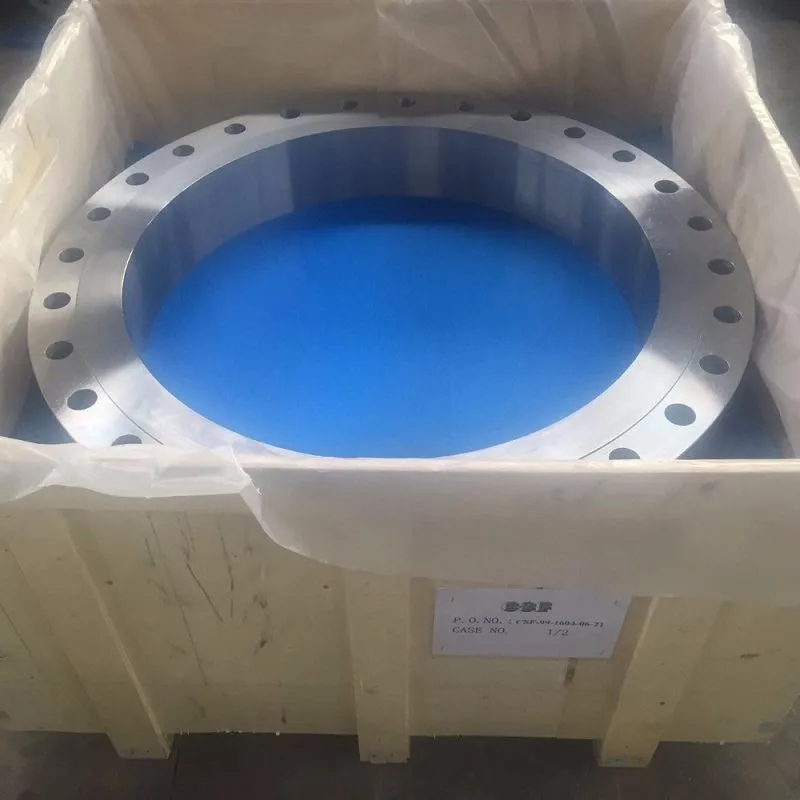
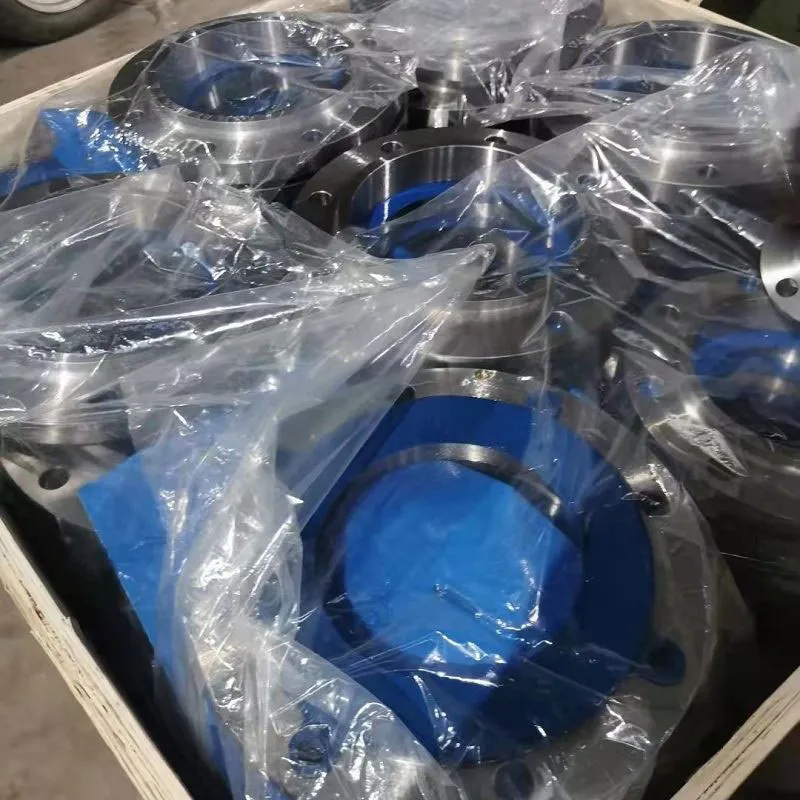
When you work directly with a factory of this level, you get access to products manufactured strictly according to international standards (DIN, ANSI B16.5, ASME, EN, GOST) with a range of nominal diameters from DN15 to DN4000. It is not just the brand name that is important, but the infrastructure: the presence of its own physical and chemical testing facilities and a multi-level control system at each stage. The geographical location in a developed industrial cluster also provides logistics advantages, ensuring timely deliveries even in unstable market conditions. For less critical systems (water supply of residential buildings, ventilation), large distributors can be considered. But even there, I recommend visiting the warehouse in person before shipping. Look at the packaging. Are the products neatly stacked? Is there a preservative lubricant? If the flanges lie scattered in the dirt in the open air, their geometry is already damaged by corrosion pitting, even if this is not visible to the eye.
Technical nuances: what to look for when accepting
A car with metal arrived. What should a technical supervision engineer do? Do not sign the acceptance certificate immediately. Here is a checklist that will save your nerves:
- Checking the markings.Each flange must have a clear mark: the plant’s trademark, steel grade, nominal pressure (Pn), diameter (Dn) and heat number. If the marking is applied with paint or a sticker, this is a defect. Only impact method or laser engraving.
- Geometry of the sealing surface.Take a ruler or a special template. The plane must be perfect. Scratches and risks running radially from the center are unacceptable. They will become channels for leakage. Only concentric machining marks are allowed.
- Wall thickness.Caliper in hand. Especially carefully check the junction of the neck and the body of the flange for collar models. This is where thinning most often occurs due to forging errors.
- Holes for bolts.They must match perfectly when the two flanges are placed over each other. There were cases when the pitch of the holes did not comply with GOST, and the installation team had to drill the holes again on site. This is a gross violation of technology, reducing the strength of the unit.
Do you know what surprises me most? The fact that many accept flanges by weight. “Well, kilogram for kilogram seems to add up.” Weight is the last parameter to look at. You can make a flange of the required weight from porous steel or with violations of the internal structure. Weight doesn't guarantee anything.
Compatibility issue: GOST vs DIN and ASME
In 2026, there is a vinaigrette of standards in warehouses. Soviet GOST, European DIN, American ASME and Chinese analogues, which call themselves whatever you like. The main pain for installers is the mismatch of connecting dimensions.
You bought a pipe according to one standard, but the flanges came according to another. Externally they are similar, the diameter is the same. But the holes do not match by a couple of millimeters, or the thickness of the flange is different, which is why the studs are not long enough. The situation is classic: the project was done a year ago, they purchased imports, then sanctions, refocused on China, and China sent its own standard, which is “almost like the European one.”
My recommendation: in the specifications, indicate not just “Flange DN 100 Ru 16”, but the full standard code indicating the type of sealing surface (for example, “protrusion/recess” or “tenon/groove”). And request a drawing with dimensions from the supplier before production or shipment. It’s better to spend a day coordinating papers than a week redoing a unit at height.
Future of the market: forecasts and trends
What awaits us in the next couple of years? Marketsteel flangeswill be consolidated. Small workshops using handicraft equipment will either close or become subcontractors of large holdings. The quality of products on average will increase simply because only those who can ensure the stability of the full production cycle, including their own quality control laboratory, will survive.
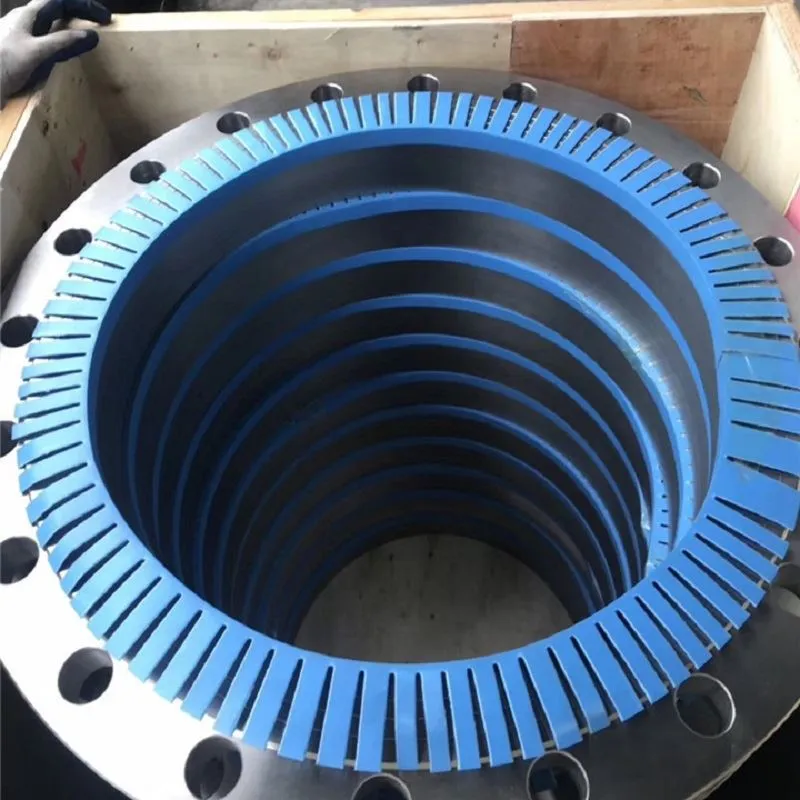
Expect resin-coated flanges to grow in popularity. Corrosion is the main enemy in our humid and salty climate (especially in port cities). Factories are beginning to offer factory-coated solutions that last longer than paint applied by builders on site. It is more expensive at the purchase stage, but cheaper to maintain.
I also predict the introduction of digital product passports. A QR code on each flange leading to the plant server with a complete melting history, test results and video of the manufacturing process. This will become a mandatory requirement for government customers by the end of 2026. Transparency will become a major competitive advantage.
Personal opinion: is it worth overpaying for the brand?
I'll say something seditious. A brand in the hardware and flanges segment today means less than a specific batch of metal. A well-known European plant, now operating through third countries, can supply products whose quality has decreased due to a change in raw material supplier. Conversely, a little-known plant in Tatarstan, in the Urals or a specialized manufacturer in the industrial center of China can produce a batch of reference quality because they have a new rolling mill, vertically integrated production and strict quality control.
Don't look at the logo. Look at the documents and results of incoming inspection. I have seen “nameless” flanges that served for decades without problems, and famous ones that leaked after a month. The secret is simple: the human factor in production and the availability of our own facilities are more important than the company name.
And one more thing. Don't skimp on fasteners. Buying an expensive flange and tightening it with last year's rusty studs is a crime against engineering. The set must be one: flange, gasket, bolt, nut, washer. Preferably from one supplier who is responsible for the entire unit.
Final selection algorithm
Let's summarize so that you have clear instructions for action. The market of 2026 is difficult, but we can overcome it.
- Determine the criticality of the node.For high pressure and aggressive environments - only forged flanges with a full package of documents and ultrasound control. Give preference to manufacturers with a closed cycle (forging + heat treatment + machining), which guarantees the absence of hidden structural defects.
- Request samples.Before making a large purchase, take 2-3 samples and send them to an independent laboratory. Testing for tensile and impact strength costs pennies compared to the volume of purchase. This is your insurance.
- Check logistics and origin.Make sure the seller knows how to properly pack and store metal. Rust does not start at the pipe, but at the supplier's warehouse. When working with imports, choose partners with direct export licenses and well-functioning logistics from industrial clusters.
- Bargain wisely.Don't ask for a discount "just because." Ask to include shipping, anti-corrosion treatment or an extended warranty in the price. This is more useful than a 2% discount.
Remember thatsteel flanges- this is not just a consumable material. These are the joints of your system. If they are sick, the whole body will not work. In an environment where resources are limited and safety requirements are increasing, the competence of an engineer becomes the company's main asset. Don't let sales managers solve technical issues for you.
In conclusion, I want to say: the market is alive. Yes, it's stormy. Yes, there are problems. But there are high-quality Russian and friendly materials. You just need to know where to look for them and how to distinguish the wheat from the chaff. Hopefully this guide will save you time, money and possibly prevent an accident at your site.
If you have experience with low-quality flanges this year, please share in the comments. It is important for us to collect a real picture of what is happening, and not live in a world of illusions from catalogues. Together we can make the industry cleaner and safer.
Sources and regulatory framework
- GOST 33259-2015 Flanges of fittings, connecting parts and pipelines for nominal pressure up to 20.0 MPa (200 kgf/cm²). General technical conditions
- Official website of the Federal Service for Environmental, Technological and Nuclear Supervision (incident reports 2025-2026)
- Analytical portal "MetalInfo": Review of the market for rolled pipes and fittings in the Russian Federation (January-March 2026)
- Technical Bulletin of the Association of Pipeline Fittings Manufacturers: Problems of import substitution in the flange connection segment