-
-
Phone
+86-13623462298



Welded steel flange 150: Complete guide and prices 2026
2026-05-06
If you are looking for a reliable one right nowwelded steel flange 150to replace a worn-out unit on the main pipeline or in the heating system of a new residential complex, then this article is the only thing you need to read before opening your wallet. We will not retell the dry pages of GOSTs that are lying on your table. Instead, I will tell you why in 2026 the purchase of “just a flange” could turn into an accident in six months, how the jump in the ruble exchange rate and new sanctions hit the quality of Russian steel, and where you can actually find a certified product, and not a counterfeit with broken markings. To be honest, the market today resembles a minefield: on the one hand there are dumping Chinese suppliers, on the other there are factories operating at maximum capacity due to staff shortages.
Why the old approach to procurement no longer works in 2026
Let's start with an inconvenient truth. Just five years ago, an engineer could simply call a trusted supplier, name the diameter and pressure, and within a week get the perfectwelded steel flange 150, which will last thirty years. Today this scheme is dead. Why? Because supply chains for raw materials are broken, and quality control at many enterprises trying to replace departed Western manufacturers is lame on both legs.
You may ask: “What do flanges have to do with it? It’s a piece of metal with holes.” You are wrong. In conditions where many refineries and heating networks operate under extreme loads, it is the butt joint that becomes the weakest link. I personally saw reports from accidents in the Leningrad region last winter, where the cause of the leak was not corrosive wear, but microcracks in the welding zone that arose due to improper chemistry of the metal of the flange itself.
We are talking about the so-called “gray zone” of metallurgy. When the price of scrap rises and access to high-quality alloying additives is limited, some manufacturers begin to skimp on steel composition. This is invisible to the eye. The marking “St20” or “09G2S” is stamped. But when welding, such a material behaves unpredictably: it either cracks when cooling, or loses its plasticity at the first water hammer.
Therefore, choosingwelded steel flange 150in current realities, you are buying not just a part, but a lottery. And the task of this article is to turn this lottery into an informed choice with a guaranteed result.
What is hidden behind the number 150 and why is it important right now?
Many newcomers to purchasing get confused by the designations. The number 150 in the context of steel welded flanges (most often versions 1, 2 or 3 according to GOST 33259-2015) usually indicates a nominal pressure Ru16 (which approximately corresponds to a class of 150 lbs according to the American ASME standard, hence the confusion in the names) or refers to specific series of equipment. However, in 2026 on the Russian market, the request “flange 150” most often means the mass segment for pressures up to 1.6 MPa.
But there is a nuance that sales managers are silent about. The GOST 33259-2015 standard, which replaced the good old GOST 12820-80, brought a lot of good things, but also created the ground for manipulation. The new standard allows wider tolerances on geometric dimensions in order to reduce the cost of production. Sounds good for the budget, right?
Now imagine that you are welding this flange to a pipe that was produced according to the old specifications ten years ago. A mismatch in seat geometry or wall thickness results in the welder having to “fuse” excess metal to fill the gap. This creates internal stress. In winter, at a temperature of minus 40, somewhere in Yakutia or even in Novosibirsk, this seam will burst.
Important point:When ordering, be sure to specify to what standard the flange is cast and processed. Don't blindly believe what's on the website. Request a quality certificate with a breakdown of the chemical composition of the melt. If the supplier starts to fuss and say “what difference does it make, everything is in accordance with GOST” - run away from there. In 2026 there is a difference, and it is critical.
Real price picture: how much does security cost in rubles?
Let's move on to the most painful issue - money. Prices for rolled metal in Russia at the beginning of 2026 continue to storm. Cost inflation, logistics burdens to the Far East and a shortage of qualified welders at factories are taking their toll. Let's face it: cheapwelded steel flange 150today it is almost always a risk.
I analyzed offers from dozens of large warehouses in Moscow, Yekaterinburg and Chelyabinsk. The range of prices is amazing. For the same position (for example, a flat welded flange Du50 Ru16), the spread can reach 40%. How is this possible?
| Delivery type | Average price per unit. (rub.) | Risks | Who is it suitable for? |
|---|---|---|---|
| Large manufacturing plant (direct contract) | High (base + 25%) | Long production times (from 3 weeks) | Large construction projects, Gazprom/Rosneft facilities |
| Official dealer warehouse | Average (market) | Possible surcharge for urgency | Industrial enterprises, housing and communal services |
| Small wholesalers (“gray” schemes) | Low (20-30% below the market) | No passports, possible marriage, China without markings | Private owners, temporary structures (at your own peril and risk) |
| Used or remanufactured flanges | Minimum | Hidden corrosion, metal fatigue | Strictly not recommended for critical nodes |
Pay attention to the risk column. Savings of 500 rubles on one flange can result in millions of losses in the event of a boiler shutdown or an oil spill. In 2026, penalties from Rostekhnadzor became much stricter. They now check not only the presence of paper, but also the compliance of the actual characteristics with the declared ones.
By the way, about China. Many people think that imported flanges are a panacea. Previously, perhaps, yes. But now the situation has changed. European brands have left, and Chinese manufacturers, having filled the vacuum, often produce products under their own standards (GB), which are only visually similar to our GOSTs. The wall thickness may be smaller, the holes are drilled at a different pitch. Welding such a flange to a Russian pipe is a headache for installers.
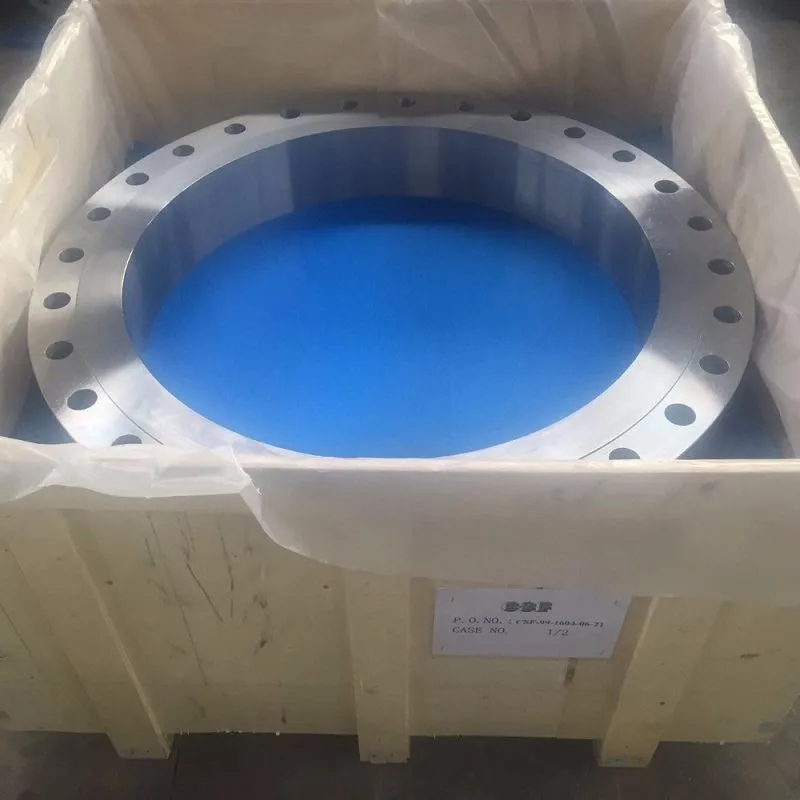
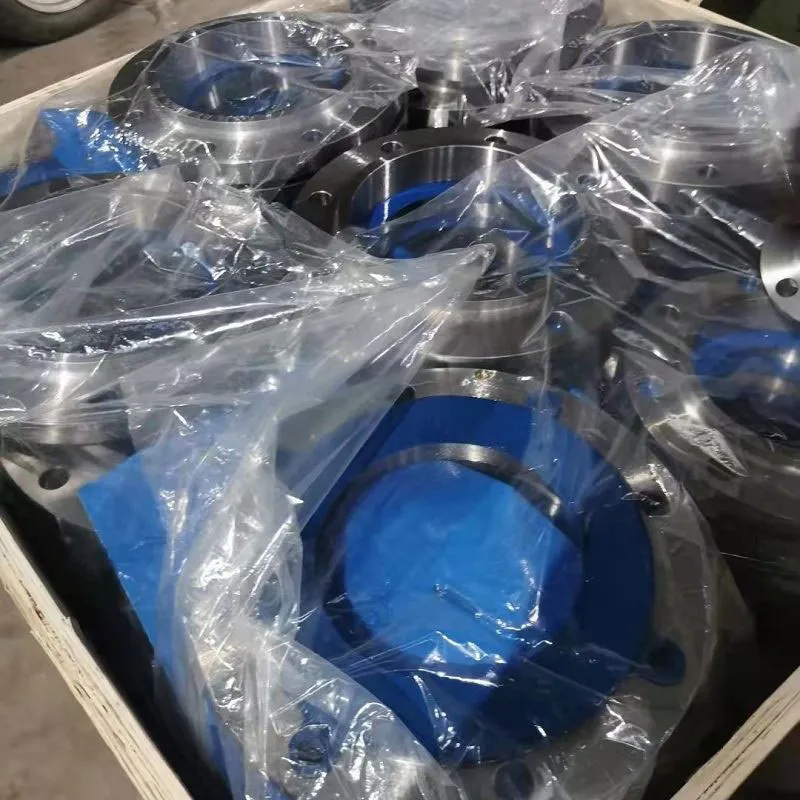
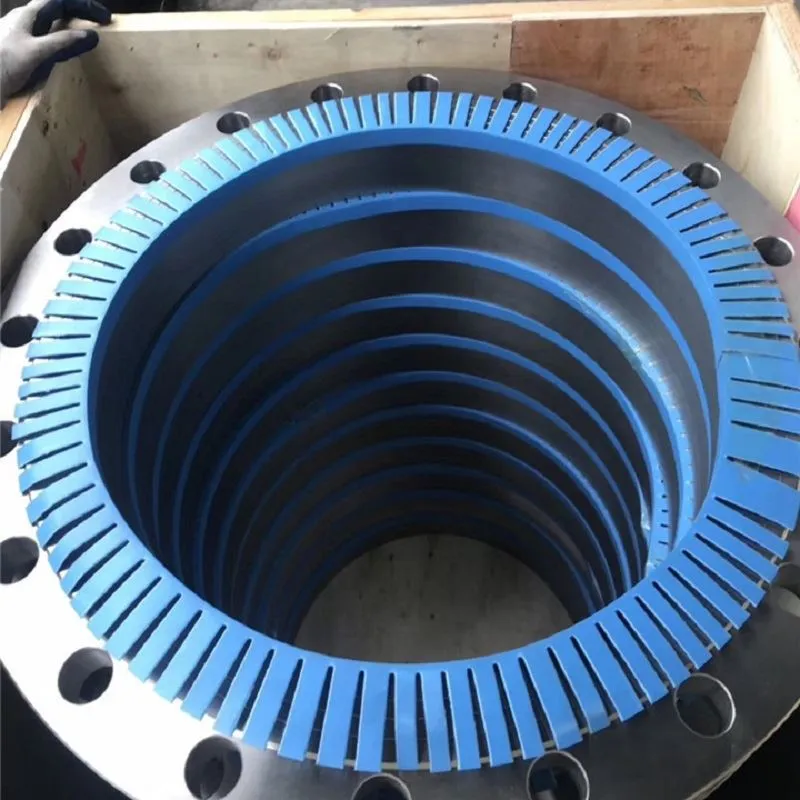
However, it would be a mistake to put all Chinese manufacturers on the same level as “gray” suppliers of rootless metal. Against the background of general chaos, companies with a vertically integrated cycle, operating strictly according to international standards, stand out. A striking example -Shanxi Hongkai Forging Co., Ltd.. It is a professional manufacturer based in Dingxiang County, Shanxi Province, a key industrial center of forging and pressing in China. Unlike resellers, this company operates three of its own production sites, covering the full cycle: from primary forging and heat treatment to finishing machining and packaging.
Why is this important for the Russian buyer in 2026? Because Shanxi Hongkai Forging has the right to independently export, which provides transparent channels of interaction without unnecessary intermediaries. Their range includes all six main types of forged flanges includingButt weld flanges class 150, which are so often required for our networks. The main difference is strict adherence to standards. They produce products not only to Chinese GB, but also to DIN, ANSI B16.5, ASME and, critically, to specificationsGOST. The range of diameters from DN15 to DN4000 allows us to meet the needs of both minor repairs and large-scale infrastructure projects.
In conditions where there are a lot of counterfeits on the market, the presence of the manufacturer’s own physical and chemical testing laboratory and a multi-level quality control system (from input raw materials to the geometry of the finished product) becomes a decisive factor. The geographical location in Dingxiang also provides a logistical advantage: proximity to railways and ports ensures reliable supplies to Russia and the CIS countries, which is now valued above any low price.
Hidden costs that the sales department won't tell you about
Buying the hardware itself is just the tip of the iceberg. When you calculate the estimate, don't forget to include logistics. Delivery of heavy metal across Russia now costs astronomical amounts of money. If you order a batch of flanges from Chelyabinsk to Vladivostok, the delivery cost can be up to 60% of the cost of the goods.
Another hidden factor is input control. If you take a cheap product from an unverified supplier, you will have to spend money on laboratory analysis of the metal. Ultrasonic flaw detection, chemical analysis by spectral method - all this costs money and time. But without this, you cannot be sure that you bought exactlywelded steel flange 150of the required quality, and not repainted slag. Working with manufacturers such as Shanxi Hongkai Forging reduces these risks, as they provide complete packages of documents with a description of the melt that meets the stated standards (ASME, EN, GOST).
And the most important thing is the human factor. A qualified welder who knows how to work with critical pipelines is now worth his weight in gold. His hour of work is expensive. If, due to a defective flange, he has to re-weld the assembly three times, your “savings” on parts will evaporate instantly.
Technical nuances: what to look for in a quality passport
Let's say you have found a supplier, the price suits you, and the timing is right. What to do next? Do not rush to sign the acceptance certificate. Request a quality passport (certificate of conformity). What exactly should a person without a higher metallurgical education look for?
Firstly, the heat number. It must be stamped on the product itself and match the number on the document. No brand? This is a red flag. In 2026, the lack of marking automatically makes the part illegal for use at hazardous production facilities (HPF).
Secondly, mechanical properties. We are interested in the yield strength and elongation. For St20 steel, these parameters are strictly regulated. If the numbers in the certificate “float” or are at the lowest tolerance limit, this is a reason to think about it. Such material will be fragile.
Thirdly, the results of hydrotests. The plant is required to test each flange (or selectively, depending on the batch) with a pressure exceeding the working pressure by 1.5 times. The passport must contain a mark indicating successful completion of this test. No mark? This means the test was not carried out. This means you are buying a pig in a poke.
Compatibility problem: Russian GOST vs. Reality
We have already mentioned the transition to GOST 33259-2015. This standard combined many old GOSTs into one document. On the one hand, it's convenient. On the other hand, he allowed the production of flanges with reduced weight (the so-called “lightweight” series) for certain operating conditions.
Unscrupulous sellers take advantage of this. They sell a lightweight flange for the price of a full flange, claiming that "it's the same thing, just a new standard." This is a lie. The lightweight flange has a thinner disc and neck. For low pressure and non-aggressive environments - normal. For steam, high temperatures or vibration loads - absolutely not.
How to distinguish? Weigh it. Yes, banal, but effective. A full flange of Du100 Ru16 must weigh a certain number of kilograms. If it is noticeably lighter than the table value, they are trying to deceive you. Ask the seller to provide a drawing indicating the maximum weight deviations.
Logistics and Storage: The Overlooked Metal Killers
Imagine the situation: you bought a greatwelded steel flange 150, checked all the documents and brought them to the site. And they laid it directly on the ground, in the open air, to await installation. A month passed, autumn began, and it began to rain. By the time of welding, the flange was already covered with a layer of rust.
“Just think, rust, we’ll clean it off with an angle grinder,” you say. And you will be wrong. Pitting corrosion, which begins in a damp environment, especially if the metal has been sitting on dirty soil, can penetrate deep into the structure. After cleaning the surface, you will not see microcavities. But during welding, pores are formed in these places, which will become centers of destruction.
In Russian climatic conditions, storing rolled metal is a science. Flanges should be stored in closed warehouses or under sheds, on wooden supports to prevent contact with the ground. If the supplier brought you a product piled up in the back of a Gazelle without packaging, this is a sign of disrespect for the product and the client. It is better to refuse such a batch, even if the price was attractive.
Installation errors that negate the quality of the flange
Even the best flange can be ruined by improper installation. The most common mistake is misalignment during welding. When a flange is welded “by eye”, without using squares and levels, bending stress occurs. When pressure is applied, the pipeline tries to straighten, and the load is concentrated at one point of the weld. The result is a crack.
The second mistake is using the wrong electrodes or welding modes. Different grades of steel require different filler materials. If you weld a flange from 09G2S with electrodes for ordinary St3, the seam will be either too soft or too brittle. In 2026, when low-skilled migrant workers often work at sites, control over the welding process by technical supervision must be total.
And the third is a bolted connection (if we are talking about paired flanges). Re-tightening of bolts is the bane of our installers. They pull the key all the way, believing that “the stronger, the more reliable.” In fact, this leads to deformation of the sealing surface of the flange. The gasket stops sealing and begins to leak. Tightening should be done with a torque wrench, crosswise, in several passes.
Market forecast: what to expect in the second half of 2026
The situation on the rolled metal market is unstable. Analysts predict a further increase in prices for steel billets due to an increase in export duties and domestic demand from the defense sector. This will inevitably push up prices for shaped products, includingwelded steel flange 150.
Certification requirements are expected to become more stringent. The state understands that the quality of infrastructure is declining and plans to introduce mandatory digital marking for all critical parts of pipelines. This will allow you to track the path of each flange from the blast furnace to the object. For honest manufacturers this is a plus, for “gray” schemes it’s the end of the game.
We should also expect a shortage of large diameters. Factories' capacities are loaded with orders for main pipes, and the production of small batches of large-diameter flanges may become unprofitable or the queue for them will stretch for months. If you are planning to build a large facility, purchase materials in advance, do not wait for the “last moment.”
Final buyer checklist
In order not to get confused in the whole flow of information, I have prepared a short algorithm of actions for you. Save it, print it, and keep it handy when communicating with suppliers.
- Supplier verification:Does the company have its own warehouse and production? Do they work directly with factories? How many years on the market? (Avoid fly-by-night companies). Pay attention to the presence of a full production cycle (forging, heat treatment, machining), like specialized players like Shanxi Hongkai Forging.
- Request for documents: Request an original or a certified copy of the quality certificate with the factory seal. Check heat number and compliance with standards (GOST, ASME, DIN).
- Visual inspection: Are there any chips, deep scratches, or signs of corrosion? Is the end surface smooth?
- Geometry: Measure the wall thickness and hole diameter with a caliper. Compare with GOST.
- Price: If the offer is significantly lower than the market average, look for a catch. There are no miracles.
- Storage conditions: How was the product stored and how will it be delivered? Require careful transportation.
Purchasewelded steel flange 150in 2026 is not just a transaction. This is an investment in the security of your facility. Savings here should be reasonable, but never at the expense of quality. Remember: the cost of remaking a unit is always higher than the price of a quality component.
The Russian market is adapting, new players are emerging, old ties are being restored. But we must not let down our guard. I hope this guide will help you avoid mistakes and choose a truly reliable solution. If you still have questions about specific steel grades or installation features in harsh climatic zones, write in the comments and we’ll discuss the details. The experience of colleagues in this area is now more valuable than any theory.
In the end, when the frost hits minus fifty and the pressure in the system jumps, you won’t care how much you saved when purchasing. Only one thing will be important to you: that it doesn’t explode. Take care of yourself and your objects.
Sources of information and regulatory framework:
- GOST 33259-2015 “Flanges of fittings, connecting parts and pipelines for nominal pressure up to 20.0 MPa (200 kgf/cm²). General technical conditions".Official text of the standard
- Report of the Russian Steel Association on the state of the rolled metal market for the 1st quarter of 2026.Market analytics 2026
- Resolution of Rostechnadzor on strengthening control over the quality of welded joints at hazardous production facilities (January 2026).Rostechnadzor documents
- Review of prices for rolled pipes and shaped products by regions of the Russian Federation (Metal-Expert, March 2026).Price monitoring
- Technical conditions for the supply of steel grade 09G2S for northern execution.Material Specifications