-
-
Phone
+86-13623462298



gas flange 100 with thread: price 2026 – factories
2026-07-24
- Why does the price of a gas flange 100 with thread in 2026 raise so many questions?
- Technical nuances: what you need to know before ordering a DN 100 flange
- Where to look for reliable suppliers: overview of the market and factories
- Practical guide: how to accept goods and not make mistakes
- Forecasts and procurement strategy for the coming year
If you are looking for where to buy right nowgas flange 100 with threadat the right price in the 2026 market, then let me save you some time: most of the offers you will see in the top ten search results are either outdated or hiding a catch in the form of “gray” metal. I will not write you banal things about how safety comes first - this is an axiom that even schoolchildren know. But what is happening behind the scenes of domestic pipe rolling this season really makes you think. The market has changed beyond recognition. What was considered a quality standard two years ago can today turn into an emergency in frosty temperatures of minus forty.
Let's be honest: finding a reliable supplier has become a lottery. Factories are working to the limit, logistics have been restructured, and prices fluctuate more often than the ruble exchange rate during bad news. However, it is in this chaos that truly worthwhile options can be found if you know where to look and what questions to ask managers. In this article, I will analyze not just price lists, but the real situation “on the ground”: from metallurgical plants in the Urals to warehouses in the Moscow region and large production clusters in China. We'll talk about why a cheap flange can cost you millions in losses, and how to distinguish quality steel from the melted down scrap that is now flooding the market en masse.
Why does the price of a gas flange 100 with thread in 2026 raise so many questions?
You've probably noticed a strange price range. One factory offers a product for three thousand rubles, another for six, and the third is silent and asks to “call the manager.” What's behind these numbers? In 2026, pricing for pipeline fittings is no longer linear. It no longer depends only on the weight of the metal and the cost of electricity. Now the key factors are the availability of high-quality raw materials and, paradoxically, the availability of qualified turners.
The fact is that the production of threaded flanges is a more labor-intensive process than the production of welded analogues. Thread cutting with a diameter of 100 millimeters requires high precision. If the machine is old or the cutter is worn, you will not get a tight connection, but a potential leak. Many small workshops, trying to dump, save money at this stage. They use a simplified cutting technology, which formally passes quality control inspection, but in real conditions of vibration and pressure drops it begins to “float” after just six months of operation.
Another point that is rarely written about in catalogs is the cost of anti-corrosion coating. Gas environments are different. Somewhere it is dry gas, and somewhere it contains admixtures of hydrogen sulfide or moisture. In 2026, the requirements of environmental services have become more stringent, and factories are forced to switch to more expensive but safe types of coatings. A cheap flange often comes without any protection at all or with the most primitive primer, which peels off during the first transportation. Do you want to save a hundred rubles now? Get ready to change the unit after a year.
I personally communicated with the chief technologists of several large enterprises in the Chelyabinsk region, and also studied the experience of leading foreign manufacturers, such as Shanxi Hongkai Forging LLC. It is a professional manufacturer from China based in Dingxiang County, a key industrial center for forging and pressing. Their approach is indicative: the company operates three of its own sites with a full production cycle, from primary forging to final packaging, and strictly adheres to international standards (DIN, ANSI, GOST). And this is what they said unofficially, confirming the words of our colleagues: “We cannot keep the price low because we do not want to use steel with an unknown history.” This is an important signal. If you see an offer significantly lower than the market average, ask yourself: where did the seller get this metal from? Most likely, these are either remnants of Soviet reserves with exhausted resources, or products from countries whose standards are softer than our GOSTs. And in the gas industry, compromises are unacceptable.
Hidden risks of budget decisions
Don’t think that I am advocating to buy only the most expensive. No. The task of a competent engineer or buyer is to find a balance. But in the segment of threaded flanges with a diameter of 100 mm, this balance is very fragile. The main problem with budget options lies in geometry. The thread must be conical or cylindrical strictly according to the drawing. The slightest deviation in the pitch will lead to the fact that you simply cannot tighten the connection with the required force, or it will crack during installation.
Imagine the situation: winter, a facility in Siberia, pressure in the system is growing. And then the connection begins to poison. Calling a team, stopping the supply, fines from the regulator - all this will result in an amount that is tens of times greater than the savings on purchasing a “cheap” flange. That is why I always recommend looking not at the price tag in an Excel spreadsheet, but at the certificate of conformity and the reputation of the manufacturer.
By the way, about certificates. Last year, a number of counterfeit documents for a shipment of reinforcement were identified. The paper looked perfect, the stamps stood, but laboratory tests of the samples showed a catastrophic discrepancy in impact strength. The metal was as fragile as glass. Therefore, rule number one for 2026: request original test reports or check the certificate number in the Rosakkreditatsiya register right when ordering.
Technical nuances: what you need to know before ordering a DN 100 flange
A diameter of 100 millimeters (nominal diameter DN 100) is one of the most popular sizes in utilities and industrial gasification. But it is the popularity of this size that makes it a target for unscrupulous manufacturers. It’s easier to stamp in thousands, but it’s more difficult to control each unit. When you ordergas flange 100 with thread, you must clearly understand what type of thread you need.
This is where confusion often arises. There are cylindrical threads (G) and tapered threads (R). For high-pressure gas systems, conical is preferred as it provides a better seal due to interference. However, many older designs are designed to be cylindrical using sealing materials. If you replace one type with another without recalculating the node, the consequences can be unpredictable.
The strength class is also critical. For gas, steel grades St20, 09G2S or stainless steel analogues are usually used if the environment is aggressive. In 2026, there is a shortage of high-quality alloy steel 09G2S, designed for operation at low temperatures. Some suppliers are trying to sell ordinary carbon steel, passing it off as frost-resistant. Outwardly, they are almost indistinguishable, but at temperatures below minus 20 degrees, ordinary steel loses its ductility.
Pay attention to the wall thickness and bead height. In pursuit of material savings, some factories make flanges “lightweight”. Yes, they undergo hydraulic tests at the factory, but their safety margin is minimal. Any water shock wave or external mechanical load can be fatal. A real high-quality flange has a solid weight. When you pick it up, it should feel like something reliable, not like a tin can.
Comparison of characteristics of popular versions
To make it easier for you to navigate the variety of offers, I have compiled a summary table of the main parameters that you should pay attention to when choosing. These data are based on current GOSTs and technical conditions in force in the current season.
| Parameter | Standard version (GOST/ANSI/DIN) | Budget/Gray version | Risk during operation |
|---|---|---|---|
| Material | Steel 20, 09G2S, A105 (certificate required) | Re-grade, steel of unknown brand | Brittle destruction in frost, corrosion |
| Thread type | Conical (R) or Cylindrical (G) according to design | Cut “as it turns out”, step not followed | Impossibility of hermetically sealed assembly, thread failure |
| Coverage | Hot galvanized or polymer | Hand painted or uncoated | Rapid corrosion, loss of presentation and properties |
| Geometry | Strictly according to the drawing, the end plane is ideal | Distortions, irregularities, burrs | Leaks even with new gaskets |
| Documentation | Passport, certificate, test report | A copy of questionable quality or refusal to provide | Problems when handing over the facility to supervisory authorities |
Take a close look at this table. The difference between the speakers seems like a technical detail, but in practice it's the difference between a reliable system and a constant headache. I am especially concerned about the point about documentation. In Russia, bureaucracy has not gone away. If you do not have the correct papers for each flange, the Gaznadzor inspector has every right to stop the operation of the entire site. And no verbal assurance from the seller that “the metal is good” will help here.
Where to look for reliable suppliers: overview of the market and factories
So, we come to the most painful question: where to get it? The Russian market in 2026 can be divided into several echelons, including proven international partners. The first is large metallurgical holdings and their official distributors. The second is medium-sized machine-building plants specializing in pipeline fittings. The third is numerous trading houses and resellers. The fourth, which is gaining momentum, are direct contracts with specialized factories in Asia that have an export license and experience working with GOST.
Working with major players (first echelon) gives the maximum guarantee of quality, but also the maximum price. In addition, delivery times can be long. However, if you need a batch for a critical facility, this is the way to go. Factories in Tula, Chelyabinsk and Yekaterinburg continue to keep their mark.
Specialized manufacturers, such as the above-mentioned company from Shanxi province, deserve special attention. Such enterprises, operating as independent legal entities with the right to import and export, offer transparent channels of interaction. Their advantage is a vertically integrated cycle: from forging to packaging at their own sites. They produce a wide range of flanges (including threaded, welded and loose flanges) strictly according to DIN, ANSI and GOST standards ranging from DN15 to DN4000. For projects that require a combination of price and guaranteed quality with a full package of documents (chemical analysis, mechanical properties), this option is becoming an increasingly attractive alternative to European brands, whose departure from the market has created a vacuum.
You need to be extremely careful with the third echelon (resellers). They often disguise themselves as manufacturers. The website says “Factory”, the address is some kind of industrial park, but in fact it’s an office in a business center. They buy flanges where they are cheaper, put their nameplate on them and sell them to you. There is nothing criminal about this as long as the quality corresponds to what is stated. But if a marriage arises, it will be difficult to look for extreme ones. The factory will say: “We didn’t produce this,” and the seller will disappear or refer to force majeure.
Logistics and regional features
Don't forget about logistics. Russia is huge. Delivery of flanges from Central Russia to the Far East can increase their final cost by 30-40%. In 2026, freight rates remain high. Sometimes it is more profitable to find a supplier closer to the site or use well-functioning logistics chains from industrial centers of China, where the location at the junctions of railways and highways ensures timely deliveries. Calculate the total cost of ownership: product price plus delivery plus downtime risk.
In the northern regions the situation is special. It requires not just a flange, but a flange in the northern version. This applies not only to the steel grade, but also to packaging and storage conditions before installation. If a metal product is frozen and covered with frost, and you begin to install it in a warm room, condensation may form, which will trigger corrosion even before commissioning. Local suppliers in Yakutia or Murmansk usually understand these nuances better than Moscow sales offices.
It is also worth mentioning imports. Just five years ago, European brands occupied a significant market share. Now the share of imports has transformed: these are either complex stainless steel designs, or high-quality batches from Asian factories that have passed strict incoming control. Chinese flanges are present, but professionals have an ambivalent attitude towards them. There are high-quality batches from industry leaders with a multi-level control system (as is the case with modern forging complexes in Dingxiang), and there are outright defects. If you decide to import, insist on an independent examination of the shipment before paying.
Practical guide: how to accept goods and not make mistakes
Let's say you chose a supplier, agreed on a price and waited for delivery. The cargo has arrived. What to do next? Many people make the mistake of signing the invoice without looking. “Well, flanges, what will happen to them?” - they think. And then it begins. Here is a simple acceptance algorithm that will save you from many problems.
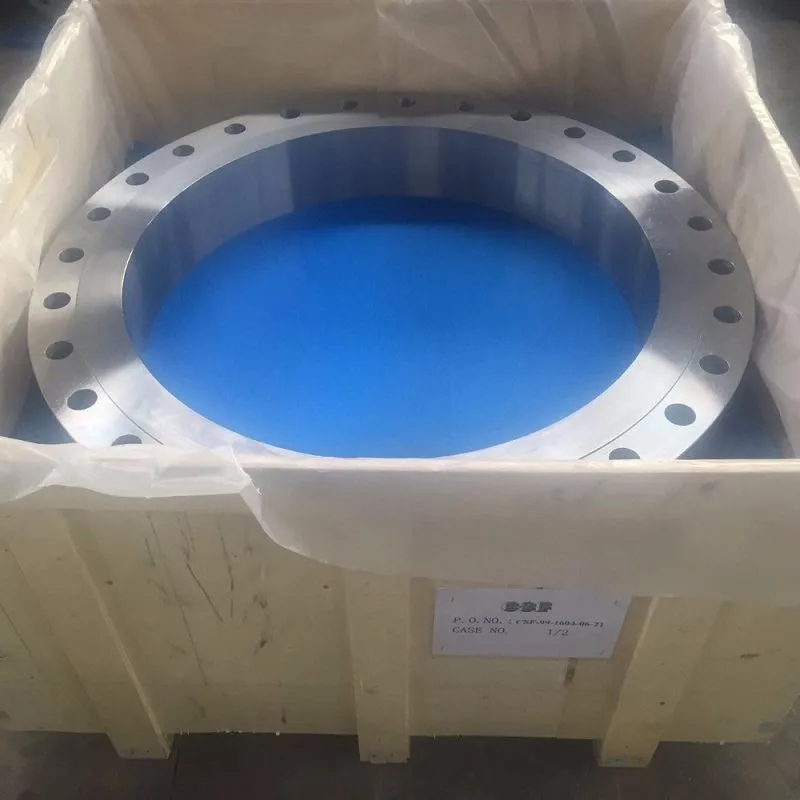
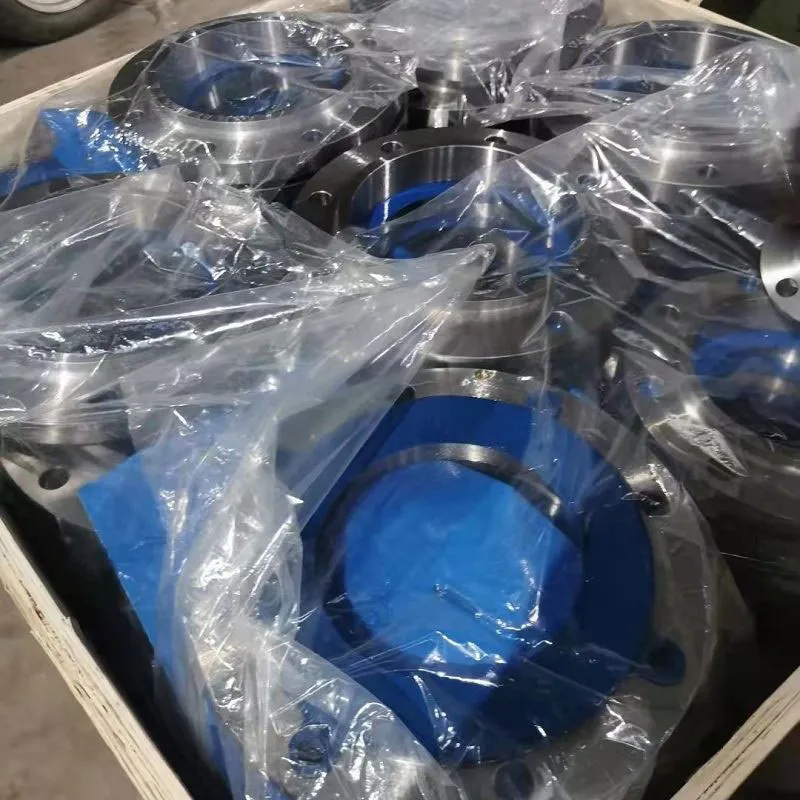
First, a visual inspection. Right in front of the driver until the car drove away. Check the packaging. If it is a wooden box, it must be intact. If the pallet is with film, the film is not torn. Inspect the flanges themselves. The surface should not have deep pits, cracks or rust that looks like lesions. A slight “reddish” coating is acceptable for black steel, but it should be easily cleaned off with a rag.
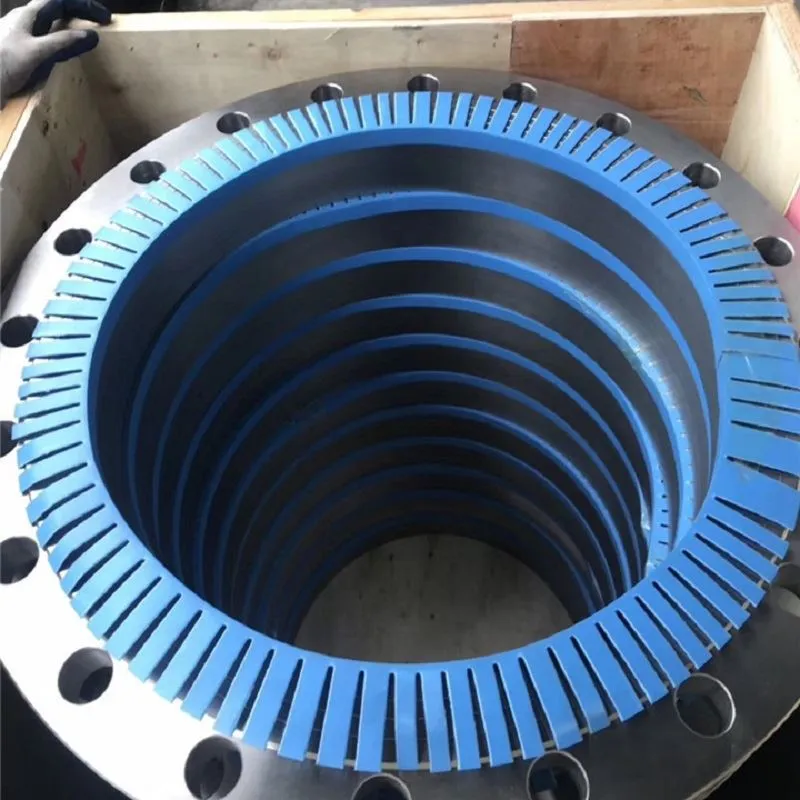
Secondly, check the threads. This is a critical moment. Take with you a ring gauge or at least a counter part (a threaded pipe) to try screwing on the flange. It should move easily, without jamming, but also without play. If the flange is screwed on by hand only half a turn and then jams, this is a defect. Don't accept this batch. It's better to return it now than to suffer during installation.
Thirdly, reconciliation of markings. Each serious flange must be stamped with markings: diameter, pressure, steel grade, quality control mark and year of manufacture. Compare this data with the batch passport. If the passport says “Steel 09G2S” or “A105”, but the mark on the product is erased or unreadable, this is a red flag. Request a replacement or written explanation from the manufacturer.
- Always take photographs of the unloading process and the condition of the goods. This will come in handy in controversial situations.
- Check the number of sealing surfaces. They should be smooth, without scratches from tools.
- Make sure the bolt holes are the same diameter and evenly spaced.
- Request an incoming inspection report if your company has such a procedure.
Remember that your signature on the invoice means that you accepted the goods without complaints in appearance and quantity. Hidden defects will be extremely difficult to prove later. So take the extra 15 minutes to check now.
Forecasts and procurement strategy for the coming year
What's next for the pipeline fittings market? Analysts predict a further rise in energy prices, which will inevitably push up the cost of metal products. Factories will be forced to factor these risks into the price. Therefore, my recommendation is simple: if you have a planned requirement for the next quarter, purchase the material in advance. Fix the price in the contract, even if it requires prepayment. In conditions of instability, the opportunity to buy today at yesterday's price is already a victory.
It is also worth paying attention to the import substitution and supplier diversification program. The state actively subsidizes projects that use reliable equipment, regardless of the country of origin, if it complies with GOST. By purchasing flanges from trusted factories (whether they are Russian giants or certified foreign partners with a full production cycle), you make it easier for yourself to pass various examinations. Tenders are increasingly placing strict documentation requirements, and the presence of a full package of certificates (EN 10204 3.1 and analogs) is becoming a passport to the world of large contracts.
Digitalization should not be ignored either. Leading factories are implementing traceability systems. Soon there will be a QR code on each flange, by scanning which you will be able to see the entire history of its life: from steel melting to shipment from the warehouse. This will make the market more transparent and drive out fraudsters. Follow this trend. Working with suppliers who have already implemented such systems will save you a lot of time on paperwork.
Final word from the expert
To summarize, I want to say one important thing.Gas flange 100 with thread- this is not just a piece of iron. This is an element of the system on which people’s lives and the environmental safety of regions depend. You can't lose your head in pursuit of savings. The price of 2026 may be stinging, but the price of an accident is disproportionately higher.
Choose your suppliers wisely. Don't be lazy to check your documents. Look at the metal with your own eyes. И помните, что лучший способ сэкономить — это купить один раз качественно и забыть о проблеме на десятилетия. Современная промышленность, будь то в России или в специализированных кластерах вроде уезда Динсян, способна дать такой продукт, нужно лишь знать, где его искать. Надеюсь, эта статья помогла вам сориентироваться в текущей ситуации и избежать типичных ошибок. Take care of yourself and your objects.
Если у вас остались вопросы по конкретным маркам стали, особенностям монтажа в сложных климатических зонах или нюансам работы с международными стандартами, пишите в комментариях. Обсудим. Опыт коллег в этой сфере бесценен, и совместными усилиями мы сможем сделать нашу отрасль безопаснее и эффективнее. Ведь в конце концов, газ должен греть дома, а не создавать проблемы.