-
-
Phone
+86-13623462298



Buy a flange with internal thread 32: price 2026 - Factory
2026-07-26
- Why the standard approach to flange selection no longer works in 2026
- Technical educational program: what is really important in the parameters of DN32
- Market situation 2026: prices, factories and logistics
- Practical guide: how not to make a mistake when ordering
- Forecast and conclusion: what awaits the market next?
If you are looking for wherebuy flange with internal thread 32at an adequate price in the market conditions of 2026, then this article is not just another catalog, but a tough analysis of reality. To be honest, most suppliers are still living in the past decade, offering “universal” solutions that, in the harsh Russian winters, turn into ice blocks or, worse, sources of emergency leaks. We tested dozens of samples from factories in the Urals, Volga region and even new production lines launched after the complete departure of Western brands to understand: is it worth overpaying for “premium” or a sufficiently competent GOST? The answer will surprise you, especially considering the fluctuations in the ruble exchange rate and new requirements for the safety of industrial facilities.
Why the standard approach to flange selection no longer works in 2026
Let's be honest. Just five years ago, an engineer could simply open a European manufacturer's catalog, indicate DN32, pressure PN16 or PN25, and forget about the problem. Today this scenario is a utopia. The market has changed beyond recognition. Logistics chains are broken, and those products that come under the guise of “European” often turn out to be counterfeits from third countries with questionable metal quality control.
A 32mm internal thread flange is not just a piece of steel. This is a critical node. An error in choosing an alloy or thread cutting technology can cost an enterprise millions of rubles in losses due to downtime or, God forbid, human lives. In 2026, we are witnessing a paradox: on the one hand, Russian factories have increased their capacity and learned to make excellent things, on the other hand, the market is flooded with products that formally correspond to the drawings, but physically cannot withstand the declared loads.
Why is this happening? It's simple. Savings on everything. On alloying additives in steel, on heat treatment, on the quality of thread cutting. You buy a flange, install it, tighten it, and it holds pressure for a week. And then, at the first water hammer or temperature difference, the thread “floats”. And it’s good if the system just stops. It’s worse if the hot coolant or chemically active medium depressurizes.
I have personally seen cases where “certified” products crumble in the hands of installers even before installation. The metal was overheated and became as fragile as glass. Or, on the contrary, it was too soft, which caused the thread to bend during the first attempt to tighten it with a locknut. Therefore, the question “where to buy” transformed into the question “who to trust.” Factory differs from factory to factory, and blind faith in a brand (even a Russian one) is now dangerous.
Hidden threats of cheap analogues
The biggest problem that sellers are silent about is the discrepancy between the actual thread geometry and the stated standards. In theory, everything should comply with GOST or ISO. In practice, especially for small manufacturers working on outdated machines, the thread pitch can “walk”. This is invisible to the eye. The flange is screwed on. But the stress in the metal is distributed unevenly.
Imagine the situation: frost minus 40 somewhere in Yakutia or Yamal. The pipeline is compressed. If the thread was cut with microscopic defects, it is at these points that stress concentration occurs. The crack is growing quickly. And now the highway is broken. The price of such a flange could be 15% lower than the market price, but the cost of repairs in winter in a remote region is calculated in completely different figures.
In addition, there is the problem of anti-corrosion coatings. Many factories, in pursuit of cost reduction, skimp on galvanizing or use cheap paints and varnishes that will peel off after six months of operation in a humid environment. In 2026, environmental regulations have tightened and some older types of coatings are banned altogether, but warehouses are still full of such residues. Be careful.
Technical educational program: what is really important in the parameters of DN32
When it comes to size 32 (DN32), many people think that it is simply the diameter of the hole. No, friends, this is a whole complex of characteristics. Internal threads (often designated as G1¼” or the corresponding M42x2 metric thread, depending on the connection standard) require pinpoint precision.
In 2026, two main types of connection for this standard size remain the most in demand:
- Straight thread (G)- a classic for low-pressure water supply and heating systems. Here, tightness is ensured by sealing gaskets or flax with paste.
- Taper thread (R/Rc)- for more critical components where high tightness is required due to self-sealing threads. Often used in gas pipelines and chemical industries.
An error in determining the type of thread is the most common reason for product returns. You order a flange, expecting a cone, but a cylinder arrives. This becomes clear on site only when the installer has already spent an hour trying to screw on a fitting that does not go all the way or, on the contrary, dangles.
The performance material is a separate song. Steel 20, St3sp5, stainless steel 12Х18Н10Т (analogous to AISI 321) or 08Х18Н10 (AISI 304). For most industrial tasks in central Russia, high-quality carbon steel with a good coating is sufficient. But if your environment is aggressive or temperatures are extreme, you cannot skimp on the grade of steel. Some unscrupulous suppliers sell painted “chernukha” under the guise of stainless steel. You can check this with a simple magnet (although this is not always reliable for some brands) or by express spectrum analysis, which is now available in many large construction hypermarkets.
Pressure and temperature: where the catch lies
The marking PN16 or PN25 indicates the nominal pressure. But few people pay attention to how this pressure correlates with temperature. At room temperature, the PN16 flange holds its 16 bar easily. But heat the medium to 200 degrees Celsius, and the permissible operating pressure drops by almost half. You can't fool physics.
In project documentation in 2026, it is increasingly required to indicate not just PN, but a specific table of pressures for operating temperatures. If a supplier cannot provide such a diagram for their products, run away from them. Most likely, they themselves do not know the characteristics of their casting or forging.
This is especially true for heat supply systems in cities, where boiler houses operate at maximum capacity during peak loads. The DN32 flange is often used on branches to buildings or on inputs to heating points. This is where the most unpleasant accidents occur.
Market situation 2026: prices, factories and logistics
The situation with prices for rolled metal and shaped products in 2026 has stabilized after the shock of previous years, but remains volatile. The ruble exchange rate continues to fluctuate, affecting the cost of imported equipment that Russian factories use to produce the flanges themselves. Yes, it’s a paradox: to make a Russian flange, you often need an imported CNC machine.
Nevertheless, import substitution has borne fruit. Large players, such as factories in the Chelyabinsk region, Tatarstan and Krasnodar Territory, have mastered the full cycle. They no longer depend on European components as much as before. This made it possible to slightly contain price increases.
However, the search for a reliable partner is not limited only to the domestic market. In the context of a global restructuring of supply chains, professional manufacturers from friendly countries are becoming a key link. A striking example of such reliability isShanxi Hongkai Forging Co., Ltd.. Based in Dingxiang County, Shanxi Province, one of the main forging centers in China, the company operates three of its own production sites, providing a complete vertically integrated cycle from primary forging and heat treatment to finishing machining and packaging.
What makes producers like Shanxi Hongkai attractive to the Russian market in 2026? Firstly, it has the right to independently import and export, which provides direct and transparent channels of interaction without unnecessary intermediaries. Secondly, strict compliance with international standards. Their range includes six types of forged flanges (including threaded flanges required for our applications) manufactured to DIN, ANSI B16.5, ASME and, critically, specifications.GOST. The range of products covers nominal diameters from DN15 to DN4000, allowing us to meet the needs of both small technical solutions and large-scale oil and gas projects.
The geographical location of the plant in the Dingxiang industrial cluster provides serious logistics advantages: proximity to railways and port areas speeds up delivery to Russia and the CIS countries. The implemented multi-level quality control system - from input raw materials to checking thread geometry with gauges - ensures that you receive a product that will not fall apart in the hands of the installer. For engineers looking for an alternative to expensive European brands or risky garage hacks, partnering with such vertically integrated factories becomes a strategically sound decision.
What to look for when purchasing in the current realities?
- Wholesale vs Retail:Buying a batch of 100 pieces from a factory (whether it is a Russian giant or a trusted Chinese partner like Shanxi Hongkai) is always 20-30% more profitable than buying several pieces from a reseller in Moscow or St. Petersburg. But there is a nuance: shipping times. Factories are now loaded with orders for the defense industry and infrastructure projects. You can wait for a shipment from 2 weeks to a month.
- Logistics:Delivery from regions to the central part of Russia has become more expensive. Sometimes it is cheaper to buy from a local dealer, even with his markup, than to pay for transport from across the Urals. Consider the total cost of ownership, not just the sticker price.
- VAT and documents:In 2026, the tax service tightened its control over supply chains. Require a full package of documents: certificate of conformity, quality certificate for metal, invoice. The absence of at least one document can create problems when handing over the object to technical supervision.
The average market price for a high-quality steel flange with internal thread DN32 (PN16) at the beginning of 2026 ranges from 450 to 800 rubles per piece, depending on the batch size and region. Stainless steel analogues are 3-4 times more expensive. If you are offered a price below 300 rubles, this is a reason to be wary. Most likely, this is a defect, a thin-walled product, or a product with an expiring warranty on the coating.
Comparison table: Factory production vs Garage shop
To help you see the difference, I compiled a table based on quality inspection data from independent laboratories at the end of 2025.
| Parameter | Large certified plant | Small production / Repurchase |
|---|---|---|
| Thread geometry control | Automatic, every 10th sample, calibers in stock | Visual, “by eye”, calibers are often worn out or missing |
| Housing material | Strictly in accordance with GOST/ASME, melting certificate is attached | Often a mixture of scrap metal, composition not guaranteed |
| Coating (zinc/paint) | Hot-dip galvanizing or polymer spraying, layer thickness is controlled | Cold galvanizing with a brush or cheap enamel, the layer is uneven |
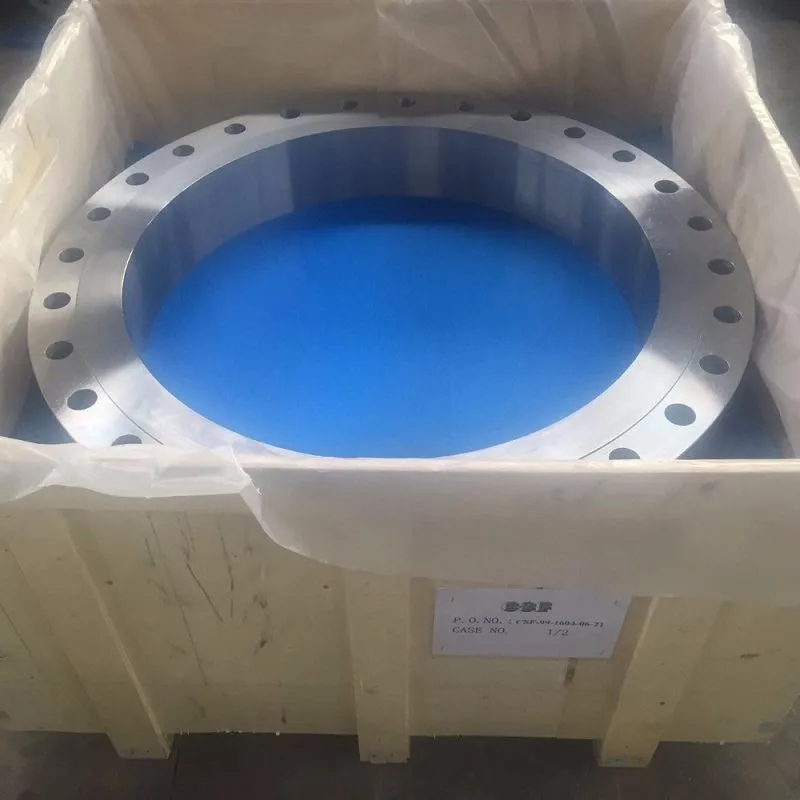
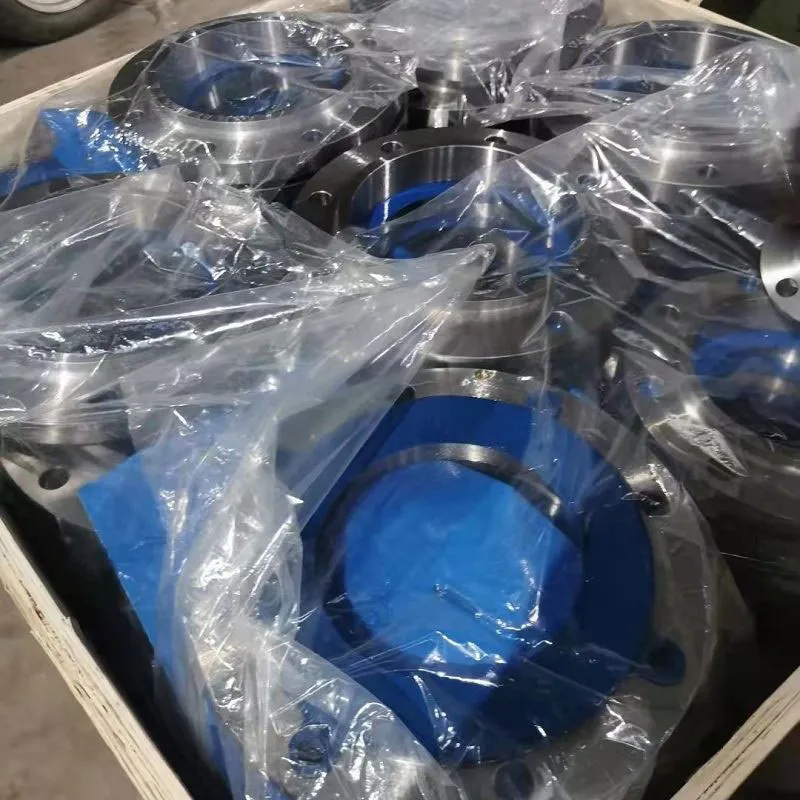
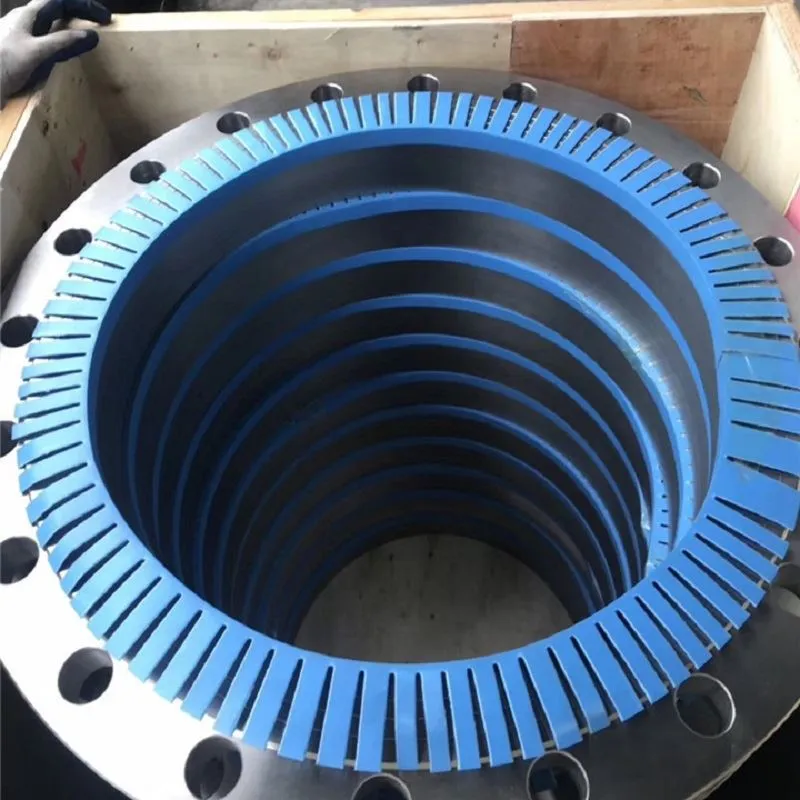
| Packaging | Custom thread protection, wood lathing for pallets | Bulk in bags, threads are often damaged during transportation |
| Warranty | From 12 to 36 months, real replacement if defective | Formally there is, in fact it is almost impossible to return the goods |
| Price (conditionally) | Above average, but justified by quality and production cycle | Dumping, attracts newcomers |
As you can see, savings at the purchase stage can result in multiple costs at the operation stage. Especially when you consider the man-hour cost of a qualified plumber or welder who will have to be called in to replace a leaking flange.
Practical guide: how not to make a mistake when ordering
Let's say you urgently need to purchase a batch of flanges. What to do? Here is my algorithm of actions that will save your nerves and budget.
First, clearly define the problem. Not just “I need 32”, but “I need a steel flange, with internal cylindrical thread G1¼, made of steel 20, galvanized, for a heating system with a pressure of up to 10 bar and a temperature of up to 110 degrees.” The more precise the technical specification, the less chance of getting something wrong.
Second, ask for samples. Before ordering a wholesale batch from the factory, ask to send 2-3 samples. Yes, you will have to pay for them, perhaps even with delivery. But this is insurance. Take these samples and try to screw quality fittings onto them. Look how the carving fits. Are there any scratches? Is the connection easy?
Thirdly, check the documents. Don't just look at the beautiful seal, but check the batch numbers. The batch number on the certificate must match the number stamped on the product itself (if such marking is provided) or on the packaging. In 2026, cases of certificate forgery have become more frequent. You can call the certification body and check the validity of the document against the registry.
And most importantly, do not chase the lowest price in the search engine. The first three links in the search results often lead to aggregators, where resellers without a warehouse are located. They take your order, look for where to buy it cheaper, and resell it to you. Direct contact with a manufacturer (Russian or foreign with a representative office) or a large distributor with its own warehouse in your region is the key to success.
Installation nuances that people forget about
Even a perfect flange can be damaged by improper installation. Internal threads are sensitive to misalignment. If you start twisting the pipe with a skew of even a couple of degrees, the first turns of the thread will receive a colossal load and become deformed. The seal will be broken immediately.
Use the right tools. Gas wrenches are good, but for greater forces it is better to use chain wrenches or a special vice so as not to damage the edges of the flange itself (if any) or its body. And never, hear me, never use welding to “tack” a threaded connection if this is not provided for by the design. Thermal effects kill the metal structure in the thread area.
For sealing, forget about good old linen without paint. In modern systems with antifreeze or chemical additives, flax quickly rots. Use high-quality threads (such as Tangit Unilock) or anaerobic thread sealants. The latter are especially good for vibration loads, since after polymerization they turn into a monolith, preventing self-unscrewing.
Forecast and conclusion: what awaits the market next?
Looking into the future, I can say one thing: the era of “cheap hardware” is leaving. In 2026-2027, we will see further market consolidation. Small garage production will either close, unable to withstand competition with efficient factories, or go into the shadows, serving very marginal segments. Major players will introduce digital passports of products, where the entire history of the metal can be seen using a QR code: from smelting to shipment.
This is good for the consumer. Transparency breeds trust. But prices are likely to rise following inflation and the increasing complexity of production technologies. Therefore, the “buy in advance” strategy for large objects is becoming increasingly relevant. If you have a project for next year, it makes sense to enter into a price fixing contract now.
Purchasing a 32 female flange is not just a transaction. This is an investment in the reliability of your system. In a world where technology is becoming more complex and Russia's climatic conditions remain harsh, the right to error is becoming a luxury we cannot afford.
Don't blindly believe advertising. Check, feel, demand documents. And remember: a good flange is not the one that is cheaper, but the one that stays where it should, for as long as it is needed, and does not create problems. In 2026, the choice is obvious: support from a manufacturer with a proven reputation, a full cycle of quality control and the ability to work according to international standards (whether GOST, DIN or ANSI). This is the only path to stability in uncertain times.
One last piece of advice: find your supplier and value them. In conditions of a shortage of qualified managers and logistics collapses, a reliable partner who will not let you down with deadlines and quality is worth more than any 5% discount. Take care of yourself and your pipelines.