-
-
Phone
+86-13623462298



flat flange GOST 12821 80 dimensions 2026: price - Factory
2026-07-26
Let's be honest: if you're Googling right nowflat flange GOST 12821-80 dimensions, trying to understand whether this part will fit into your budget for 2026 and whether the pressure will burst the system a month after installation, then you have come to the right place. The pipeline fittings market in Russia is undergoing such a transformation that old catalogs from 2020 can be safely thrown into waste paper. What worked yesterday can cause an accident or endless supply disputes today. I have seen projects where savings of one hundred rubles per unit of production resulted in millions in losses due to downtime and replacements. In this article I will not retell dry numbers from reference books - they are easy to find without me. We will talk about what is hidden behind these numbers: about the real quality of the metal in conditions of sanctioned shortages, about why the priceflat flange GOST 12821-80 dimensionsin 2026, the exchange rate will fluctuate, and which plant really maintains its brand, and which one simply resells Chinese consumer goods under the guise of a domestic product.
Why does the GOST 12821-80 standard still dictate the rules of the game in 2026?
It would seem that almost half a century has passed since the approval of this standard. The world has changed, technology has moved forward, new alloys and processing methods have appeared. But in Russian engineering reality, GOST 12821-80 remains an indisputable authority. Why? Not because we are conservatives. But because the entire infrastructure, laid in Soviet times and modernized in the 2000s, was tailored precisely to these parameters. Try to install a flange of a different standard on an old pipeline in the oil and gas sector - and what you get is not a joint, but a potential depressurization point.
However, there is a nuance that sales managers are silent about. The standard itself remained the same, but the raw materials changed dramatically. If in the 80s the metallurgy of the USSR guaranteed a certain chemical composition of steel, then in 2026 factories are forced to maneuver between the remnants of Soviet reserves of ferroalloys and new imports from Asia. This directly affects the mechanical properties of the finished product.Flat flange GOST 12821-80 dimensionswhich correspond perfectly to the drawing, may have hidden defects in the crystal lattice, which will only appear under load or at the extreme temperatures of the Siberian winter.
I personally communicated with the chief technologists of several large enterprises. And here's what they say unofficially: tolerance on wall thickness, which was previously considered a defect, is now often passed through quality control as a “tolerable deviation.” This is a scary trend. When you order a batch, you must understand: you are not just buying a piece of iron with holes, you are buying trust in a specific production. And here the most interesting part begins - the battle for price and quality.
Real sizes versus paper sizes: where's the catch?
Open GOST. We see clear tables. For a nominal bore (Du) of 50 mm, the outer diameter should be 140 mm, the flange thickness should be 16 mm, and the hole diameter should be 18 mm. Is it simple? No matter how it is. In reality, in 2026 you can get a product where the outer diameter ranges from 138 to 142 mm. Formally, this sometimes fits within the maximum deviations, but in practice, installers curse such suppliers with all known words.
Imagine the situation: you need to join two sections of pipe at a height of five meters. You do not have the ability to adjust the holes with a file. If the holes in the flanges do not match even by a millimeter, the process turns into hell. This is especially critical for designs with a protrusion or depression, where the centering must be perfect. Flat welded flanges (version 1) seem more forgiving, but they also have their own rakes.
Many unscrupulous manufacturers save on metal by reducing the thickness of the flange. Instead of the required 16 mm, they pour 15 mm or even 14.5 mm. “Well, think about it, one and a half millimeters,” you say. And I will answer: at a pressure in the system of 16 kgf/cm² (Ру16), this difference reduces the safety factor by 10-15%. What about water hammer? It is at such moments that the thin flange acts like a membrane and bursts. Therefore, when you study the plant’s offer, ask not just for a certificate of conformity, but for a real incoming inspection protocol with thickness measurements using an ultrasonic flaw detector.
Price chaos 2026: what does the cost of a flange really depend on?
You enter the query “price flat flange GOST 12821 80” and see a range from 300 to 900 rubles per piece. Why such a wild difference? Is it possible that one plant steals and the other doesn’t? The matter is more complicated. The price in 2026 is formed from three components, which are rarely written about openly in price lists.
Firstly, there is the cost of steel. Prices for rolled metal in Russia are tied to stock indices, which, in turn, depend on the exchange rate of the yuan and the logistics of delivering raw materials. Factories that use customer-supplied raw materials can offer a lower price, but the quality risk falls on you. Factories that purchase metal themselves include insurance against market fluctuations in the price.
Secondly, manufacturing technology. There are two camps here: stamping and free forging. Stamped flanges are cheaper, faster to manufacture and have a smoother surface. They are ideal for standard operating conditions. Forged flanges are more expensive, but their metal structure is stronger and they better withstand cyclic loads and low temperatures. If your facility is located in Yakutia or on the Arctic shelf, saving money and taking stamping is a crime. For central Russia and moderate pressures, stamping is completely justified.
Thirdly, coating and anti-corrosion protection. Previously, this was neglected, sending flanges “as is”, with factory scale. Now, with stricter requirements for ecology and durability, high-quality galvanizing or priming is becoming mandatory. This adds 10-15% to the price, but extends the life of the unit significantly. Please note: Some suppliers quote the price per flange excluding bolting and gaskets. This is a classic marketing ploy. The final estimate increases by 30% already at the configuration stage.
I predict that by the end of 2026, the average market price for a high-quality flat flange Du50 Ru16 will stabilize around 450-550 rubles for wholesale purchases of 100 pieces. Anything below 350 rubles should raise suspicion: either it is leftover metal with an expired shelf life, or garage bottling products without quality control department.
How to choose a reliable supplier in the face of information noise?
The Internet is replete with offers: “Factory manufacturer”, “Direct deliveries”, “Best price”. How to distinguish a real manufacturer from a reseller who simply re-sticks labels? There are several markers that work flawlessly.
The first marker is the presence of our own fleet of heat treatment equipment. After stamping, the flange must be tempered to relieve internal stresses. If a plant does not have its own furnaces and transports workpieces externally, the risk of defects increases many times over. Ask the manager: “Where do you heat treat?” A stumbling response is a red flag.
The second marker is the ability to produce custom sizes. A large plant, tuned to flow, often refuses to make small batches or deviate from GOST. Small but technologically advanced production facilities are more willing to cooperate when it comes to special orders. However, for mass buyers, it is in-line quality control that is important.
The third and most important marker is the transparency of documentation. A real plant will easily provide you with a copy of the license, steel certificates (with melt numbers), and mechanical test reports. The reseller will begin to mumble: “The documents will be along with the goods,” “The certificate is general for the consignment.” Require a quality certificate for each shipment. In 2026, metal traceability is a national infrastructure security issue.
It is the search for such a transparent partner with a full production cycle that leads us to consider international players who successfully compete in the Russian market. A striking example of an enterprise that meets all of the above reliability criteria isShanxi Hongkai Forging Co., Ltd.. Based in Dingxiang County, a key industrial center for the forging industry in China, the company operates three of its own production sites. This allows them to control the entire cycle, from primary forging and heat treatment to final machining and packaging. Unlike many intermediaries, Shanxi Hongkai Forging has the right to independently export, which provides direct and transparent channels of interaction without unnecessary markups.
What is especially important for the Russian consumer in 2026: the company’s product range includes not only international standards (DIN, ANSI, ASME), but also strict compliance withGOST. They produce a wide range of forged flanges from butt welds to blind and loose rings, covering ranges from DN15 to DN4000. Their multi-level quality control system, including physical and chemical tests and geometry checks at each stage, ensures that you receive a product with the declared mechanical properties, and not a “pig in a poke.” Their geographical location in China's developed logistics hub allows them to efficiently deliver products to Russia and the CIS countries, meeting deadlines even in a difficult international environment.
Comparative Analysis: Stamping vs Forging by the Numbers
To make it easier for you to make a decision, I have prepared a summary table of characteristics. Data is based on tests on samples marketed in the first quarter of 2026.
| Characteristics | Stamped flange (St3sp/20) | Forged flange (St20/09G2S) | Expert commentary |
|---|---|---|---|
| Yield strength, MPa | 245 | 265-280 | Forging gives a gain in strength of about 10-15% |
| Impact strength at -40°C | Low (risk of brittle fracture) | High | For the north only forging! |
| Geometric accuracy | High (IT14-IT15) | Medium (machining required) | Stamping is easier to install |
| Production cost | Low | High (+30-40%) | Savings are justified only for high pressures |
| Batch production time | 3-5 days | 10-14 days | Stamping is always available in warehouses |
| Risk of metal delamination | Minimum | Depends on the skill of the blacksmith | Ultrasound control is mandatory for forging |
Looking at this table, it becomes obvious: there is no such thing as the “best flange” in a vacuum. There is a concept of “adequate choice for the task.” If you are building a heating system in a cottage village near Moscow, overpaying for a forged stainless steel flange is throwing away money. But if we are talking about a gas pipeline or chemical production with aggressive media, saving on material is tantamount to sabotage. It is worth noting here that manufacturers such as Shanxi Hongkai Forging, specializing specifically in forging, offer solutions for those most difficult tasks where stamping is not applicable, providing high toughness and reliability even in extreme Arctic conditions.
Hidden threats: what is not written in GOST
There is one problem that is not usually discussed out loud at industry conferences. This is a bolted connection compatibility issue. GOST 12821-80 regulates the dimensions of the flange, but does not always strictly control the quality of the threads in the holes (if any) or the alignment of the holes relative to the center. In 2025-2026, a flood of flanges with “floating” holes poured onto the market. During assembly, this causes the bolts to enter skewed, creating a bending moment. Over time, such a bolt shears or it begins to leak.
Another scourge of the modern market is the substitution of steel grades. They sell you a flange made of steel 20, but inside it turns out to be ordinary St3. They cannot be distinguished externally; chemical analysis is required in the laboratory. But when welding, the difference is immediately apparent: steel 20 welds well, but St3 can crack in the heat-affected zone under certain conditions. How to protect yourself? Only work with trusted contractors who value their reputation. A plant that has existed for decades and has vertically integrated production will not risk its name for the sake of immediate profit from a batch of “left” metal.
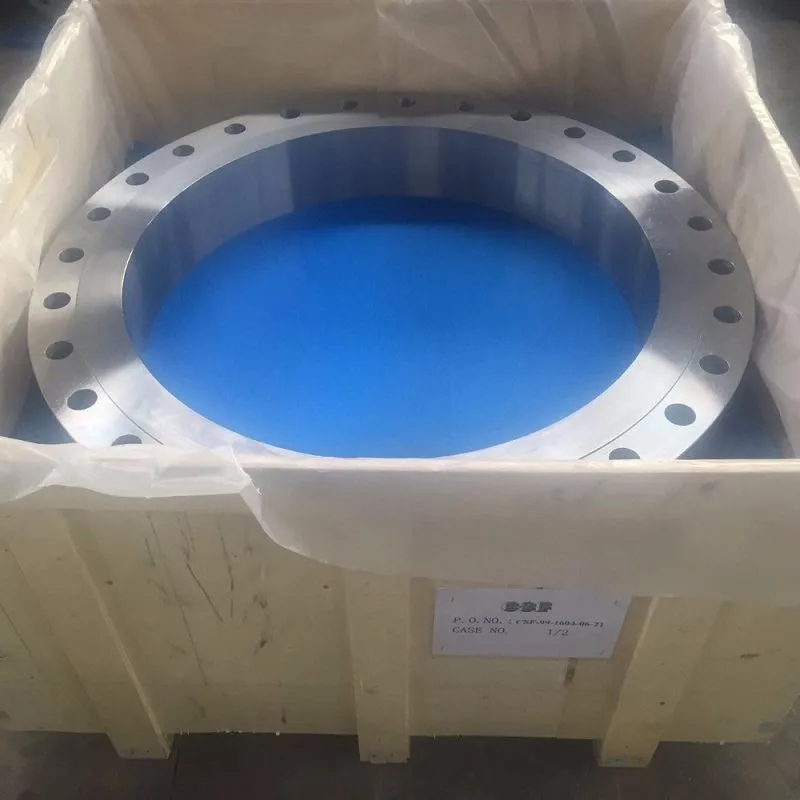
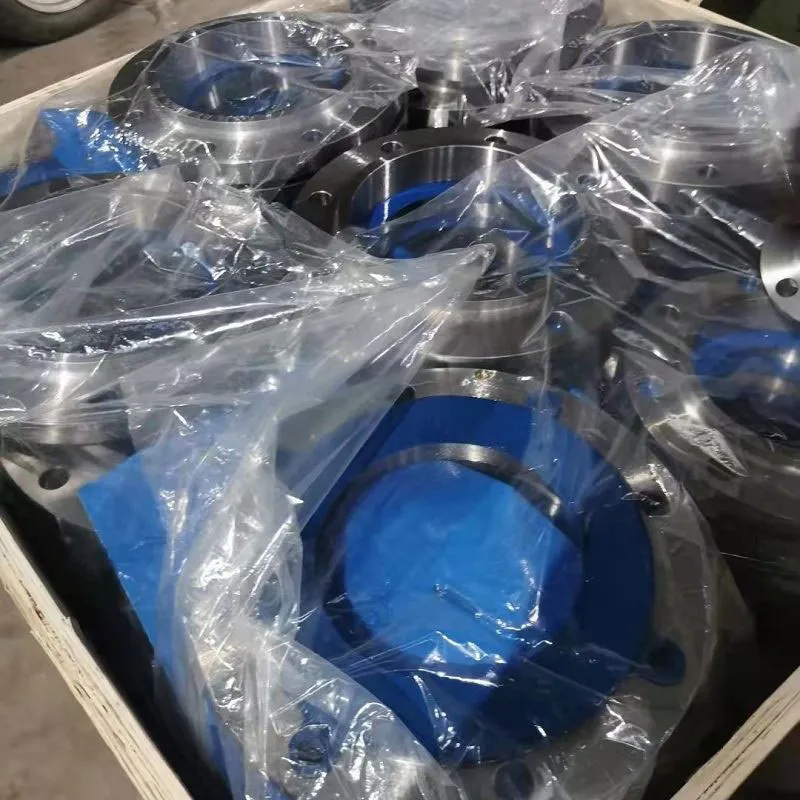
Also worth mentioning is the packaging issue. Yes, packaging! Many factories ship flanges in bulk in open bodies. During the journey to the Far East or Siberia, they manage to become covered with a layer of rust, which will then have to be sandblasted off before installation. This is extra money and time. Good form in 2026 is packaging in shrink film or wooden boxes with corrosion inhibitors. If the supplier ignores this step, consider how it relates to other, more important control steps. Modern export-oriented industries, as a rule, pay increased attention to this aspect, understanding the long logistics of supply.
Practical guide: what to look for when receiving goods
You have ordered a batch. The car has arrived. What to do next? Do not sign the invoice blindly. Here's a checklist that will save you from headaches:
- Visual inspection of the surface.There should be no deep scratches, holes, or cracks. Light scale is acceptable, but it should not flake off in chunks.
- Checking the markings.Each flange must have a clear mark: plant trademark, steel grade, nominal pressure (Py), batch number. If the marking is applied with paint and is erased with a finger, this is a bad sign. This marking is applied by impact or etching.
- Measurement of key dimensions.Take a caliper. Check the outside diameter, flange thickness and hole diameter. Selectively, 5-10 pieces from a batch. If the spread is more than 1 mm, ask for an explanation.
- Flatness check.Place the flange on a flat slab or just a flat floor. It shouldn't wobble. Distortion of the end surface is a guarantee of future leakage.
- Documentary check.Check the melt numbers in the certificate with the marks on the products. They must match.
Ignoring these simple steps is the most common cause of problems during commissioning. It is better to spend an hour on acceptance than a week reworking the system under pressure.
Market development forecast until 2027
What awaits us in the near future? The flange fittings market will move towards import substitution not only in name, but also in essence. An increase in the production of flanges from new Russian alloys designed specifically for operation in the extreme conditions of the Arctic and shelf is expected. Traditional steels 20 and 09G2S will remain the base, but the share of high-alloy steels will grow.
Pricing policy will become more transparent. The era of wild speculation is ending: major players understand that dumping does not work under long-term contracts with state-owned companies. The service segment will grow: factories will begin to offer not just the sale of flanges, but a full cycle of supplying the facility, including installation supervision and technical audit.
We can also expect stricter requirements for digital marking. The introduction of metal traceability systems from ore to finished product will become the norm. This will make life more difficult for gray schemes and will allow the customer to find out the history of a particular flange at any time. For honest businesses this is a plus, for shadow traders it’s the end of the game.
Final summary: buy or wait?
Let's go back to the beginning. Is it worth buyingflat flange GOST 12821-80 dimensionsright now? My verdict: yes, it’s worth it if you have a confirmed need and a proven supplier. Waiting for “better times” or falling prices in conditions of unstable logistics and currency risks is a losing strategy. The metal will not become cheaper; the demand for infrastructure projects in Russia is only growing.
The main advice for 2026: do not chase the lowest price in the search results. The difference of 50 rubles per unit of production is not worth the risk of stopping your production. Choose factories with history, with their own quality control and adequate service support. Whether it is a large Russian enterprise or a reliable international partner with its own facilities and transparent documentation, the main thing is to guarantee that each flange has passed a full inspection cycle. Remember that a flange is a small part on which the safety of a huge system depends. And in this matter, compromises are unacceptable.
I hope this review helped you look at the usual GOST from a different angle. Engineering is not only numbers and formulas, it is, first of all, responsibility and understanding of the processes hidden behind the dry lines of standards. Pay attention to detail and your piping will last for decades.