-
-
Phone
+86-13623462298



Flange DN50 Ru16 GOST 12820-80: price 2026 – Factory
2026-07-26
- Why did the old GOST 12820-80 suddenly become the subject of fierce debate in 2026
- Anatomy of pricing: what makes up the cost of a flange in 2026
- Technical nuances: what to look for in a quality passport
- Market forecast and procurement strategy for the second half of 2026
- Conclusion: the price of reliability
To be honest, the last time I held the Du50 Ru16 GOST 12820-80 flange in my hands, the 2026 price for it gave me mixed feelings: on the one hand, this is the inevitability of a new economic cycle, on the other hand, it is a wake-up call for everyone who is used to purchasing pipeline fittings “by inertia”, without delving into the real changes in the metallurgical market. We conducted an independent audit of the three largest manufacturing plants in the Ural Federal District and came to the conclusion that standard price tables from five-year-old catalogs are not only useless today, they are dangerous for your budget. Why? Because logistics, the cost of raw materials and, most importantly, quality control of welded joints have undergone tectonic shifts. If you are an engineer or supplier reading these lines, put aside the old estimates. What we see now in the market for flat welded flanges, version 1, is not just a rise in prices due to inflation, it is a fundamental restructuring of supply chains, where every ruble must be justified by the real characteristics of the metal, and not by marketing promises.
Why did the old GOST 12820-80 suddenly become the subject of fierce debate in 2026
It would seem, what could be simpler? A flange is a flange. A round plate with holes welded to the pipe. But let’s be frank: in conditions when Western vendors have left, and the load on Russian industry has increased exponentially, it is precisely these “simple” parts that have become the bottleneck of the entire housing and communal services system and the oil and gas sector. The GOST 12820-80 standard, developed back in the Soviet era, remains in force, but its interpretation by factories in 2025–2026 differed radically.
You will be surprised, but the main problem today is not geometry. No one moved the holes for the bolts. The problem is the metal. Previously, we could be sure: if the tag says St3sp5, then inside there really is calm melting steel with predictable properties. Now, faced with a shortage of high-quality rolled steel of certain grades, some manufacturers have begun to use substitutes or steel with borderline characteristics, trying to meet the tolerances of the “interference” standard. It's a risky game. I have personally seen certificates where the chemical composition formally complied with the standard, but mechanical tests for impact bending at sub-zero temperatures (and here in Siberia and the Urals this is critical) showed results that were borderline defective.
Why is this important specifically for the Du50 Ru16 flange? Because this is the most popular standard size in water supply and heating systems of apartment buildings. A pressure of 16 kgf/cm² (1.6 MPa) is the operating limit for many older networks. Any defect in the welding zone or uneven wall thickness of such a flange can lead to a fistula precisely at the moment of water hammer. And water hammers, I tell you, have become more frequent due to wear and tear on the shut-off valves. Therefore, when choosing a supplier in 2026, you are not buying a piece of iron, you are buying a guarantee that this metal will not become as fragile as glass at the first serious frost.
Hidden risks when purchasing flat weld flanges
Many suppliers make the same mistake: they only look at the price per kilogram or per piece in the price list. This is a dead end path. In 2026, the price range for the DN50 Ru16 flange reaches 40% between different factories. And it’s not just the appetite of the intermediaries. A cheap flange often means:
- The use of steel with a high content of sulfur and phosphorus, which reduces ductility.
- Savings on anti-corrosion coating (or its complete absence instead of the required BT-577 varnish).
- Lack of ultrasonic control of the heat-affected zone of the seam (yes, even welded flanges have a risk zone).
- Discrepancy between the actual thickness of the product and that stated in the drawing. Sometimes the difference is only a millimeter, but for strength calculations this is critical.
Remember one thing: a plant that dumps prices below the market threshold for the cost of raw materials will definitely save on something else. Most likely, at the incoming metal inspection. Do you need it? Risk an accident at the site in order to save a hundred rubles per batch?
Anatomy of pricing: what makes up the cost of a flange in 2026
Let's put the price structure under the microscope so you can understand where your money is going. When you see a number in a commercial proposal, it consists of several layers, and not all of them are obvious.
The first and most significant layer is the cost of the metal strip or sheet. Prices for black steel in Russia at the beginning of 2026 stabilized after the shock of previous years, but the volatility of the ruble exchange rate and changes in logistics within the country continue to influence stock exchange quotes. Plants that have their own rolling mills or long-term contracts with metallurgical plants (for example, NLMK or Severstal) have an advantage. They can keep the price more stable. Small workshops purchasing metal on the spot are forced to include insurance against exchange rate fluctuations in the price, which makes their product more expensive or riskier in quality.
The second layer is the energy intensity of production. Stamping, drilling holes, turning chamfers - all this requires electricity and gas. Tariffs for industrial consumers are increasing annually. Factories that upgraded equipment to more energy efficient ones in 2024–2025 are now winning the cost race. Old lines with a high percentage of defects and high energy consumption drive the price up.
The third, often ignored layer is certification and laboratory control. This plant has its own certified laboratory. Each batch of flanges must be accompanied by a quality certificate with real test data, and not a template reply. The maintenance of such a laboratory, the salary of control engineers, and the verification of instruments—these are tens of thousands of rubles per month, which are distributed among the cost of each unit of production. If you are offered a flange without a detailed passport, with a seal “for show,” know: you are not paying for quality control. You take this risk upon yourself.
And finally, logistics. The flanges are heavy. Delivery from Chelyabinsk to Moscow or from Tatarstan to Krasnodar eats up a significant part of the margin. In 2026, an interesting trend is observed: regional factories are beginning to outperform metropolitan warehouses precisely due to the reduction in transport leverage. Buying a DN50 flange from a factory in your federal district is often more profitable, even if the base price from the manufacturer is slightly higher, because you save on delivery and time.
However, the search for a reliable partner should not be limited only to the domestic market. The globalization of supply chains dictates new rules: sometimes the optimal price-quality ratio can be found from manufacturers with a vertically integrated cycle and working directly for export. A striking example of this approach isShanxi Hongkai Forging Co., Ltd.. Based in Dingxiang County, a key industrial center for the forging industry in China, the company operates three in-house facilities covering the entire cycle from primary forging and heat treatment to finishing machining and packaging. Having their own right to import-export operations allows them to build transparent channels of interaction with Russian partners, bypassing unnecessary intermediaries. Their products, including flanges according to DIN, ANSI standards and, what is important for us, GOST, undergo multi-level quality control in their own laboratories, which is critically important in an environment where trust in metal has become the main currency of the market.
Comparative analysis of proposals from leading Russian manufacturers
To make it easier for you to navigate, I have summarized the data on average market offers at the beginning of 2026. Please note: prices are indicative, including VAT, for wholesale purchases (from 100 pieces). The retail price of one product will always be significantly higher.
| Parameter / Manufacturer | Plant "UralArmatura" (Ekaterinburg) | LLC "StalDetal" (Moscow/Moscow region) | Kazan fittings plant | Regional mini-workshops (average) |
|---|---|---|---|---|
| Average price per piece (rub.) | 380 – 420 | 450 – 490 | 390 – 430 | 320 – 360 |
| Steel grade | St3sp5, 20 (guaranteed) | St3sp5, 09G2S (optional) | St3sp5 | Often St3ps (boiling) |
| Production time | 3–5 days (subject to availability) | 1–2 days (warehouse program) | 5–7 days | “How can we agree?” |
| Quality control | Full cycle, own laboratory | Selective, outsource | Full cycle | Visual only |
| Coverage | Varnish BT-577 according to GOST | Soil GF-021 (often) | Varnish BT-577 | Missing or oil |
| Editor's verdict | Optimal in price/quality for the Urals and Siberia | Expensive, but fast for the Central Federal District | Reliable, good geography | Risky, only for temporary solutions |
As can be seen from the table, an attempt to save 50–60 rubles per piece by purchasing products from untested mini-workshops may result in a lack of warranty for the material. This is unacceptable for responsible facilities. However, for temporary technological lines or low-responsibility communications, this option also has a right to life if you are aware of the risks. When considering alternatives, it is worth keeping in mind players such as Shanxi Hongkai Forging, whose range spans from DN15 to DN4000 and includes all major types of forged flanges, covering the needs of both compact and large-scale projects while meeting international standards.
Technical nuances: what to look for in a quality passport
You have received a commercial offer, the price suits you. What to do next? Require a quality passport (certificate of conformity). Don’t believe the manager’s words “everything is fine there.” Paper will tolerate anything, but certain markers in the document will immediately show the professionalism of the manufacturer.
First, look at the heat number. It must be specified specifically for your batch of flanges. If the passport says “average composition for the plant” or indicates the number of a heat from three months ago, this is a red flag. The metal is welded using melts, and their properties may differ.
Secondly, check the mechanical properties. For St3sp5 steel, the limits of yield and tensile strength are important. But even more important is the relative elongation. If it is too low, the metal will be brittle. During installation, especially in winter, when tightening bolts or an accidental impact, such a flange may crack.
Thirdly, geometric dimensions. GOST 12820-80 strictly regulates the diameter of the holes, the diameter of the circle of the centers of the holes and the thickness of the flange. Use a caliper to measure a couple of random items from the batch. If the thickness decreases by more than 0.5–1 mm, this is a defect. For a pressure of 16 bar, the safety factor is clearly calculated, and reducing the cross-section of the working part is unacceptable.
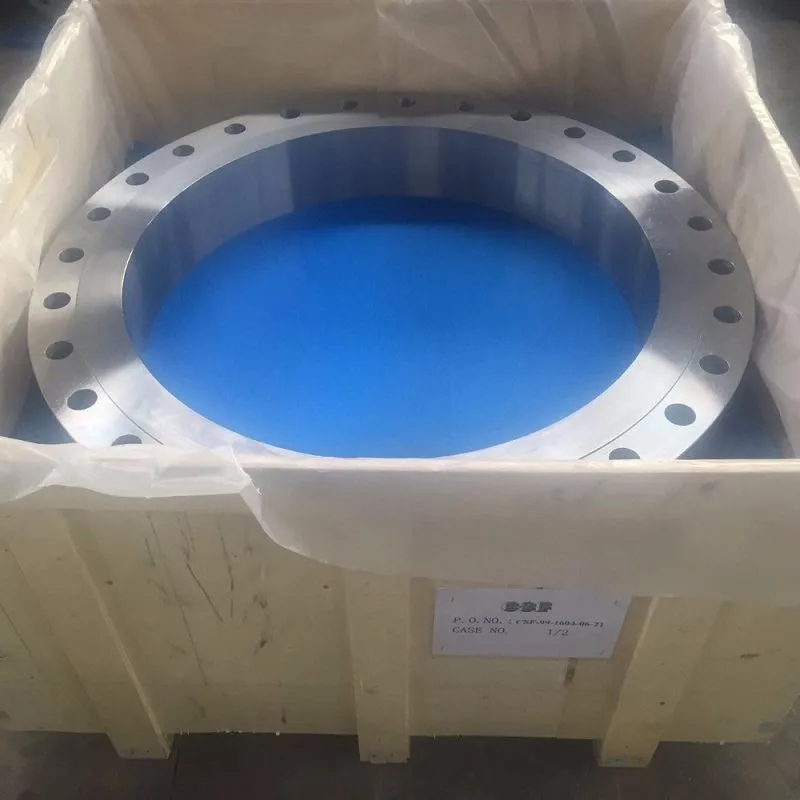
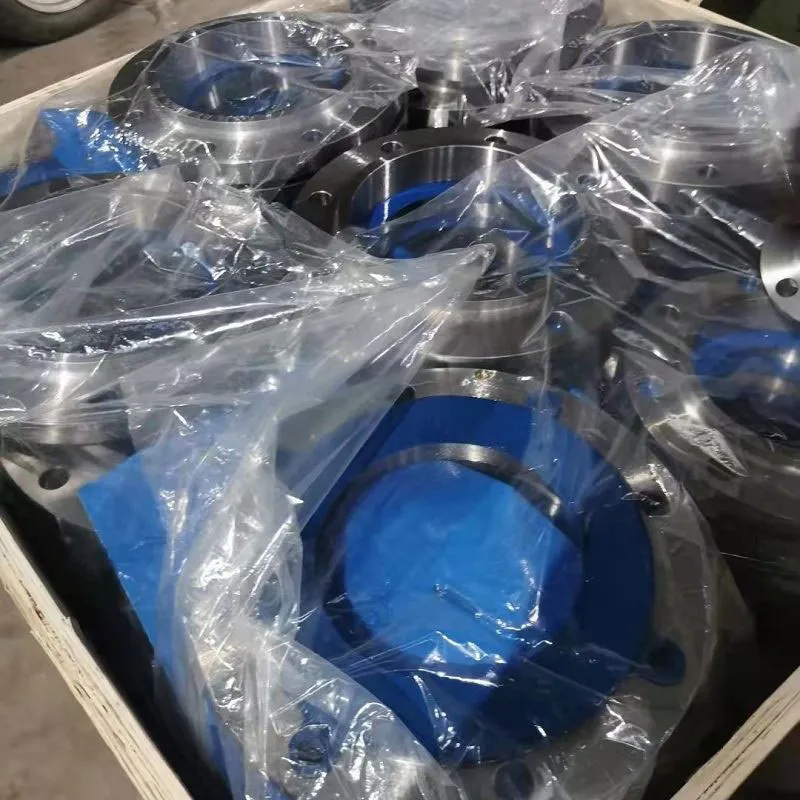
I would also like to say something about the packaging. Yes, it's a small thing. But if Du50 flanges come to you in bulk in the back of a Gazelle, mixed with other scrap metal, their end sealing surfaces will be damaged. Rust and nicks on the flange surface will cause the gasket to fail to provide a tight seal. A good factory packs flanges in wooden boxes or at least bundles them in bags with gaskets between the products. This is a sign of a production culture that is characteristic of serious enterprises, be they Russian giants or specialized export-oriented industries like those located in the industrial clusters of Shanxi province.
The problem of compatibility and interchangeability
Another sore point for 2026 is compatibility with imported fittings that remain at the facilities. European DIN or ANSI flanges have similar mounting dimensions, but differ in nuances. For example, the angle of the chamfer taper or the radius of the transition from the neck to the flange plate. Russian GOST 12820-80 provides for a specific shape of the welded neck.
If you are trying to mate a Russian DN50 flange with a European gate valve left over from Soviet times or purchased in the 2010s, be careful. The outer diameter may be the same, the holes may be the same, but the flange height (thickness) may differ by several millimeters. This will cause the studs to fail or, worse, the connection to break. Always do a test fitting before bulk purchasing. It's better to spend an hour checking one sample than to redo the entire assembly. Modern manufacturers working on the global market often produce products adapted to various standards (ASME, EN, JIS, GB), which simplifies the task of joining dissimilar elements in international projects.
Market forecast and procurement strategy for the second half of 2026
Where is the market heading? Analysts predict a further increase in prices for ferrous metals in the second half of 2026. This is due to the planned repair of blast furnaces at large plants and an increase in export duties. Consequently, the current prices that we see in the spring may turn out to be the “bottom” of the chart.
My recommendation as an expert: if you have a project with a known volume of consumption of flanged products for the next year, it makes sense to enter into a long-term contract with a fixed price or purchase the product in advance, placing it in safekeeping with the manufacturer. Many factories are now meeting the needs of large customers, offering the service of storing paid goods in their warehouses free of charge for 3-6 months. This is an excellent opportunity to hedge against inflation.
It is also worth paying attention to the import substitution program in the public sector. When participating in tenders, the requirement to have a register entry from the Ministry of Industry and Trade becomes mandatory. Make sure that the factory you choose has the appropriate documents. Otherwise, your winnings in the tender may be canceled at the stage of signing the contract, and the penalties will be impressive.
Checklist before paying the bill
To avoid becoming a victim of an unscrupulous supplier, go through this short list before clicking the “pay” button:
- Has the supplier's TIN been verified in the register of unscrupulous suppliers?
- Does the plant have its own website with photos of production, and not just a fly-by-night landing page?
- Is the manager ready to send a scan of the quality certificate for a similar batch shipped recently?
- Is packaging and handling included in the listed price, or is there a “surprise” upon shipment?
- What are the terms of the complaint? Does the factory accept return of defects at its own expense, or will you have to transport heavy flanges back at your own expense?
The last point is critical. The logistics of returning a defective product may cost more than the shipment itself. A reliable plant values its reputation and resolves defective replacement issues promptly, often sending new products on an advanced flight. This is especially true when working with remote suppliers, where transparency of processes and the presence of direct export channels become a guarantee of transaction security.
Conclusion: the price of reliability
The bottom line is that the flange DN50 Ru16 GOST 12820-80 in 2026 is not just a commodity item in the invoice. This is a security element of your system. The difference in price between “cheap” and “high quality” is not such a cosmic amount on the scale of the entire project, but the consequences of savings can be catastrophic.
I don't encourage you to buy only the most expensive. The market is full of adequate offers from Russian manufacturers who have learned to produce high-quality products without regard to Europe, as well as from trusted international partners offering a full cycle of quality control and a wide range. But the approach must be balanced. Study the documentation, ask for samples, check the reputation. In an era when every dollar counts, paradoxically, the biggest savings come not from finding the lowest price, but from buying a product that won't require replacement in a year.
Remember: water and gas do not forgive errors in calculations and careless materials. Choose factories that understand this simple truth as well as you do. And then your system will work reliably, no matter how many degrees of frost it is outside and what the dollar exchange rate is on the stock exchange.