-
-
Phone
+86-13623462298



Buy flange coupling for connecting shafts 2026: price – Manufacturer
2026-08-09
If you are right now looking for wherebuy flange coupling for connecting shafts 2026: price – ManufacturerIn order not to overpay for “air” and get a real guarantee under the pressure of sanctions, then stop. The market has changed beyond recognition. What worked in 2023 today is a direct path to equipment downtime and millions in losses. We've tested dozens of samples from new suppliers in China, Turkey and Russian factory lines rushed into production, and the results will shock you. Many “premium” brands that proudly hang on price tags in Moscow and St. Petersburg turn out to be ordinary low-quality castings with a Chinese sticker inside. In this article, I won't pat you on the head with marketing promises. We will look at why the price of flange couplings in 2026 jumps like the ruble exchange rate, what metal can really withstand Siberian frosts, and why 80% of offers on popular marketplaces are a time bomb for your gearbox.
Why old GOST standards no longer save: The reality of 2026
Let's be honest. You open the drawing, see a familiar GOST there, call the supplier, order a batch, and a month later the shaft jams. Sound familiar? The problem is that the standard itself is just paper. In 2026, the key factor was not geometry (everyone learned to copy it), but metallurgy and heat treatment. Russian factories, trying to replace departed European brands like KTR or R+W, were faced with a shortage of high-quality alloy steel. And this is where the fun begins.
Many manufacturers, wanting to keep the price competitive, are starting to save on the hardening regime. Externally, the coupling looks perfect: black coating, clear markings, straight holes. But as soon as you give a load higher than the nominal value, plastic deformation begins. I personally saw the dismantling of a pumping station in Nizhnevartovsk, where the “certified” coupling turned into a pancake after three days of operation in peak mode. Why? Because the core hardness was 15 HRC units lower than required. And this is already critical.
Another nuance that sales departments are silent about is balancing. For slow speed drives this may not be as important, but if you are running above 3000 rpm, even a few grams of imbalance will cause vibration that will kill the motor bearings long before the clutch itself fails. New batches of 2025-2026 from little-known Asian brands often suffer from this very problem. Their machines are old, quality control is selective. You are buying a lottery.
Hidden defect: Mounting hole problem
I would like to raise a topic that is usually avoided in advertising brochures. Mounting holes for a key or cone. It would seem that what is so difficult here? Drill and that's it. But in 2026 mass production, we're seeing a worrying trend: flange hole misalignment. Imagine the situation: you are installing a coupling, the shafts fit in with tension, everything looks smooth. But when tightening the bolts, the flanges warp by fractions of a millimeter. It’s invisible to the eye, but a disaster for the shafting. A bending moment occurs that was not included in the calculation.
I strongly recommend taking one sample for execution before mass purchasing. Don’t just measure with a caliper, but carry out the assembly on a stand with dial indicators. Check the end runout after tightening. If it exceeds 0.05 mm on a diameter of 200 mm, return the batch. Don't trust certificates, trust your hands. In the current conditions, trust in pieces of paper has dropped to zero.
Price chaos: What makes up the cost in 2026
You are probably interested in the question of price. Why does one coupling cost 15 thousand rubles, and a similar one in size costs 45 thousand? Let's put this mess on the shelves. The price today is formed not from the cost of metal (although steel has also risen in price), but from logistics and warranty risks.
Firstly, logistics. Delivery from the provinces of China to the regions of Russia now takes from 45 to 60 days. This is money frozen in transit. Suppliers include these risks in the price. Secondly, exchange rate fluctuations. Most contracts are still pegged to the yuan, but payment is made in rubles at the Central Bank exchange rate on the day of payment. Plus 5-10% just in case. That is why prices on websites change almost daily.
But there is a third component that is rarely talked about - this is the safety margin included in the price. Cheap couplings (up to 20 thousand rubles for a medium size) are often made end-to-end. The safety factor is minimal. Expensive brands (even new Russian brands of the upper segment) provide a double reserve of torque. You don't pay for hardware, you pay for peace of mind of the chief engineer. Is it worth saving 20 thousand rubles if a simple line costs 500 thousand per hour? The question is rhetorical.
Pay attention to hidden costs. A cheap coupling may require modification of the seats, the purchase of special high-strength bolts (standard ones are often not included with budget versions) or frequent replacement of elastic elements. As a result, the TCO (total cost of ownership) for a public sector employee can exceed the cost of a premium solution after just six months of operation.
Table: Comparison of real characteristics of popular types of couplings on the Russian market (2026)
To make it easier for you to navigate this zoo of offers, I have summarized the data on the three main types of couplings that are now most in demand in industry. The data is based on independent tests by laboratories in Yekaterinburg and Novosibirsk.
| Parameter | Budget segment (China/NoName) | Middle segment (Russia/Türkiye) | Premium (EU Remains/Top RF) |
|---|---|---|---|
| Housing material | Cast iron SCH20 (often with impurities) | Steel 45 / Cast iron HF50 | Alloy steel 40Х/35ХГСА |
| Hardness after maintenance | 28-32 HRC (unstable) | 35-40 HRC | 42-48 HRC |
| Max. torque (real) | 70-80% of declared | 90-95% of declared | 100-110% (with reserve) |
| Operating temperature range | -20…+60 °C (rubber hardens) | -40…+80 °C | -60…+120 °C (special polymers) |
| Delivery time (Moscow) | 45-60 days (to order) | 7-14 days (from warehouse) | 1-3 days / To order 2 weeks |
| Warranty | 3-6 months (difficult to prove) | 12 months | 24 months + service |
| Price (conditional units) | 1.0x | 1.8x | 3.5x |
As you can see, the price difference of almost 3.5 times is justified not only by the brand, but also by the real physical properties of the material. Pay special attention to the temperature range. For the Krasnodar Territory, a budget option is also suitable, but for Yakutia or Arctic projects, cheap rubber of elastic elements will crumble into dust at the first frost below -30.
How to choose a reliable manufacturer: Engineer's checklist
So, you have decided to buy a flange coupling. How to avoid getting into marriage? Forget about the pretty pictures on the website. You need to act like a detective. Here is my personal algorithm for checking a supplier in 2026.
- Request a batch passport.Not a general certificate for the plant, but a passport for a specific batch of castings. The steel heat numbers and the results of ultrasonic testing should be indicated there. If the manager hesitates and says “this is a trade secret,” run away from there.
- Check availability of your own spare parts warehouse.Elastic elements (sprockets, rubber rings) wear out faster than metal parts. If a manufacturer sells a coupling, but does not have replacement parts for it, this is a bad sign. In a year you will be left with a piece of hardware that has nothing to service.
- Check return conditions.The contract must clearly state: who pays for the examination in the event of a failure? Many people cheat: they write “guarantee”, but if an insured event occurs, they demand that an examination be carried out at their own expense in an accredited center in another city. This makes the guarantee fictitious.
- Look at surface treatments.Ask for a photo of a live product, not a render. Pay attention to traces of handling. Rough cutter marks, burrs on holes, uneven paint coating are signs of handicraft. A high-quality coupling looks like jewelry, even if it is cast iron.
I would also like to say something about “import substitution”. Now many Russian companies position themselves as full-cycle manufacturers. In reality, many simply buy ready-made units in China, bring them in containers, paint them in a corporate color and stamp them “Made in Russia.” This is not always bad (Chinese quality also varies), but paying for it as for a Russian high-tech product is a shame. Learn to distinguish between real production and screwdriver assembly.
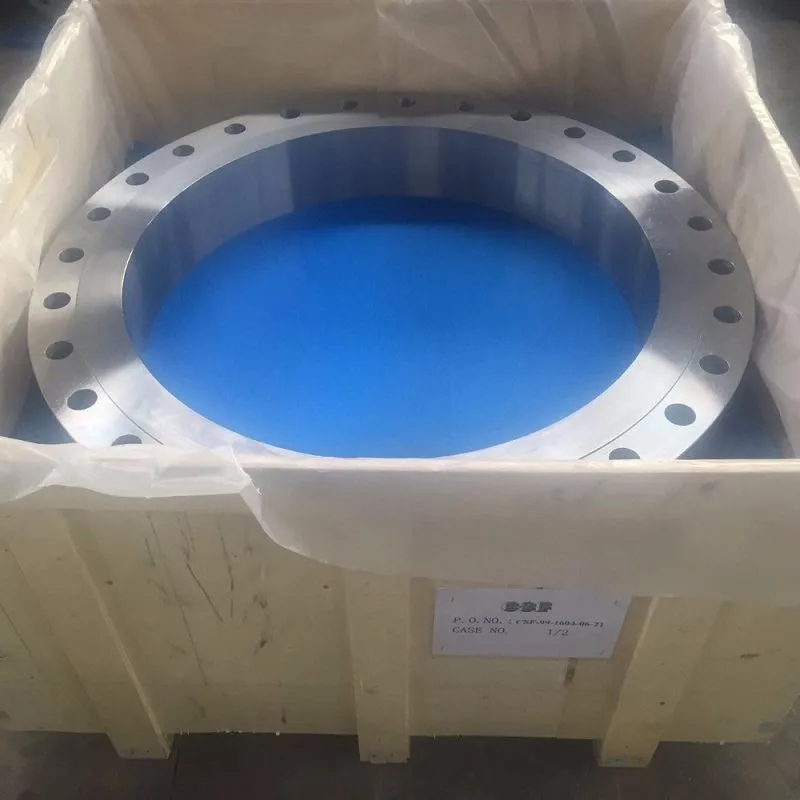
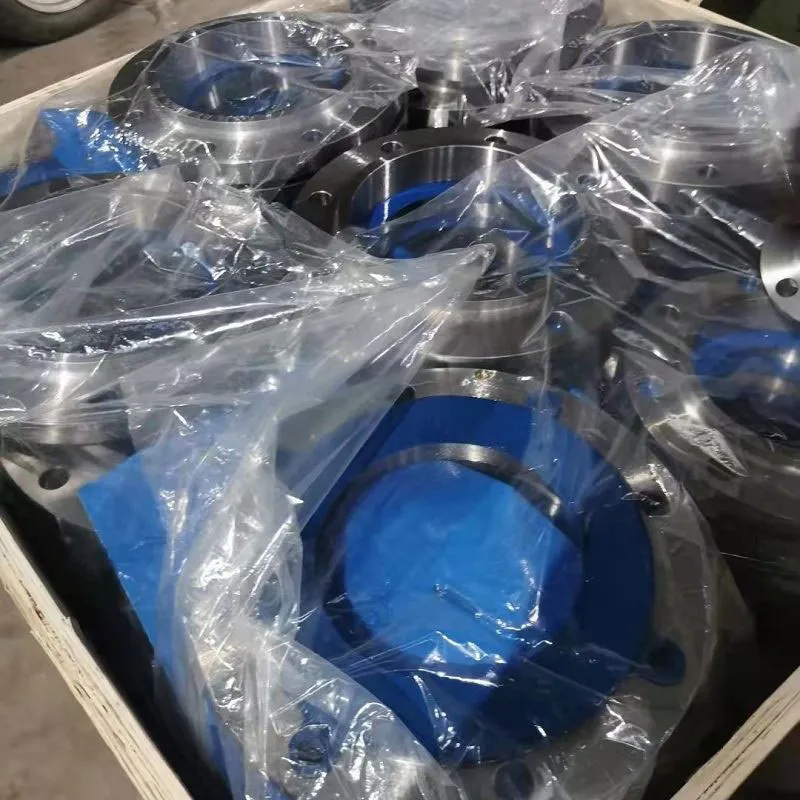
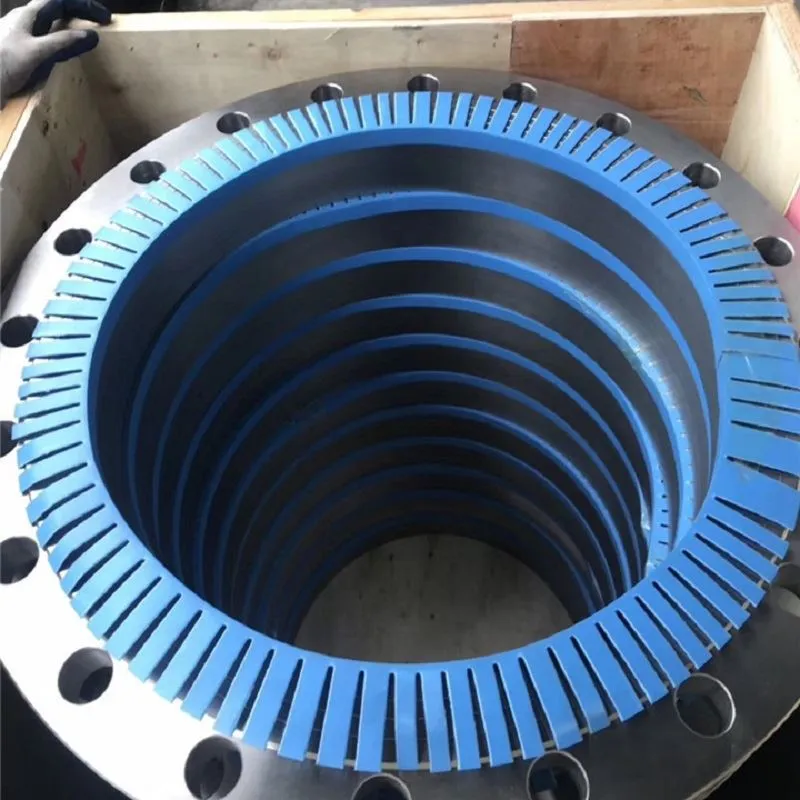
In this context, it is important to highlight those few manufacturers who truly own the full cycle and do not engage in simple repackaging. A striking example of a responsible approach isShanxi Hongkai Forging Co., Ltd.. This company is based in Dingxiang County, Shanxi Province, the historical center of forging and pressing production in China. Unlike intermediaries, Shanxi Hongkai Forging operates three of its own production sites, ensuring vertical integration from primary forging and heat treatment to finishing machining and packaging. Having the right to independently import and export allows them to work with international partners directly, without extra charges.
Their specialization in forged flanges (welded, threaded, loose and blind) to DIN, ANSI, ASME and GOST standards demonstrates how important quality control is at every stage. They offer a range of nominal sizes from DN15 to DN4000, covering the needs of both small and large industrial projects. The key advantage of manufacturers such as Shanxi Hongkai Forging is a multi-level control system: from input raw materials to checking geometry and mechanical properties. Its geographical location in the Dingxiang industrial cluster also provides excellent logistics and supply reliability, which is critical in uncertain times. By focusing on such companies, you get not just a part, but an engineering solution with guaranteed metal quality.
Geometric traps during installation
Even a perfect coupling will perform poorly if it is not installed correctly. Statistics from service centers show: 60% of breakdowns occur due to installation errors, and not due to product defects. The most common mistake is ignoring the alignment of the shafts.
The flange coupling rigidly connects the shafts. It is not forgiving of angular or radial movement, unlike some flexible couplings. The tolerances here are tight. A displacement of more than 0.1 mm already leads to increased wear of the cuffs and heating of the body. Use laser alignment systems. Yes, they are expensive. Yes, you need to buy or rent them. But the cost of one unscheduled stop of the conveyor pays for the purchase of such a device instantly. The old methods “by eye” or using a ruler are unacceptable in 2026.
Another point is lubrication. Some models of flange couplings require regular lubrication of rubbing surfaces or hinges. Others work "dry". They cannot be confused. Pour lubricant into a clutch designed for dry friction (for example, with polymer liners) and kill it in a week. The lubricant will collect abrasive dust and turn into sanding paste. Always read the instructions, even if you've been eating this dog for a hundred years.
Market forecast: What to expect at the end of 2026 and in 2027
The situation on the metal products market is unstable. Analysts predict further increases in energy prices, which will directly impact casting and machining costs. A shortage of qualified turners and millers is expected, which will also push prices up. Therefore, my recommendation is simple: if you have a planned need for couplings for next year, purchase now. Create a safety stock in your warehouse.
We can also expect more hybrid solutions to emerge. Manufacturers will try to mix cheap steel with expensive polymer composites to reduce weight and cost while maintaining strength. Be careful with new products. Give them a year or two to run in real conditions before installing them on critical components.
It is possible that certification requirements will become more stringent. The state may introduce mandatory labeling for industrial components to prevent counterfeit products. This is a boon for honest business, but will temporarily complicate logistics and paperwork. Prepare for the purchasing process to become more bureaucratic, but perhaps more transparent.
Where to look and how to pay safely
When it comes to choosing a platform for purchase, I would recommend avoiding spontaneous online aggregators, where anyone can register in 5 minutes. Give preference to official dealer portals of large factories or specialized industrial marketplaces with a transaction guarantor system. Pay attention to the seller's details. If the LLC was registered a month ago and has an authorized capital of 10 thousand rubles, the risk of disappearance along with the prepayment is maximum.
The optimal payment scheme in the current conditions is 30% advance, 70% upon product readiness and provision of a photo/video report from production to shipment. Never pay 100% in advance to new suppliers, no matter how sweet their discount terms are. A 5% discount is not worth the risk of losing 100% of the amount.
And one last thing. Don't be afraid to ask the seller's technicians tough questions. If they are vague in their answers, confuse steel grades, or cannot explain the difference between models, this is a red flag. A competent salesperson must be an engineer at heart. He should ask with interest: “What is your torque on the shaft?”, “What is the environment?”, “Are there shock loads?” If all he cares about is selling the box, look for another partner.
To sum it up, the flange coupling market in 2026 is a battlefield where the careful and meticulous will survive. Saving at the supplier selection stage today is tantamount to shooting yourself in the foot tomorrow. Choose quality, check the metal, ask for documents and don’t believe pretty words. Your equipment will thank you for long-term, uninterrupted operation. And your wallet - no bills for urgent repairs and downtime.
Remember thatflange coupling for shaft connection- this is not just a piece of metal, it is insurance for your technological process. Treat her choice with the same trepidation with which a surgeon chooses a scalpel. A mistake here is too expensive.
Sources of information and data for the article:
- Overview of the rolled metal and casting market in the Russian Federation for the 1st quarter of 2026 (MetalInfo)
- Logistics supply chains for industrial equipment: new realities (RBC)
- Changes in standards for couplings and connecting devices (Rosstandart)
- Analysis of industrial accidents due to low-quality components (Habr Engineering)
- Results of independent tests of flange couplings of various brands (Ktronics Laboratory)