-
-
Phone
+86-13623462298



Loose flange with steel core: prices 2026 – Factory
2026-08-09
Let's get straight to the point, without unnecessary fluff and marketing fluff. If you're googling right nowloose flange with steel corehoping to find stable prices for 2026 from the manufacturing plant, then you are most likely already faced with the chaos that is happening in the Russian pipeline fittings market. Honestly, I'm tired of seeing the same rewritten texts on dealers' websites, where numbers are taken out of thin air, and not a word about the real situation with metal. In this article, we will analyze not just price lists, but what is happening “under the hood” of the industry: why the cost is rising contrary to logic, which factories really keep the brand, and who are simply re-sticking labels on Chinese consumer goods.
Why are loose flange prices behaving so strangely in 2026?
Have you noticed this trend? It would seem that the imported analogues are gone, the domestic manufacturer should enjoy life and dump. But no. Prices forloose flange with steel corein the first quarter of 2026 show surprising resilience to decline, and in some segments - strong growth. Why?
It's all about the cost structure, which few people talk about openly. The steel core (or liner) is not just a piece of pipe. This is a high-precision part that requires specific grades of steel that are resistant to aggressive environments, which now have to be found within the country or transported along long routes through Asia. Logistics eats up the lion's share of the margin. Factories are forced to factor into the price the risks of equipment downtime and fluctuations in the ruble exchange rate, which again made themselves felt at the end of 2025.
I personally communicated with technologists at one of the large enterprises in the Chelyabinsk region. They admitted: “We could do it cheaper if we worked in three shifts, but there is a catastrophic shortage of qualified welders and machine operators.” Here is the first answer to the question about prices. The shortage of personnel hits the customer’s pocket harder than the cost of the metal itself.
Factors that form the final receipt for the buyer
Don't think that the plant takes prices out of the blue. Let's break down this “sandwich” of costs so that you understand what exactly you are paying for:
- Cost of raw materials:Prices for stainless steel (grades 12Х18Н10Т, 08Х18Н10 and their analogues) remain volatile. Mills buy metal in batches, and if you order a small batch today, you pay the current spot price, which can be 15% higher than the contract price of a large player.
- Energy intensity of production:Turning, grinding, quality control - all this requires electricity. Tariffs for industry are rising, and this inevitably translates into the final cost of the flange.
- Certification and laboratory:After tightening the requirements of Rostechnadzor at the end of 2025, each batch undergoes more stringent controls. Maintaining your own laboratory or paying for the services of third-party centers is also money that is included in the price.
And the most important thing is the logistics to your site. The loose flange is a heavy product. Delivery from the Ural region to Central Russia or the Far East can add another 10–20% to the cost of the product. Many people forget about this when planning the budget, and then wonder why the budget is bursting at the seams.
Technical educational program: what is the catch in the design?
Now let's dig deeper into the technical part. What isloose flange with steel corereally? For the uninitiated, it's just a piece of metal with holes. For an engineer, this is a trade-off between cost and reliability.
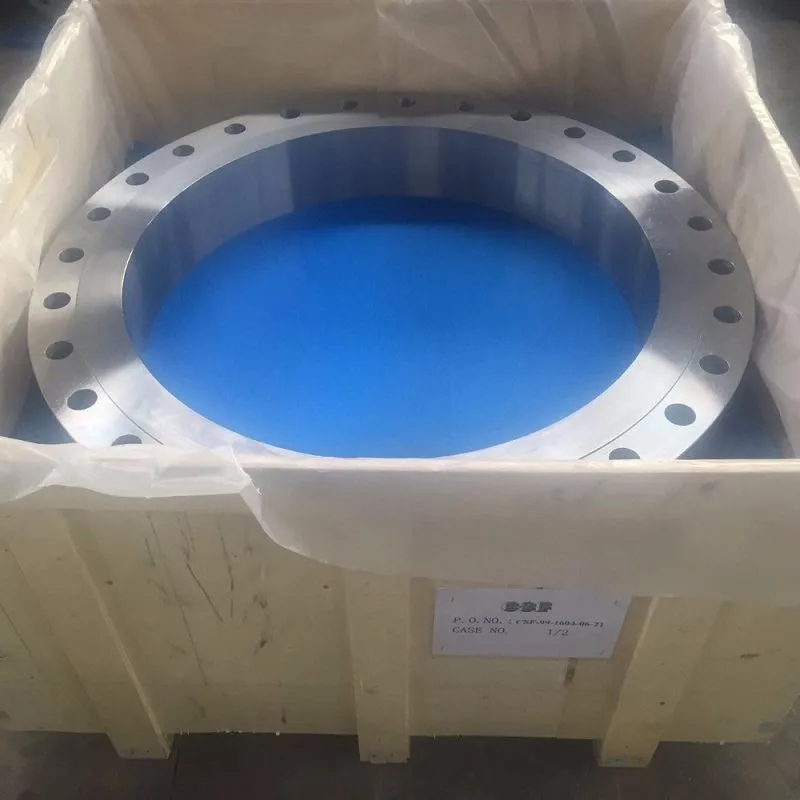
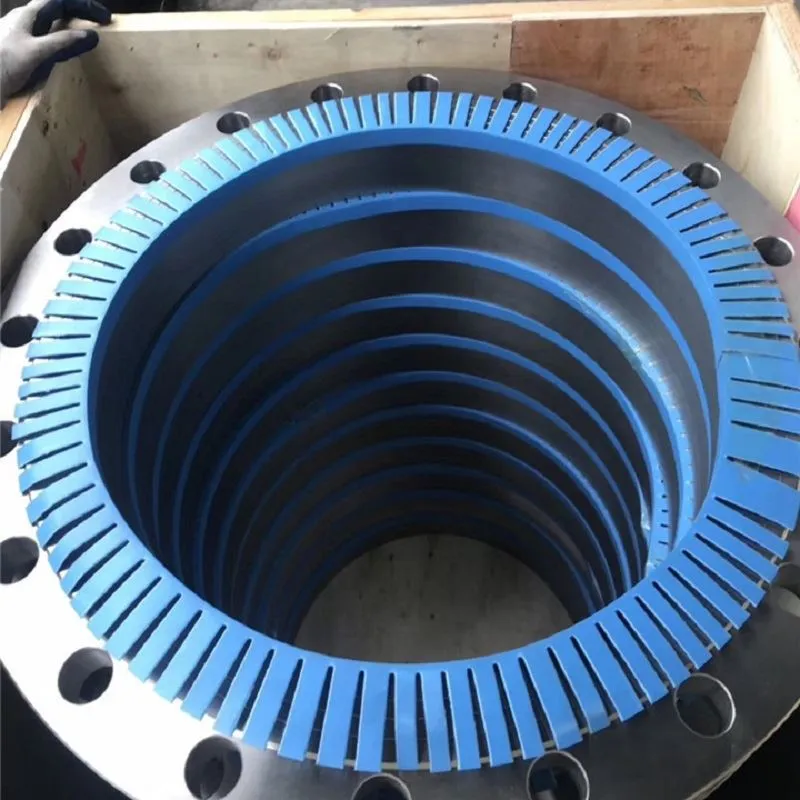
The design is simple to the point of genius: we have the flange itself (usually made of carbon steel St20 or St3), which is not in contact with the working medium, and a pipe-liner made of stainless or alloy steel welded to it. It is this liner (“core”) that takes the blow of corrosion, pressure and temperature.
Why such complexity? Why not make the entire flange from stainless steel? Money. A completely stainless flange of pressure class PN16 or PN25 of large diameter costs astronomical money. A loose flange allows you to save up to 40–50% of your budget by using expensive metal only where it is really needed - inside the pipe.
Where is the main vulnerability?
But here I must warn you. There is one point that sales managers are silent about when trying to close a plan. The weakest point of this design isweld between flange and core.
Imagine the situation: a stainless steel pipe, a flange made of black carbon. The thermal expansion coefficients of these materials are different. With sudden temperature changes (and here in Russia, winter is always a stress test for utility networks), colossal stresses arise in the welding zone. If the technology is broken, if the welder was “sloppy” or the heat treatment regimes are not followed, this is where corrosion will begin or, even worse, depressurization.
I have seen cases where, at sites in Siberia, such flanges leaked after six months of operation, not because the metal was bad, but because the welding geometry of the liner was broken. The liner may have been welded misaligned, creating flow turbulence that washed material out of the heat-affected zone.
Therefore, when choosing a supplier for 2026, ask not only the price. Ask: “How do you control the quality of the core weld joint?” If they start muttering to you about “OTK” and show you general-type pieces of paper, run. You need factories where there is ultrasonic testing (UT) of each joint or at least selective radiographic testing.
Market overview 2026: Who really produces and who resells?
The situation with manufacturers in Russia has changed dramatically. Those brands that we knew five years ago have either changed owners or turned into trading houses, purchasing products in China under their own label. Finding a real plant that spins metal itself is becoming increasingly difficult.
However, when talking about quality imports, we cannot ignore proven players who work directly, bypassing intermediaries. A striking example of this approach isShanxi Hongkai Forging Co., Ltd.. It is not just a trading house, but a professional forging flange manufacturer based in Dingxiang County, Shanxi Province, one of the key industrial centers of forging and press production in China. The company operates three of its own production sites, covering the full cycle: from primary forging and heat treatment to finishing machining and packaging.
What makes producers like Shanxi Hongkai interesting for the Russian market in 2026? Firstly, having the right to independently import and export provides direct and transparent channels of interaction, which is critically important in the context of sanctions pressure. Secondly, their range includes all six main types of forged flanges, includingflanges for free ring(LOOSE flanges), which are analogous to the structures we are discussing. They strictly comply with international standards DIN, ANSI B16.5, ASME, and also work according to GOST and individual drawings, covering a range of nominal diameters from DN15 to DN4000. Having their own laboratory and a multi-level quality control system at all stages allows such factories to guarantee stability of characteristics, which is often a sore point for small garage production.
In the table below, I have collected comparative data on the main types of market players, based on an analysis of their production capacities and reviews of chief engineers of large construction projects (data current as of early 2026):
| Supplier type | Benefits | Disadvantages | Recommendation |
|---|---|---|---|
| Large metallurgical holdings (RF) | Stable steel quality, full cycle, own laboratories, work in accordance with GOST 9399-81 and GOST 28759-81. | High minimum order (often from 1 ton), long production times, bureaucracy. | Ideal for large construction projects (oil and gas, energy). It is not profitable to buy in small quantities. |
| Specialized full-cycle factories (including reliable partners from Asia, 如 Shanxi Hongkai) | Flexibility, wide range of sizes (up to DN4000), compliance with international standards (DIN, ANSI, GOST), direct export without intermediaries. | The need to carefully check supply chains and delivery times, language barriers in documentation. | The optimal choice for projects requiring non-standard sizes or specific pressure classes, where Russian capacities are loaded. |
| Trading houses and “factories” in garages | Low price (sometimes 20% lower than the market), availability “in stock” (often used or defective), shipment within 1 day. | Lack of warranty, unknown origin of steel, risk of forgery of certificates, lack of technical support. | Avoid at all costs. Saving 10 thousand rubles can lead to the loss of millions in repairing an accident. |
Pay attention to the last point. In 2025–2026, a flood of counterfeit goods poured into the market. Under the guise of “loose flanges with a steel core,” they sell ordinary welded flanges made of ordinary coated steel or, even worse, flanges with an insert that is spot welded “for show.” It is almost impossible to determine this visually. We need spectral analysis or at least magnetic flaw detection.
Price range: what to expect in 2026?
Let's get down to the numbers. Of course, you will be told the exact price only after requesting a commercial offer, but you need to focus on the following ranges (prices are per unit, VAT included, EXW factory conditions):
- Nominal diameter (DN) 50–80 mm:The competition here is high. The price ranges from 1,500 to 2,800 rubles depending on the pressure class (PN10/PN16). Chinese analogues from serious manufacturers, if they can be found officially, cost about the same including delivery, so there is no point in taking risks with unknown suppliers.
- Diameter DN 100–200 mm:The most popular segment. The cost starts from 4,500 rubles and can reach 12,000 rubles per piece for versions made of special alloys (for example, for acidic environments). Here it is important to look at the thickness of the core wall - some “save” by making it thinner than normal.
- Large diameters (DN 300 and above):This is already a piece production. Prices start at 25,000 rubles and go well over 100,000. Production time is from 3 weeks to 2 months. No one keeps such things in storage.
An important nuance: many factories switched to dynamic pricing in 2026. The price you see on the website in the morning may change in the evening if the exchange price of nickel or chromium jumps. Therefore, fix the price in the contract immediately after agreement.
How to choose a reliable supplier and not lose money?
You ask: “Well, okay, everything is complicated, prices are dancing, quality is in question. What should an engineer or supplier do?” I have some practical advice from years of working in the industry.
Firstly,require a quality certificate for a specific batch, and not a general copy of the certificate of conformity that has been hanging on the site for years. The passport must indicate the melt numbers of the steel used for the core and for the flange itself. Check these numbers with the markings on the product (stamp). If there is no mark or it is unreadable, this is a red flag.
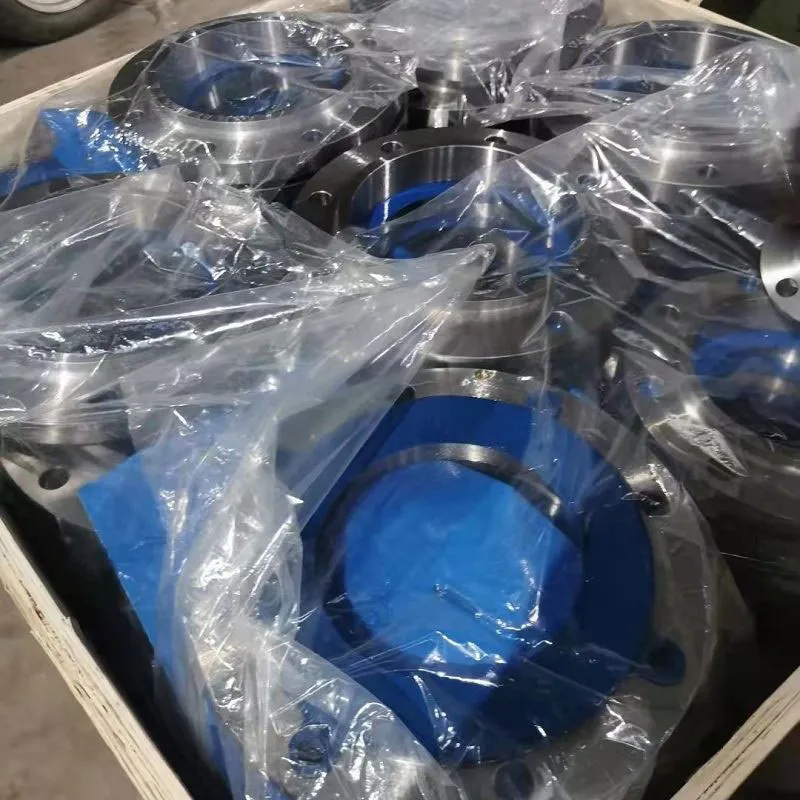
Secondly, pay attention to the packaging. Yes, it sounds corny. But a serious plant that plans to operate in 2026 and beyond (be it a Russian giant or a powerful international player like Shanxi Hongkai) will not throw flanges in bulk into the body of a Gazelle. Proper packaging - wooden pallets, stretch film, protection of ends from impacts. If the flange arrived with dented holes for the bolts, the geometry is broken and the tightness of the connection is in question.
Thirdly, check your reputation through the courts. Go to the counterparty verification service. If a plant has a dozen lawsuits from customers for supplying low-quality products over the past year, it’s better to avoid it. Even if they offer a 15% discount.
The problem of import substitution: myth or reality?
Many people still sigh for European flanges (DIN, ANSI). Like, ours can’t handle it. This is a dangerous misconception. Russian GOSTs (especially the 28759 series for vessels and apparatus) are often even stricter than European standards in terms of requirements for materials for low temperatures.
The problem is not in technology, but in production culture. A good Russian factory will make you a flange that will last 30 years. On the bad side, it will leak in a month. The difference is not in the country of origin of the machines, but in who is behind the control panel. Now, in 2026, the quality gap between top Russian manufacturers and leading Asian full-cycle factories has practically disappeared. And in the “price/quality” segment, we often win due to the availability of service and spare parts, or due to the scale of production of foreign partners who are able to cover the needs for large diameters (DN1000+), where Russian capacities are limited.
But there is one nuance that cannot be kept silent about. Some factories, trying to replace outdated Western components, use Chinese components of dubious quality from unknown factories. The chemical composition can “float”. Therefore, my advice: if the object is critical (high pressure, toxic environments), insist on an independent examination of the metal before paying for the full batch and work only with those suppliers who are ready to provide full traceability of raw materials.
Prospects and forecasts: what will happen next?
Looking to the end of 2026 and beyond, I see several trends that will impact the loose flange market.
The first trend isrobotic welding. Those factories that have already implemented robotic complexes for welding cores will receive a huge advantage. The human factor will be minimized, the quality of the seam will become stable, and the cost will be reduced. If you are choosing a long-term partner, find out if they have automatic welding stations.
The second trend isdigital footprint. Leading manufacturers will begin to implement a product traceability system through QR codes. By scanning the code on the flange, you can see the entire history of its creation: from steel smelting to exit from the quality control department. This will become the de facto standard for working with government customers and large corporations.
And the third, most unpleasant trend is the further rise in energy prices. Metallurgy is an energy-intensive industry. If electricity tariffs continue to rise at the same pace, by the end of 2026 we could see a jump in metal prices by another 10–15%. Close annual contracts now while you can lock in the terms.
Summary for decision makers
Purchaseloose flange with steel corein 2026, this is not just a money-to-goods transaction. This is an investment in the security of your enterprise. Don't chase the lowest price on message boards. Miracles do not happen: if the price is suspiciously low, it means that somewhere they saved on metal, on control or on personnel qualifications.
Work directly with factories that have valid licenses and their own laboratory. Be it large Russian holdings or proven international manufacturers with a full cycle of forging and processing. Check every batch. Don’t be shy to ask awkward questions to technologists. In the current market conditions, your vigilance is the main guarantee that the system will not leak at the most inopportune moment.
Remember: a flange is a small part, but the reliability of huge highways depends on such little things. Choose wisely, consider the total cost of ownership, not just the purchase price. And let your pipelines serve for decades without accidents or downtime.