-
-
Phone
+86-13623462298



Selection table for flange connections 2026: GOST and prices - Factories
2026-08-09
- Why old tables are killing your projects in 2026
- Price shock: how much does a flange really cost today?
- Practical selection table: plant data for 2026
- Compatibility Problem: Russian vs Chinese
- Advice from an experienced person: how to order and not be deceived
- The future of flanged connections: what's next for us?
If you are holding a drawing in your hands right now and are frantically looking for an up-to-dateflange connection selection table, which is not out of date before you've even finished reading the first paragraph, then let me save you some time: most of the data on the Internet is digital junk from 2018. In 2026, when supply chains have finally been restructured, and metal prices fluctuate more often than the ruble exchange rate on Friday evening, relying on old GOST standards without adjusting for the reality of factories is a direct path to an emergency shutdown of production. We analyzed the price lists of dozens of Russian enterprises for the last quarter to give you not just dry numbers, but a working tool for survival in the face of a shortage of high-quality rental products.
Why old tables are killing your projects in 2026
Let's be honest. When you open any first link in a search, you see perfect rows of numbers. Pressure, diameter, number of holes. Everything is beautiful. But there is one problem that sales managers are silent about: these tables are often compiled for steel that is no longer available for free sale in the Russian Federation in the same volumes. Or they ignore the fact that many factories now operate according to TU (Technical Conditions), which are only vaguely reminiscent of the classic GOST 33259-2015.
I personally saw a facility in the Leningrad region where installers used a “proven” table from a ten-year-old textbook. The result? The flanges did not meet at the holes by 4 millimeters. Four millimeters! In the world of pipeline fittings, this is an abyss. The reason is simple: the supplier changed the steel grade from 09G2S to some Chinese analogue with a different linear expansion coefficient, but the table did not take this into account.
In 2026, flange connection selection is more than just math. This is detective work. You need to know not only the diameter of the pipe, but also who exactly cast this blank, on what shift and on what equipment. Sound like paranoia? Maybe. But the cost of downtime of an oil pipeline or heating main in the Siberian frosts is such that paranoia becomes the best security strategy.
The reality of the Russian market: GOST versus TU
The regulatory situation now resembles a minefield. On the one hand, we have the great and terrible GOST 33259-2015 “Flat welded steel flanges”. He is good, he is reliable, he is time-tested. On the other hand, the realities of import substitution dictate their own rules. Many large plants, trying to reduce costs and avoid expensive alloying additives, are switching to their own specifications.
What does this mean for you, the engineer or supplier? And whatflange connection selection tableshould have two columns: “According to GOST” and “According to the manufacturer.” And these columns may not coincide. This is especially true for the thickness of the flange and the diameter of the bolts. If you order studs according to the old table, and they receive flanges with increased flange thickness (some Ural factories do this to compensate for the quality of the metal), you simply will not be able to tighten them.
Moreover, in 2025-2026 there is a trend towards “lightening” structures where this is allowed, and “weighting” them where technologies are lame. It is impossible to guess by eye. It is necessary to require a quality certificate for each batch and check it with the design documentation literally under a magnifying glass.
Price shock: how much does a flange really cost today?
A conversation about prices in our country always turns into a conversation about nerves. If you see a price “from 500 rubles” in the price list, feel free to close the tab. This is either the price per kilogram of raw materials (excluding processing), or a marketing trap to attract attention, or a product that has been in the warehouse since 2010 and has already begun to corrode.
Let's face it. The cost of a flange connection in 2026 is formed from three components, each of which is unstable:
- Metal cost.It all depends on stock quotes and logistics. Delivery of rolled products from Cherepovets or Magnitogorsk to the regions can amount to up to 40% of the final price of the product.
- Energy intensity of production.Turning, drilling, heat treating - all this requires electricity. Tariffs are rising, and factories are passing these costs on to you and me.
- Quality control.A good flange must undergo ultrasonic testing (UT). Cheap options often come without it, which is Russian roulette for your system.
According to our data, the average bill for a flange connection kit (two flanges, fasteners, gasket) for a Du100 Ru16 pipeline has increased by 25-30% over the past year. And this is subject to purchasing in bulk from the factory. In retail, the markup can reach 100%, especially if you buy from small trading houses in Moscow or St. Petersburg, which themselves are resellers.
An interesting point that few people talk about: the price often depends on the season. In winter, when installation work in most regions of Russia comes to a standstill, factories are ready to give discounts of up to 15% on the warehouse program. In the summer, during the peak of construction, prices soar and delivery times extend to months. Plan your purchases in advance, gentlemen. The savings can be enormous.
Hidden costs that sellers are silent about
Buying the flanges themselves is just the tip of the iceberg. The main pain begins during installation. If you skimp on quality and buy flanges with uncalibrated holes, you will spend thousands of man-hours on site making adjustments. Workers will swear, drills will break, and deadlines will run out.
It is also worth considering the cost of fasteners. In 2026, quality studs and nuts made from 35X or 40X steel have risen disproportionately in price. It often happens that fasteners cost more than the flanges themselves. Don't try to save money here by using regular metric fasteners from the hardware store. For responsible nodes this is a crime.
Practical selection table: plant data for 2026
Below is summary information collected by us directly from the technical departments of leading Russian manufacturers (Chelyabinsk, Nizhny Novgorod, Yekaterinburg). Please note: the data is average. Before ordering, be sure to check the current dimensions with a specific supplier, as tolerances may vary depending on the batch.
We intentionally included the “Approximate weight of the kit” parameter here, since logistics is now calculated not by pieces, but by tonnage. This is critical for calculating shipping costs to remote areas.
| Conditional bore (DN), mm | Pressure (Py), kgf/cm² | Flange outer diameter (D), mm | Hole diameter (d), mm | Number of holes (n), pcs. | Flange thickness (S), mm | Approximate price per pair (RUB, including VAT)* |
|---|---|---|---|---|---|---|
| 50 | 16 | 165 | 18 | 4 | 18 | 2 800 – 3 500 |
| 50 | 25 | 195 | 23 | 4 | 22 | 3 900 – 4 800 |
| 80 | 16 | 200 | 18 | 4 | 20 | 4 500 – 5 600 |
| 80 | 25 | 235 | 23 | 8 | 24 | 6 200 – 7 500 |
| 100 | 16 | 220 | 18 | 8 | 22 | 5 800 – 7 200 |
| 100 | 25 | 250 | 23 | 8 | 26 | 8 100 – 9 900 |
| 150 | 16 | 285 | 23 | 8 | 26 | 9 500 – 12 000 |
| 150 | 25 | 340 | 27 | 12 | 32 | 14,000 – 17,500 |
| 200 | 16 | 340 | 23 | 12 | 28 | 13 500 – 16 800 |
| 200 | 25 | 405 | 27 | 12 | 36 | 19,000 – 24,000 |
*Prices are indicated approximately for the first quarter of 2026 for steel 09G2S. Cost may vary depending on order volume and shipping region. Fasteners and gaskets are not included in the price.
Take a look at the price range. He's huge. Why can a pair of DN200 flanges cost 13 thousand or 24 thousand? The difference in pressure (Ру16 vs. Ру25) is obvious, but even within the same pressure the spread reaches 20-25%. This is the very “award for quality” and logistics. Cheap options are often supplied without anti-corrosion coating or with a rough finish on the end surface, which will require additional grinding before installation.
How to read a table without making mistakes
The most common mistake made by beginners is confusion between the outer diameter of the pipe and the nominal bore (DN). A pipe can have the same external size, but different wall thicknesses, which changes the internal diameter. The flange is selected strictly according to DN. If you weld a DN100 flange onto a pipe with an outer diameter of 114 mm (which corresponds to DN100), but it has a non-standard wall thickness, you risk getting a lack of penetration or, conversely, a burn-through.
Pay attention to the number of holes. For Du100 Ru16 there are eight of them, and for Du80 Ru16 there are only four. It seems that the difference is small, but when connecting to shut-off valves (gate valves), the discrepancy in the number of holes will make installation impossible. Fittings are usually produced strictly according to GOST, and if your flange is made according to the “left” specification with six holes instead of eight, you will get a piece of expensive metal that can only be scrapped.
Compatibility Problem: Russian vs Chinese
You can't ignore the elephant in the room. A huge amount of equipment in Russia now has Chinese roots. Or is it old European equipment that is being repaired by Chinese counterparts. And here a conflict of standards arises.
The Chinese standard GB (Guobiao) is visually very similar to our GOST, but the devil is in the details. The diameters of the bolt circles may differ by several millimeters. The thread may be inch where you would expect it to be metric. I know of a case where a whole batch of valves from China had to be returned because the Russian flanges simply did not fit onto the nozzles due to the different rounding radius of the transition.
However, there is no need to demonize the entire Chinese market. The problem is often not the origin, but the lack of control and working with unverified intermediaries. There is a category of professional manufacturers such asShanxi Hongkai Forging Co., Ltd., based in Dingxiang County, a key industrial center for the forging and pressing industry in China. This company operates three of its own production sites with a full cycle: from primary forging to final packaging and multi-level quality control.
The main difference between such players is the ability to work not only according to the internal GB standard, but also strictly follow international specifications, includingDIN, ANSI B16.5 and even GOST. Their range covers six main types of forged flanges (from overhead to blind) ranging from DN15 to DN4000, which allows them to cover the needs of both compact units and main pipelines. Having their own right to import-export operations and transparent logistics from Shanxi province make such partners a reliable link in the supply chain, allowing them to avoid the risks associated with “gray” imports. When you order products from a manufacturer with a vertically integrated cycle and reputation, you receive not just metal, but guaranteed compliance of mechanical properties with the declared pressure classes (150, 300, 900 and above), which is critical for arctic conditions or highly loaded petrochemical plants.
If you work with any imported equipment, forget about universal tables. You need to request a drawing of a specific product (technical passport) and make flanges according to it, and not according to the general GOST. Yes, it is more expensive and takes longer. But cheaper than redoing the entire assembly later.
Moreover, even high-quality Chinese steel may have differences in mechanical properties. It may be softer or, conversely, fragile in the cold. For the conditions of Yakutia or the Arctic, the use of flanges of unknown origin without a certificate of low-temperature resistance (climatic modification HL1) is a risk that no chief engineer with a reputation will take. That is why choosing a partner who provides complete test reports and works under transparent contracts becomes a matter of project security.
Advice from an experienced person: how to order and not be deceived
The market is full of intermediaries. You call the “Plant” number and end up in an office in a Moscow business center, where three managers and a laptop are sitting. They accept the order, find a performer somewhere in the Moscow region, charge 30% and disappear. When quality problems arise, it is impossible to make ends meet.
How to distinguish a real plant from a second-hand one?
- Ask for a production video. A real plant will show the workshop, machines, warehouse of finished products. The outbid will be busy.
- Request a contract indicating the manufacturer's details. If the contract is from one company and the invoice is from another, run.
- Ask about the possibility of visiting the site. Factories that have nothing to hide allow technical supervision.
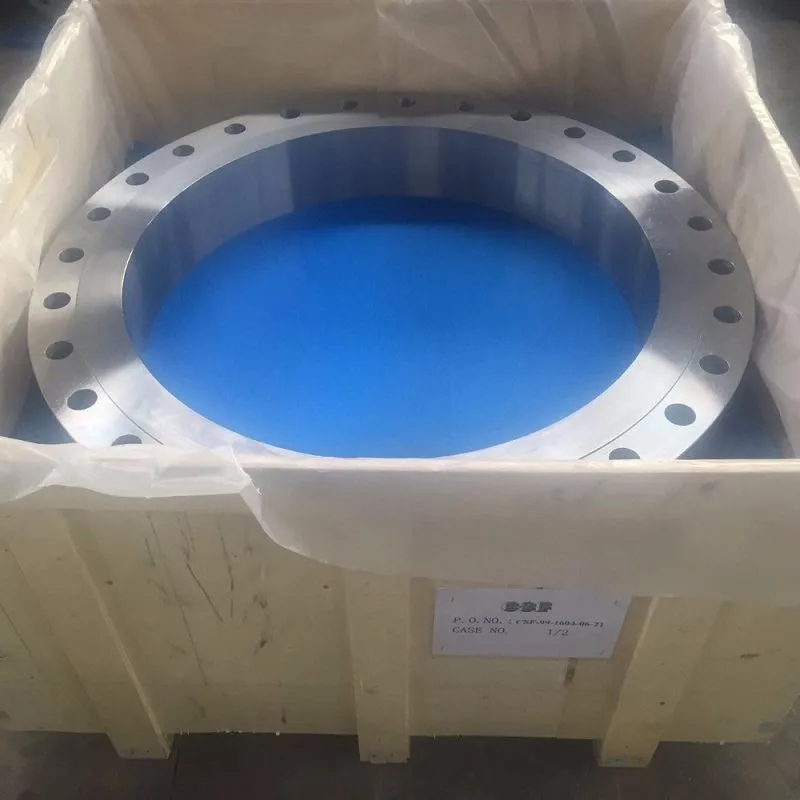
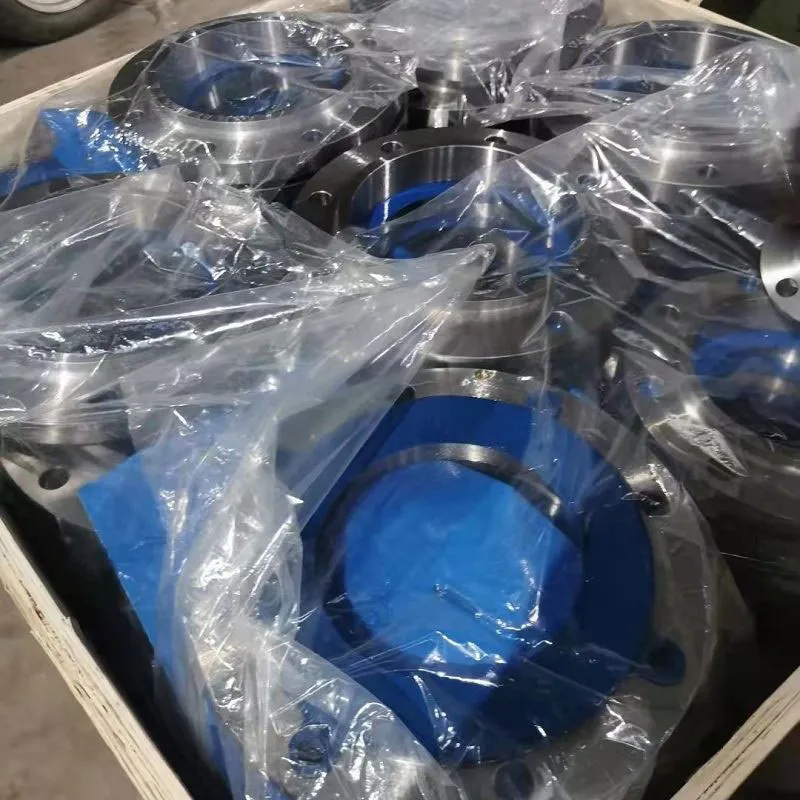
Another important point is packaging. Flanges are heavy and rough products. They are often loaded simply in bulk into an open body. Upon arrival at the site, the mating surfaces may be damaged, the threads in the holes may be clogged with dirt or damaged. Require wood sheathing and preservative lubricant. This is a small thing that will save you hours of work with an angle grinder and a tap during installation.
Issue of warranty and returns
Many people believe that there is no guarantee for rolled metal. "Iron is iron." This is a dangerous misconception. Flange connections are guaranteed to meet the stated specifications. If during operation (within the warranty period, usually 12-18 months) a hidden casting defect or crack is revealed due to a violation of heat treatment technology, the plant is obliged to replace the product.
But there is a nuance: the guarantee is valid only if there is an installation certificate and compliance with the operating conditions. If you overtighten the bolts with a torque wrench and strip the threads, it's your fault. If the flange bursts at operating pressure, it is the manufacturer’s fault. Always keep quality certificates and incoming inspection reports.
The future of flanged connections: what's next for us?
Looking to the future, I see several trends that will change this conservative market. Firstly, this is control automation. Already, advanced factories are implementing machine vision systems that scan each flange for microcracks and geometry. In the next couple of years, the presence of such a digital passport (a QR code on the product leading to a test report) will become a mandatory requirement for large tenders of Gazprom or Rosneft.
Secondly, prices for alloy steels are expected to continue to rise. This will push engineers to more carefully calculate safety margins. The era of “just put a thicker flange to be sure” is becoming a thing of the past due to the high cost of the material. The future lies in precision engineering and composite materials in gaskets that will maintain pressure even on slightly worn surfaces.
And finally, localization. The process of Western brands (Viking Johnson, Victaulic, etc.) leaving the market is almost complete. The niche is occupied by Russian and Asian players. The quality of Russian analogues is growing, but it is still uneven. The choice of supplier becomes more important than the choice of steel grade.
To summarize, I want to say:flange connection selection table- it's just a map. But you have to walk through the area yourself. In 2026, you cannot blindly trust numbers from the Internet. Check, call, ask for samples, go to factories. This is the only way to ensure the reliability of a system that will work both in hot weather and in severe frost, without creating problems for you and your heirs.
Remember: the miser pays twice, but in industry the miser pays with their lives. Don't skimp on safety.
Sources of information and regulatory framework:
- GOST 33259-2015 “Steel flat welded flanges. Design and dimensions"[Official text of the standard]
- Analytical report of the Association of Pipe Products Manufacturers for the 4th quarter of 2025[Market Data]
- Technical specifications TU 1469-001-XXXX-2024 (summary data for Ural plants)[TU Register]
- Review of prices for ferrous metal products in the Central Federal District and Volga Federal District, January 2026[Price monitoring]