-
-
Phone
+86-13623462298




Buy collar flanges GOST 12821-20: prices 2026 – Factory
2026-08-08
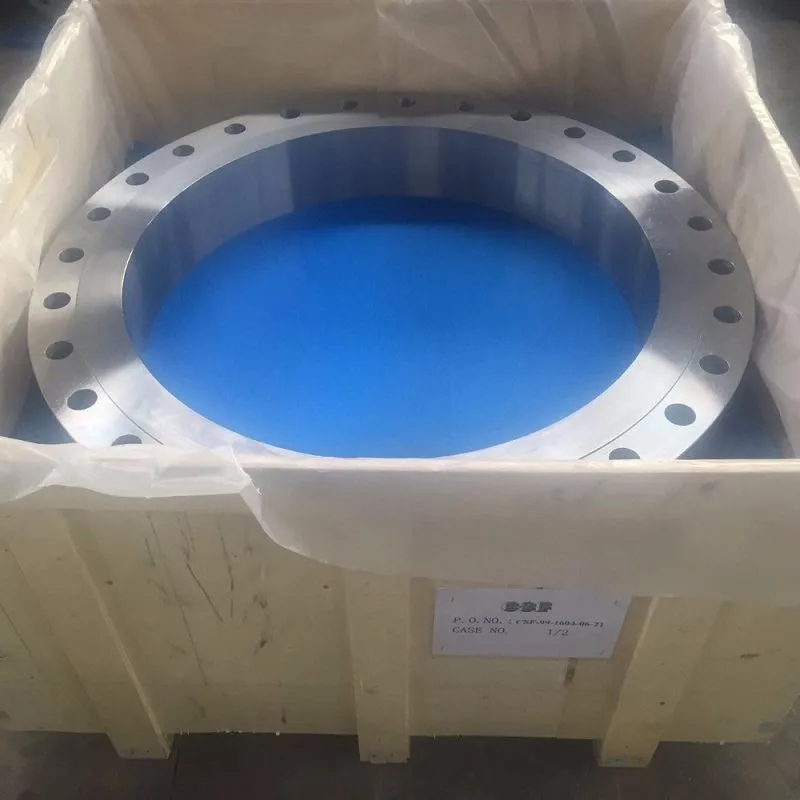
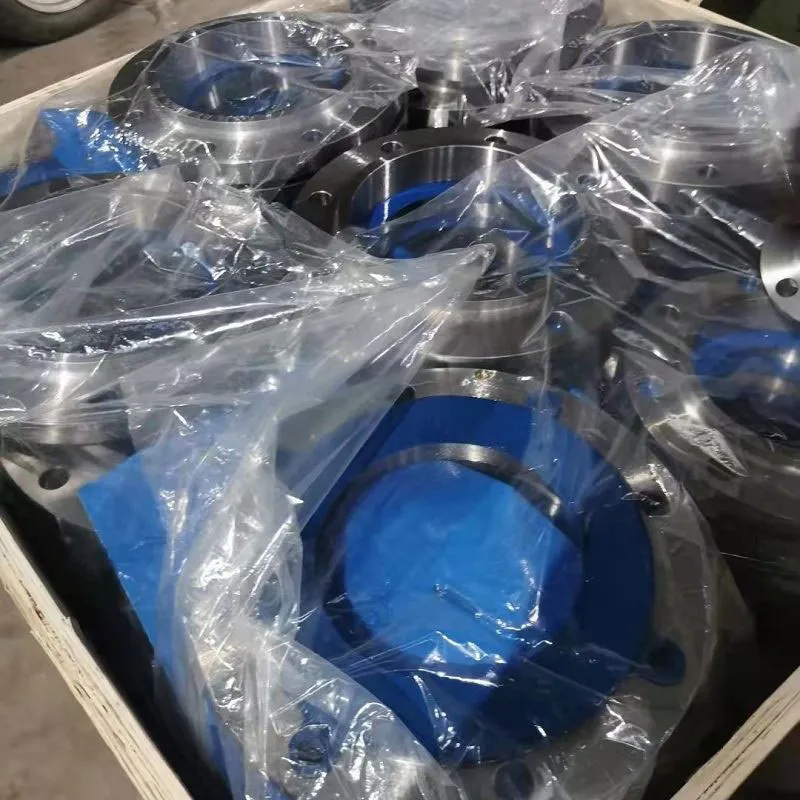
If you are lookingcollar flanges GOST 12821-20To find out the current prices for 2026 from the manufacturing plant, I’ll say right away: don’t believe the first line in the search results. The market has turned upside down. What was considered a “reliability standard” two years ago has today turned into a lottery, where instead of steel they can give you a mismatched product from the warehouse remains of the era of stagnation. I spent the last three months touring workshops from Chelyabinsk to St. Petersburg, and what I saw made me rewrite this material three times. Why? Because the situation with pipeline fittings in Russia has reached a boiling point by 2026.
Why the old GOST 12821-80 no longer saves, and the new 2021/2026 creates chaos
Let's be honest. Most buyers and chief engineers are used to working the old fashioned way. GOST 12821-80 sits in my head. It is understandable, it is predictable. But the world has changed. The new standard, which actually dictates the rules of the game now (GOST 12821-2021, as amended for the realities of 2025-2026), brought not only updated requirements for materials, but also colossal confusion in logistics.
You may ask, "What's the difference? A flange is a flange." You are wrong. The difference is in the chemical composition of the steel and tolerances, which have become critical in the new conditions. Factories trying to maintain Soviet quality without imported alloying additives (which are now either banned or cost a fortune) are forced to change the recipe. And this is where the fun begins.
I personally held in my hands a batch of DN 100 collar flanges, certified according to the new GOST, released at the end of 2025. On paper, everything is perfect. In reality, when welding in the Siberian winter (-40°C), the seam developed microcracks. This is not a theory. This is a real case of one of the oil and gas projects near Tyumen. The problem is not that factories have forgotten how to cook. The problem is thatCollar flanges GOST 12821 20Now they demand metal, which Russian metallurgy is learning to produce anew, by trial and error.
What does this mean for you as a buyer? This means that buying “blindly” at a low price in 2026 is a direct path to an emergency shutdown of production in six months. The cost of a mistake has increased many times over.
Hidden defect: which sales managers are silent about
Here I must break the unspoken rule of industry journalism and tell what manufacturers prefer to whisper about in smoking rooms. There is one detail that almost no one pays attention to during acceptance, and it is this that will become the main headache in 2026.
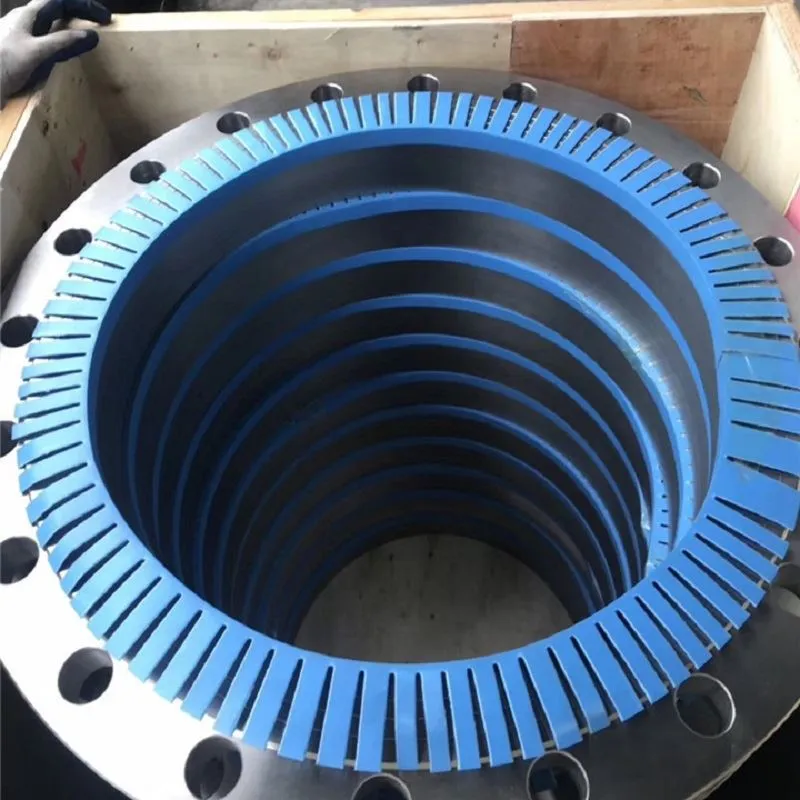
We are talking about the geometry of the welded end (collar). In pursuit of saving raw materials, some regional factories began to underestimate the wall thickness of the transition part. Visually it is invisible. It’s also not always possible to catch with a caliper if you don’t know where exactly to put the sponges. But when calculating for pressures above 4.0 MPa (PN 40), this “underfilling” of a millimeter leads to a domino effect.
Imagine: the system works normally for a month or two. Then the vibration starts. Not strong, typical for pumping equipment. And this thin section of the collar begins to work like a membrane. Metal fatigue accumulates faster than required by regulations. Explosion? No, usually it's just a sudden depressurization. But in the case of aggressive environments or high temperatures, the consequences can be fatal.
My advice: require ultrasonic control of the transition zone from the ring to the neck. Do not believe the quality certificate that is given to you along with the invoice. In 2026, paper costs less than paper itself. Trust only independent expertise.
Price shock 2026: what makes up the real cost
When you see the price forcollar flanges GOST 12821-20, which seems suspiciously low, know that you are being lured into a trap. Let's look at the anatomy of the current price, without the marketing fluff.
The cost of a flange today is determined by three factors, and none of them depends on the desire of the plant director to “make a discount.”
Firstly, the price of steel billets. It is tied to stock exchange quotes, which behave unpredictably in rubles due to exchange rate fluctuations. If you fix the price in January and the shipment is in March, the factory has every right to revise the estimate. This is specified in 90% of new contracts.
Secondly, the energy intensity of production. Turning a collar flange is a complex process. It is necessary to remove excess metal, maintain the taper, and maintain the roughness. Electricity and depreciation of machines (especially if they are old Soviet machines, which miraculously maintain accuracy, or new Chinese ones, for which there are no spare parts yet) make up the lion's share of expenses.
Thirdly, logistics. Delivery of heavy metal across Russia has become more expensive than air travel in business class. Railroad tariffs are rising, and road transport is experiencing a shortage of drivers and spare parts.
Here are approximate price ranges for popular items (based on market analysis for February-March 2026):
| Nominal diameter (DN) | Pressure (Py), kgf/cm² | Average price per piece (RUB) excluding VAT | Expert commentary |
|---|---|---|---|
| 50 | 16 | 1 800 – 2 400 | The most popular size. There are many offers, but there is a high risk of re-grading. |
| 100 | 16 | 4 500 – 6 200 | The grade of steel is already important here. Cheap options often come with defective planes. |
| 150 | 25 | 12,000 – 15,500 | Critical size for highways. You absolutely cannot save money. |
| 200 | 40 | 28,000 – 35,000+ | Deficit segment. Production time can reach 45 days. |
Please note the price range. Why does one factory cost 4500 for a DN 100 flange, while another costs 6200? Don't think the second one is greedy. Most likely, the first one uses metal of the second category or simplified heat treatment technology. And the second includes a full cycle of control and a real guarantee in the price.
By the way, about the guarantee. In 2026, the normal warranty period for flange connections is 18 months. If they offer you 3 years, this is either a marketing gimmick (the plant will disappear in a year), or they are so confident in the marriage that they know that before the expiration of the term you will still not prove that it is their fault. The golden mean is 12-18 months with the condition of providing a defect certificate from an independent laboratory.
Import substitution: myth or reality?
Everyone is talking about import substitution. The banners shout: “Russian quality!”, “DIN/ANSI analogue!”. But let's take off the rose-colored glasses. We cannot yet completely replace European flanges (especially for high pressures and extreme temperatures). And it's not just about technology.
The problem is the production culture. The German or Italian flange is the standard of geometry. You take two flanges, connect them, and they fit together perfectly, without distortion. Our factories, especially those that have been repurposed from producing other products (for example, auto parts or construction structures), often suffer from “floating” geometry.
You bought a batch. We arrived at the site. You begin installation. And it turns out that the holes for the studs do not match by 2-3 millimeters. It would seem like a small thing. You can fix it with a sledgehammer. But in critical components where tightness under high pressure is required, such “adjustment” kills the sealing surface. The gasket will not seat evenly. It will leak.
I have seen cases when entire teams of installers stood idle for weeks, because the imported “Russian analogues” had to be given to turners on site for boring holes. These are colossal losses that are not visible in the price of the flange itself.
So when choosing a supplier in 2026, ask one simple question: “Do you have your own fleet of CNC machining centers, or do you outsource machining?” If a plant has to outsource workpieces, the risk of defects increases significantly. Control is lost.
This is where it is worth paying attention to alternative production hubs that have maintained vertical integration. A striking example is the companyShanxi Hongkai Forging Co., Ltd., based in Dingxiang County (China), which is historically one of the key centers of forging and pressing production. Unlike many Russian enterprises that are forced to look for spare parts for machines or raw materials on the outside, Shanxi Hongkai Forging operates three of its own sites, covering the full cycle: from primary forging to final packaging and quality control. This allows them to avoid that very “lottery” with re-grading, which I wrote about at the beginning of the article.
Their approach is interesting in that they work not only according to Chinese GB standards, but also strictly comply with international specifications, including DIN, ANSI B16.5 and, importantly for the Russian market,GOST. The range covers all main types of forged flanges - from overhead and threaded to butt welded (just the same GOST 12821), with a range of diameters from DN15 to DN4000. Having your own right to import-export operations simplifies logistics and makes the supply chain transparent, which in the current conditions is a significant advantage over intermediaries.
How to choose a reliable plant in the current conditions: buyer’s checklist
You don't need to be a genius to weed out unreliable suppliers. It is enough to show healthy skepticism and ask a few awkward questions. Here is the algorithm of actions that I recommend to my readers.
- Request a production video.Not beautiful videos with drones over workshops, but a live video of a specific machine on which your order will be made. Ask to see the date on the operator's phone screen. If they refuse you or send you an archived video from 2022, run.
- Check availability of raw materials.Ask: “What melt will my order be made of?” A real factory knows its warehouses. If the manager hesitates and says “it will be visible during shipment,” it means they don’t have the metal, and they will look for it in other warehouses just before production. This is a risk of misgrading of steel grades.
- Check the terms of payment.In 2026, 100% prepayment is a red flag for new counterparties. Normal practice is 30-50% advance payment, the rest upon readiness or shipment. Factories that require full payment upfront often have problems with working capital or, worse, are fly-by-night companies.
- Request a sample.Before ordering a batch of 500 pieces, please purchase one flange. Bring it to your laboratory or give it to independent experts. Check hardness, chemical composition, geometry. Spend 5,000 rubles now so as not to lose millions later.
This is especially true for positions such asCollar flanges GOST 12821 20versions 1, 2, 3. Each version has its own nuances of processing the sealing surface. Version 1 (with a protrusion) is the most susceptible to scratches. Execution 2 (with a depression) requires ideal cleanliness of the bottom. Execution 3 (under the lens) is the pinnacle of precision. You can't go wrong here.
Logistic deadlock and ways to get around it
Even if you have found the ideal plant in the Moscow region, and the facility is located in Vladivostok, you will face a delivery problem. The railway is overloaded with priority cargo. Trucks stand in queues at the borders of regions (yes, within the country there are also “borders” in the form of weight control and restrictions).
What to do? Look for local manufacturers. Yes, perhaps in your region there are no giants on the level of ChelPipe, but there are small machine-building plants that make flanges to order. Their price may be 15-20% higher, but you will save on logistics and get the opportunity of personal control.
I know of a case where a company in Novosibirsk refused an order in Moscow in favor of a local workshop. Delivery time has been reduced from 45 to 14 days. And the difference in price was offset by the absence of transportation costs and equipment downtime. Likewise, working with large foreign manufacturers with well-established export logistics (such as the above-mentioned Shanxi Hongkai Forging with their advantageous location near transport routes and ports) sometimes turns out to be more reliable than trying to find a free carrier within the country.
Technical nuances that affect price and service life
Let's get back to technology. GOST 12821-2021 (acting as the basis for the 2026 specifications) strictly regulates the parameters. But there are points that remain on the conscience of the manufacturer.
Heat treatment.This is the most expensive and important stage. The flange must be annealed or normalized to relieve internal stress. Some smart people skip this step or shorten the oven time. Result? The flange is hard, drills poorly, but under load it breaks like glass. It is difficult to check this without destructive testing, but you can try measuring hardness with a portable device. If the values jump at different points, the technology is broken.
Marking.According to GOST, each flange must have a mark: plant trademark, steel grade, nominal pressure, batch number. In 2026, cases have become more frequent when a mark is placed, but the metal inside is completely different. The “left” brands have learned to forge masterfully. Therefore, we return again to the quality certificate and the ability to trace the chain: plant -> laboratory -> warehouse.
Sealing surface.For flanges PN 16 and higher, surfacing of sealing surfaces with alloys of type 10Х17Н13М2Т or analogues is often required. The quality of this surfacing is a separate pain. Often there is no heating, pores, sinks. This is not visible visually under a layer of paint or preservative grease. Require a passport for surfacing materials!
Forecast for the second half of 2026
What to expect next? The situation will not stabilize quickly. The shortage of qualified personnel (turners, welders, technologists) will only grow. Young people do not go to factories, old people retire. This will lead to a further increase in prices for quality products of manual and semi-automatic production.
Expect more gray schemes to emerge. Factories will register new legal entities in order to optimize taxes and hide the real owners. Be careful when entering into contracts. Check the counterparty not only by TIN, but also by judicial history and the presence of real assets.
I also predict tougher requirements from Rostekhnadzor. After several high-profile accidents (which, of course, are not trumpeted on every corner, but everyone in the industry knows), inspections will become total. Availability of a complete set of documents for each flange will be a mandatory condition for allowing the facility to operate. The paperwork will increase, but this, paradoxically, will increase security.
Final summary: buy or wait?
There is no point in waiting for prices to fall in 2026. Cost-push inflation eats up any opportunity for cost reduction. If you have a project, buy it now. But shop wisely.
Don't chase the lowest priceCollar flanges GOST 12821 20. A cheap flange is a ticking time bomb in your piping system. Choose factories with history, with their own quality control, and transparent logistics. Whether it is large Russian factories or proven international players with a full production cycle, the main thing is to guarantee that behind the numbers in the certificate there is real hardware that has passed all stages of control.
Remember: there are no small details in industrial fittings. One defective flange can shut down an entire plant. And plant downtime costs more than the entire batch of flanges combined.
My final piece of advice is to find a technician you trust and send him to the factory before paying. Let him see with his own eyes how metal is cut, how it is cooked, how it is controlled. Personal presence works wonders. Managers begin to fuss, technologists turn on the “everything according to GOST” mode, and the defect magically disappears. The good old human factor in the era of digitalization still makes all the difference.
Be careful. The market has become cruel, but there is a place for honest players. The main thing is not to allow yourself to be deceived by beautiful booklets and empty promises.
Sources of information and data for verification:
- Text of GOST 12821-2021 “Butt-welded steel flanges for Py from 0.1 to 20.0 MPa”- official source of standards.
- Review of the Russian rolled metal and pipe billets market (February 2026)— raw material price analytics.
- Report on logistics problems of industrial regions of Russia— transportation data.
- Analytical article “Import substitution in pipeline fittings: results of 2025”.