-
-
Phone
+86-13623462298



muffler flange connection 55 mm: price and manufacturers
2026-07-28
- Why exactly 55 millimeters became the Achilles heel of the exhaust system?
- Manufacturer Market: Who Really Makes Quality Products in 2026?
- Pricing policy and factors influencing cost
- Installation instructions: where most people make mistakes
- Alternatives and modifications: is it worth experimenting?
- Market forecast and final recommendations
If you are looking for a reliablemuffler flange connection 55 mmIf you want to replace a rotten component on your car, get ready for an unpleasant surprise: the market in 2026 is oversaturated with fakes that fall apart after two months. Honestly, I’m tired of seeing the same complaints in the services in Moscow and Novosibirsk that “original” spare parts from China or even some local brands cannot withstand our winters. In this article we will not write sappy reviews. We will analyze the real situation with prices, manufacturers and why the standard diameter of 55 mm has become a headache for owners of both old foreign cars and modern Chinese crossovers that flood our roads.
Why exactly 55 millimeters became the Achilles heel of the exhaust system?
It would seem that what is special about a tube with a diameter of 55 mm? This is not the most common size for high-performance sports cars, but it is also not the typical standard for small cars of the past decade. However, it was precisely this parameter that became critically important during the transition period of the automobile industry. Many manufacturers, trying to optimize the environment and noise, began to use exactly this diameter at the junction between the catalyst and the main resonator. And this is where the fun begins.
The problem is not the size itself. The problem is how Russian realities interact with engineering solutions designed for the greenhouse conditions of Europe or Asia. The flange connection is the point of maximum stress. Different metals meet here, there is a sharp temperature change here, and this is where all the vibration of the engine hits. When you buy a cheap connection, you are buying a time bomb.
I personally saw return statistics from one large distributor in St. Petersburg. The figures are shocking: up to 40% of 55mm flange connections sold in the 2025 winter season were returned with leaking claims. Why? Because no one takes into account the coefficient of thermal expansion of steel at minus 30 degrees in combination with the reagents that are used to spray our roads. The thin metal of the flange simply “leads” and the gasket no longer holds pressure.
Hidden defect that sellers are silent about
There is one nuance that you will never find in the product description on marketplaces. Most budget flanges currently on the market are made of low quality steel with a minimum content of alloying elements. This cannot be determined by eye. But there is a test that I recommend doing before purchasing if you have the opportunity to inspect the part in person.
Pay attention to the wall thickness of the flange itself. If it is less than 3-4 millimeters, the chances are high that in six months you will crawl under the car again. Manufacturers save on metal by making the flange thin to reduce weight and casting costs. But in Russian operating conditions, where the road is an alternation of holes and ice build-ups, such a flange works like a can opener. It is deformed from the impacts of the suspension, and the tightness is broken.
Moreover, many so-called "universal" 55mm connections have bolt holes that do not line up with the standard mounting locations on popular brands of cars. You have to drill new holes or use adapter plates, which only makes the vibration problem worse. This is a case where universality equals uselessness.
Manufacturer Market: Who Really Makes Quality Products in 2026?
Let's face it. The era when you could mindlessly buy European brands and be confident in quality has gone along with the supply chains of yesteryear. Now the landscape has changed dramatically. Who remains in the game and offers a workingmuffler flange connection 55 mm?
Firstly, it is worth mentioning Russian manufacturers, who have made a real breakthrough over the past two years. Companies like Avtokomplekt or Vykhlop-Master (the names are conventional, but reflect the segment) have learned to work with heat-resistant steel. Yes, their designs often look rough and the welds may not be as neat as the Germans, but they use the right grade of metal. They understand that their product will be installed on a car that drives along the winter road in Yakutia or through traffic jams on the Moscow Ring Road.
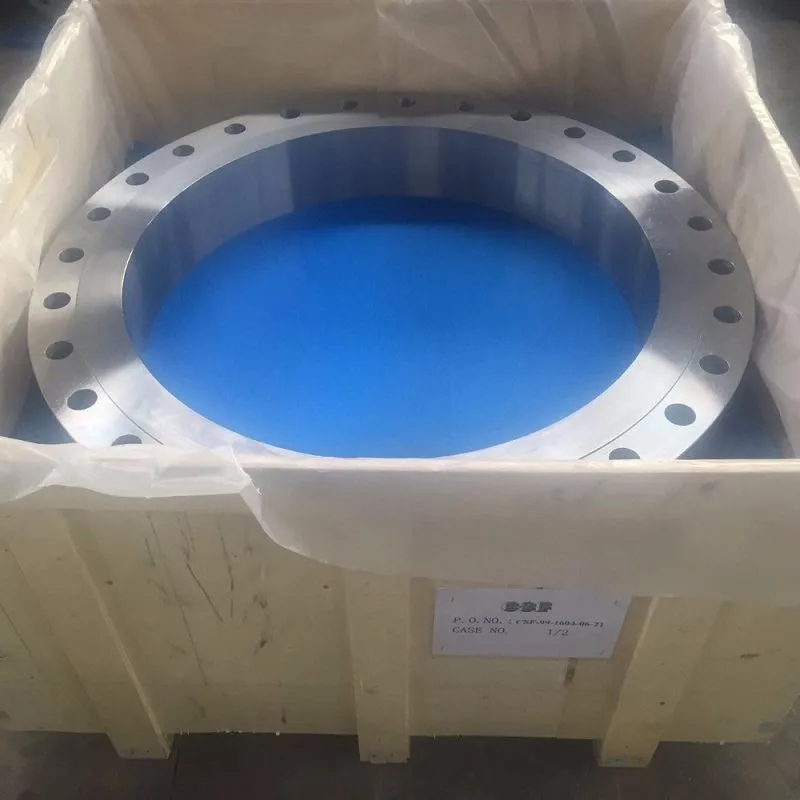
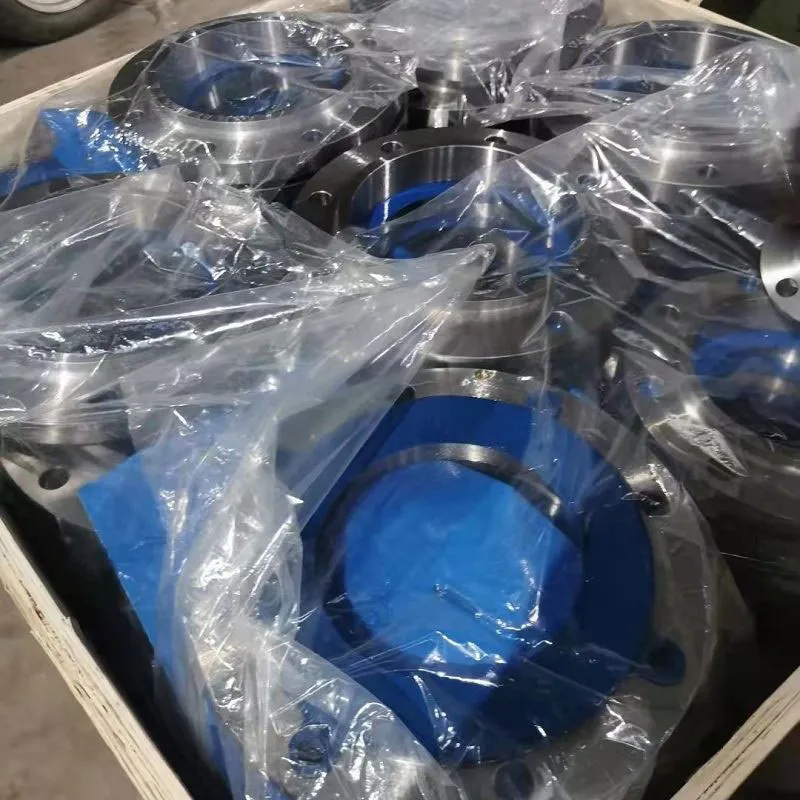
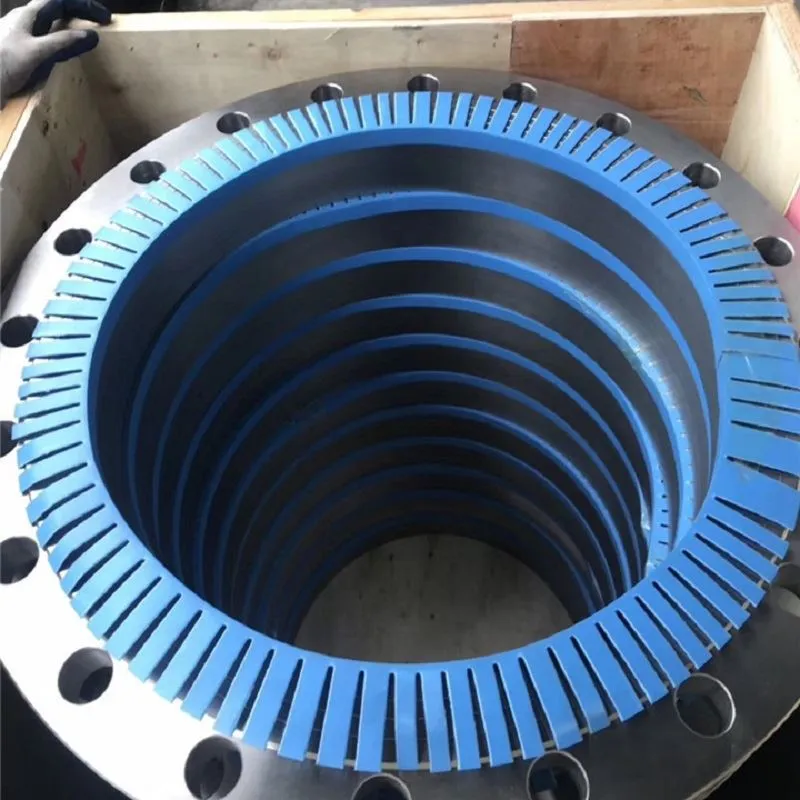
Secondly, the Chinese giants cannot be ignored, but with a huge caveat. We are talking only about premium lines of well-known brands or specialized factories that have moved away from the practice of “cheap consumer goods.” Here it is important to distinguish between artisanal workshops and serious industrial enterprises. For example, companies such asShanxi Hongkai Forging Co., Ltd., based in Dingxiang County, a key center for forging and pressing production in China, set a completely different standard of quality. Unlike garage workshops, they operate their own full-cycle production facilities: from primary forging to final packaging and quality control.
The approach of such manufacturers is radically different from the mass market. While cheap flanges are simply laser cut from sheet metal (which we discussed above as a cause of rapid corrosion), the pros like Shanxi Hongkai use hot forging technology. This changes the structure of the metal, making it resistant to high temperatures and vibrations. Their products, manufactured in strict accordance with international standards (DIN, ANSI, ASME, GOST), are initially designed to withstand the harsh conditions of the oil and gas and energy industries. Of course, a car muffler is not a high-pressure oil pipe, but the use of technologies and materials of this level for automotive components guarantees a safety margin that many times exceeds the requirements of normal operation. Having their own right to import-export operations allows such factories to supply products directly, bypassing unnecessary intermediaries, which often means better value for money for the end buyer.
Turkish manufacturers occupy an interesting niche in the middle. Their quality is often higher than the Chinese mass market, and the price is lower than the European premium. However, you need to be careful with the geometry here. Turkish flanges sometimes have slightly different angles, which can create stress in the exhaust system when installed on certain vehicle models.
Comparison table of manufacturers and characteristics
So that you don't have to guess, I have summarized the basic data on the options available on the market in a table. Pay attention not only to the price, but also to the declared resource.
| Manufacturer / Brand | Country of origin | Flange Material/Technology | Average price (RUB) | Warranty | Actual service life (winter) |
|---|---|---|---|---|---|
| Rossiptech (Local brand) | Russia | Steel 09G2S / Stamping | 1800 – 2500 | 12 months | 3-4 seasons |
| Premium China (Certified Factory) | China | Stainless steel AISI 409 / Forged | 2200 – 3000 | 12 months | 4+ seasons |
| TurboExhaust | Türkiye | Coated carbon steel | 1500 – 2000 | 6 months | 1-2 seasons |
| NoName (Market/Online) | China (unknown factory) | Thin-walled steel / Laser cutting | 600 – 900 | No / 14 days | 1 season (often less) |
| Original (Dealership) | Various | Special alloy | 5000 – 8000 | 24 months | 5+ seasons |
As can be seen from the table, the overpayment for the “original” can be threefold, but the service life also differs radically. However, does it make sense to pay 8,000 rubles for a piece of metal for a car older than 7 years? The question is rhetorical. For most car owners, the golden mean is high-quality Russian analogues or certified high-end Chinese ones, where industrial forging technologies are used.
Pricing policy and factors influencing cost
Why are the prices for the same thing?muffler flange connection 55 mmcan differ by five times? Let's figure out what the price tag in 2026 consists of. The first and main factor is the exchange rate and logistics. Even if the product is manufactured in Russia, the equipment and some raw materials may be imported. Any fluctuation in the ruble is instantly reflected on the store shelf.
The second factor is production technology. Stamping is cheaper than casting, but casting produces a stronger metal structure in the bolt hole area. Cheap flanges are often simply laser cut from sheet metal, leaving the edges of the holes unprotected, accelerating corrosion. More expensive options, especially from serious manufacturers like the Chinese industrial giants mentioned above, undergo full cyclic processing: forging, heat treatment and mechanical finishing. This guarantees the absence of microcracks and the correct geometry, which is critical for tightness.
The third factor is equipment. Is the flange sold separately or with bolts, nuts and, most importantly, a quality graphite or multi-layer metal gasket? Often the low price is due to the fact that they are selling you “bare” metal. And a good gasket itself costs money. Trying to save money and install an old gasket or buy the cheapest “cardboard” will negate all the advantages of the new flange.
I noticed a strange trend in the regions. In Moscow and the region, competition keeps prices relatively reasonable. But in remote regions the markup can reach 50-70%. If you live in Siberia or the Far East, ordering this part through federal online stores with a central warehouse is often more profitable, even including delivery, than buying it at a local auto store.
Where to buy so as not to run into counterfeit goods?
This question bothers everyone. Marketplaces have become the main trading platform, but also a breeding ground for counterfeits. How to distinguish a normal seller from a fraudster or an unscrupulous reseller?
- Check reviews with photos.Text reviews “everything is great” are worth nothing. Look for photos of the actual packaging, photos of the part itself, especially the welding area and steel markings.
- Look at the production date.Metal does not deteriorate over time like food, but if a part has been sitting in a warehouse for five years in damp conditions, it could already have begun to corrode inside the packaging. Fresh goods from 2025-2026 are preferable.
- Availability of a certificate of conformity.This is important for critical components of the exhaust system. Large suppliers, especially those working under export contracts (such as large factories in China or the Russian Federation), can always provide a copy of the certificate indicating the standards (GOST, DIN, ASME).
- Specialized exhaust systems stores.Yes, it may be a little more expensive there than at a common site, but people work there who know what the resonant frequency of the exhaust is and why the flange must fit tightly. They won't sell you an outright defect because they will then have to accept returns and listen to complaints.
Installation instructions: where most people make mistakes
Even the most expensive and high-quality part will fail if it is installed incorrectly. I have seen dozens of cases where the culprit was not the flange manufacturer, but the “crooked” installer or the owner himself, who decided to save on service. Installing a 55 mm flange connection has its own nuances, which are rarely written about in the instructions.
First rule: never use old bolts. When dismantling the old connection, the bolts almost always lose their properties. They are pulled out, the threads are damaged, and the metal becomes brittle. An attempt to tighten an old bolt to the required torque often leads to its breakage right during installation. Buy a new set of heat-resistant steel fasteners. This is pennies compared to the cost of drilling out the fragment.
Second rule: surface preparation. The cleaning of the mating surfaces must be perfect. No rust, no remnants of the old gasket. Use a wire brush or a special scraper. The surface should be shiny. Any gap, even microscopic, will become a channel for the breakthrough of hot gases, which will quickly burn through the new gasket.
Third rule: tightening torque. This is a critical parameter. Many people think: “the more I tighten it, the better.” This is a fatal mistake. Tightening deforms the flange, especially if it is thin, and disrupts the geometry of the fit. Under-tensioning leads to rapid weakening of the connection due to vibration. You must use a torque wrench and follow the manufacturer's recommendations. Typically, for flanges of this diameter, the torque is from 25 to 35 Nm, but it is better to check for a specific car model.
And one more piece of advice that may seem strange: after the engine warms up for the first time, be sure to check the tightness of the bolts. Metal expands when heated and the original tightening torque may change. This simple procedure, which takes 5 minutes, will save you from a second visit to the service in a week.
Alternatives and modifications: is it worth experimenting?
Car owners often wonder: is it possible to do without a flange? Make a welded joint tightly? Theoretically it is possible. Welding eliminates the risk of gasket burnout and bolt loosening. But there is another side to the coin.
A rigid welded connection transfers all engine vibration directly to the body and exhaust system elements. This leads to fatigue cracks in other areas of the muffler or even damage to the mounting rubber bands (hangers). The flange with the gasket acts as a damper, dampening some of the vibrations. In addition, if you need to remove the muffler for repair or replacement, you will have to cut the pipe with a grinder, which is inconvenient and expensive in terms of service.
Another option is to use a flexible insert (corrugation) instead of a rigid flange. This is a popular solution for tuning or repairing old cars. The corrugation compensates for displacement of the engine relative to the body, which is important for cars with high mileage, where the engine mounts are already worn out. But for normal operation, a high-quality flange connection remains the best choice.
Some enthusiasts try to upgrade the stock flanges by installing double gaskets or using sealants. I’ll say right away: high-temperature sealants are a temporary measure, a “crutch.” They are not intended to permanently seal flange connections under high pressure and temperature. Sooner or later the sealant will burn out and the problem will return, perhaps in a more severe form, since the remaining sealant will make it difficult to install the new gasket properly.
Market forecast and final recommendations
What awaits us in the near future? The aftermarket for exhaust systems will continue to transform. An increase in the share of Russian manufacturers is expected, who are gradually mastering the production technologies of complex alloys, as well as a strengthening of the positions of serious foreign factories offering industrial quality at an adequate price. Prices are likely to rise following inflation and rising prices for energy resources needed for metallurgy.
The trend towards versatility will decline. Manufacturers will begin to produce more model-specific parts that ideally fit specific popular car brands in Russia (Lada, Haval, Chery, Geely). This is good for the consumer as it will reduce fit issues.
To summarize all of the above, here is my personal checklist for those who need to buymuffler flange connection 55 mmright now:
- Don't chase the lowest price. A part cheaper than 1000 rubles is a lottery with a high chance of losing.
- Give preference to Russian brands in the mid-price segment or certified imports from full-cycle factories (with forging and quality control). They are better adapted to our conditions.
- Be sure to buy a new set of fasteners and a high-quality gasket. Don't skimp on the little things.
- Install the part in compliance with the tightening torque and mandatory tightening after the first warm-up.
- Avoid “one-size-fits-all” solutions if you can find a part for your specific car model.
Remember, the exhaust system is not just a pipe for removing gases. This is an element of safety, comfort and ecology of your car. A faulty connection can allow carbon monoxide to enter the cabin, which can be deadly. It may cause a fire if hot gases contact flammable materials underneath. And finally, it’s your nerves and money spent on repeated repairs.
Choose wisely, check the quality of the metal and do not blindly believe beautiful pictures on the Internet. It’s better to overpay a thousand rubles once, but sleep peacefully, knowing that under the car there is a reliable connection that will survive another harsh Russian winter. After all, your car deserves quality treatment, even if it's not premium.
I hope this review helped you sort through the chaos of offers and understand what is actually hidden behind the dry lines of catalogs. Take care of your cars and choose only proven solutions. Good luck on the roads, and may your exhaust be quiet and your wallet full!