-
-
Phone
+86-13623462298



Threaded flange: Complete guide to selection and installation 2026
2026-05-16
- Why the old approach to flange selection no longer works in 2026
- Market 2026: Who really produces high-quality threaded flanges
- Technical specifications: what to look for in the product data sheet
- Installation instructions: how not to spoil an expensive part
- The problem of counterfeit goods: how to distinguish an original from a fake in a store
- The future of the industry: what awaits us after 2026?
If you are holding in your hands right nowthreaded flangeand are trying to understand why it stands like an airplane wing or why the carvings on it seem “too perfect” for the harsh Russian winters of 2026, then this article is written especially for you. We will not retell dry GOSTs, which you can already find in dusty archives. We will talk about what is really happening in the warehouses of Moscow, Yekaterinburg and Novosibirsk: about the shortage of high-quality steel, about Chinese counterfeits of European brands, and about whatthreaded flange for heating and water supply systemswill actually survive the next heating season, and some will turn into scrap metal in six months.
To be honest, the market for fasteners and pipeline fittings in Russia has changed beyond recognition over the past year. What was considered the standard of quality back in 2024 - German or Italian series - today has either disappeared from the shelves or is sold at a price comparable to the Bitcoin rate. And here the main question arises: is it worth pursuing a brand when domestic factories have finally begun to produce products that are not embarrassing to put on site? What to do with reliable foreign suppliers who have maintained quality but adapted to new realities?
Why the old approach to flange selection no longer works in 2026
Let’s dot the “e” right away. If you are used to choosing fittings based on the “cheaper” principle, then in the conditions of 2026 this path leads straight to leaks and lawsuits. The problem is not only the price. The problem is the metal.
You may have noticed that many suppliers suddenly began offering “analogues” of well-known brands. They look the same. The weight seems to be the same. But the chemical composition of steel... This is where the fun begins. In pursuit of import substitution, some manufacturers (we won’t point fingers, but you know who they are) began to save on alloying additives. There is less chromium, almost no nickel. Result? The flange rusts from the inside where it cannot be seen until one night the system leaks.
I personally saw reports from service centers in St. Petersburg, where batches of threaded connections purchased in the winter of 2025 began to corrode by spring. And it's not about the quality of the water. The fact is that the metal was simply not designed for the aggressive environment of our central networks.
So what to do? Ignore the price? No. But we need to look deeper. You don't just need a piece of metal with threads. You need a guarantee that this metal meets its stated characteristics at temperatures up to +150°C and pressure, which our utility workers sometimes like to increase without warning.
The Hidden Threat: Thread Compatibility Issue
Here's one nuance that 90% of salespeople in construction hypermarkets are silent about. Inch thread. It would seem that what is so difficult here? 1 inch is 1 inch. No matter how it is.
In 2026, three thread standards are simultaneously available on the Russian market, which are visually almost indistinguishable from each other to the untrained eye:
- Classic pipe cylindrical thread (GOST 6357-81).
- European metric thread, which is often installed on “Asian” flanges.
- American NPT standard, which is found in equipment left over from old projects or imported through parallel imports.
The thread pitch may differ by a fraction of a millimeter. You screw the flange on by hand, feel resistance, tighten it with a wrench - and everything seems to hold. But in a month the vibrations in the system will do their dirty work. The connection will leak. Or, worse, the thread will “break” at the most inopportune moment under pressure.
My advice:Always carry a thread gauge with you, or at least try to screw the flange onto a standard nipple before purchasing a batch. Don't trust the label on the box. In China (and sometimes here too) they like to write “G 1/2” and cut anything.
Market 2026: Who really produces high-quality threaded flanges
The supply situation has changed dramatically. If earlier the top managers of the housing and communal services swore that “they would not take Russian goods for anything,” now the situation has turned 180 degrees. Why? Because logistics from Europe has become gold, and from China - a lottery, if you don’t know where exactly to go (or order).
Let's face it. Large Russian factories, such as those in the Chelyabinsk region or Tatarstan, have made huge leaps over the past two years. They purchased new equipment, set up quality control and, most importantly, learned to work with steel grades 09G2S and 12Х18Н10Т so that it is not inferior to imported analogues.
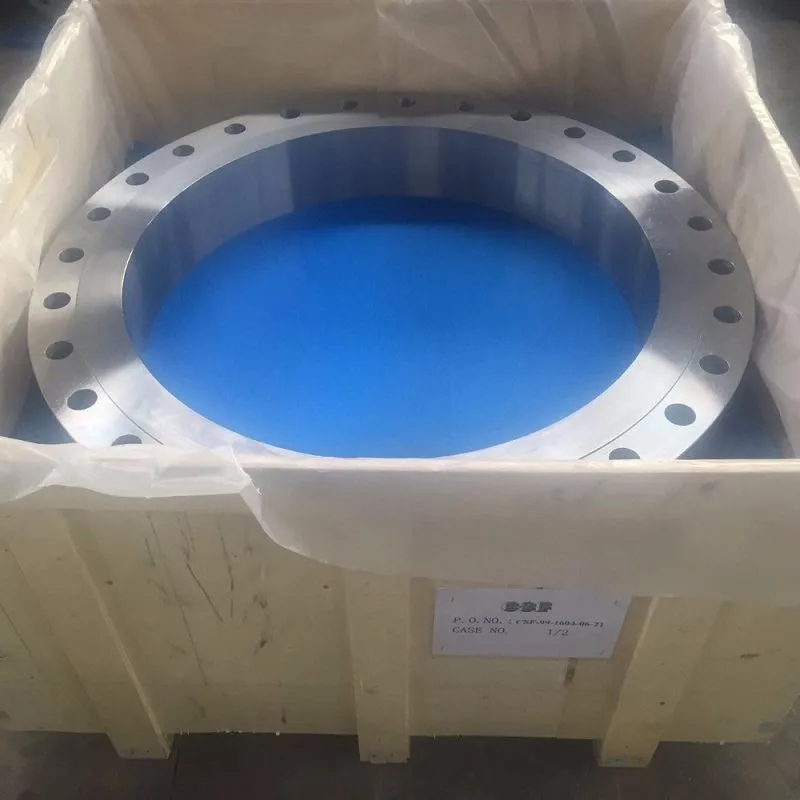
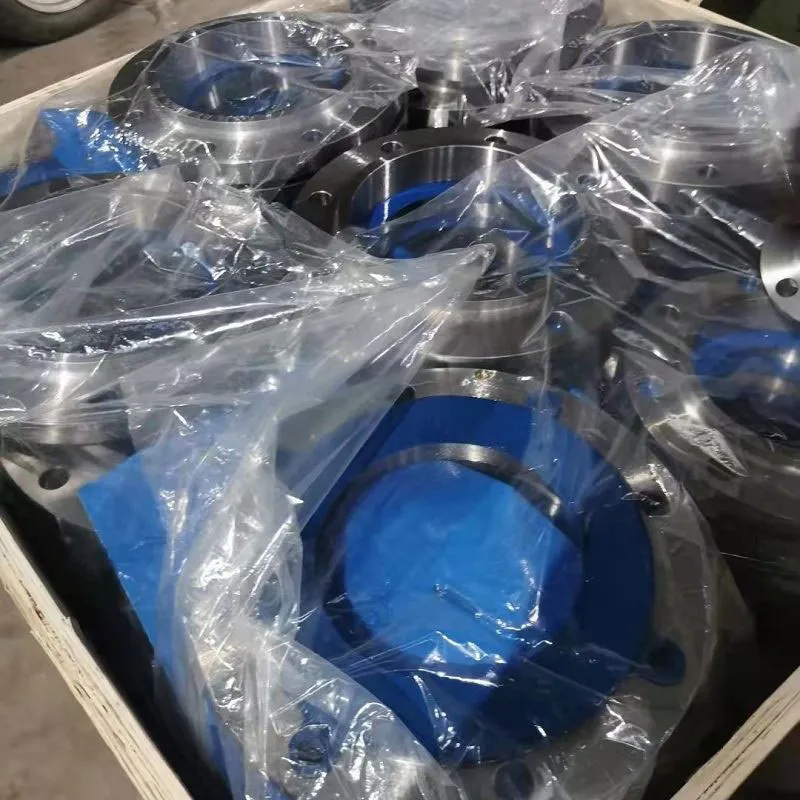
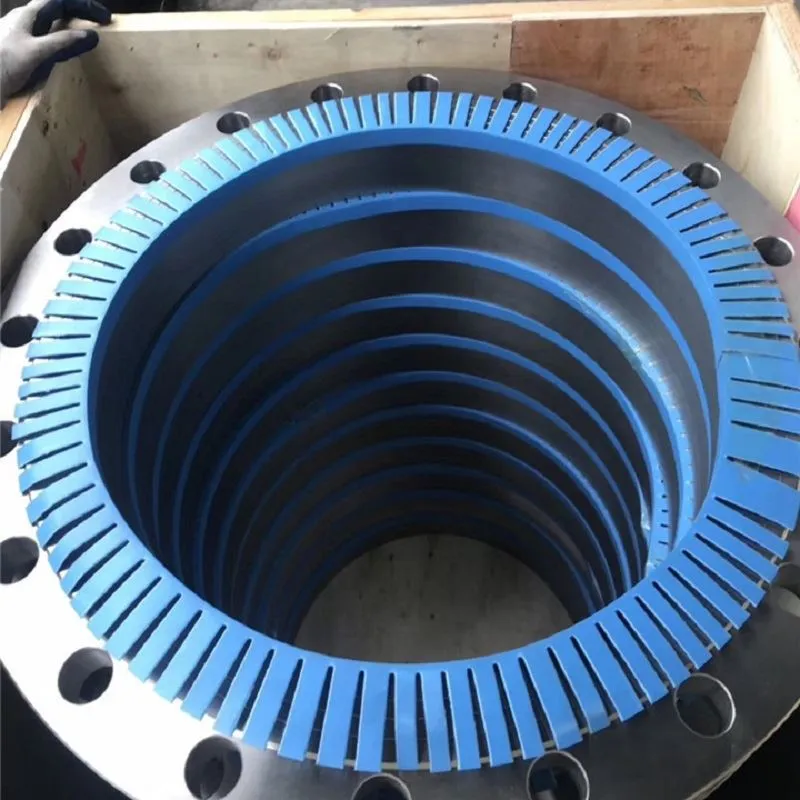
However, we cannot discount trusted foreign partners who have managed to maintain vertical integration of production and strict quality control even in turbulent conditions. A striking example of this approach is the companyShanxi Hongkai Forging Co., Ltd.. Based in Dingxiang County, Shanxi Province, one of China's key forging industrial centers, the company operates three in-house facilities covering the entire cycle from primary forging to final packaging.
Why does this matter to the buyer in 2026? Because the absence of intermediaries and our own control at each stage (heat treatment, mechanical processing, physical and chemical tests) guarantee that you will receive the product strictly according to the standard, be it GOST, DIN or ANSI B16.5. While small shops stamp “high-pressure flanges” from ordinary structural steel, disguising them as stainless steel, manufacturers such as Shanxi Hongkai Forging work with a wide range of materials and sizes (from DN15 to DN4000), ensuring transparency of transactions through their own export rights. Their products, including threaded, welded and loose flanges of pressure classes from 150 to 2500, are supplied directly to Russia and the CIS countries, bypassing dubious “gray” import schemes.
But there is also another side to the coin in the common market. Small shops that previously made simple clamps suddenly began churning out “high-pressure flanges.” By purchasing such products in spontaneous markets or through dubious advertisements on boards, you risk receiving a product made of ordinary structural steel, painted with silver to look like “stainless steel.”
How to distinguish? Look at the weight. Stainlessthreaded flangealways lighter than a steel counterpart of the same dimensions, but at the same time it is more tensile strength. If the flange is suspiciously heavy for its size and at the same time is cheap, this is a reason to be wary. Most likely, this is an ordinary “chernushka” with a coating that will peel off after the first water hammer.
Price segment: where savings end and risk begins
Let's talk about money. At the beginning of 2026, the average market price for a high-quality threaded stainless steel flange (AISI 304/316) with a diameter of 1 inch fluctuates around 450–600 rubles. Galvanized steel options are cheaper - about 250–350 rubles.
If you are offered stainless steel for 150 rubles, run. This is not a promotion. It's either a defect or a fake. The cost of raw materials plus energy costs for processing do not allow selling a normal product below this level. The exception is dumping by large distributors who get rid of illiquid stock, but even there the discount rarely exceeds 20-30%.
What influences the price in 2026?
- Exchange rates:Even domestic production depends on imported equipment and some additives.
- Logistics within the Russian Federation:Delivery from Siberia to Moscow has become a significant expense item.
- Certification:The presence of a real quality certificate and test reports adds about 10-15% to the cost, but this is your insurance.
Remember: saving 50 rubles on a flange can result in repairs to the neighbors’ apartment below in the amount of 100 thousand. The arithmetic is simple.
Technical specifications: what to look for in the product data sheet
Most installers do not look at passports at all. They take the part and go to work. This is a professional mistake that leads to amateurish results. In 2026, documentation requirements have become more stringent, and rightly so.
What specifically should you pay attention to in the specification before placing an order for a large batch?
Pressure and temperature (PN and T)
PN16 or PN25 markings are not just numbers. This is the limit at which the flange is guaranteed not to fail. But there is a nuance. The pressure is indicated for a temperature of +20°C. As the temperature increases, the strength of steel decreases.
For heating systems in private homes, PN16 is usually sufficient. But if you are installing an input in an apartment building or an industrial facility where water hammer is possible, I strongly recommend taking a spare and using PN25 or even PN40. The difference in price is minimal, and the margin of safety is colossal.
Temperature is also important. Standard stainless steel lasts up to +200°C. But O-rings (gaskets), which are often included or purchased separately, may have limitations. EPDM rubber is good up to +140°C, paronite is good up to +450°C, but it requires more tightening force. Make sure the entire assembly, not just the metal, meets your specifications.
Material of execution
There is complete chaos in terms here. Sellers say “stainless steel”, meaning everything. Let's figure it out:
- AISI 304 (08Х18Н10):The most popular option. Suitable for water, weak acids, food processing. For most tasks in housing and communal services - ideal.
- AISI 316 (10Х17Н13М2):Contains molybdenum. Needed if the water is aggressive, chlorinated or used in a marine environment. It costs 20-30% more. For a regular battery in an apartment - redundant, for a swimming pool or chemical shop - mandatory.
- Steel 20 (galvanized):Budget option. The zinc coating protects against rust, but only as long as it is intact. When threading or welding (if the flange is welded, although we are talking about threaded flanges, there are combi-variants), the protection is violated. Requires additional painting of the ends.
- Brass:Beautiful, does not rust, but expensive and less tensile strength. Often used for decorative purposes or in low pressure systems.
The table below will help you quickly navigate the choice of material for a specific task in the conditions of the Russian climate and infrastructure.
| Environment type | Recommended Material | Allowable pressure (max) | Features of operation |
|---|---|---|---|
| Cold water supply (CWS) | Steel 20 (galvanized), AISI 304 | PN16 – PN25 | Risk of condensation on steel, insulation required. |
| Hot water supply (DHW) | AISI 304, AISI 316 | PN25 | Resistance to scale and thermal expansion is important. |
| Heating (private house) | Steel 20, Brass, AISI 304 | PN16 – PN20 | Consider the type of coolant (antifreeze can corrode seals). |
| Heating (industrial facilities) | AISI 316, Steel 09G2S | PN25 – PN40 | High risk of water hammer, safety margin required. |
| Aggressive environments / Chemistry | AISI 316L, Titan (special order) | According to the project | Ordinary stainless steel can undergo intergranular corrosion. |
Installation instructions: how not to spoil an expensive part
Did you buy a good flange? Half the battle is done. Now the main thing is not to ruin it during installation. I have seen so many cases where craftsmen ruined threads with the wrong tool or killed the seal by over-tightening that I decided to describe this process step by step.
Thread preparation
Never, hear, never screw a flange onto a dirty or damaged pipe. Drive the threads on the pipe with a die or special cutter. Remove any burrs. Any unevenness will become a source of stress, where a crack or leak will begin.
Use the correct sealant. Flax with pasta? Old school, works reliably if you know how to reel it in. Fum tape? Convenient for water, but bad for gas and high temperatures (may “leak” when heated). Anaerobic sealant? An excellent option for rigid connections, but keep in mind: it will be difficult to disassemble such a unit later and it will require heating.
Personal observation:on the frosty days of January-February, anaerobic sealants of some budget brands simply do not polymerize normally if the room is not heated. Check the instructions on the can!
Tightening torque
“Tightened until the arm fell off” is not a method, it is a crime against engineering. Retightening a threaded flange does two things:
- Deformation of the part itself (especially if it is brass or silumin, which manufacturers sometimes suffer from).
- Squeezing out the seal, causing the connection to leak even more than if it had not been tightened at all.
Use a torque wrench. Yes, this is an extra expense for the tool, but for critical components it is necessary. If there is no key, follow the rule: tighten it all the way, and then make another half turn. No more. If you feel that it is going too hard, stop. Check for skew.
Alignment
The flange must fit strictly perpendicular to the pipe. Any misalignment will create uneven pressure on the gasket. Sooner or later, a fistula will appear at the point of maximum gap. Use a square to check before final tightening.
The problem of counterfeit goods: how to distinguish an original from a fake in a store
The market is flooded with products that only mimic quality. How to avoid becoming a victim of scammers? Here are a few signs that scream that this is a cheap fake:
- No mark.A serious flange always has markings: manufacturer, steel grade, pressure (PN), diameter. If the surface is smooth and clean, like a teardrop, but without letters, this is suspicious. Reliable factories, be they Russian giants or specialized enterprises like Shanxi Hongkai Forging, never skimp on labeling, since this is their face and a guarantee of compliance with ASME, EN or GOST standards.
- Processing quality.Run your finger along the threads. It should be sharp, clean, without chips or “torn” edges. If the thread appears smeared or rough, the metal is of poor quality.
- Package.Serious brands pack goods in boxes with instructions and a passport. Scattering in a plastic bag without identification marks is a sign of “garage” production.
- Price.I repeat, miracles do not happen. If the price is 40% or more below the market average, this is a trap.
Be especially careful with products that are positioned as “Italy” or “Germany”, but are sold at a market stall for pennies. The real European flange in 2026 is the premium segment. There simply cannot be a lot of it and it cannot be cheap.
The future of the industry: what awaits us after 2026?
Looking at current trends, several predictions can be made. First, standardization. The state will increasingly require certificates and traceability of materials. The era of “gray” schemes is becoming a thing of the past.
Secondly, the growing popularity of composite materials. Already now there are flanges with a polymer coating that do not rust at all and weigh several times less. They are still expensive, but in a couple of years they can occupy a significant market share in the cold water segment.
And thirdly, digitalization. Smart flanges with pressure and temperature sensors? It sounds like science fiction, but pilot projects have already been launched in smart cities. Perhaps soon we will be buying not just hardware, but an element of a monitoring system.
But for now, here and now, your best choice is a proven manufacturer with a full cycle of quality control, honest labeling and the hands of an experienced installer. Don't chase fashion, chase reliability. After all, when the pipe starts leaking, you won't care what logo was on the flange. Only one thing is important: that he holds it.
Choose wisely. Check your documents. And let your system serve for decades without a single drop of moisture on the floor.
Sources of information and data for verification:
1.Analytical review of the Russian pipeline valves market 2025-2026
2.Current GOST standards for threaded connections (GOST 6357-81, GOST 12815-80)
3.Price dynamics for stainless steel products and fittings in the first quarter of 2026
4.Expert opinion: errors in installing threaded flanges in the North