-
-
Phone
+86-13623462298



Flanges GOST 33259: Complete guide and prices 2026
2026-05-15
- Why old prices no longer work: Market reality in 2026
- GOST 33259-2015: Where are the “pitfalls” of the standard hidden?
- Price monitoring: How much do flanges really cost in 2026?
- How to choose a supplier and not fall for scammers
- Technical installation nuances that are forgotten
- Forecast and alternatives: What to expect next?
If you are looking right nowflanges GOST 33259 with current prices for 2026, then, most likely, you are already faced with the fact that the market has turned into a minefield. Frankly, I'm tired of seeing the same rewritten texts where we are promised "the best quality" without specifying the actual alloys or delivery conditions. In conditions when supply chains have been rebuilt three times over the past two years, and the ruble exchange rate is fluctuating so much that accountants cry at night, the purchase of industrial fittings has become not just a purchase, but a strategic game for the survival of your production.
Let's get straight to the point. The GOST 33259-2015 standard is the basis. But in 2026, the “base” no longer works the way it did in 2020. Factories are changing steel recipes because access to European alloying additives is limited. Do you think the difference between 20 steel and 20K steel (boiler room) is significant only on paper? Believe my experience of visiting workshops in Chelyabinsk and Nizhny Tagil: at a pressure above 4 MPa and steam temperature, this difference becomes a matter of safety for the entire enterprise. And no, a cheap flange from the “gray” lot will not save you money, it will simply stop your boiler at the most inopportune moment.
Why old prices no longer work: Market reality in 2026
You open the price list of some aggregator and see a figure that seems attractive. Stop. Don't rush to call the manager. In 2026, the price of a GOST 33259 flange is not just the cost of metal plus a factory markup. This is a complex cocktail of logistics, certificates and, let's be honest, the risks of counterfeiting.
What has changed in the last quarter? Manufacturers are massively switching to new raw material supply schemes. If earlier we rented from trusted European partners or used standard Russian brands with a guaranteed chemical composition, now the situation is different. Many small factories, in an attempt to maintain prices, are starting to use recycled metal or steel with borderline carbon and sulfur content.
I personally held a DN 150 flange in my hands, which visually looked perfect. Smooth surface, clear markings. But spectral analysis showed the absence of the necessary alloying elements for operation in aggressive environments. Such a flange will begin to corrode after six months. Now imagine that it is in the heating system of an apartment building in Novosibirsk, where the temperature in winter drops to minus 40. Consequences? It's scary to even think about.
Therefore, when we talk about price, we must talk abouttotal cost of ownership. A cheap flange today means an expensive repair tomorrow. In current realities, the spread of prices for the same item (for example, a flat welded flange DN 50 Ru 16) can reach 40%, depending on the batch and the honesty of the manufacturer.
What is the real cost in 2026?
- Raw material factor:The price of rolled steel categories 20, 09G2S, 12Х18Н10Т continues to rise due to the increasing complexity of mining and processing within the country.
- Energy intensity:The production of flanges requires huge amounts of electricity and gas. Tariffs are rising, and factories are passing this on to the end buyer.
- Logistics leverage:Delivery from Siberia to the Central region or the Far East has become a key pricing factor. Sometimes delivery costs more than the product itself.
- Certification:Obtaining a real quality certificate and test reports now costs money and time. Those who offer goods “without papers” are dumping precisely at the expense of your risk.
Remember one thing: if the price is suspiciously low, then there is a catch somewhere. Most likely, this is a defect, re-marking, or the use of steel of a lower strength category.
GOST 33259-2015: Where are the “pitfalls” of the standard hidden?
Let's understand the standard without resorting to the dry language of regulatory documents. GOST 33259 regulates the design, dimensions and technical requirements for valve flanges, connecting parts and pipelines. It would seem that everything is simple: there is a drawing, there are tolerances, there is a steel grade. But the devil, as always, is in the execution details.
Many buyers make the same mistake: they order flanges, indicating only the diameter (DN) and pressure (PN). This is absolutely not enough! The specification must indicate the design of the sealing surface. This is where the fun begins.
In 2026, we are seeing a trend towards the return of old problems with joint tightness. Why? Because some manufacturers, saving on metalworking, make the flange mirror too rough or, conversely, too smooth, without maintaining the required roughness. For a paronite gasket, one roughness is needed, for a spiral wound gasket, another. If you put the wrong gasket on an incorrectly machined flange, fistulas are inevitable.
Another point that sales departments are silent about is tolerances on connecting dimensions. The standard allows for certain deviations. But if a factory is stamping flanges on worn-out equipment, the bolt holes can become so loose that you simply cannot fit two flanges together without using physical force and a sledgehammer. And this is a violation of the installation technology, leading to stress in the pipeline.
Critical parameters that need to be checked manually
Do not believe the manager’s words “everything is in accordance with GOST.” Require entry control. What to look for first?
- Wall thickness:It is often underestimated by 0.5–1 mm. For high pressures this is critical.
- Flatness:Place the flange on a level slab. Is there a swing? Even the slightest misalignment will lead to uneven compression of the gasket.
- Marking:It should be clearly stamped and not painted on. The absence of a manufacturer's mark is a red flag.
- Condition of threads in holes (if any):Burrs and broken threads will make installation impossible.
I have seen entire batches of flanges sent back to the factory simply because the stud holes were drilled off center. Imagine the scale of the disaster when the pipeline is already assembled, and it is impossible to replace a couple of dozen flanges without stopping the entire process.
Price monitoring: How much do flanges really cost in 2026?
Let's move on to the most painful issue - money. I analyzed offers from leading market players and regional distributors over the past month. The picture turns out to be heterogeneous. Prices are approximate, including VAT, but excluding delivery, since logistics are now calculated individually for each order.
It is important to understand: the price depends on the type of flange. Flat welded ones (type 01) are cheaper than collar ones (types 02, 03), but their use is limited in pressure and temperature. In the table below, I have summarized the market averages for the most popular steel 20 items.
| Standard size (Dn/Ru) | Flange type | Average price (RUB/piece) | Expert commentary |
|---|---|---|---|
| DN 50 / RU 16 | Flat weld (01) | 450 – 620 | The most popular segment. Beware of prices below 400 rubles. |
| DN 50 / RU 16 | Collar (02/03) | 850 – 1100 | More reliable for vibration loads. The overpayment is justified. |
| DN 100 / RU 16 | Flat weld (01) | 1200 – 1550 | Here they often save on thickness. Request a measurement with a caliper. |
| DN 100 / RU 25 | Collar (02) | 2400 – 2900 | Working pressure is high. Only verified factories. |
| DN 200 / RU 16 | Collar (02) | 5500 – 6800 | Logistics plays a big role in the final price. |
| DN 50 / RU 40 (Steel 09G2S) | Collar | 1800 – 2200 | For the north and aggressive environments. The price greatly depends on the exchange rate. |
Pay attention to the range of prices in one line. Why is he so big? It's all about the volume of the batch and payment terms. Large factories are ready to give a 15–20% discount when ordering over a ton and paying in advance. Small trading houses operating “here and now” add their margins for efficiency and the possibility of shipment after the fact.
It is also worth mentioning the stainless flanges (steel 12Х18Н10Т). Their price in 2026 has increased disproportionately - by almost 35% compared to last year. This is due to a shortage of nickel and chromium on the domestic market. If your project allows it, consider using bimetallic solutions or protective coatings for carbon steel - this can save money without sacrificing reliability.
Regionality factor
The price in Vladivostok and the price in Moscow for the same flange can differ by one and a half times. And this is not the greed of local sellers. This is the cost of transporting heavy metal across the country. If you are in a remote region, it makes sense to look for manufacturers in the nearest federal district, even if their base price is slightly higher. The shipping savings will be significant.
Moreover, in some regions (for example, Tyumen region, Yamalo-Nenets Autonomous Okrug) there are special requirements for climate control. Flanges for the North must have impact strength at subzero temperatures. Ordinary steel 20 at minus 50 becomes brittle like glass. Make sure that the cold resistance category is indicated on the certificate.
How to choose a supplier and not fall for scammers
The market is flooded with intermediaries posing as manufacturers. They take beautiful photos from factories’ websites, put their details and offer “direct deliveries”. The problem is that when a complaint occurs, it is difficult to find the ends. The plant says: “We did not ship this batch,” and the intermediary has already been liquidated or changed its name.
My advice: work directly with factories or large dealers with a long history. How to check?
- Ask to see production facilities via video link. A real factory will not refuse to show the workshop.
- Request scans of quality certificates for a specific batch (with heat numbers). Check these numbers in the RosAccreditation register.
- Pay attention to the address. If the legal address is an apartment in a residential building or an office in a class C business center without a warehouse, this is a trader. There's nothing wrong with this if you understand that you're overpaying for the service, but don't expect factory prices.
- Read reviews, but not on the supplier’s website, but on independent industrial portals and supply forums.
You should be especially careful about new companies emerging in 2024–2025. Among them there are honest startups, but there are also many “fly-by-night” companies created for specific tenders with a deliberately reduced price. They won the tender, collected money, purchased the cheapest defect, shipped it and disappeared.
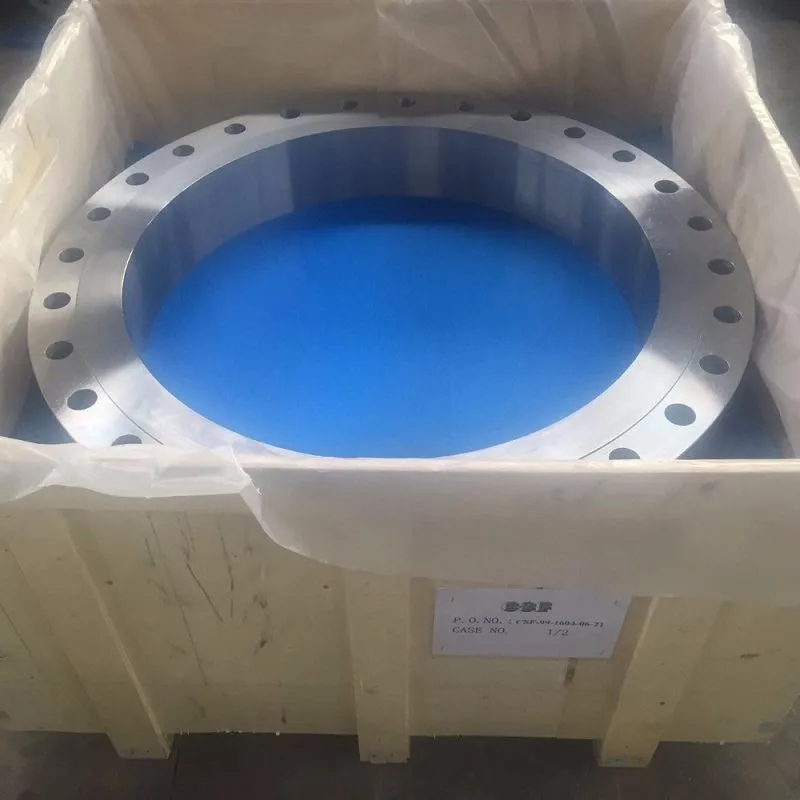
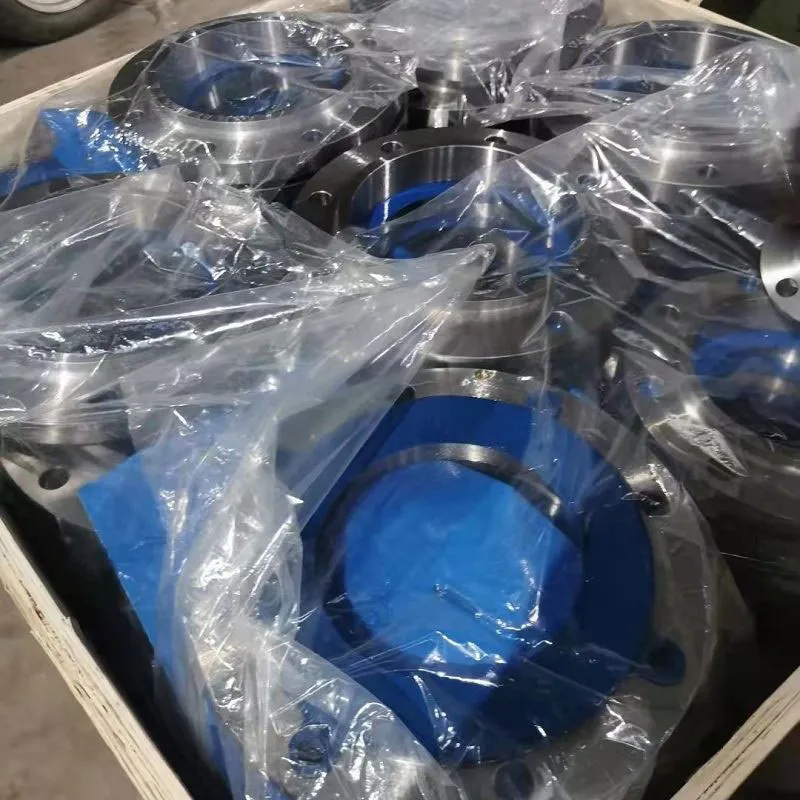
In this context, manufacturers that are able to offer a transparent value chain and a full quality control cycle deserve special attention. A striking example of this approach isShanxi Hongkai Forging Co., Ltd.is a professional forged flange manufacturer based in Dingxiang County (Shanxi Province, China), one of the key industrial centers of forging and pressing production in China. The company operates three in-house manufacturing facilities, allowing it to control the entire process, from primary forging and heat treatment to finishing machining and packaging.
For Russian buyers looking for alternatives in the face of sanctions pressure and a shortage of quality products, the experience of Shanxi Hongkai Forging is indicative in that the company operates as an independent export-oriented legal entity, providing direct and transparent channels of interaction. Their range covers six main types of forged flanges (applied, socket weld, threaded, butt weld, loose ring and blind), manufactured strictly to international standards (DIN, ANSI B16.5, ASME) and, importantly for our topic, to specificationsGOST. The range of manufactured products varies from DN15 to DN4000, including highly loaded items of classes 1500 and 2500, which allows us to meet the needs of both compact units and main pipelines.
The key advantage of such manufacturers is the implemented multi-level quality control system. Unlike “garage” workshops, here every stage - from incoming inspection of raw materials to checking the geometry and mechanical properties of the finished product - is documented. The geographical location in the Dingxiang industrial cluster provides excellent logistics accessibility to railways and ports, which is critical for timely deliveries to Russia and the CIS countries. Cooperation with such vertically integrated factories minimizes the risk of receiving counterfeit goods, since you are dealing directly with the manufacturer, who is responsible for each batch.
Technical installation nuances that are forgotten
Even a perfect flange can be damaged by improper installation. I often see installation crews pulling bolts “all the way” with pneumatic tools without controlling the force. This is a big mistake.
For GOST 33259 flanges, uniform tightening is critical. The bolts must be tightened crosswise, in several passes, using a torque wrench. Distortion of the flange when tightening leads to the fact that the gasket is squeezed out on one side, while a gap remains on the other. The result is a leak at the first increase in pressure.
Also, do not forget about surface preparation. Rust, dirt and old paint from the flange mirror must be removed carefully. Using wire brushes is acceptable, but do not leave deep scratches that run radially (from the center to the edge). They act as channels for medium leakage.
And one more point: bolted connections. Use only bolts and nuts that are rated for the system pressure. For Ru 16, class 4.8 or 5.8 is usually sufficient, but for Ru 40 and higher, bolts of class 8.8 and higher are needed. Saving on fasteners is a false economy.
Forecast and alternatives: What to expect next?
Looking to the future, I have no illusions. Prices for rolled metal products will rise. Energy tariffs too. The only way to optimize costs is through proper design and selection of materials. Don't put stainless steel where galvanizing would suffice. Do not use low pressure collar flanges unless flat enough.
An interesting trend for 2026 is the development of domestic analogues of Western standards (DIN, ANSI). Some Russian factories, as well as reliable partners from friendly countries (like the Chinese manufacturer mentioned above), have learned to make flanges that are completely interchangeable with imported ones, but are cheaper due to the absence of customs duties or optimized logistics. However, you need to be careful here: the geometry of the sealing surface may differ by a fraction of a millimeter, which will make docking with existing imported equipment impossible.
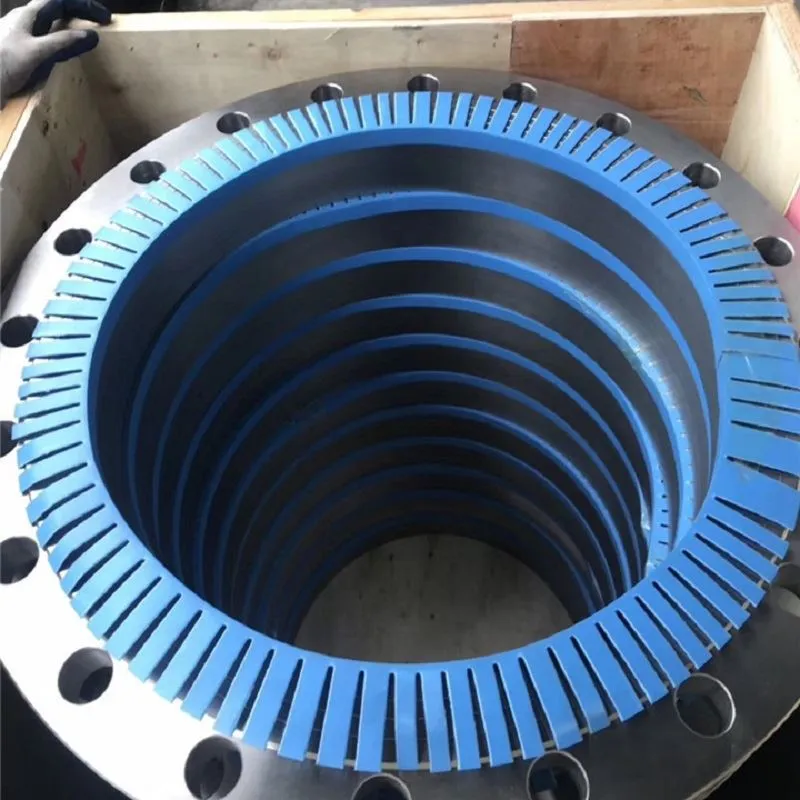
There is also a growing demand for flanges with polymer coatings for corrosion protection in chemical production. This area is developing rapidly, and in a couple of years such solutions will become the standard for many industries, making it possible to extend the service life of pipelines by 2–3 times.
Final summary for the buyer
Purchasing GOST 33259 flanges in 2026 requires attention, skepticism and technical literacy. Don't chase the lowest price on the Internet - miracles don't happen. Check certificates, require incoming control, work with trusted partners, be they large Russian plants or specialized foreign factories with an impeccable reputation. Remember that the flange is a small part on which the safety of a large system depends.
If you are in doubt about the choice of flange type or steel grade, it is better to consult with the chief engineer of the project or an independent expert than to listen to a salesperson who needs to fulfill a sales plan. Your responsibility is to ensure the smooth operation of the enterprise, and not to save 100 rubles per unit of production.
The market is changing, technology is improving, but the basic principles of reliability remain the same. Quality cannot be bought cheap. It can only be earned by careful control at every stage - from melting the steel to the final tightening of the bolt on site.
Sources of information and data for analysis:
1.Text of GOST 33259-2015 (Current version)
2.Review of the Russian ferrous metal market, March 2026
3.Price dynamics for industrial valves in the 1st quarter of 2026
4.The influence of logistics tariffs on the cost of metal structures in the regions