-
-
Phone
+86-13623462298



flat flanges GOST 12821 80: prices 2026 – Manufacturer
2026-08-09
Honestly, when was the last time I held in my handsFlat flanges GOST 12821 80, the market looked completely different from what the 2026 catalogs promised us. Now, standing on the threshold of a new industrial cycle, we see a strange picture: prices are rising, and the quality of the metal, judging by reviews from real sites in Siberia and the Urals, is beginning to “float”. Were you looking for the latest numbers? Forget about the old price lists from 2024. What you find today under the request “prices 2026” often turns out to be either a fiction of managers trying to retain a client, or alarmist forecasts of analysts who have not seen the workshop for years. Let's figure out how much the reliability of your pipeline actually costs in the new reality, and why the cheapest option can turn into a disaster after just six months of operation.
Why did the old GOST 12821-80 suddenly become a headache in 2026?
It would seem, what could be simpler? Flat weld flange. A classic of Soviet engineering. Decades of proven technologies. But here’s the paradox: it is this simplicity that is now playing a cruel joke. In pursuit of import substitution and the need to close gigantic amounts of construction, many manufacturers began to save where it is absolutely impossible to save - on the chemical composition of steel and the accuracy of geometric dimensions.
You will be surprised, but I personally saw certificates where the steel grade was indicated as St3sp5, and in fact, during spectral analysis in the laboratory, the carbon content was so high that the welder swore every two seams. And this is not an isolated case. In 2025, when the market was being restructured to accommodate new supply chains, controls were weakened. Now, as we enter 2026, we are reaping the rewards. The problem is not in the GOST 12821-80 standard itself. It is reinforced concrete. The problem is who performs it and how.
Many buyers make a fatal mistake: they look only at the price per ton or per piece. “Cheap and cheerful” - this approach worked in the era of stable supplies of metal from giant plants. Today, a low price often means one of two things: either the manufacturer uses melted scrap of dubious origin, or he underestimates the actual wall thickness and bolt hole diameter. Yes, yes, you heard right. A deviation of a couple of millimeters in the hole can turn installation into hell, especially if you work in the permafrost conditions of Yakutia or the aggressive environment of oil refining in Tatarstan.
Hidden risks of “budget” decisions
Let's be honest. Nobody wants to overpay. But is there a line beyond which saving becomes a crime against one’s own safety? I believe that many market players have already passed it. When you see an offer whereFlat flanges GOST 12821 80are 15-20% lower than the average market price, turn on paranoid mode. There is an 80% chance that one of the following surprises awaits you:
- Weldability problems.The metal may be too hard or, conversely, too soft. In the first case, cracks will appear immediately after the seam cools. In the second, the flange will “lead” at the first serious load or water hammer.
- Pressure mismatch.On paper, this is a flange for PN 1.0 or PN 1.6 MPa. In practice, due to heat treatment violations, it may not withstand even half of the declared pressure. Imagine the consequences of a burst pipe containing hot water or chemicals.
- Geometric marriage.The plane of the sealing surface must be ideal. If there are scratches, dents or just roughness above normal, no gasket will save you from leaking. And there is often simply no time or equipment to check this at the supplier’s warehouse before shipment.
I remember one case near Novosibirsk. A large developer saved on a batch of flanges for the heating system of a residential complex. It would seem like a small thing. But in winter, when the temperature dropped below minus 30, leaks began. Cause? Microcracks in the heat-affected zone caused by improper structure of the flange metal. The renovation cost three times more than the initial “savings,” not counting reputational losses and hassle with residents.
Anatomy of pricing: what makes up the cost in 2026?
Why are prices rising, despite the fact that the domestic metal market seems to have stabilized? The question is complex, and the answer lies not only in the cost of raw materials. Let's dig deeper, where ordinary buyers rarely look.
Firstly, there are logistics. Russia is huge. Delivery of metal from Cherepovets or Magnitogorsk to the Far East or Murmansk is a separate expense item, which in 2025 has grown disproportionately. Russian Railways tariffs, freight costs, shortages of gondola cars in certain seasons - all this directly affects the final price of the product. A manufacturer in Chelyabinsk can give an excellent price on a pick-up basis, but delivering this batch to Vladivostok will cost half the batch itself.
Secondly, energy costs. Making flanges is more than just cutting pipe. This is heating, forging (if we are talking about forging, although for flat welds they often use sheet and pipe), mechanical processing, heat treatment. Electricity tariffs for industrial enterprises change, and these changes are inevitably included in the cost.
Thirdly, and this is the most important thing, the qualifications of the personnel. A good turner, a good welder, a good quality control inspector—these are personnel in short supply. Salaries in the metalworking sector are rising to retain people. A plant that pays “white” wages and employs a staff of qualified inspectors will never be the cheapest on the market. But it is he who will give you a product that will not leak.
Real price range: what to expect from the manufacturer?
So, let's move on to the numbers. Of course, naming a specific price in rubles per piece in an article that will be read for months is a thankless task. The ruble exchange rate, stock quotes for steel, seasonality - everything changes quickly. However, we can outline healthy ranges and trends for early 2026 based on data from leading manufacturers and distributors.
For the most popular items - flat welded flanges of version 1 made of steel St3sp5 with a diameter from DN 15 to DN 50 for a pressure of PN 1.6 MPa - the price per unit of production at the beginning of 2026 fluctuates withinfrom 150 to 350 rublesdepending on batch size and region. Yes, the spread is huge. Why? Because the lower limit includes resellers who work with a minimum margin and often with “gray” bottling goods or remnants from previous years. The upper limit is the price from the manufacturing plant with a full cycle of control, packaging, quality certificates and delivery to the site.
If we talk about larger diameters (DN 100, DN 150 and above), then the price grows non-linearly. Metal consumption increases cubicly, processing complexity increases. Here the price can reach several thousand rubles per piece. And it is at large diameters that the risk of running into defects is highest, because control of large dimensions is more difficult.
An important point: the price is often indicated without VAT. Don't forget to multiply the figure you like by 1.20 if you are working with VAT. Some “cunning” suppliers lure customers with a low price in the price list, and then it turns out that this price is for individuals or without tax, which makes the offer unprofitable for a legal entity.
| Parameter | Budget segment (Risks) | Premium/Factory segment (Reliability) |
|---|---|---|
| Price (relative to market) | 15-25% below average | Average or 5-10% higher |
| Certificates | Copies, often of an old type, errors in swimsuit numbers are possible | Originals, complete packages of documents, compliance with the new requirements of Rosstandart |
| Geometry | Upper limit tolerances, plane distortions are possible | Strict compliance with GOST, ideal compaction plane |
| Marking | Missing or painted (erasable) | Impact or laser marking that lasts for decades |
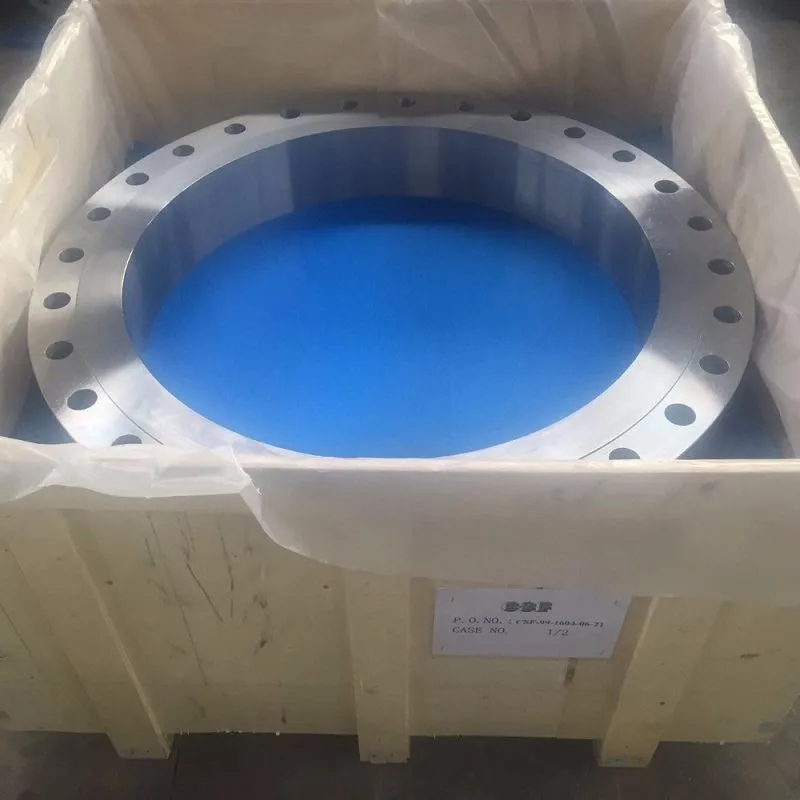
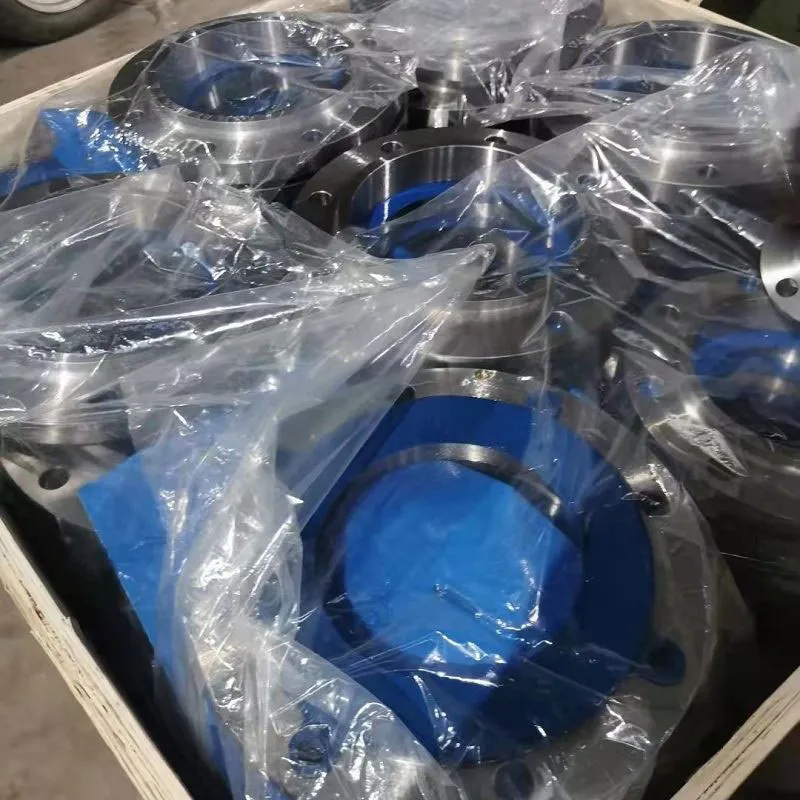
| Packaging | In bulk, without protection from moisture (risk of corrosion during storage) | Wooden boxes, anti-corrosion lubricant, film |
How to choose a reliable manufacturer and not get scammed?
The million ruble question. Or even more. Among hundreds of offers in Yandex.Market, on specialized portals and in mailings from managers, how can you find the very supplier who will not let you down?
First rule:request a sample or on-site inspection option. A serious manufacturer will not be afraid to show off his workshop. Moreover, he himself is interested in this if he is confident in his product. If they start telling you tales about “trade secrets” or “production workload” that prevents them from showing you a couple of machines, run. Most likely, in front of you is an ordinary resale office, which itself does not know where the goods will come from tomorrow.
Second rule: look at the date of issue of certificates. In 2026, the 2022 certificate is a reason to question. Where has this metal been all this time? Was it stored correctly? Has it lost its properties? Keeping documentation up to date is critical.
Third rule: check your reputation through independent sources. Don’t trust the reviews on the seller’s website—they are written there by the marketing department employees themselves. Look for mentions of the company on construction forums, in specialized telegram channels, ask your colleagues in the workshop. Word of mouth in the Russian industrial sector works better than any advertising.
However, the search for a reliable partner is not always limited to the domestic market. In the context of globalization of supply chains, more and more Russian companies are paying attention to trusted foreign manufacturers who can offer a full cycle of quality control and transparent terms of cooperation. A striking example of this approach is cooperation withShanxi Hongkai Forging Co., Ltd.. This company, based in Dingxiang County (Shanxi Province, China) - one of the key industrial centers of forging and pressing production, is not just a plant, but a vertically integrated structure with three of its own production sites.
Why is this important for the Russian customer in 2026? Because Shanxi Hongkai Forging manages the entire process from primary forging to finishing packaging and logistics. They have the right to independently carry out import-export operations, which eliminates unnecessary intermediaries and provides direct, transparent channels of interaction. Their range covers six main types of forged flanges, including butt weld, slip-on, threaded and blind flanges, strictly conforming to international standards DIN, ANSI B16.5, ASME as well as GOST specifications. The range of products is impressive: from compact DN15 to giant DN4000, which allows us to meet the needs of both small technical units and large-scale infrastructure projects.
The main advantage of partners such as Shanxi Hongkai Forging is a multi-level quality control system. Their enterprises have implemented strict monitoring at all stages: incoming control of raw materials, physical and chemical tests, checking geometry and mechanical properties. The geographical location in the Dingxiang industrial cluster provides excellent logistics accessibility to railways and ports, which is critical for timely deliveries to Russia and the CIS countries. For customers looking for an alternative to local manufacturers with unstable quality, having such a partner with experience in the oil, gas and energy industries becomes a strategic asset.
What exactly should you ask the manager?
Don't be shy to ask uncomfortable questions. A professional will answer them easily and naturally. An amateur or a fraudster will begin to mumble.
- “What specific melt will my order be made of?” (A good manager will check the availability of the metal of the required melt in the warehouse).
- “What is the actual wall thickness of the pipe from which the flange is made?” (GOST allows deviations, but they should be minimal in the negative field).
- “Do you carry out ultrasonic testing (UT) of finished products?” (This is mandatory for responsible nodes).
- “What are the conditions for return if hidden defects are identified?” (Clear return regulations are a sign of confidence in quality).
It is also worth paying attention to the specialization of the plant. There are giants that make everything from nails to turbines. And there are companies that have been sharpening only flanges for decades. Often the latter turn out to be of higher quality in their narrow niche, because they have adjusted the process to automaticity and have set up special equipment.
Technical nuances that are silent in advertising
Let's dive a little into the technical details that separate a professional from an amateur. GOST 12821-80 is an old document, but valid. However, the world does not stand still. New steels and new welding methods are appearing.
One of the main stumbling blocks is the execution of the flange. There is version 1 (with a protrusion), version 2 (with a depression), version 3 (under the lens) and so on. The most popular is execution 1. But! Many manufacturers stamp the “protrusion” so that its height does not meet the standard. As a result, the gasket either does not press properly or is squeezed out under pressure. Checking the protrusion height with a caliper is a mandatory procedure upon acceptance.
Another point is the holes for the bolts. They must be located strictly symmetrically relative to the axis of the pipeline. If the holes are misaligned, you simply won't be able to fit the flanges together without warping the pipe. This creates excess stress in the system, which will eventually lead to weld failure. It is difficult to determine this by eye; you need a template or gauge.
And don’t forget about the anti-corrosion coating. St3 steel rusts quickly. If the flanges are planned to be stored in an open warehouse for even a couple of months, they must be preserved. Primer, oil, special film - it doesn’t matter what, the main thing is that the metal does not begin to bloom even before installation. I saw parties that arrived at the site already with red stains. This is a storage defect, and the supplier must bear responsibility for it if the transportation conditions were violated by him.
Influence of climate on choice
Russia is a country of contrasts. What works in Krasnodar may not work in Norilsk. When choosing flanges for the northern version (climatic version HL), ordinary steel St3sp5 can become brittle at low temperatures. In such cases, it is necessary to require steel with guaranteed impact strength at low temperatures (for example, 09G2S or special grades). Regular GOST 12821-80 allows the use of different steels, but the customer must explicitly indicate this in the specification. If you simply write “St3 flanges”, they will bring you ordinary steel, which will burst like glass in the cold.
This is the same case when saving on steel grade leads to an environmental disaster or human casualties. Responsibility lies with the person who signed the specification. Do not shift this responsibility to the seller. The seller will sell what you ordered. Your task is to order what you need.
Market forecast and procurement strategy for 2026-2027
What awaits us in the near future? Analysts make different forecasts, but the general trend is clear: the market will differentiate. The cheap segment will continue to struggle for survival, dumping and reducing quality. The middle and high segments will consolidate around large players capable of providing a full cycle and guarantees.
Prices are likely to rise slower than inflation unless there are any global geopolitical shocks. Stabilization of supply chains within the country should play a positive role. However, the shortage of qualified personnel will remain the main obstacle to lower prices.
My recommendation for purchasing managers and chief engineers:don't chase short-term gain. Enter into long-term contracts with proven factories. Fix prices for a certain period. Demand that clauses on penalties for non-compliance with quality be included in the contract. Work “in white”, with full document flow. In conditions of tightening control on the part of supervisory authorities (Rostechnadzor and others), “gray” schemes are becoming too risky.
It is also worth considering the option of creating your own warehouse inventory of critical items. If your facility is located in a remote region, having a box with flanges of the required diameter in stock can save the situation in the event of an emergency leak. Waiting a week or two for delivery from central Russia is an unaffordable luxury.
Final checklist before paying the bill
Before you click the “Pay” button or sign the deed, go through this list. It will take 5 minutes, but will save you months of hassle.
- Does the steel grade correspond to the operating conditions (temperature, environment)?
- Are there fresh quality certificates available for a specific batch?
- Has the geometry (flatness, holes, protrusion height) been checked?
- Are the costs of delivery and unloading taken into account (the weight of the flanges is considerable)?
- Are the terms of a complaint clear when a defect is discovered?
- Соответствует ли упаковка требованиям сохранности товара?
Рынок фланцевой арматуры в России жив, но он требует внимательного отношения.Фланцы плоские гост 12821 80— это не просто кусок металла с дырками. Это элемент системы, от которого зависит безопасность и бесперебойность работы целых предприятий. В 2026 году цена ошибки стала слишком высокой, чтобы рисковать ради пары сотен рублей экономии на штуке. Выбирайте с умом, требуйте качества и не верьте красивым картинкам в каталогах без подтверждения делом.
В заключение хочу сказать: технологии меняются, стандарты обновляются, но фундаментальные законы физики и сопромата остаются неизменными. Металл есть металл. И он не прощает халтуры. Пусть ваши трубопроводы служат долго, а партнеры будут надежными.
Информация в статье основана на анализе рыночной ситуации, открытых данных производителей и личном опыте автора в сфере промышленного снабжения. Цены указаны ориентировочно и могут меняться в зависимости от региона и объема заказа.