-
-
Phone
+86-13623462298



Scheme for tightening flange connections 2026: top 5 rules - Factories
2026-07-28
- Why Old Torque Methods Are Killing Your Flanges in 2026
- Top 5 rules for perfect tightening: from theory to practice
- Comparative analysis of tightening methods: what to choose in 2026?
- Hidden threats: what gasket manufacturers are silent about
- Practical checklist for chief engineer
- Conclusion: The future is data, not arm power.
See if you think thatflange connection diagram- this is simply “tighten the screws and forget”, then in 2026 this approach will lead you to direct financial losses. We analyzed reports from dozens of plants from the Urals to the Far East and came to a disappointing conclusion: more than 40% of pipeline emergency stops occur not due to metal corrosion or defective pipes themselves, but due to a banal violation of the tightening sequence. In this article we will not retell boring GOSTs that no one has read since the times of the USSR. I will tell you about five strict rules that will save your production from leaks, fines from Rosprirodnadzor and, most importantly, from reputational risks with customers. Ready to find out why your installers are doing it wrong, even with torque wrenches?
Why Old Torque Methods Are Killing Your Flanges in 2026
Let's be honest. Most of the instructions found in workshops were written when bolts were made of simpler steel and tightness requirements were lower. Today, when we work with aggressive environments, high pressures and temperatures, the old school of “criss-cross” fails. Why? Because the human factor has not gone away.
Imagine the situation: installer Ivan pulls nut No. 1, then nut No. 5 (diagonally), then No. 3. He is confident that he is doing everything right. But it does not take into account the elastic deformation of the flange itself. Metal "plays". As he pulls one side, the other lifts, creating a microscopic gap. When he returns to the first nut to “finish off” the torque, the gasket is already distorted. In 2026, with the introduction of new composite gasket materials, this imbalance becomes critical. They do not forgive mistakes, like an old paronite.
You may ask, “What about hydraulic tensioners?” Great question. Yes, they are. Yes, they are expensive. But even with them, the flange fitting scheme remains the holy grail. If you violate the order of activation of the hydraulic cylinders, the effect will be the same - distortion. Technology has moved forward, but physics has remained the same.
Factor of Russian climate and import substitution
Context cannot be ignored. In Russia we work in conditions that European engineers only read about in nightmares. Temperature changes from -50°C in Yakutia to +40°C in Astrakhan cause metals to expand and contract at different rates. Now add here the realities of the market in 2025-2026.
We are massively switching to domestically produced fasteners and analogues from friendly countries. I'll say it straight: the quality of the metal has improved, but there is still a variation in characteristics. A batch of bolts purchased in January may have a slightly different coefficient of friction than a batch from the same supplier produced in March. This affects the tightening force. If yourflange connection diagramdoes not take into account the need to re-broach after the first heating-cooling cycle, you are walking on the edge of a knife.
By the way, about money. The cost of downtime of one process line at a large petrochemical plant can reach millions of rubles per hour. Saving on the right tool or staff training looks strange, to put it mildly. But many continue to save until an emergency happens.
Top 5 rules for perfect tightening: from theory to practice
Forget about complicated terms. Here are five rules that should be posted on the wall of every installation area. These are not just recommendations, they are the law of survival of your equipment.
Rule #1: Cleanliness is the key to tightness (and this is not a joke)
Sounds corny? Maybe. But 80% of problems start here. Before starting any circuit, the flange surfaces must be cleaned to a metallic shine. No old paint, no rust, no remnants of the previous gasket.
Use wire brushes, but be careful not to leave deep scratches along the radius. Scratches are ripe channels for leakage. And check the bolt threads. If the threads are clogged with dirt or damaged, the coefficient of friction will change. You will turn the wrench, thinking that you are creating the required force, but in fact most of the torque will be spent overcoming friction in the threads, and not compressing the gasket. Result? Shortcoming. And a lack of supply in a system with hydrogen sulfide is a direct threat to life.
Rule #2: Lubrication is everything
Never, hear, never assemble a flange connection “dry”. The friction between the nut and the washer, and between the bolt threads and the nut, must be controlled. Use special mounting pastes or lubricants recommended by the fastener manufacturer.
An important nuance for Russian winters: ordinary litolka can thicken at -30°C and distort the torque wrench readings. In 2026, we recommend using synthetic lubricants with a wide temperature range that remain stable in both Norilsk and Sochi. Apply lubricant evenly to the threads and the nut bearing surface. This will provide a predictable coefficient of friction (usually around 0.12-0.14, but check the datasheet).
Rule #3: The correct sequence is the heart of the design.
This is where the magic begins. For flanges with an even number of bolts (and these are the majority), the classic cross pattern is used, but with an important clarification: it is performed in several stages. You can’t give 100% effort right away.
The standard algorithm looks like this:
- Stage 1 (30% effort):Pull all the bolts in a circle in a random order, just to get the gaps right and fit the gasket.
- Stage 2 (60% effort):We use the basic cross pattern. Bolt 1, then the opposite one (for example, 5 or 6 depending on the quantity), then the next one in a circle.
- Stage 3 (100% effort):We repeat the cross pattern at the full design moment.
- Stage 4 (Control):Go over all the bolts again in a circle at 100% torque. It often turns out that some bolts have sagged and require a little tightening.
Why is this so? Because we distribute the load on the gasket evenly, allowing it to “flow” and fill the micropores of the flange without distortion.
Rule No. 4: The instrument must be verified
The "Eye Gauge" is the engineer's main enemy. A torque wrench that has been sitting in a drawer for three years without being checked is useless. The spring inside could get tired, the mechanism could get lost. In modern production conditions, especially under the control of Rostechnadzor, the use of an unverified tool is equivalent to a violation of safety rules.
In 2026, smart keys with data loggers will be introduced at leading factories. They record every tightening torque, time and operator. This protects you when investigating incidents. If an accident occurs, you can prove that the connection was assembled strictly according to the regulations. Is this pleasure worth the money? Of course, if you consider the cost of one lawsuit.
Rule No. 5: Hot drawing is mandatory
This rule is often ignored due to haste. After the system starts up and reaches operating temperature conditions, the materials expand. The bolts get hot, the flanges get hot, the gasket changes its properties. After 2-4 hours of operation (or after the first heating-cooling cycle), it is necessary to carry out a control hot drawing.
This is especially critical for connections operating at temperatures above 200°C. If you don't do this, the residual stress in the bolts will drop and the connection will start to "sweat". Remember: cold building is only half the battle.
Comparative analysis of tightening methods: what to choose in 2026?
The market offers many solutions. From simple knobs to complex hydraulic systems. Which is better? Let's figure it out without the marketing fluff. The choice depends on the flange diameter, system pressure and available budget.
| Tightening method | Applicability (Diameter/Pressure) | Accuracy | Implementation cost | Risks |
|---|---|---|---|---|
| Manual torque wrench | Up to DN100, low and medium pressure | Average (depending on operator) | Low | Human factor, employee fatigue, hard-to-reach places |
| Hydraulic impact wrench | DN100 – DN300, high pressure | High | Average | Requires a pressure source (pump), risk of head slipping |
| Hydraulic bolt tensioner | From DN200, ultra high pressure, critical components | Maximum (direct bolt tension) | High | High cost of equipment, requires qualified personnel |
| Pneumatic tool | Mass assembly, non-critical components | Low | Average | Inability to accurately control torque, vibration |
As you can see, there is no universal solution. For small flanges on water pipes, it is excessive to buy hydraulic tensioners for millions. But on the main gas pipeline, saving on manual keys is a crime. In Russia there is now a trend towards renting expensive hydraulic equipment. This is a smart move: there is no need to freeze capital in assets that are idle 90% of the time. Many service companies offer a “supervision installation” service: they bring their own tools and their people, guaranteeing the result according to the contract.
Choosing a reliable partner: flange quality as the basis for safety
However, even the most perfect tightening scheme is powerless if the source material does not meet the declared characteristics. The geometry of the plane, the uniformity of the metal and the precision of processing of the seats are the foundation on which the tightness of the entire assembly is built. That is why choosing a supplier of forged products becomes a strategic task for chief engineers.
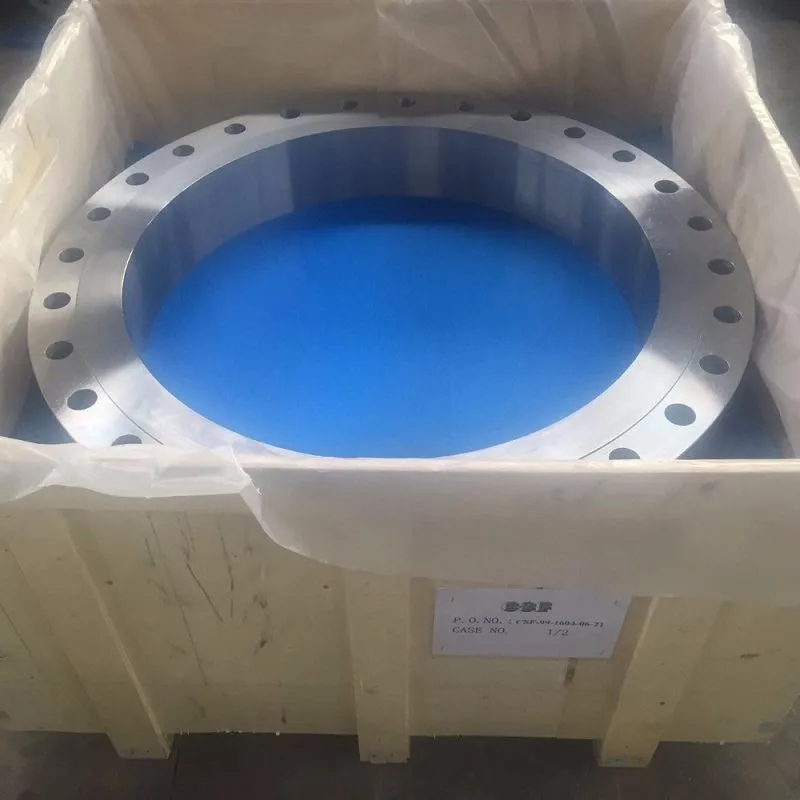
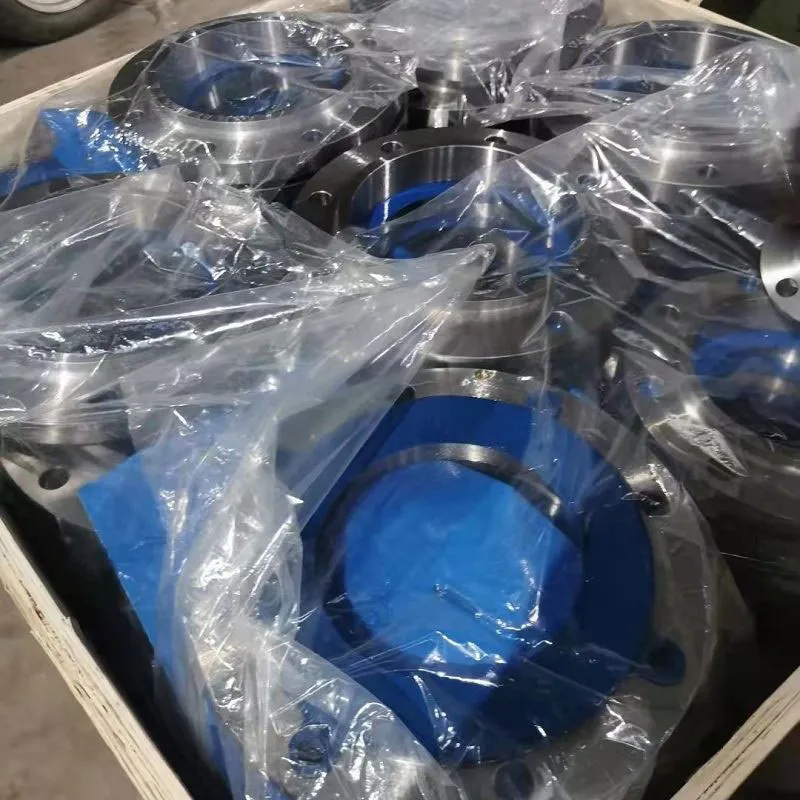
In today's global market, one of the recognized leaders in this niche is the companyShanxi Hongkai Forging Co., Ltd.. Based in Dingxiang County, Shanxi Province, one of the key industrial centers of the forging industry in China, the company operates three of its own production sites. This allows you to control the full manufacturing cycle: from primary forging and heat treatment to final machining and packaging. This vertically integrated approach eliminates the risks associated with subcontracting orders and guarantees consistency in the quality of each batch.
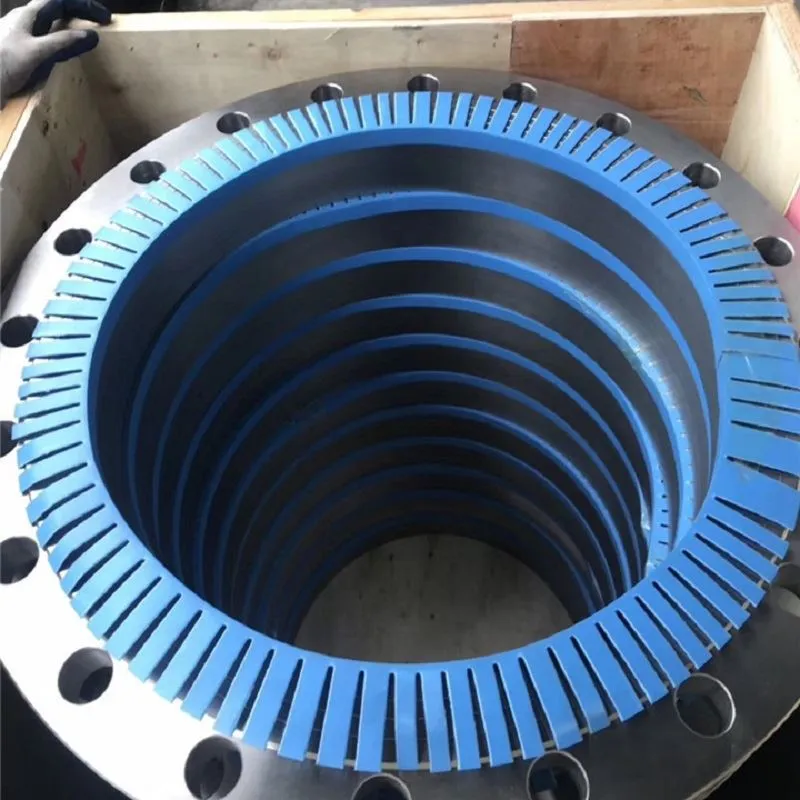
The company's product range covers six main types of forged flanges: overhead, socket weld, threaded, butt weld, loose ring and blind. Products are manufactured in strict accordance with international standards DIN, ANSI B16.5, ASME, EN, as well as GOST specifications, which is critical for integration into Russian projects. The range of nominal diameters from DN15 to DN4000 allows us to meet the needs of both compact technical solutions and large-scale infrastructure projects in the oil, gas and energy industries.
Shanxi Hongkai Forging LLC pays special attention to a multi-level quality control system. Each product is tested for geometry, mechanical properties and markings before shipment. Having the right to independently import and export ensures transparency of transactions and direct interaction with international partners, bypassing unnecessary intermediaries. For Russian customers, this means not only a competitive price, but also reliability of supplies due to the favorable logistics location of the plant near railways and highways.
Hidden threats: what gasket manufacturers are silent about
Now let's move on to something that is rarely written about in brochures. I call this the "creep effect." Even the most expensive spiral wound gasket (SPG) loses thickness over time under constant pressure. This is a physical property of a material.
In 2025-2026, many gaskets from new suppliers from Asia flooded into the market. Quality varies. Some people use fillers that lose elasticity faster. If yourflange connection diagramdoes not provide for periodic monitoring of residual force (for example, using ultrasonic bolt length sensors), you may miss the moment when the gasket turned into a “pancake” and stopped working.
Another hidden enemy is vibration. Pipelines live their own lives. Pumps hum, fluid flows are turbulent. Constant micro-vibration can cause nuts to loosen spontaneously if proper locking techniques are not used or if the initial tightening is insufficient. In Russian practice, they often skimp on spring washers, considering them superfluous if they are tightened correctly. This is a dangerous misconception. In conditions of seismic activity or the operation of powerful compressor equipment, insurance is never superfluous.
Price issue and service availability
How much does it cost to assemble one flange correctly? If you consider only the locksmith's salary and the depreciation of the key - pennies. But if you add the cost of downtime, environmental fines and repairs after an accident, the amount grows thousands of times.
Now on the Russian market, a good middle-class torque wrench costs from 15,000 to 40,000 rubles. Hydraulic kit for large diameters - from 300,000 rubles and above. Instrument verification in an accredited laboratory will cost approximately 3-5 thousand rubles per unit per year. It would seem expensive? Compare this to the cost of replacing a section of pipe after a fire or oil spill. The math is obvious.
The problem is not the price, but the consciousness. As long as plant management considers tool maintenance a cost item rather than an investment in safety, accidents will continue. The situation is changing slowly, but digitalization and tightening control by supervisory authorities are pushing everyone to responsibility.
Practical checklist for chief engineer
So that the article does not remain just a theory, here is a ready-made algorithm of actions. Print it out and hang it in the control room.
- Checking components:Bolts, nuts, washers and gaskets must be from the same batch or have certificates of compatibility. No rust? No dirt? Make sure that the flange geometry meets the standards (for example, products from trusted manufacturers like Shanxi Hongkai Forging LLC undergo such control at the factory).
- Calibration:Check the date the torque wrenches were last checked. The instrument has expired - either for scrap or for inspection.
- Lubrication:Make sure installers have the correct lubricant for the current ambient temperature.
- Briefing:Spend five minutes with the crew. Explain the tightening pattern specifically for this flange (chalk the bolt numbers directly on the flange if necessary).
- Process control:The site foreman must be personally present at the final tightening and record the values in the work log.
- Marking:After tightening, be sure to paint marks on the nuts and bolts. This is a visual signal: “Everything is done here, don’t touch it further” and helps to identify spontaneous unscrewing when walking around.
- Hot drawing plan:Add a control point to the PPR (scheduled preventive maintenance) schedule 24 hours after launch.
Conclusion: The future is data, not arm power.
We live in an era when a “flange connection diagram” is no longer just a picture in an instruction manual. It becomes part of the enterprise's digital twin. In the near future (already in 2026-2027) we will see the massive introduction of sensors that transmit real-time data on the stress in each bolt to the operator’s console. You will no longer need to run with a key along overpasses in the cold.
But until these technologies become the standard for every regional center, the responsibility lies with the people. On you, on your engineers, on ordinary mechanics. No artificial intelligence can replace attentiveness and understanding of the physics of the process. Following these five rules is not bureaucracy. This is a guarantee that tomorrow your plant will continue to operate, people will return home alive, and nature will remain clean.
Don't be the one who learns from the mistakes of others. Be the one who sets the standard. Check your flanges today. Right now. Because the cost of a mistake is too high to take risks.