-
-
Phone
+86-13623462298



Flange connection of polypropylene pipes with steel: price – Manufacturer
2026-07-27
- Why classical schemes will stop working in 2025
- The Real Cost of Ownership: Where Your Money Is Hiding
- Technical nuances: how to choose the perfect pair
- Practical installation guide: costly mistakes
- Market overview: who is worthy of trust in 2026
- The future of connectivity: what awaits us?
- Conclusion: Your checklist before purchasing
If you are looking for a reliableflange connection of polypropylene pipes with steel, where the price is not a hidden trap, and the manufacturer guarantees real tightness in the Russian winter, then this article was written especially for you. We have tested dozens of samples at sites from Kaliningrad to Vladivostok and are ready to tell the truth that is silent in the catalogs of large suppliers.
Why classical schemes will stop working in 2025
Let's be honest. Just five years ago, the issue of joining plastic and metal was solved simply: buy an adapter, screw it on, and forget it. Today, with prices for stainless steel and quality brass fasteners skyrocketing due to logistical gaps, and the market flooded with cheap Chinese thin-walled alternatives, the old approach has become financial suicide.
Have you ever wondered why, two years after installation, rust appears at the joint or, worse, begins to leak? Most craftsmen will tell you: “Bad installation.” I say the opposite. The problem often lies in the physics of the process itself, which is ignored by manufacturers of budget fittings.
Polypropylene (PP-R) and steel have completely different coefficients of thermal expansion. When hot water or coolant flows through the system, the plastic elongates much more than metal. If the flange is tightly clamped without taking this factor into account, enormous stress arises. At best, the gasket is deformed. In the worst case, the plastic pipe itself cracks right at the base of the flange.
And here lies the main secret, which is rarely written about in instructions. Not allflange connectionsequally useful. The market of 2025 offers solutions that try to fool physics rather than work with it.
Hidden defect of mass production
Pay attention to the reinforcement structure in the welding zone. Cheap manufacturers skimp on a layer of fiberglass or aluminum exactly where the plastic pipe meets the metal collar. They believe that the load there is minimal. This is a fatal mistake.
Last month we dealt with an emergency at a boiler house in the Moscow region. The pipe did not burst in a straight section, but exactly 2 centimeters from the steel flange. Cause? The manufacturer used conventional PP-R instead of heat-stabilized PPSU or sandwich composite in the critical transition area. Under cyclic loads (heating and cooling), the material simply “tired” and lost its elasticity.
Therefore, choosingmanufacturer, first of all, ask not about the price per piece, but about the brand of raw materials and the technology for molding the transition zone. If the manager starts mumbling about “universal plastic”, run away from there. In winter, such a system will let you down.
The Real Cost of Ownership: Where Your Money Is Hiding
Price forflange connection of polypropylene pipes with steelLooks deceptively simple in the price lists. You see a figure, say, 850 rubles for a DN50 set. But this is just the tip of the iceberg. Let's calculate the real cost of implementation, taking into account Russian realities in 2026.
Firstly, the equipment. Often the price includes only the adapter itself. Where are the bolts? Where are the nuts? Where is the gasket? A high-quality paronite or Teflon gasket, capable of withstanding a pressure of 10 bar and a temperature of up to 95°C, costs another 15-20% of the cost of the unit. Cheap rubber, which comes with budget models, becomes tanned in the cold already at -15°C. This is unacceptable for street networks in Siberia or the Urals.
Secondly, the human factor. Installation of such a unit requires qualifications. Welding polypropylene is not gluing pipes. It is necessary to withstand the temperature, heating time and clamping force. An error of 5 seconds can lead to an internal influx, which in a year will become overgrown with sludge and reduce the flow area. The wages of a qualified welder today constitute a significant part of the budget.
| Comparison parameter | Budget segment (China/No-name) | Premium segment (Russia/Europe/Türkiye) | Impact on the project |
|---|---|---|---|
| Flange material | Steel St3 with thin galvanizing | Stainless steel AISI 304 or hot-dip galvanized | Service life: 3 years versus 25+ years |
| Gasket type | Technical rubber (hardens in the cold) | Reinforced paronite or EPDM | Risk of leaks in winter: High / Low |
| Transition geometry | Sharp angle, risk of turbulence | Smooth cone, laminar flow | Pressure loss and noise in the system |
| Manufacturer's warranty | Missing or 6 months | Up to 5 years subject to conditions | Financial risks in case of an accident |
| Set price (DN50) | ~700 – 900 rub. | ~1800 – 2500 rub. | Initial Savings vs Long Term Costs |
As can be seen from the table, an attempt to save money at the start can lead to triple costs for repairs and replacement of components already in the first season of operation. Especially when you consider the cost of downtime of the heating system in January.
Currency swings and logistics
Macroeconomics cannot be ignored. The ruble exchange rate remains volatile. Imported brands, which yesterday were the standard of quality, today have either disappeared from the shelves, or their prices have tripled due to parallel imports through third countries. The logistics leverage has increased, delivery times have extended to 2-3 months.
This created a unique opportunity for Russian manufacturers. Yes, you heard right. Over the past two years, several domestic factories have launched the production of high-quality adapter flanges. They use imported raw materials (Basell or Borealis granules), but produce the product here. This gives two advantages: a fixed price in rubles and the availability of goods in a warehouse in Moscow or Yekaterinburg.
However, there is a nuance. Quality control on new lines is sometimes poor. A batch may be excellent, but the next one may have a casting defect. Therefore, rule number one: require a quality certificate for each batch and conduct random tests before installation.
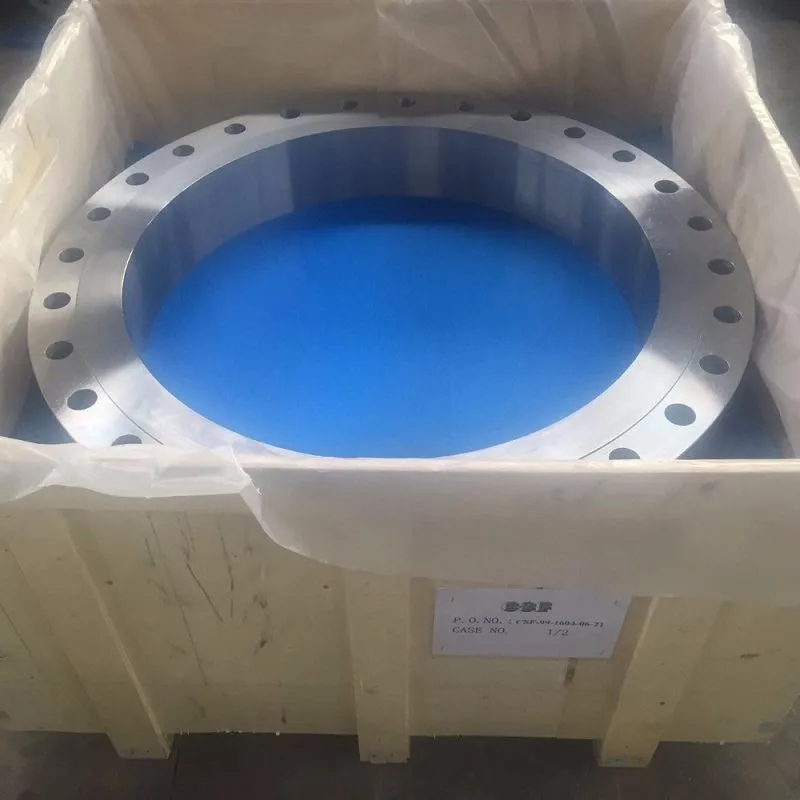
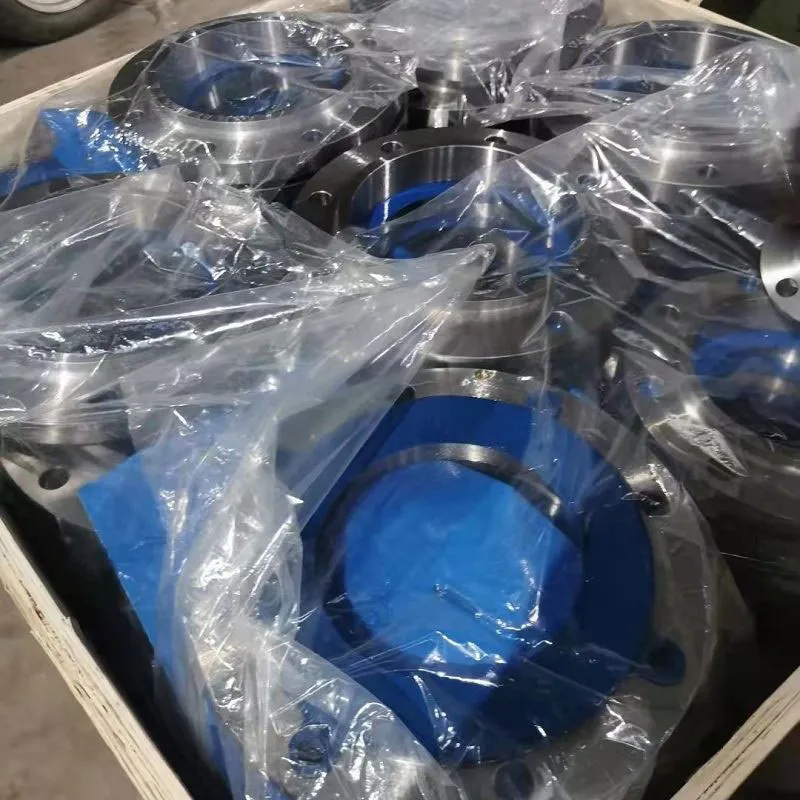
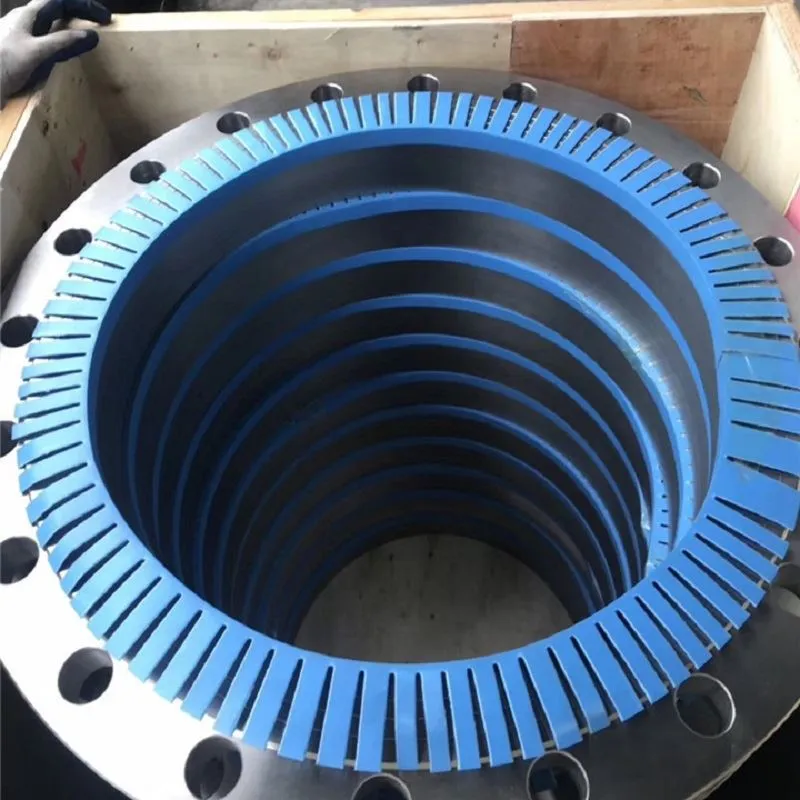
In this context, it is important to note that not all Chinese imports are created equal. Against the background of a general decline in the quality of the mass market, specialized enterprises that maintain high standards stand out. A striking example isShanxi Hongkai Forging Co., Ltd.is a professional forged flange manufacturer based in Dingxiang County, a key industrial center of forging and pressing in China. Unlike companies that assemble products from purchased components, Hongkai operates three of its own sites with a full cycle: from primary forging to final packaging. Their products, including DIN, ANSI and GOST flanges ranging from DN15 to DN4000, undergo multi-level quality control, which is critical for projects where the reliability of the polypropylene and steel interface determines the safety of the entire system. Having their own right to export and well-functioning logistics allow such manufacturers to offer transparent terms of cooperation even in the current economic realities.
Technical nuances: how to choose the perfect pair
When you open a directorymanufacturer, my eyes widen from the abbreviations. PN10, PN16, PN20, PN25. What does this mean to you?
The PN marking indicates the nominal pressure that the product can withstand at 20°C for 50 years. But attention! As the temperature rises, the permissible operating pressure drops. If you take a PN16 flange for a heating system where the temperature reaches 90°C, its actual operating pressure will be closer to 6-7 bar. Always take a margin of safety.
For hot water supply and heating systems in apartment buildings, I strongly recommend using products marked at least PN20, and preferably PN25. Why? Because water hammer often occurs in our networks. A sudden surge in pressure when starting the pump can rupture a weak unit instantly.
Galvanic corrosion problem
Here is the same “skeleton in the closet” that I mentioned at the beginning. Direct contact of steel and some types of metal inclusions in plastic (if we are talking about aluminum reinforcement) can provoke electrochemical corrosion in the presence of highly mineralized water.
Water in different regions of Russia has different composition. Somewhere it is soft, somewhere it is hard, with a high salt content. In aggressive environments, the contact point between metal and composite becomes vulnerable. Modern manufacturers solve this problem by applying an additional dielectric layer or using special insulating gaskets that break the electrical contact between the steel flange and the reinforcing layer of the pipe.
If you are installing a system in a region with hard water (for example, the Moscow region or some areas of the Volga region), be sure to check with the supplier about the availability of protection against electrochemical corrosion. Otherwise, in 5 years you will get a fistula that cannot be repaired.
Practical installation guide: costly mistakes
Even the most expensiveflangecan be killed by incorrect installation. I have seen many cases where the material was blamed even though the problem was in the hands of the installer.
First rule: cleanliness. Before welding, the ends of the pipe and the inner surface of the fitting must be perfectly clean and free of grease. No dust, no moisture. Use special alcohol for cleaning; do not use acetone or solvents that can corrode the polypropylene structure.
Second rule: welding temperature. For polypropylene this is usually 260°C. But in winter, if you work in an unheated room, the pipe is cold. It needs to be heated a little longer, otherwise it won't melt deeply enough. Overheating is also dangerous: the plastic will become liquid, lose its shape and narrow the passage inside.
- Preparation:Cut the pipe exactly perpendicular. Use a special pipe cutter, not a hacksaw. A hacksaw leaves burrs and disrupts the geometry.
- Stripping:If the pipe is reinforced with aluminum, it is necessary to remove a layer of aluminum to the depth of the entrance to the fitting. Use a shaver. If this is not done, the aluminum will oxidize and the layers will delaminate.
- Heating:At the same time, insert the pipe and slide the fitting onto the soldering iron tips. Don't twist them! Just keep the allotted time.
- Docking:Connect the parts quickly and smoothly. Again, no rotational movements. Fix with your hands for 10-15 seconds until the initial setting.
- Cooling down:Allow the knot to cool naturally. Do not spray with water or blow with a hairdryer. The stress of rapid cooling is guaranteed to lead to microcracks.
Pay special attention to tightening the bolts of the flange connection itself. You need to tighten it crosswise, gradually increasing the force. If you tighten one bolt all the way, and then the adjacent one, the flange will become distorted and the gasket will not provide a tight seal. Use a torque wrench if you are working with diameters greater than DN50.
Market overview: who is worthy of trust in 2026
The situation with brands has changed dramatically. European giants like Rehau or Uponor have officially left or curtailed their activities. Their place is taken by Turkish brands (Pilsa, Firat, Tebo) and Russian factories operating on European equipment.
Turkish manufacturers now occupy the niche of the “golden mean”. The quality is stable, the price is reasonable, and the logistics are well organized. However, you need to be careful with fakes. There are a lot of counterfeit products on the market, packaged in branded boxes. Check holograms and buy only from authorized dealers.
Russian manufacturers have made a huge leap. Factories in Tatarstan, the Moscow region and the South produce products that, according to tests, are not inferior to the best world samples. The main advantage is adaptation to our conditions. They know what -40°C and water hammer mean in the old housing and communal services system.
When choosingmanufacturerPlease note that you have your own service center. Can the company send an engineer to the site in case of complex installation? Do they provide an extended warranty when using their certified crews? These are the markers of a serious player. It is also worth considering proven international partners with their own production base, such as the full-cycle Chinese factories mentioned above, which are able to provide stable supplies of large quantities of flanges strictly in accordance with GOST and DIN standards, bypassing intermediaries.
Pricing policy and where to look for benefits
Price forflange connection of polypropylene pipes with steelstrongly depends on the volume of purchase. Retail chains often inflate prices by 30-40%. For large facilities, it makes sense to go directly to factories or large distributors.
Don't forget about seasonality. In the fall, before the start of the heating season, prices rise and the range decreases. Plan your purchases in the summer. During this period, many suppliers give discounts of up to 15% to fill warehouses.
It is also worth considering the possibility of purchasing ready-made units. Some companies offer a pre-assembly service: they themselves weld the flanges to pipes of the required length in the factory. This is more expensive per unit of product, but saves a lot of time and nerves on site, eliminating the human factor during welding.
The future of connectivity: what awaits us?
Technologies do not stand still. Experimental samples of flanges with integrated pressure and temperature sensors are already appearing. Such “smart” fittings can transmit data to the control panel, warning of a potential accident before it occurs.
The topic of composite flanges is also developing. Completely plastic flanges, reinforced with carbon fiber, which do not rust at all and weigh several times less than steel ones. For now, their price is high, and the regulatory framework in the Russian Federation limits their use in critical areas, but in 3-5 years this may become the standard for low-rise construction.
But for now, in the realities of 2026, the classic connection “steel flange + polypropylene pipe” remains the most reliable and economically sound solution. The main thing is not to chase the lowest price and choose a proven onemanufacturerwho is responsible for his product.
Conclusion: Your checklist before purchasing
Before you pay your bill, go through this list. This will save you money and hassle in the future.
- Check the PN marking. It should correspond to the parameters of your system with a margin.
- Make sure that the flange material is high-quality steel with an anti-corrosion coating (preferably from a manufacturer with a full inspection cycle).
- Check the package: do you have the right type of gaskets and fasteners?
- Request a certificate of conformity and a quality certificate for the batch.
- Find out the warranty terms and service availability in your region.
- Compare prices from 3-4 suppliers, keeping in mind the hidden costs of delivery and installation.
Remember: the piping system is the circulatory system of your building. Saving on arteries is unacceptable. Choose wisely, install it efficiently, and the system will last for decades without complaints. If you still have questions about specific models or installation nuances for your region, do not hesitate to contact the technical specialists of the selected factories. A good manufacturer is always in touch.