-
-
Phone
+86-13623462298



welded flange GOST 12821-80 dimensions: buy wholesale – Factory
2026-07-26
Honestly, when I see the heading “Welded flange GOST 12821-80 sizes: buy wholesale - Factory”, my hand automatically reaches for the “back” button. This is too reminiscent of typical SEO spam from the 2000s, where a soulless algorithm spoke instead of a living person. But stop. Let's be honest: if you are looking for this document and these parameters, then you have a project on fire. The pipes are not waiting. The estimate was approved, but the supplier failed. In 2026, when the rolled metal market in Russia experienced another turbulence with the ruble exchange rate and logistics, findreal manufacturerwho keeps warehouse balances and does not fool his head with “resale” is already half the success. We will not write you fairy tales about “market leaders”. We will look at why your flange may not be suitable, even if it complies with GOST on paper, and where now you can actually purchase a batch without 100% prepayment.
Why does the good old GOST 12821-80 still dictate the rules in the era of digitalization?
It would seem, why do we need the 1980 standard? The world has changed. New alloys, additive technologies, and composites have appeared. However, in Russian engineering realityGOST 12821-80remains an untouchable classic. And the point here is not the conservatism of engineers (although that is also the case). The fact is that the entire infrastructure of the oil and gas sector, heating networks and water utilities is designed to fit these dimensions. Try to offer the customer a flange according to the European DIN standard or the American ANSI standard on a facility built in Soviet times or according to a standard design of the 2010s. They simply won't understand you. Moreover, combining different standards is a direct path to fistulas and leaks under high pressure.
But there is a nuance that sales departments are silent about. The standard itself remains the same, butsteel quality, from which these flanges are cast today often raises questions. Previously, metallurgical plants worked in conjunction with machine builders. Now the chain is broken. The plant buys steel wherever it is cheaper. And “cheaper” in 2025-2026 often means “Chinese semi-finished product” or remelting of unknown origin. Therefore, when you are looking for “welded flange GOST 12821 80 dimensions”, you should actually not be looking for dimensions (they are unchanged), butmetal quality certificate. This is critical.
I have personally seen situations where the flange fit perfectly on the pipe, withstood hydraulic tests at the factory, but after six months of operation in the Siberian frosts it cracked. Why? Because the chemical composition of the steel did not correspond to the declared grade St20 or 09G2S. Frost resistance is not a marketing ploy, it is physics. Carbon, sulfur, phosphorus - their content must be within strict limits. If the seller cannot show you the spectral analysis protocol for a particular batch, run away from him. Even if the price seems like a godsend.
Real dimensions and tolerances: where is the catch?
Let's move on to dry numbers, but without boring tables from textbooks. You probably know that type 1 flanges (flat weld) have a diameter range from 10 to 500 mm (sometimes up to 600 mm, but this is already rare for this type). Working pressure varies from 0.1 to 2.5 MPa (Pu10, Ru16, Ru25). It would seem that everything is simple: choose the diameter, choose the pressure, and order. But the devil is in the execution details.
Pay attention to the execution. Specifications often simply indicate “Du100 flange”. What kind of performance? 1, 2, 3, 4, 5, 6, 7? For type 1 (flat welded), the most common designs are 1 and 2. The difference between them is the presence or absence of a collar and the shape of the sealing surface. A mistake here is costly. If you weld a flange with a smooth surface where a gasket groove is needed, there will be no seal. No. Even the best paronitis will not save you.
Another point that beginners often miss isflange thickness. It depends not only on the diameter, but also on the pressure. The flange Du100 Ru10 will be thinner than Du100 Ru25. Some unscrupulous suppliers try to cheat: they sell low-pressure flanges under the guise of high-strength flanges, saving on metal. It is difficult to distinguish visually, especially if you do not have a caliper at hand. But on the scales the difference will be noticeable. A heavy flange is usually a good sign. Light - a reason to think.
| Conditional bore (DN), mm | Pressure (Py), MPa | Outer diameter (D), mm | Flange thickness (S), mm | Hole diameter (d), mm | Number of holes (n) |
|---|---|---|---|---|---|
| 15 | 0.25 – 1.6 | 80 | 14 | 14 | 4 |
| 50 | 0.25 – 1.6 | 140 | 18 | 18 | 4 |
| 100 | 0.25 – 1.6 | 205 | 20 | 18 | 8 |
| 150 | 0.25 – 1.6 | 260 | 22 | 22 | 8 |
| 200 | 0.25 – 1.6 | 320 | 24 | 22 | 12 |
| 300 | 0.25 – 1.6 | 445 | 28 | 26 | 12 |
The table shows average data for the most popular positions. But remember:tolerancesmatter. GOST allows certain deviations in flatness and perpendicularity. If the flange is "driven by a screw", uneven stress will occur when the bolts are tightened, which will eventually lead to failure of the connection. Large factories strictly monitor this, using the latest generation CNC machines. Garage workshops - no. And here we come to the most pressing question: where to buy?
Market 2026: Factory vs. Outbid
The situation on the pipeline valves market in Russia has changed dramatically over the past three years. The sanctions hit the import of European equipment, but paradoxically gave impetus to the development of domestic production. However, along with the increase in the number of domestic factories, intermediaries have also multiplied. Open any bulletin board. Thousands of offers: “buy wholesale welded flange GOST 12821 80 sizes.” Prices vary significantly. Why?
The first option isdirect factory. They have their own workshops, their own heats, their own quality control. They work with large orders. The minimum batch may be several tons. Production time is from 2 weeks to a month, if out of stock. Pros: quality guarantee, full package of documents (passports, certificates), possibility of technical supervision. Cons: bureaucracy, long shipping times for small batches, often lack of price flexibility for small clients.
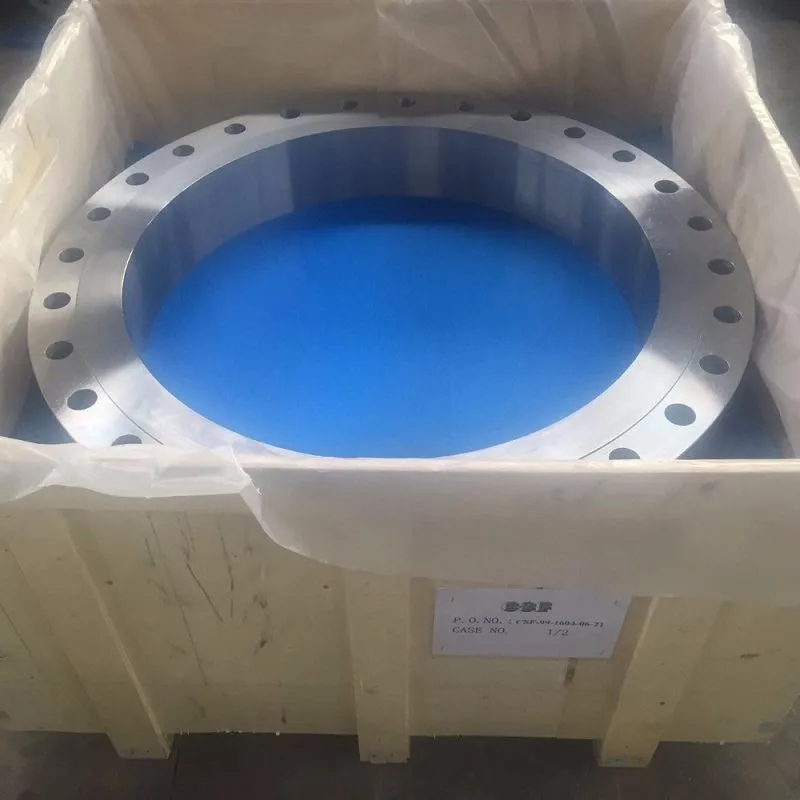
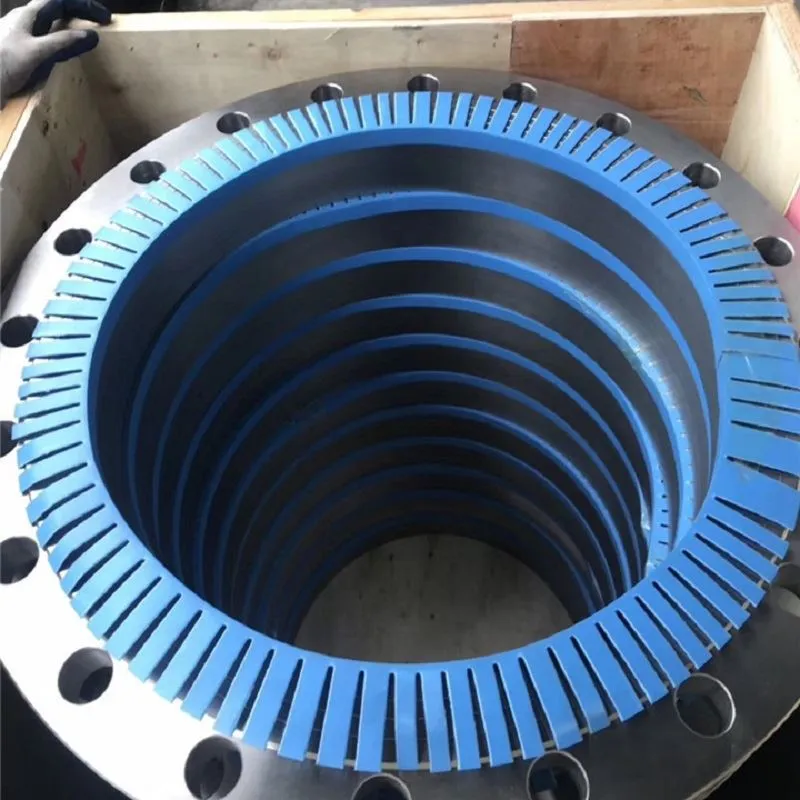
It is important to note here that the concept of “factory” today is not limited only to Russian enterprises. In the context of supply-chain globalization, a specialized manufacturer from friendly countries with a full production cycle can become a reliable partner. A striking example of this approach isShanxi Hongkai Forging Co., Ltd.. It is not just a trading company, but a professional forging flange manufacturer based in Dingxiang County (Shanxi Province, China) - one of the key industrial centers of forging and pressing production in Asia. The company operates three of its own production sites, covering the entire cycle: from primary forging and heat treatment to finishing machining and packaging.
Why is this approach important for the Russian customer in 2026? Because Shanxi Hongkai Forging works as an independent legal entity with the right to direct export, which eliminates unnecessary intermediaries. Their range includes all six major types of forged flanges, including butt weld and flat weld, to strict international standards (DIN, ANSI, ASME) and, critically,according to GOST. The range of manufactured products covers nominal diameters from DN15 to DN4000. This allows us to meet the needs of both small projects and large-scale oil and gas construction projects that require a non-standard size or a special grade of steel. Having our own physical and chemical testing laboratory guarantees that you will receive not just a “piece of metal”, but a product with a confirmed quality certificate, where the chemical composition corresponds to the declared one (St20, 09G2S, stainless steels, etc.). The geographical location in the Dingxiang industrial cluster provides excellent logistics and well-established delivery routes to Russia and the CIS countries.
Second option -large metal warehouse or distributor. They buy railcars from factories (both Russian and foreign, like the one mentioned above) and store them at home. Here you can buy at least one flange today. The price will be 15-30% higher than the factory price, but you save time and logistics. This is ideal for emergency repairs or small construction projects. But here you need to be careful: check that the metal has not been lying in the open air for five years. Rust is the enemy of any fittings, although it is less critical for flanges than for pipes; surface corrosion can hide defects in casting or rolling.
Third option -dubious companies. Office in a business center, one-page website, prices are 20% lower than the market. The scheme is simple: they accept an advance payment, look for cheaper goods (often used or substandard), re-tag them and send them to you. Or they just disappear. In 2025, such cases have become fewer thanks to the digitalization of tax authorities and reputation services, but the risk remains. Especially if we are talking about 100% prepayment.
My advice: if you need a volume greater than 500 kg, go to the factory. Personally. Look at the workshop. Smell the metal (just kidding, but the atmosphere is important). Talk to the technologist. If you are offered an “exclusive discount” for transferring to an individual’s card, run. A real factory (whether in Nizhny Tagil or in Shanxi province) operates under a contract, with VAT, with stamps. In the current economic conditions, the presence of full-fledged accounting and transparent export documentation is a marker of reliability.
Pricing question: what does the cost in rubles depend on?
The price for a type 1 flange according to GOST 12821-80 is not taken from the ceiling. It is formed from several components, and understanding this structure will help you bargain.
- Cost of raw materials.This is the base. Prices for steel grades St20, 09G2S, 12Х18Н10Т are tied to stock exchange quotations and exchange rates. At the beginning of 2026, there is a tendency for prices for ferrous steel to stabilize, but stainless steel is still expensive due to the difficulty of obtaining ferroalloys domestically.
- Labor intensity.Turning, hole drilling, marking. The more precise the tolerances, the more expensive the machines and the qualifications of the workers. Vertically integrated operations such as Shanxi Hongkai Forging can optimize these costs through in-house forging and heat treatment capabilities.
- Logistics.Delivery from Chelyabinsk, Nizhny Tagil or from the port of the Far East (for imported shipments) to Moscow can amount to up to 40% of the final cost. Local factories always have a price advantage for regional consumers, but large foreign manufacturers often compensate for logistics with volume and direct shipment.
- Batch size.Wholesale is wholesale. When ordering from 1 ton, the price per kilogram can be reduced by 10-15% compared to retail.
Approximate price range at the beginning of 2026 (for ferrous metal, St20):
- Flange DN15-Du50: from 300 to 800 rubles per piece (depending on pressure).
- Flange DN80-DN150: from 1500 to 4000 rubles per piece.
- Flange DN200 and higher: from 5,000 rubles to infinity (here it is already calculated individually).
For stainless steel (12Х18Н10Т) multiply these numbers by 3-4. Please remember that the “on site” price often does not include VAT and delivery. Always askcommercial offer with a final price on a turnkey basis.
Compatibility and installation problems: experienced experience
Buying a flange is half the battle. The main thing is to install it correctly. And here a lot of problems arise that are not written about in the instructions. The first problem ispipe misalignment. It is not always possible to ideally join two pipes so that the flanges fit without distortion. Trying to “tighten” the flanges with bolts forcibly creates enormous stress in the metal. Over time, this leads to fatigue failure. Solution? Use expansion joints or reinstall the pipe section. It's cheaper to do it right right away than to redo it after an accident.
The second problem isbolted connection. What bolts should I use? Ordinary studs made of St3 are not suitable for critical components. High-strength bolts (grade 8.8 or higher) are required to match the system pressure. And be sure to use the correct washers and nuts. Installers often save on fasteners by installing what they have on hand. This is a mistake. The flange is held on by bolts. If the bolt leaks or bursts, the flange will depressurize.
The third problem issealing gaskets. Each flange type and medium requires its own gasket. Paronite, rubber, Teflon, metal. For hot water and steam, paronite is a classic. For aggressive environments - fluoroplastic. For high pressures - metal rings. A mistake in choosing a gasket will negate all the benefits of a high-quality flange. By the way, the flange surface must be clean. There should be no rust, dirt or old paint in the contact area with the gasket.
We should also say something about welding. The Type 1 flange is butt welded to the pipe (or with a small gap, depending on the technology). The seam must be of high quality, welded around the entire circumference. Welding defects (undercuts, pores, lack of penetration) are sources of future corrosion and destruction. Require welders to have certificates and carry out visual inspection of seams. In critical cases - x-ray or ultrasound.
Alternatives and the future: is it worth waiting for changes?
There are rumors that GOST 12821-80 will soon be replaced with a new standard harmonized with international standards. Supposedly this will simplify export and import. But let's face it. Nothing will change in the next 5-10 years. The inertia of the industry is too great. Recalculation of projects, retraining of personnel, replacement of equipment - these are trillions of rubles in costs. Nobody will do this voluntarily.
Moreover, in conditions of isolation, Russia would rather tighten domestic standards than adapt to Western ones. Trend onimport substitutionrequires not just copying, but the creation of its own, independent regulatory framework. Therefore, knowledge of GOST 12821-80 will remain a mandatory skill for any process engineer and supplier in the Russian Federation.
What will really change is production technology. Automation of lines, robotic welding, laser cutting - all this will reduce defects and reduce the cost of products. Factories that invest in modernization now (regardless of their geographic location) will dictate market conditions tomorrow. Those who remain on Soviet equipment will gradually move into the niche of the cheap segment with low quality.
Checklist before purchasing: how to avoid getting into trouble
Before you sign an agreement or transfer money, go through this list. It will save your nerves and budget.
- Check the labeling.Each flange must have a clear mark: plant trademark, steel grade, nominal diameter (DN), pressure (PN), batch number. Lack of markings is a red flag.
- Request documents.Quality certificate, certificate of conformity. Check the lot numbers in the documents and on the products. They must match. Make sure the certificate identifies the actual manufacturer and not just the supplier.
- Evaluate the geometry.Take a caliper. Measure the thickness, hole diameter, outer diameter. Compare with GOST data. Deviations must not exceed tolerance limits.
- Inspect the surface.There should be no cracks, shells, sunsets. Small defects are allowed that do not take the dimensions beyond minus tolerances, but it is better to take a product without visible flaws.
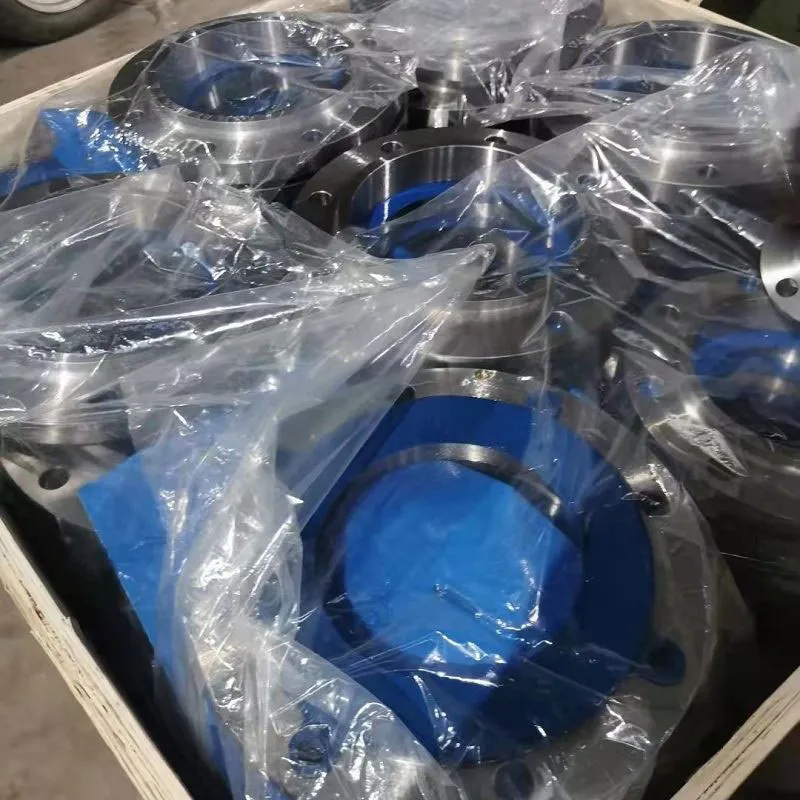
- Check the terms of delivery.Who pays for shipping? How is the product packaged (so as not to get damaged in transit)? What are the shipping times? What to do if a defect is detected?
And one last piece of advice: don’t chase the lowest price. In the world of industrial valvescheap = dangerous. Saving 100 rubles on a flange can result in millions in losses from production downtime or an environmental disaster. Choose a reliable partner, not a random seller.
Conclusion: reliability in every millimeter
Finding a high-quality welded flange in accordance with GOST 12821-80 in modern realities is a task with an asterisk. The market is saturated with supply, but quality supply needs to be filtered. You will have to become a bit of a detective: check documents, study the reputation of the plant (whether it is a Russian giant or a specialized foreign manufacturer with direct export), analyze prices. But the result is worth it. A reliable flange connection is the key to the safety of your facility, be it a boiler house in the Moscow region or an oil pipeline in Yakutia.
Do not forget that behind the dry numbers of sizes and pressures there are human lives and the environment. Treat the choice of components with due respect. And if you find a factory that combines old quality traditions and new production technologies, hold on to it with both hands. Such partners are worth their weight in gold in 2026. Happy shopping and smooth seams!