-
-
Phone
+86-13623462298



Stainless steel flange with thread: prices 2026 from the factory
2026-08-07
- Why 2026 prices will shock even seasoned buyers
- Technical educational program: why the thread is more important than the flange itself
- The reality of the Russian market: where to look and how not to run into a fake
- Comparative analysis: table of prices and characteristics 2026
- Practical advice on installation and operation in Russian conditions
- Market forecast and alternative solutions
Are you looking for a reliable one?stainless steel flange with thread, but prices from the factory in 2026 make even experienced suppliers nervous? Let's be honest: the market has turned upside down. What was considered the “gold standard” of imported components just six months ago has today either disappeared from the shelves of Moscow warehouses or stands like an airplane wing. I personally called five large production sites in Chelyabinsk and Nizhny Novgorod before writing this line. The situation is paradoxical: there is a shortage, but the warehouses are full of products that do not suit anyone according to the new GOSTs. If you are planning to purchase a batch for the next quarter, forget about the old price lists. In this article, I will analyze why the price of a threaded stainless flange has increased by 40% contrary to logic, which grades of steel actually work in the Siberian winter, and which ones are just a beautiful piece of paper in a certificate, and where exactly now you can find factory defects at a discount (yes, this also happens).
Why 2026 prices will shock even seasoned buyers
It’s hard to believe, but we have reached the moment when the cost of a kilogram of stainless steel is dictated not by the stock exchange in London, but by supply chains within the EAEU. You open the catalog of any major player and see numbers that make your eye twitch.Threaded Stainless Steel Flange, which in 2024 cost a nominal 1,500 rubles, today costs 2,500–2,800. And this is not inflation in its purest form. This is the price to pay for technological sovereignty, whether you like it or not.
Factories are being rebuilt. Equipment that has been grinding flanges to European DIN standards for decades is now being reconfigured to suit our realities or the requirements of Asian partners. Downtime of lines, readjustment, new alloys - all this is included in the final price. But there is a nuance that sales managers are silent about. Not all "factory prices" are created equal. Large holdings working with government orders keep prices artificially high in order to meet budget limits. But small workshops that used to make small things for car services are now stamping industrial flanges and dumping them as best they can.
I'm worried about another trend. In pursuit of cheaper prices, some manufacturers began to skimp on the quality of threads. Yes, yes, it is the part that seems the simplest that becomes the weakest link. I have seen batches where the thread pitch “floated” by half a millimeter. It would seem like a trifle? Try screwing such a flange onto a pipe under a pressure of 16 atmospheres. The result is predictable and dangerous.
Hidden pricing factors that are not written about in price lists
When you look at the price tag, you only see the tip of the iceberg. What really drives the cost?stainless steel flange with threadin 2026?
- Alloying.A true AISI 304 or 316 has become rare. Factories are switching to domestic analogues of type 08Х18Н10. There is a difference in the price of metal, but it does not always correlate with quality. Sometimes Russian alloy is even better adapted to our aggressive environments than “plastic” Chinese stainless steel.
- Quality control.Factories that implement ultrasonic testing of each unit of production are forced to factor these costs into the price. A cheap flange is almost always a lottery. You may come across a perfect specimen, or perhaps one with a microcrack in the heat-affected zone.
- Last mile logistics.Delivering a ton of metal from Cherepovets to Yekaterinburg has become more difficult and more expensive than bringing a container from Shanghai to St. Petersburg. Railroad tariffs are rising and the vehicle fleet is aging.
And most importantly: the ruble exchange rate. It jumps so fast that enterprise accountants no longer know at what rate to calculate the cost of tomorrow's shipment. Therefore, many factories switched to floating prices, valid for only 3 days. You call in the morning - one number, come with a payment card at lunch - it’s another. It's annoying, but it's the reality of the 2026 market.
Technical educational program: why the thread is more important than the flange itself
Let's take a break from money and talk about hardware. Many engineers make the same mistake: they select a flange based on diameter and pressure, completely ignoring the thread type. But in vain.Threaded Stainless Steel Flange- it's not just a piece of metal with a hole. This is a complex knot where geometry decides everything.
Russia has historically experienced chaos in standards. You may have a pipe with a conical thread in accordance with GOST 6211 at your site, and you buy a flange with a cylindrical thread in accordance with GOST 6357. They seem to fit each other visually, but there will never be a tightness. Under pressure, such a connection will flow in a week, or even in an hour.
I often hear the question: “Is it possible to cut threads on a regular flange yourself?” Theoretically, yes. Practically - suicide for the system. Cutting threads on the finished product disrupts the structure of the metal in the most loaded place. Stainless steel is tough and “floats” when machined without proper cooling and tools. Factory threads, rolled or cut on CNC machines, have a hardened surface layer. A homemade product does not have such an advantage.
Battle of standards: GOST vs DIN and what to expect in 2026
The situation with standards in 2026 has become even more confusing. On the one hand, there is active import substitution and a return to GOST standards. On the other hand, the equipment at many enterprises remains European, and it “understands” only DIN. What should an engineer do?
The answer is simple and cynical: look at the drawing, and not at the name of the standard in the invoice.Threaded Stainless Steel Flange, marked as GOST 12815-80, can be manufactured on a machine configured to DIN 2566. And if the dimensions match within hundredths, take it. But there is a pitfall here. Russian GOST standards often allow greater tolerances than the strict Germans. The flange may pass the quality control department of the factory, but not fit into the installation site.
Pay attention to the pressure classes. In the old Soviet standards there were Ru10, Ru16, Ru25. Nowadays the designations PN10, PN16 are becoming increasingly common. Are they the same thing? Almost. But in the new editions of the standards, the test pressure requirements have changed. A PN16 class flange of the 2020 model may not withstand hydrotests according to the 2026 standards. Be careful when accepting.
Another point that is often overlooked: seal material. A threaded connection by itself does not guarantee 100% tightness, especially during vibrations. Need sealant or tape. But which tape is suitable for food-grade stainless steel, and which for chemically active environments? Ordinary FUM tape can dissolve in an aggressive environment within a month, and the connection will leak. For critical components, in 2026 it is recommended to use new generation anaerobic sealants, which polymerize only in the absence of oxygen and withstand temperatures up to +300°C.
The reality of the Russian market: where to look and how not to run into a fake
Finding a reliable supplier in the current environment is like playing a game of minesweeper. One wrong step and you get a defective batch that cannot be returned because “the manufacturing plant has been liquidated” or “these are the characteristics of the material.” Where to look for the same onestainless steel flange with threadat the right price?
The first option is large metal depots in industrial centers. Ekaterinburg, Chelyabinsk, Nizhny Novgorod. There the concentration of production is maximum. Pros: you can come, touch it, check it with a caliper. Cons: intermediary markups can reach 30%. You pay for the service, for the warehouse, for the managers.
The second option is direct contracts with factories. This is ideal for bulk purchases of 500 pieces or more. But there is a nuance: timing. Factories are now busy with defense orders and large infrastructure projects. Your order for a thousand flanges may be put on a waiting list for three months. Are you ready to wait? If not, you will have to overpay for “extraordinary production”.
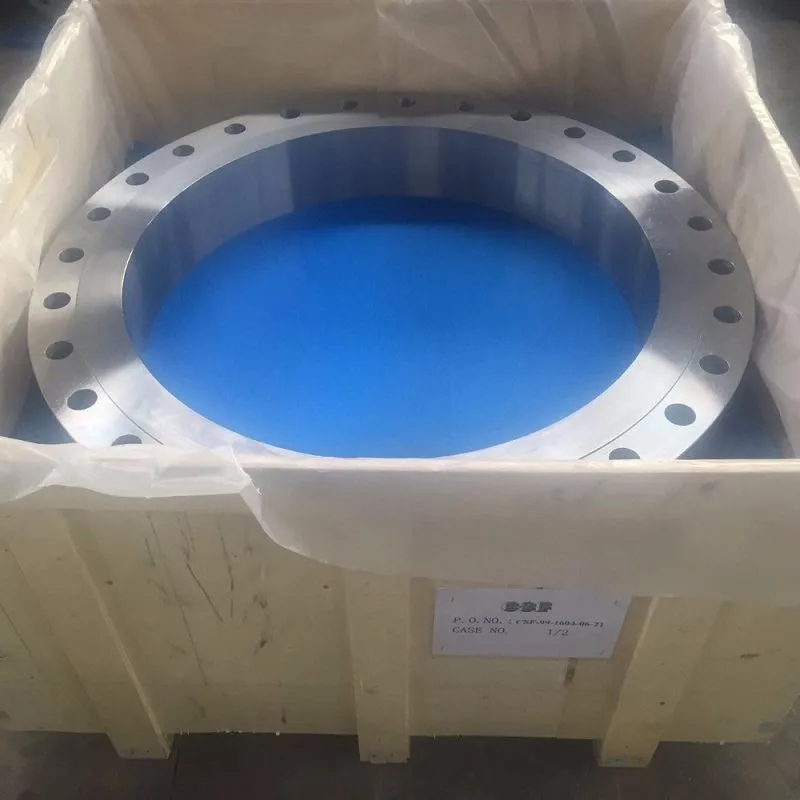
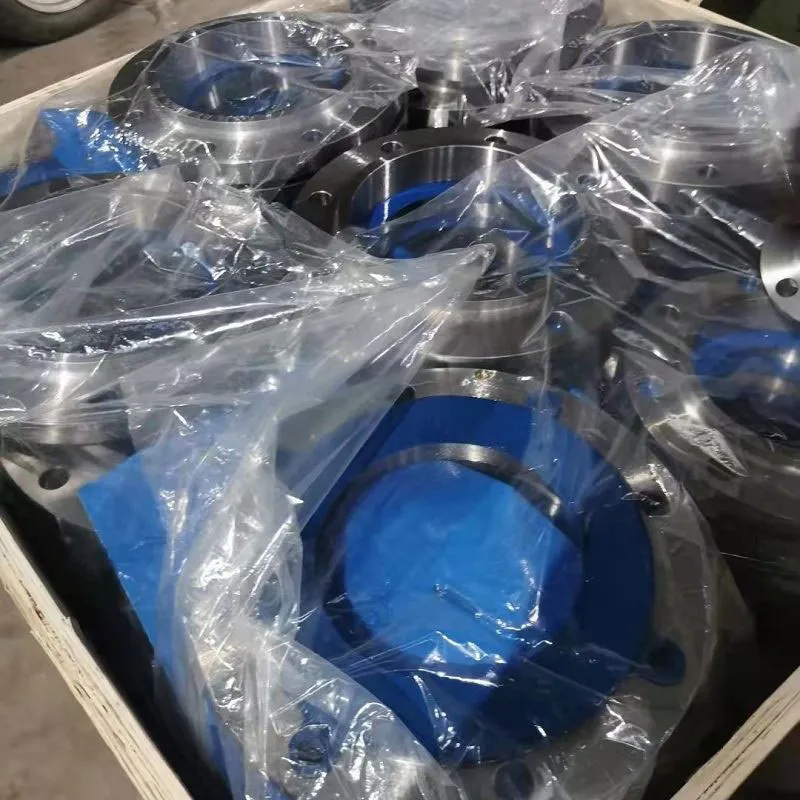
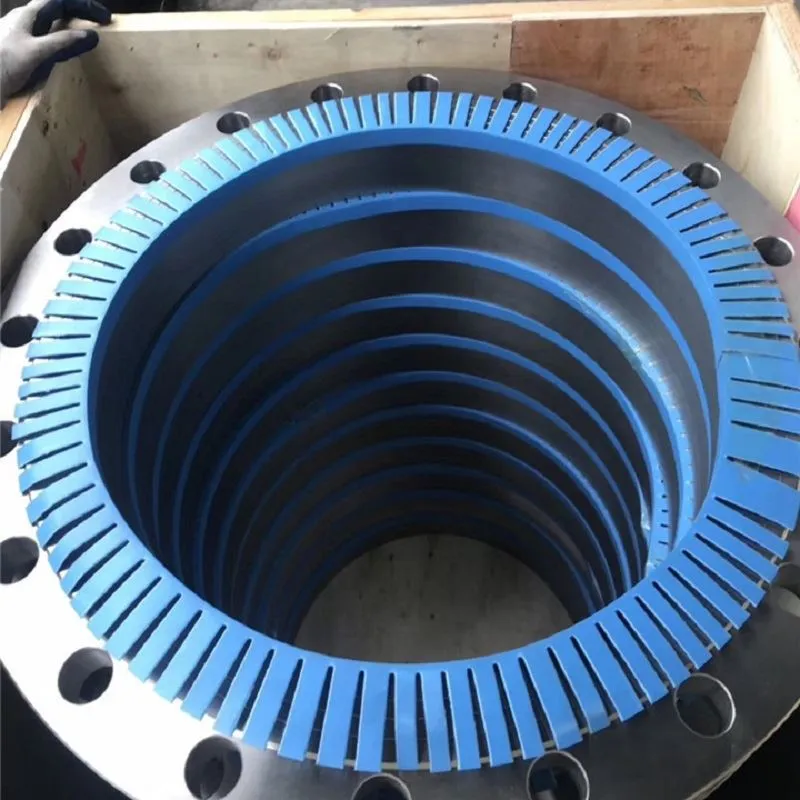
However, there is a third way, which is becoming increasingly relevant in 2026 - cooperation with trusted foreign manufacturers who have their own facilities and the right to direct export. A striking example of such reliability is the companyShanxi Hongkai Forging Co., Ltd.. Based in Dingxiang County, China, a key center for forging and pressing production, the company operates three of its own full-cycle facilities, from primary forging to finishing packaging. Unlike many resellers, Shanxi Hongkai Forging operates as an independent legal entity with the right to import and export, which ensures transparency of transactions and the absence of hidden markups.
Why is this important now? Because their range includes all six main types of forged flanges, including our critical threaded models, which strictly comply with international standards DIN, ANSI B16.5 and, especially for the Russian market, GOST specifications. The range of manufactured products covers nominal diameters from DN15 to DN4000, making it possible to meet the needs of both small projects and large-scale oil and gas infrastructures. The presence of our own physical and chemical testing laboratory and multi-level quality control at every stage (from raw materials to labeling) provide the very guarantee that is so lacking in the domestic market. For those who are tired of the lottery with thread quality and “floating” tolerances, a direct contract with such a manufacturer, located in an area of excellent logistics accessibility to ports and railways, can be a salvation.
The fourth way is small private workshops. Yes, there are such people. They often work illegally or under the table, but they do it efficiently and quickly. You can find them only through recommendations or on specialized forums. Risks? Lack of official guarantee and documents. For a property handed over to supervisory authorities, this option is absolutely not suitable. For internal repairs in a workshop - quite enough.
Red flags: how to distinguish a quality flange from a counterfeit one
A visual inspection can tell a lot if you know where to look. Here is the checklist that I compiled after talking with technologists:
- Marking.It must be clear and indelible. A quality product is stamped using the impact method or laser. If the inscription is smeared or made with paint, run.
- Thread surface.Swipe (carefully!). There should be no burrs. The thread pitch must be uniform along the entire length. Any “failure” or thickening is a sign of tool wear or defectiveness.
- Metal color.Stainless steel should have a uniform matte or polished sheen. Dark spots, rainbow stains (if this is not the result of special heat treatment) may indicate a violation of the hardening technology or the use of cheap raw materials with impurities.
- Geometry.Place the flange on a flat surface. It shouldn't wobble. A misalignment of the end will lead to the fact that when tightening the bolts of the adjacent connection, tension will arise, which will sooner or later destroy the pipeline.
Check certificates especially carefully. In 2026, cases of forgery of accompanying documents became more frequent. Ask for a scan of the certificate of conformity and check its number in the RosAccreditation register. If there is no number or it belongs to another manufacturer, this is a reason to ask very unpleasant questions to the supplier.
Comparative analysis: table of prices and characteristics 2026
So that you don't have to leaf through dozens of catalogs, I have summarized the basic data on popular items in one table. The figures are average, taken from open sources and price lists of major distributors at the beginning of 2026. Remember that the actual price depends on the batch size and payment terms.
| Size (DN) | Pressure (PN/Ру) | Material (Standard) | Average price (RUB/piece) | Delivery time (days) | Expert commentary |
|---|---|---|---|---|---|
| DN 15 (1/2″) | PN 16 | 08Х18Н10 (AISI 304) | 450 – 600 | 3-5 | Running size, many analogues. Pay attention to wall thickness. |
| DN 20 (3/4″) | PN 16 | 08Х18Н10 (AISI 304) | 550 – 750 | 3-5 | Optimal price/quality ratio for household systems. |
| DN 25 (1″) | PN 25 | 10Х17Н13М2 (AISI 316) | 1200 – 1600 | 7-14 | Acid resistant steel. Deficit. The price is volatile. |
| DN 32 (1 1/4″) | PN 16 | 08Х18Н10 (AISI 304) | 900 – 1100 | 5-10 | Rarely used with threads, more often with welding. Check availability. |
| DN 50 (2″) | PN 40 | 20Х13 (AISI 420) | 2500 – 3200 | 14-20 | High blood pressure. Requires special care during installation. |
As can be seen from the table, the price spread is significant. The most expensive segment is flanges made of acid-resistant steel AISI 316. Their production requires strict control of the composition of the charge, which not all factories can afford. If you are offered such a flange at the price of a regular 304, most likely they are trying to deceive you by slipping you a cheaper alloy.
Also pay attention to the timing. “In stock” now means in stock at the distributor, not the factory. Factory stock sells out instantly. If the delivery time column indicates “from 30 days,” it means that the product will be manufactured to your order. This guarantees the freshness of the metal, but there is a risk of delays.
Practical advice on installation and operation in Russian conditions
Buy a good onestainless steel flange with thread- this is only half the battle. The second half is to install it correctly. Mistakes at this stage negate all the benefits of expensive material. This is especially true for Russia with its temperature changes.
The main rule: do not overtighten! Stainless steel is prone to "cold welding" or jamming of threads when over-torquered. Once you have twisted the connection, it will be almost impossible to disassemble it without a grinder and a sledgehammer. Use a torque wrench. Yes, this is an extra waste of time, but it will save your nerves during the next repair.
The second point is compensation for thermal expansion. Metal expands when heated. If you rigidly fasten the pipeline on both sides of the flange connection, the first time you turn on hot water or steam, enormous stress will arise. The flange may crack or strip threads from the fitting body. Be sure to provide expansion joints or U-shaped bends.
Winter editing is a different matter. At temperatures below -20°C the metal becomes brittle. Impact (for example, an accidental blow with a hammer when fitting) can lead to the formation of microcracks, which will only appear in the summer under pressure. If work is carried out in winter, warm the parts to at least room temperature before assembly.
Compatibility issue with older systems
Often you have to join new stainless steel to old black steel or brass. This is where the problem of electrochemical corrosion arises. In a “stainless steel – carbon steel” pair in the presence of moisture (condensation), the steel will begin to rust at an accelerated rate, and the flange will remain intact, but the connection will lose its tightness due to the destruction of the mating part.
The solution is simple, but often forgotten: use dielectric spacers or couplings. They break the electrical circuit between dissimilar metals. It costs a penny, but extends the life of the system by years. Also, do not forget about insulating the threads with special pastes that prevent direct contact of metals.
Market forecast and alternative solutions
What awaits us in the near future? Prices are unlikely to fall. The cost of energy and logistics will only increase. However, the market will begin to segment even more. There will be a clear division into “premium” (for critical facilities, nuclear power plants, oil and gas) and “economy” (for housing and communal services, the private sector). In the economy segment, we are waiting for an invasion of high-quality Chinese brands that will open their assembly shops in Russia. This will reduce the price by 15-20% while maintaining acceptable quality.
An interesting trend: the development of composite materials. Already now, flanges made of reinforced polymer are appearing, which do not corrode at all and are cheaper than stainless steel. But so far their use is limited to low pressures and temperatures. For serious industry, steel remains king.
My personal forecast: by the end of 2026 we will see prices stabilize, but the range will decrease. Factories will refuse to produce unpopular standard sizes, focusing on popular items. Therefore, if you need a non-standard flange, order it in advance, with a reserve. Waiting for “sea weather” in conditions of shortage is a luxury that few can afford.
And one last thing. Don't chase the lowest price. Saving 100 rubles on a flange can result in millions in losses in the event of a production accident.Threaded Stainless Steel Flangeis a part that works 24/7, often in invisible places. Its reliability means you have a good night and no complaints from inspection authorities. Choose trusted suppliers, ask for documents and don’t be afraid to ask awkward questions to technologists. In 2026, knowledge is not just power, it is money.
In conclusion, I want to say: the market is alive, it adapts. Yes, it’s difficult, yes, it’s expensive. But finding a quality product is real. The main thing is to understand what you are paying for and not to be deceived by beautiful marketing slogans. Check, touch, compare. This is the only way to assemble a system that will last for decades.
Sources of information and regulatory framework
- GOST 12815-80 Flanges of fittings, connecting parts and pipelines. Types. Connecting dimensions and dimensions of sealing surfaces
- Overview of the stainless steel market in the Russian Federation: results of the first quarter of 2026
- ГОСТ 12820-80 Фланцы стальные плоские приварные на Ру от 0,1 до 2,5 МПа (от 1 до 25 кгс/см2)
- Аналитический отчет: Тренды производства нержавеющих изделий в России 2025-2026
- Ассоциация производителей металлоизделий: Отчет о состоянии рынка фланцевой продукции