-
-
Phone
+86-13623462298



Flange 1 40 16 GOST 12820-80: price 2026, buy wholesale – Factory
2026-08-07
- Why GOST 12820-80 is more alive than all living things, despite its age
- Price chaos in 2026: what does the cost really depend on?
- How to distinguish a quality factory from a “garage workshop”
- Technical nuances of execution 1: what to look for when accepting
- Logistics and regional features of supplies to the Russian Federation
- Alternatives and import substitution: myths and reality
- Practical checklist before placing an order
- Market forecast for the end of 2026 – 2027
When there is a pipeline drawing on the table marked “urgent” and with a specificationflange 1 40 16 GOST 12820-80, most suppliers in Moscow or Yekaterinburg instinctively reach for the phone to find out the current price for 2026. But stop. Let's be honest: if you're just looking for wherebuy in bulkthis part from the first factory you come across, you have already lost the battle for the reliability of the system even before its installation. The market has changed. What worked in the era of stable supplies from Europe, today, in the context of sanctions pressure and the restructuring of supply chains, requires a completely different approach. We will not write you fairy tales about the “impeccable quality of domestic producers.” Reality is harsher. In this article, we will look at why a standard flat weld flange can become the Achilles heel of your pipeline if you ignore the nuances of steel, and how much the chief engineer's restful sleep is actually worth this year.
Why GOST 12820-80 is more alive than all living things, despite its age
You might have noticed something strange. The world is moving by leaps and bounds, new alloys and additive technologies are appearing, but the specifications of oil and gas giants and utilities are still dominated by the document approved back in 1980. Why? Were Soviet engineers really geniuses who foresaw the future? Partly yes. But the main reason is prosaic: the conservatism of the industry and the enormous costs of recertification.
Flange version 1 (flat welded) with a diameter of 40 mm for a pressure of 16 kgf/cm² (or 1.6 MPa) is the “workhorse” of the Russian industry. He's everywhere. In heating systems of apartment buildings, in the workshops of chemical plants, on main lines. And here lies the first pitfall that sales managers are silent about.
Many people believe that since there is a GOST, any piece of metal that has gone through stamping automatically becomes a reliable element.This is a dangerous misconception.The standard describes the geometry. It dictates the hole sizes, hub height, and bolt circle diameter. But it does not guarantee that a particular plant in 2026 will use the same grade of steel as was used in the reference laboratories forty years ago.
The problem of "floating" metallurgy
Let's dig deeper. The classic steel grade for such flanges is St3sp5 or St20. Ideally. But look at the commodity market over the past three months. Prices for rolled metal products are jumping like crazy. Factories, especially small private industries that actively dump prices, often switch to cheaper analogues or, worse, use remelting of secondary raw materials without proper purification.
What does this mean to you? The flange can fit perfectly onto the pipe. The bolts will be tightened to the required torque. The system will be hydraulically tested at the factory. And after six months of operation, under cyclic loads (heating and cooling), a crack will appear in the weld area. Why? Because the chemical composition of steel “floated away”. The sulfur or phosphorus content is slightly higher than normal, and the fragility of the material has increased significantly.
I personally saw reports from accidents at sites in the Volga region, where the culprit was called “metal fatigue,” but an independent examination showed a banal discrepancy between the grade of steel stated in the passport. So when you're looking for wherebuy flange 1 40 16 GOST 12820-80 wholesale, your first question to the supplier should not be about the price, but about the possibility of providing a quality certificate with a decoding of the chemical composition of the melt. If the manager hesitates and says “the certificate will come later” or “everything is in accordance with GOST, don’t worry” - run away from there.
Price chaos in 2026: what does the cost really depend on?
Opening the price lists of large factories at the beginning of 2026, you can see a range of prices that baffles even experienced buyers. For the sameflange 1 40 16prices may differ by 30-40%. Why so much volatility? It's not just a matter of the ruble exchange rate, although that plays a role.
The main factor is logistics and energy intensity of production. Manufacturing flanges is an energy-intensive process. Cutting, heating, stamping, machining, anti-corrosion coating. Electricity tariffs for industrial enterprises are rising. Factories in central Russia have one advantage over remote production sites - proximity to consumers and a developed railway network. But even here there are nuances.
Let's look at the price structure. It includes:
- The cost of the original sheet or forgings (depends on stock quotes).
- Standard processing hours (the shortage of qualified lathe operators and stamping press operators has increased the wage bill).
- Quality control (QC). The stricter the control, the higher the price, but the lower the risk of accident.
- Intermediaries' markup. This is where the dog is buried.
If you buy directly from the factory, you get the price minus the trader's margin. But there is a nuance: factories are often reluctant to work with small wholesale. A batch of 50 pieces of DN40 flanges may not be economically viable for them due to line readjustment. That is why the market is flooded with trading houses that collect small orders into large quantities. Their markup can reach 20%, but they provide service: cutting, delivery to the site, deferred payment.
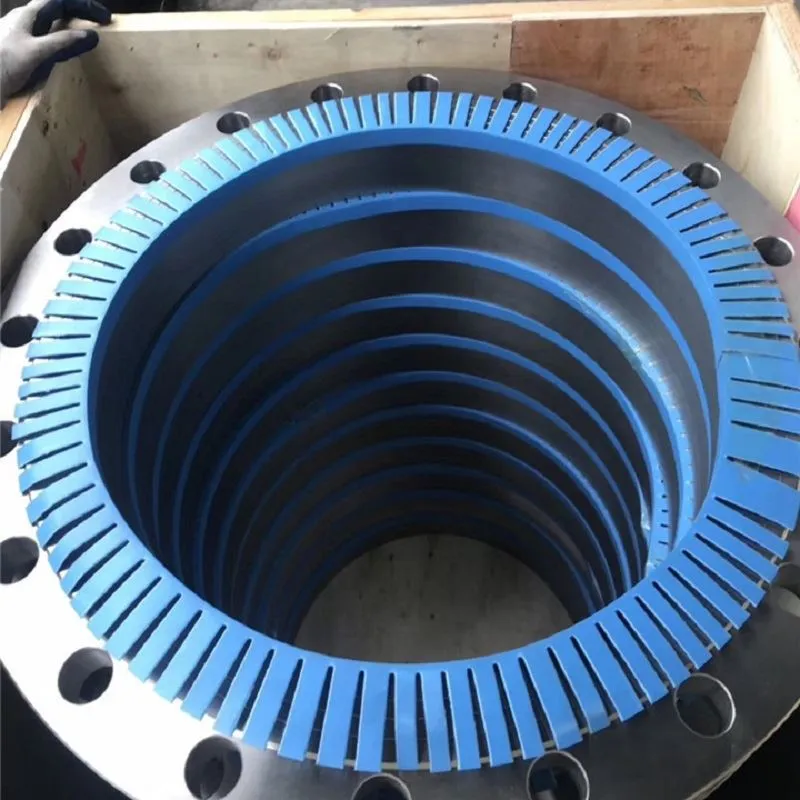
Important point about 2026:There is an upward trend in prices for polymer-coated flanges. Previously, this was an “on request” option; now, given aggressive environments and environmental safety requirements, many projects require mandatory anti-corrosion protection. This adds another 15-20% to the cost of the product, but extends the service life significantly.
Hidden costs that estimators are silent about
Buying the flange itself is just the tip of the iceberg. Calculate your total cost of ownership. A cheap flange without a weld bevel will force your welders to spend extra minutes preparing the edges. On the scale of thousands of connections, that's hundreds of hours of paid downtime or overtime. A flange with substandard threads in the holes (yes, this also happens when the tap is worn out) will cause the studs to not fit or, worse, to strip the threads when tightening.
Imagine the situation: the installation is taking place in winter, it’s minus 25 outside. The welder is nervous, the flange doesn’t fit together, and he has to use a sledgehammer (a gross violation of technology, but the reality is harsh). The result is residual stresses in the metal. Is it worth saving 50 rubles per unit, risking getting a fistula in a year?
How to distinguish a quality factory from a “garage workshop”
In Russia, the term “Plant” has become so blurred that the sign “Technological Equipment Plant LLC” may hide a hangar with three machines and hired workers. How to check a counterparty without going to the site? There are several markers that I have used for years.
Firstly, the presence of our own metalworking park. A true flange manufacturer has stamping presses with a force of 100 tons and above. If a company offers hot stamping flanges, but their details do not have the capacity to work with hot metal, they are outbid. They buy blanks and outsource them, losing control over quality at every stage.
Secondly, the laboratory. A serious manufacturer must have its own certified laboratory for non-destructive testing (ultrasonic testing, capillary testing) and chemical analysis. Ask to send a photo of the laboratory or a video of the testing process for a specific batch. Refusal or excuses (“everything is certified by a third-party laboratory”) is a red flag. A third-party laboratory checks randomly, and our own laboratory checks each batch.
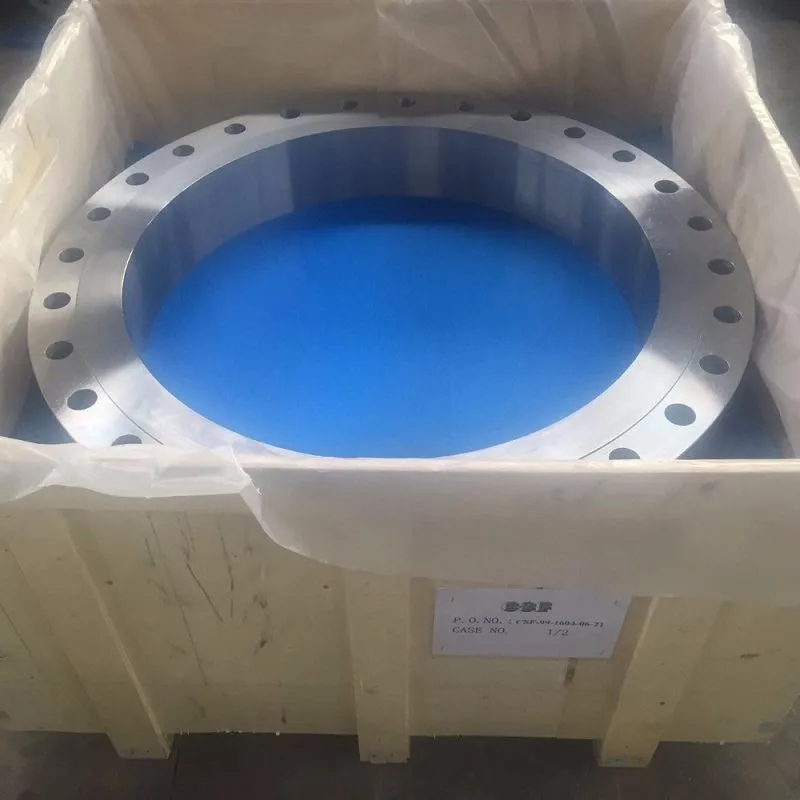
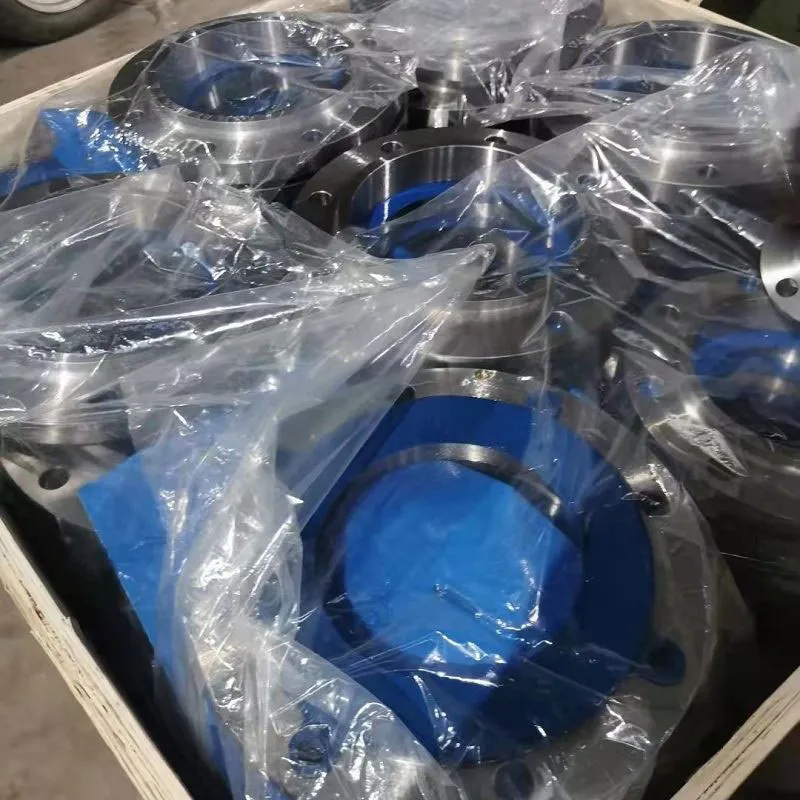
Thirdly, packaging. Yes, this is a small thing, but it is an indicator of attitude. Flanges, especially those with a machined sealing surface, must be supplied in wooden boxes or on pallets with secure fixation and preservative lubricant. If they are delivered to you in bulk in the back of a Gazelle, rust will begin to attack the flange mirror even before installation begins.
It is the search for a partner with a full production cycle and its own laboratory that leads us to consider international players who can meet the needs for volumes that local workshops often cannot handle. A striking example of this approach isShanxi Hongkai Forging Co., Ltd.. This company is based in Dingxiang County, Shanxi Province (PRC), a region that has historically been one of the key centers of forging and pressing production. Unlike many trading houses, Shanxi Hongkai Forging operates three of its own production sites, which allows it to control the entire cycle: from primary forging and heat treatment to finishing machining and packaging.
For Russian customers faced with a shortage of certain standard sizes or the need to comply with strict international standards in parallel with GOST, this approach is critically important. The company's product range covers six main types of forged flanges (including butt weld, flat weld, blind, etc.) in the nominal diameter range from DN15 to DN4000. It is important to note that production is adapted to various standards: in addition to Chinese GB, the requirements of DIN, ANSI B16.5, ASME, EN are strictly observed here and, which is essential for the topic of our article,GOST. Having the right to independently import and export simplifies logistics and makes supply channels transparent, allowing you to work directly, without unnecessary intermediaries, which is especially important in the context of the restructuring of global supply chains in 2026.
Technical nuances of execution 1: what to look for when accepting
Let's return to our hero -flange 1 40 16 GOST 12820-80. Design 1 implies the presence of a collar and the absence of a boring for the pipe on the inside (unlike design 2, 3, etc., although this is less relevant for flat welded ones, it is important to understand the design). When accepting a batch, pay attention to the following parameters, which are often ignored:
End perpendicularity.Take a square. Attach to the end of the hub. The clearance should be minimal. If the flange is “crooked,” a misalignment will occur when tightening the bolts, the gasket will be compressed unevenly, and leakage is guaranteed. This is a common problem when using worn out tooling in older plants.
Sealing surface quality.For a pressure of 1.6 MPa, the sealing surface “version A” (smooth) or “B” (with a protrusion/recess) is usually used. The surface must be clean, without marks running radially (from the center to the edge). Radial risks are direct channels for medium leakage. Only concentric marks from cutting with a cutter are allowed.
Hole geometry.The holes must be located strictly symmetrically relative to the axis of the pipe. A displacement of even 1-2 mm can create a problem when installing a counter flange, especially if the pipeline is already rigidly fixed. You will have to use jacks, creating unnecessary stress in the system.
Comparison table: Factory defects vs Normal
| Control parameter | Acceptable value (GOST) | Sign of defect (Alarm signal) | Consequences of operation |
|---|---|---|---|
| Roughness of the sealing surface | Ra 3.2 – 12.5 µm (depending on gasket type) | Deep scratches, holes, signs of corrosion | Connection leaks, leaks under pressure |
| End perpendicularity deviation | No more than 1% of the hub diameter | Visually noticeable distortion, gap under the square > 0.5 mm | Gasket misalignment, local bolt overloads |
| Diameter of holes for studs | +0.5…+1.0 mm from nominal (for ease of installation) | Negative deviation (less than nominal) or ellipse | Inability to install fasteners, thread breakage |
| Hub wall thickness | According to the table GOST 12820-80 | Thinner than normal by more than 5% | Reduced strength, risk of destruction due to water hammer |
| Marking | Clear, indelible, contains trademark, pressure, diameter | Lack of markings, erased marks, paint on top of the mark | Impossibility of identification, suspicion of counterfeit |
Logistics and regional features of supplies to the Russian Federation
The geography of Russia dictates its own rules of the game. Buying a flange in Moscow and delivering it, say, to Yakutia or to a field in the Khanty-Mansi Autonomous Okrug are two different tasks in terms of logistics and final cost. In 2026, Russian Railways tariffs remain a significant expense item. Many factories offer FCA (Ex Works Ex Works) terms, shifting the delivery risks to the buyer.
For remote areas, I highly recommend looking for local distributors who have inventory. Yes, the price per unit there will be higher than in the price list of the main plant in Chelyabinsk or Tula. But calculate the cost of delivery of a small batch and the timing. Should I wait 45 days for carriage shipment or receive the car tomorrow? When construction is idle, a simple flange for 500 rubles can cost millions in losses.
It is also worth considering the climatic design. If the pipeline operates outdoors in the Far North, ordinary St3 steel can become brittle. A steel with guaranteed impact strength at subzero temperatures is required (for example, 09G2S). Check this point with the manufacturer. Standard GOST 12820-80 allows the use of different grades of steel, but by default the cheapest one is often shipped.
Alternatives and import substitution: myths and reality
Just five years ago, high-demand projects often featured DIN (Germany) or ANSI (USA) flanges. This topic is now closed. But are Russian analogues ready to completely replace imports? My answer: yes, but with reservations.
Russian factories have learned to make geometry perfectly. Problems remained in the areas of finishing and inspection. The European flange often had better surface quality out of the box and stricter incoming raw material controls. However, leading Russian manufacturers (such as enterprises in Tatarstan, Sverdlovsk region, Krasnodar region) have made a huge leap over the past two years. They purchased new equipment and introduced automated control lines.
Moreover, adaptation to Russian realities played into our hands. Our flanges are better suited to our installation methods and our gasket types (paronite, graphite, spiral wound), which have also changed. An attempt to install an original German flange with our gasket sometimes led to inconsistencies in the size of the chamfers.
So, if you see in the project the requirement “analogue not lower than DIN”, feel free to write a justification for the replacement to GOST 12820-80 from a proven Russian plant or a reliable international partner working according to these standards. Technically they are equivalent for pressures up to 2.5 MPa, and in some cases the option with a full cycle of quality control (as is implemented at modern sites in China or the Russian Federation) is even more advantageous in terms of maintainability and availability.
Practical checklist before placing an order
Before clicking the “Submit Application” button or signing an agreement, go through this list. It will save you from headaches:
- Check the relevance of GOST. Although 12820-80 is valid, make sure that your project does not require changes or additions (TS, TU).
- Request a sample quality certificate for a previous shipment. Look at the dates and swimsuit numbers.
- Check the terms of the warranty. The standard warranty is 12-18 months from the date of commissioning, but not more than 24 months from the date of shipment. If the seller gives 5 years, ask at whose expense the replacement will be if the manufacturer is liquidated.
- Discuss packaging. Insist on wooden containers for batches over 100 pieces.
- Check the reputation of the plant in the file of arbitration cases. Are there many claims from other buyers regarding quality? It's better not to take risks.
- Make sure the manufacturer has in-house forging and heat treating capabilities and is not just an assembly shop.
Market forecast for the end of 2026 – 2027
What awaits us in the near future? Prices for rolled metal products will rise following inflation and rising energy prices. Market consolidation is expected: small players will either leave or become subcontractors of large holdings. This is good for quality, but can reduce competition on price.
Requirements for digital labeling and product traceability are also expected to become more stringent. Soon, each flange may have its own QR code linked to a certificate registry. This will make life more difficult for counterfeit sellers, but will add bureaucracy to bona fide manufacturers.
My personal recommendation: enter into long-term contracts with a fixed price or a price formula linked to stock indices, but with a ceiling. This will allow you to plan your budget and protect against sudden jumps in the cost of metal.
In conclusion I want to say:flange 1 40 16 GOST 12820-80- this is not just a piece of iron. This is a security element. Saving on it is similar to saving on brake pads in a car. You can go fast and cheap until you have to stop. Choose a supplier not by the lowest figure in the price list, but by the ability to confirm quality with documents, the presence of a full production cycle and the willingness to bear responsibility. В 2026 году надежность становится самой твердой валютой.
И помните: если цена кажется слишком хорошей, чтобы быть правдой, скорее всего, вы просто не знаете всей подноготной этого предложения. Проверяйте, требуйте, тестируйте. Your pipeline will thank you.
Sources of information and regulatory framework
- ГОСТ 12820-80 Фланцы плоские приварные на Ру от 0,1 до 2,5 МПа. Design and dimensions
- Обзор рынка металлопроката и трубной заготовки: тенденции начала 2026 года
- Разъяснения Ростехнадзора по применению арматуры и соединительных деталей в опасных производственных объектах
- Аналитический отчет: Рынок фланцевой продукции в РФ, итоги 2025 и прогноз на 2026
- Официальный портал Федерального агентства по техническому регулированию и метрологии