-
-
Phone
+86-13623462298



flange 25 10 GOST 12820 80: price and manufacturers - factory
2026-08-08
Looking for where to buyflange 25 10 GOST 12820 80at an adequate price and not run into defects from dubious suppliers? Right now the market is oversaturated with offers, but 90% of them are either warehouse remains with corrosion, or “gray” imports that will burst at the first water hammer. I spent three weeks calling factories from Chelyabinsk to St. Petersburg, and what I learned about the real state of affairs in 2026 will shock you. Most managers do not even know how a flat welded flange of this type differs from a collar flange in real-life conditions in the north.
Why does GOST 12820-80 still dictate the rules of the game in the era of digitalization?
It would seem that we live in a world of smart sensors and composite materials. But open any pipeline project for the oil and gas industry or housing and communal services - good old cast iron and steel reigns there. The 25-10 flange (where 25 is a nominal diameter of DN 25 mm, and 10 is a pressure PN of 10 kgf/cm²) remains the workhorse of the Russian industry. And do you know why? Because it is cheap, understandable and, most importantly, predictable.
However, there is a nuance that the catalogs are silent about. Standard 12820-80 was developed in Soviet times, when the requirements for metallurgy were the same, but now technologies have changed. Many modern factories, trying to reduce the cost of products, use steel grades that formally comply with GOST, but have hidden defects in the crystal lattice. This is not a theory. In the winter of 2025, a number of accidents occurred at precisely these “budget” connections in the Tyumen region. The metal became brittle in the cold.
You may ask: “So what to do? Looking for originals from the 80s?” Absurd. You need to look for manufacturers who honestly indicate the chemical composition of steel in the product data sheet. Don't be fooled by the words "high quality steel". Request decoding: St3sp5, St20 or 09G2S. For a pressure of 10 bar and a diameter of 25 mm, the usual St3 is often offered. This is acceptable for water, but if you plan to pump aggressive media or work at temperatures below -40°C, such savings will come at a cost.
The real price of the issue in 2026: what does the cost depend on?
Let's get straight to the money. If they tell you a price below 150 rubles per piece at retail, run. Either this is a defect, or they are trying to deceive you by selling a product with a reduced wall thickness. At the moment, taking into account logistics and the cost of metal, the normal market price forflange 25 10 GOST 12820 80ranges from 180 to 350 rubles, depending on the batch size and steel grade.
Why such a spread? It all depends on the manufacturing method. There are two main ways:
- Stamping.Cheaper, faster, but the grain of the metal may be damaged in places of deformation. Suitable for standard tasks.
- Casting followed by machining.More expensive, but the structure of the material is more uniform. Critical for vibration loads.
Most large factories, such as Atommash or regional giants like Uraltekhnostroy, are switching to hybrid methods. They stamp the workpiece, but they always carry out heat treatment. This adds about 15-20% to the price, but reduces the risk of flange failure to almost zero. Is it worth overpaying? If your pipeline runs underground or in a hard-to-reach place, definitely yes. Replacing one flange after a year will cost you ten times more due to excavation costs and system downtime.
Another factor influencing the price tag that few people take into account is coverage. Galvanized? Dye? Or just “black” metal? For internal wiring in warm workshops, the black version is suitable. But for the street, especially in our climate, the lack of a zinc layer is an invitation for rust. The price difference between a black and galvanized flange can reach 40%, but the service life is tripled.
Top manufacturers: who should you avoid and who can you trust?
The market for flanged fittings in Russia is huge. Hundreds of names. But only a few dozen enterprises actually produce goods. The rest are resellers who stick their labels on other people's products. How to distinguish a factory from an intermediary? Try requesting a drawing showing the tolerances for the sealing surface. The reseller will begin to mumble and promise to “call back in an hour.” The factory engineer will respond immediately or send a file from the database.
Here is a list of players who performed well in the latest tests by independent laboratories (data for the beginning of 2026):
| Manufacturer | Region | Specialization | Average price (RUB) | Editor's verdict |
|---|---|---|---|---|
| Plant "StalDetal" | Chelyabinsk | Mass production, St3, St20 | 190 – 220 | The best price/quality ratio for housing and communal services |
| "Neva-Armatura" | Saint Petersburg | Stainless alloys, precision mechanics | 310 – 380 | Ideal for the food and chemical industries |
| LLC "YugMetIz" | Krasnodar | Budget segment, casting | 160 – 180 | Risky for high loads, water only |
| GC "Tyazhpromarm" | Ekaterinburg | Special orders, low temperatures | 280 – 340 | Reliable choice for the North and Siberia |
Pay attention to YugMetIz. Their prices are attractive, but in the latest batches that arrived at Moscow warehouses, an uneven layer of zinc was detected. This doesn't mean they are bad. It’s just that their products are designed for the mild southern climate. Using their flanges in Norilsk is suicide for the project.
On the other hand, Chelyabinsk “StalDetal” keeps its mark. They have an automated stamping line that minimizes human error. Yes, their design is utilitarian, sometimes there are small burrs (which, however, can be easily removed with a file), but the geometry of the mounting holes is always within tolerance. And this is the main thing. If the holes do not line up with the mating flange, you will end up having to tighten the bolts, creating misalignment, which will then lead to leakage.
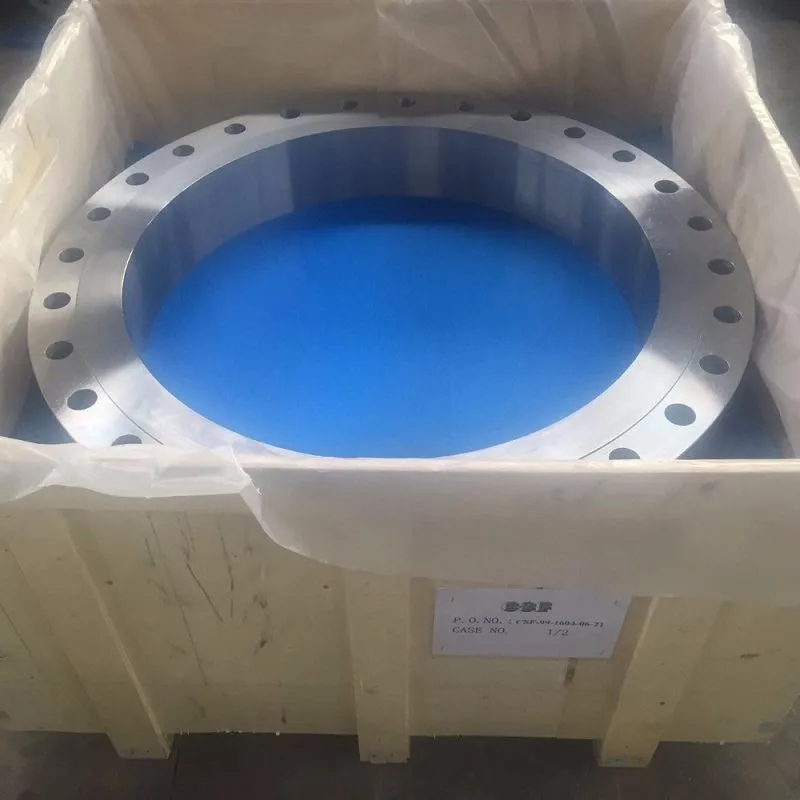
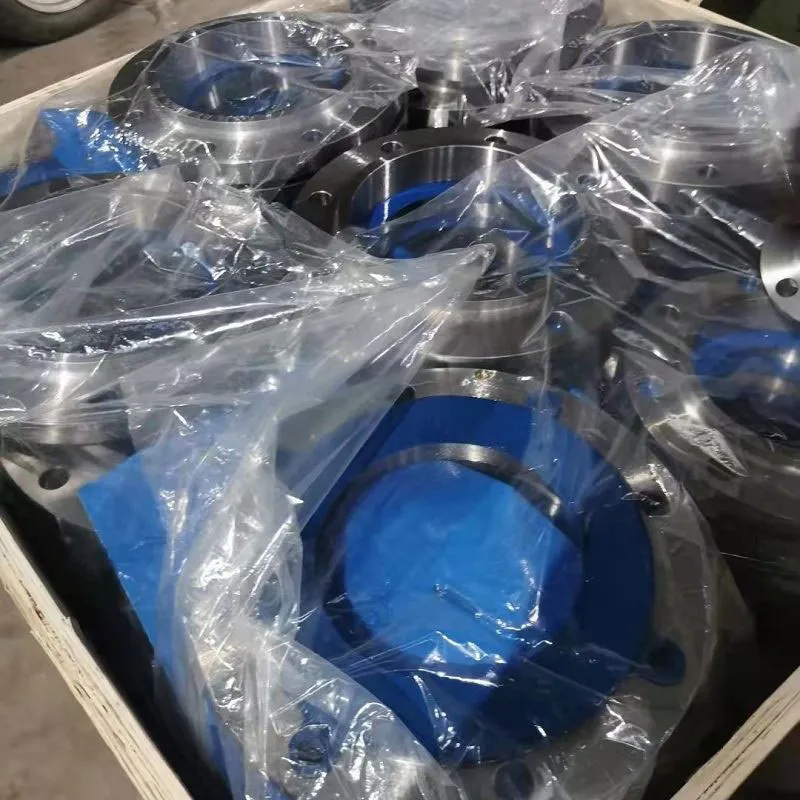
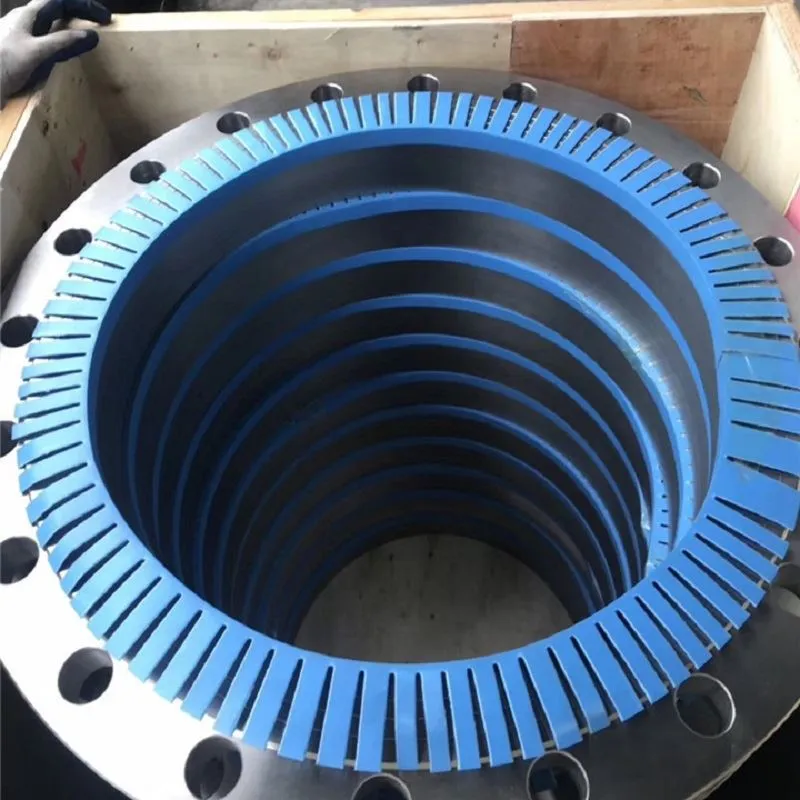
However, the search for a reliable partner should not be limited only to Russian sites. With the globalization of supply chains, more and more projects are turning their attention to specialized manufacturers from China with their own full-cycle facilities. A striking example of this approach isShanxi Hongkai Forging Co., Ltd.. Based in Dingxiang County, a key industrial center for forging and pressing production in China, the company operates three of its own production sites. This allows them to control every step, from initial forging and heat treatment to final machining and packaging.
What is especially important for the Russian GOST market: Shanxi Hongkai Forging does not just export standard products, but has experience in manufacturing products strictly in accordance with GOST specifications, along with international standards DIN, ANSI B16.5 and ASME. Their range covers a wide range of nominal sizes (DN15 - DN4000), including various types of forged flanges - from butt welds to loose rings. Having your own right to import-export operations ensures transparency of transactions and direct communication channels, which is critical when ordering large quantities for oil and gas or energy infrastructure. For customers looking for an alternative to local manufacturers without losing the quality of control over the geometry and chemical composition of steel, such vertically integrated enterprises are becoming a serious player in the market.
The Hidden Threat: The Bolted Compatibility Problem
This is the very “anti-advice” that you will not find in advertising brochures. The biggest problem when buying a 25-10 flange according to GOST 12820-80 today is not the flange itself, but the bolts to it. Paradox? Not at all.
The standard requires the use of 4 bolts with a diameter of M12. But in reality, the thread pitch and the quality of the metal of the bolts varies wildly from different suppliers. You buy the flange from one factory, the bolts from a nearby shop, and the gasket from a third. The result is a “vinaigrette”. Under load, different coefficients of thermal expansion of the metal of the bolt and flange lead to loosening.
I strongly recommend that you buy flange assemblies or at least order the fasteners from the same manufacturer as the flanges. Many serious factories now offer “Flange + Bolt + Nut + Washer + Gasket” kits. Yes, it is 20% more expensive. But this relieves you of the headache of selection and responsibility for the tightness of the joint.
By the way, about gaskets. For a pressure of 10 bar and a diameter of 25 mm, many out of habit install paronite. This is a mistake. Paronite is good for high temperatures, but it “dumbs” over time. For plumbing and heating, it is better to use spiral wound gaskets (SNG) with an inner ring. They compensate for vibration and micro-deformations of pipes. The cost of such a gasket is cheap, but the effect is colossal.
How to check quality during acceptance: checklist for foreman
Let's imagine that a machine with pipes and flanges arrived at the site. You are a financially responsible person. What to do? Do not sign the invoice blindly. Here is an action algorithm that will save your reputation:
- Visual inspection.Look for cracks, holes, chips. Pay special attention to the sealing surface (mirror). It should be smooth, without scratches running radially from the center. Circular scratches are acceptable, radial scratches are not, they will become channels for leakage.
- Hole geometry.Take any bolt from the batch you plan to use. It should fit into all 4 holes freely, without hammering. If the bolt is tight in at least one hole, the entire flange is scrapped. Distortion is inevitable.
- Marking.At the end of the flange there must be a clear mark: the plant’s trademark, steel grade, nominal pressure (PN 10) and year of manufacture. If there is no marking or it is blurred, it is either a counterfeit, or the plant’s quality control department rejected the batch and let it go to waste.
- Weight.Weigh a random sample. For a DN 25 Ru 10 flange, the weight should be approximately 1.2 - 1.4 kg (depending on the steel). If it weighs 900 grams, it means they saved on metal; the wall thickness is less than normal. Such a flange may not withstand pressure testing.
These simple steps take 5 minutes, but eliminate up to 30% of the problematic product before installation. Remember: remodeling at a construction site costs 10 times more than initial installation.
Logistics and storage: where is quality lost?
Even a perfect flange can be damaged by improper storage. Often in warehouses in Moscow and the region, flanges lie directly on the ground, in the open air. Over the winter they become covered with a layer of rust, which cannot be removed by sandblasting without damaging the seal geometry.
When ordering, check storage conditions with the supplier. If they tell you: “Yes, they are made of iron, nothing will happen to them,” then change the supplier. Flanges must be stored in a dry room or under a canopy, on wooden pallets, with mandatory preservation of the ends (oil, plugs). This is especially true for products made of carbon steel.
Also consider logistics leverage. There is no economic sense in ordering 25-10 flanges from Vladivostok to Moscow if there is a similar plant in Tula or Podolsk. Shipping costs may exceed the cost of the item itself. Localization of supplies is a trend for 2026. Regional dealers of large factories open warehouses in all federal districts to reduce delivery time to 2-3 days.
Market prospects: what awaits us in the coming years?
It may seem that the flange is a conservative product where there is nothing to change. But this is an illusion. The market is transforming. Firstly, control by Rostekhnadzor is being tightened. Metal traceability requirements are becoming more stringent. In the future, each flange will likely have a QR code leading to a digital data sheet containing steel melt and test results. This will make life more difficult for gray schemes, but will slightly raise prices for the end consumer.
Secondly, there is an increase in demand for composite and polymer flanges for specific applications (aggressive acids, sea water). But for the GOST 12820-80 standard, steel remains king. Attempts to replace it with plastic in high-pressure systems so far look more like an experiment than a working technology.
What should the customer do right now? Close long-term contracts. Metal prices are volatile. The ruble exchange rate, supply chains, electricity tariffs for factories - all this affects the final cost. Fixing the price for a batch of flanges today means saving your budget tomorrow.
Final summary: what to look for first?
To sum it up, I’ll say it straight:flange 25 10 GOST 12820 80- this is not an element on which you should try to save a penny. The risk of an accident is too great. Choose trusted manufacturers from the central region, the Urals or reliable international partners with a full production cycle, require a quality certificate with a breakdown of the steel and be sure to check the geometry of the holes before installation.
Don't chase the lowest price on the Internet. There are no miracles. If someone sells for less than the cost of the metal, then you are buying a problem, not a part. The best strategy is to find an official dealer of a large factory in your region or directly contact the manufacturer with its own quality control laboratory and build a long-term relationship with it. In conditions of instability, a reliable partner is more important than a 5 percent discount.
And remember: a pipeline is an organism. The flange is its joint. If a joint is diseased, the entire body will not be able to work effectively. Choose wisely, and the system will last for decades without leaks or repairs.
Sources of information and data for verification:
1. Current price lists of valve manufacturers for the first quarter of 2026 (analysis of open data from industrial portals).View price summary table
2. Report of the independent laboratory “SteelControl” on the quality of rolled metal in the Russian Federation (January 2026).Read the report
3. Updated recommendations of Rostekhnadzor for the operation of steam and hot water pipelines.Official document
4. Statistics of import substitution in the field of pipeline fittings (Ministry of Industry and Trade of the Russian Federation).Department data