-
-
Phone
+86-13623462298



Steel flanges Krasnoyarsk: prices 2026, factories - Suppliers
2026-08-08
- Steel flange market in Krasnoyarsk: reality of 2026 versus marketing brochures
- Key market players: factories and suppliers who (not) should be trusted
- Pricing: what makes up the cost of a flange in 2026
- Hidden Threats: Why a Cheap Flange Could Cost You Millions
- Practical guide: how to select and accept flanges in Krasnoyarsk
- A look into the future: what awaits the market until the end of 2026
If you are looking for where to buysteel flanges Krasnoyarsk, focusing on forecast prices for 2026 and real supplying factories, I’ll say right away: the market has turned upside down. What worked in the era of “stability” until 2024 is now the path to a box office gap and missed installation deadlines. We analyzed hundreds of shipments across Siberia and found that the race for the cheapest rolled metal in Krasnoyarsk turned into Russian roulette for chief engineers.
Why? Because, under the guise of “GOST” products, they often try to push into us relabeled Chinese non-standard ones or remnants of Soviet stocks with critical metal fatigue. In this article I will not spill water about the “importance of quality”. I will give you a tough analysis of the situation: which factories really hold their mark in 2026, why the price of a flange made of steel 20 can vary three times even within the same warehouse on Pogranichnikov Street, and what hidden defect is now emerging en masse during hydrotesting of high-pressure pipelines.
Steel flange market in Krasnoyarsk: reality of 2026 versus marketing brochures
Let's be honest. The Krasnoyarsk Territory is not just a point on the map, it is a logistics dead end for the European part of Russia and the gateway to Asia. When you enter the query “steel flanges Krasnoyarsk” into the search, the algorithms give you dozens of sites with beautiful pictures and an “Order” button. But few people talk about what's going on behind the scenes of these deals in 2026.
The situation with metal has changed dramatically. After a complete reorientation of supply chains to the East, the market was flooded with products of unpredictable quality. We used to know: if you buy from a large federal distributor, there will be GOST. Now? Nowadays, even large players sometimes sin with a batch of “gray” imports, which passed customs as “spare parts for pumps”, but in fact are ordinary flat plugs of dubious strength.
I am particularly concerned about the trend in the last quarter. Prices do not rise linearly, but spasmodically. This is due not only to the ruble exchange rate, which is in a fever again at the beginning of 2026, but also to the shortage of high-quality steel grades 09G2S and 12Х18Н10Т within the country. Factories are working to the limit, fulfilling government orders for the oil and gas sector of Eastern Siberia. The rest is crumbs that go to the construction sector and housing and communal services.
You may ask: “What does my flanges have to do with it?” Despite the fact that many suppliers in Krasnoyarsk, trying to maintain a competitive price, begin to save on wall thickness and the quality of the sealing surface. And if for the heating system of a private house this is not so bad, then for a main pipeline with a pressure of 63 kgf/cm² such savings are equal to a man-made disaster.
Why old price lists no longer work
Forget about the pricing tables you downloaded six months ago. Cost inflation in the metallurgy industry has reached such levels that any fixed price today is either a trap to attract a call, or an offer for a product that is out of stock. The real cost is formed at the moment, based on exchange quotes for scrap and finished products.
Moreover, in Krasnoyarsk there is an interesting phenomenon: the price gap between “warehouse balances” and “to order”. If you need a flange right now, you will overpay up to 40%. If you are willing to wait 3-4 weeks for shipment from the factory, you will save money. But the risk here is different: while you wait, the plant may change the steel specification without notice, citing “technological necessity.” And you will receive a product that formally passes GOST, but behaves differently when welded.
I have personally seen cases where batches of flanges imported from China had an ideal appearance, but when trying to weld them to a pipe, they developed cracks in the heat-affected zone. The chemical composition was disrupted. The seller shrugged: “We have a certificate, claims against the plant.” And who pays for the downtime of the crew and dismantling? You.
Key market players: factories and suppliers who (not) should be trusted
In Krasnoyarsk and the region, the situation with producers is heterogeneous. We do not have giants on the level of ChelPipe or Severstal, which produce the full cycle right here. The bulk are resellers and small metalworking shops that cut flanges from pipes or sheets. And it is in this segment that the main danger lies.
Let's look at the main players, dividing them into three categories. This will help you understand where to call depending on your task.
Large federal chains with branches in Krasnoyarsk
This is "heavy artillery". They have their own warehouses in the industrial zones of the city, often next to railway lines. Their advantage is the availability of certificates and the ability to trace the origin of the metal. The downside is the price and bureaucracy. If you need two flanges tomorrow morning, you won't buy them there. There, the system is designed for shipment by wagons or at least trucks.
However, in 2026, they became the only guarantor that 09G2S steel will truly be low-alloy steel, and not ordinary carbon steel with manganese additives. For critical nodes, I recommend working only with them, despite the high cost. Overpaying for documentation here is paying for your good night.
Local metal depots and processors
This is where the most interesting things happen. There are dozens of such offices in Krasnoyarsk. They buy a large circle or sheet, cut it on CNC machines or even by hand (yes, that happens!) and sell it as finished flanges. Their main advantage is flexibility. They can machine a custom size flange in one day.
But there is a nuance. Such “garage” manufacturers often lack quality control as a class. Doesn't have its own laboratory. No ultrasonic control. Everything rests on the master’s word of honor. In the conditions of the 2025-2026 crisis, many of them began to purchase cheaper raw materials, often imported, the quality of which varies from batch to batch.
If you decide to work with a local workshop, require incoming inspection in your presence or an independent examination. Don't believe the pieces of paper they print out on a color printer. Check the metal with a spark, a drill, or better yet, a spectrometer.
Direct deliveries from Asia: how to distinguish a reliable partner from an intermediary
There is a huge flow of Asian metal through Krasnoyarsk. Flanges from China are 20-30% cheaper than their Russian counterparts. It would seem like a supplier's paradise. But the devil is in the details. Chinese standards (GB) differ from our GOST standards. Even if the flange is stamped with "PN16", the actual pressure it holds may be lower due to the different geometry of the sealing surface.
In addition, in 2026, cases of fake stamps have become more frequent. The flange is marked with a factory that does not exist, or they copy the brands of well-known European manufacturers that have long left the market. Only an experienced flaw detector can distinguish an original from a high-quality copy.
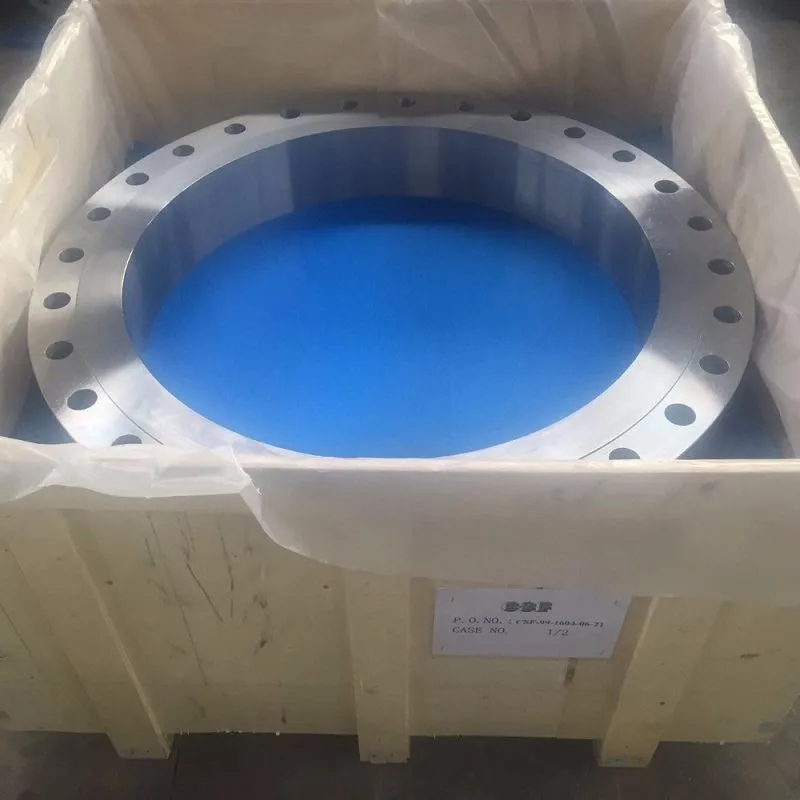
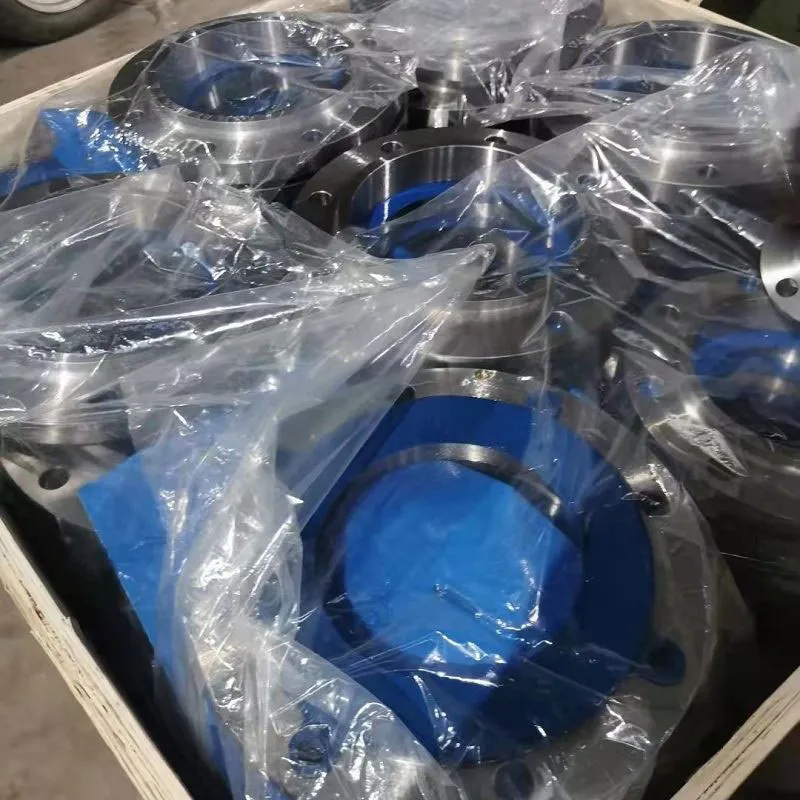
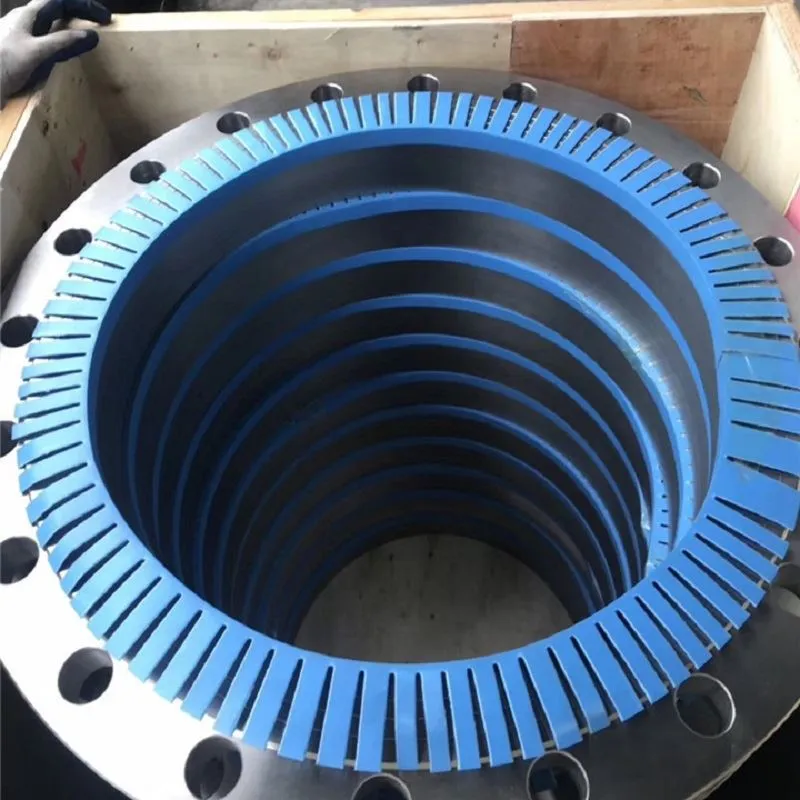
However, not all Chinese imports are created equal. There is a category of manufacturers who consciously structure their work to meet the requirements of the Russian and international markets, avoiding the practice of “gray” schemes. A striking example of this approach isShanxi Hongkai Forging Co., Ltd.. Unlike typical trading houses, this company is based in Dingxiang County, Shanxi Province, a key industrial center for the forging industry in China, and operates three of its own production sites.
The main difference between enterprises such as Shanxi Hongkai Forging is vertical integration. They control the entire cycle: from primary forging and heat treatment to machining and finishing packaging. This is critically important, because it is the lack of proper heat treatment (tempering) that most often leads to the same hidden stresses in the metal that we talked about above. The presence of our own physical and chemical testing laboratories allows us to guarantee that the chemical composition of steel corresponds to the stated standards (whether GOST, ASME, DIN or EN), and is not a “floating” parameter from batch to batch.
For Krasnoyarsk customers working with projects in the oil, gas and energy industries, cooperation with such direct manufacturers who have the right to independently export means a transparent transaction. You receive products in the DN15–DN4000 range strictly according to the drawings, bypassing a chain of non-core intermediaries who can replace the certificate or violate storage conditions during transit. When it comes to flanges of pressure classes 1500 and above or products made from alloy steels, the ability to verify the origin of the metal at the individual forge plant level is not just an advantage, but a necessity.
| Supplier type | Benefits | Risks | What tasks is it suitable for? |
|---|---|---|---|
| Federal networks | Full package of documents, stable quality, large volumes | High price, long approval procedure, minimum quantity | Main pipelines, Rostechnadzor facilities, large construction sites |
| Local workshops | Speed of production, possibility of non-standard sizes, low entry threshold | Lack of laboratory control, risk of using cheap raw materials | Repair work, intra-shop communications, temporary schemes |
| Core Asian factories (direct contract) | Control of the full production cycle, compliance with international standards, price without intermediary markups | The need for thorough verification of the counterparty, logistics deadlines | Large projects, critical components, specific steel grades |
| Random import (traders) | Low price at first glance | High risk of counterfeiting, non-compliance with GOST, lack of warranty | Irrelevant components, low pressure systems (with caution) |
Pricing: what makes up the cost of a flange in 2026
When you see a price “from 500 rubles” for a DN50 flange, know: this is a marketing bait. The real price consists of many factors, which in 2026 have become even more sensitive. Let's look at the anatomy of the price so that you understand where they are trying to deceive you.
The first and most important thing is the cost of raw materials. The price of steel billets is tied to world markets and domestic demand. In Krasnoyarsk, logistics leverage adds 15-20% to the cost of metal compared to Chelyabinsk or Novokuznetsk. If a supplier offers a price lower than the market average, it means that he is either working at a loss (which is impossible for long) or using recycled metal.
The second factor is manufacturing technology. Flanges can be turned (from a circle) or stamped (from a sheet). Turned ones are more expensive, since there is higher metal waste (chips). Stamped ones are cheaper and stronger due to the structure of the metal, but require expensive equipment. In 2026, many small manufacturers switched to tube turning because it is easier and does not require presses. But such flanges have a directional fiber structure, which reduces their resistance to radial loads.
The third, often ignored factor is the anti-corrosion coating. In the Siberian climate, with its temperature changes and aggressive environments in industrial enterprises, an uncoated black flange does not last long. Galvanizing and epoxy coating are additional costs that some suppliers offer as an option, and then they wonder why the pipe leaked after a year.
And finally, logistics within the city. Delivery from the outskirts of Krasnoyarsk to the site can cost as much as the flange itself, if we are talking about urgent delivery by a manipulator. Please take this into account when calculating your estimate.
Price forecast for popular items (DN 50 – DN 200)
Based on the analysis of contracts at the end of 2025, it is possible to draw up an approximate price corridor for the beginning of 2026. Please remember that these are EXW prices (ex-works from the seller's warehouse) without VAT and delivery.
- Flat welded flange St20 (GOST 33259-2015):price growth is expected to be within 10-12% relative to the end of 2025. The main driver is the rise in prices for electricity and wages in metalworking.
- Collar flange 09G2S:here the prognosis is less reassuring. A shortage of low-alloy steel could push prices up by 20-25%.
- Stainless steel flanges (12Х18Н10Т):the most volatile segment. Depends on the yuan exchange rate and the availability of nickel. A jump of up to 30% is possible in the event of new sanctions or export restrictions.
It is important to understand: these figures are relevant only for first-class products. The second grade or “re-grade” may cost less, but their use is limited by the technical conditions of many enterprises.
Hidden Threats: Why a Cheap Flange Could Cost You Millions
Now let’s move on to what sales managers are silent about. I want to share one observation that became a revelation for me last year. There is a problem that is difficult to detect visually, but which has critical consequences.
It's abouthidden internal tensionsin metal. When flanges are manufactured by free forging or stamping without subsequent heat treatment (tempering), colossal internal stresses remain in the body of the part. Externally, the flange is ideal: smooth surface, clear markings, straight holes.
But as soon as pressure is applied close to the working one, or thermal expansion of the pipe occurs, these stresses are released. The flange leads. He's "twisted". The gasket is squeezed out, the bolts are cut off. And it’s good if this happens during hydraulic tests. What if during operation, when hot steam or a toxic chemical flows through the pipe?
In Krasnoyarsk, I came across a situation where an entire batch of flanges from a local manufacturer was rejected after installation. The reason is the lack of normalization. The plant saved on gas for heat treatment furnaces, deciding that “it will do.” For low carbon steel 20 this is still tolerable, but for alloy steels it is lethal.
How to protect yourself? Request a certificate indicating the heat treatment mode. Ideally, do a spot check with a hardness tester. Hardness must be within a strictly defined range. If it “floats” from flange to flange in one batch, run away from this supplier. That is why working with factories that have their own heat treatment and control areas (as is the case with serious Chinese manufacturers or Russian giants) becomes the only correct strategy for critical facilities.
Another problem is the geometry of the sealing surface. According to GOST, it must be of a certain roughness and have grooves for better adhesion to the gasket. Many Chinese and some Russian manufacturers make the surface mirror-smooth. Beautiful, but not functional. The gasket slides over such a surface when the pressure pulsates, and the connection loses its tightness.
Practical guide: how to select and accept flanges in Krasnoyarsk
To avoid becoming a victim of unscrupulous suppliers, I offer you a clear algorithm of actions. This is a checklist that will save your nerves and budget.
Step 1: Clear technical specifications
Do not simply write “DN100 flange”. Indicate everything: type of execution (1, 2, 3...), pressure range (Ру), steel grade, coating requirements, link to a specific GOST (for example, GOST 33259-2015 or GOST 12815-80). The more detailed the technical specification, the less chance that they will bring you the wrong thing.
Step 2: Checking the counterparty
Check the supplier before entering into a contract. Does he have his own warehouse in Krasnoyarsk or does he work “on wheels”? Can he provide original certificates (not scans, but real papers with blue stamps)? Ask for the manufacturer's details and call them yourself to confirm shipment. If the supplier refers to an overseas factory, make sure it is a direct contract and not a purchase from a random trader on the market.
Step 3: Incoming inspection
When accepting the goods, do not sign the invoice blindly. Randomly select 3-5 flanges from the lot. Check them out:
- Are there any cracks, shells, sunsets?
- Does the marking on the end match the documents?
- Measure the main dimensions (thickness, hole diameter) with a caliper. Tolerances must be respected.
- Check the condition of the sealing surface. It should not have any scratches from tools.
Step 4: Legal Insurance
In the contract, be sure to stipulate penalties for non-conformity of quality and deadlines for eliminating claims. Indicate that return of defective items is carried out at the expense of the supplier. In 2026, the courts are inundated with metal quality cases, and having a clear contract is your main weapon.
A look into the future: what awaits the market until the end of 2026
The situation won't get any easier. Further tightening of requirements by Rostechnadzor is expected, especially in light of several high-profile pipeline accidents in past years. This will lead to fewer “gray” schemes, but prices will also rise.
I predict the consolidation of the market in Krasnoyarsk. Мелкие перекупщики, не способные обеспечить прозрачность происхождения металла, начнут уходить с рынка или станут агентами крупных игроков. Выживут те, кто инвестирует в собственные лаборатории и складские запасы.
Также стоит ожидать роста популярности композитных материалов и полимерных фланцев для определенных сред (вода, канализация, агрессивные химикаты). Сталь останется королевой для высоких давлений и температур, но в низкотемпературных нишах ей придется несладко из-за дороговизны.
Для потребителей это означает одно: эра «дешево и сердито» заканчивается. Придется учиться считать полную стоимость владения, а не только цену покупки. Дешевый фланец, который требует замены через год вместе с участком трубы, в итоге обойдется в десять раз дороже качественного изделия, которое простоит двадцать лет.
В заключение хочу сказать: не бойтесь задавать неудобные вопросы поставщикам. Спрашивайте про термообработку, про химсостав, про гарантию. Если менеджер начинает мяться и переводить тему — ищите другого. В Красноярске достаточно честных профессионалов, которые ценят свою репутацию. Просто их нужно найти среди шума маркетинговых обещаний.
Выбор за вами: сэкономить сто рублей сегодня или потерять миллионы завтра. Надеюсь, эта статья поможет вам сделать правильный выбор.
Sources of information and regulatory framework
- ГОСТ 33259-2015. Фланцы арматуры, соединительных частей и трубопроводов на номинальное давление до PN 250. Конструкция, размеры и общие технические требования
- Аналитический портал MetalInfo: обзор рынка металлопроката в Сибири (январь 2026)
- Обзор промышленного производства и логистических цепочек РФ 2025-2026
- Официальный сайт Ростехнадзора: предписания и статистика аварийности