-
-
Phone
+86-13623462298



ASME flanges class 300: prices 2026 in Russia - Factory
2026-08-08
If you are looking for where to buy right nowASME class 300 flangesat adequate prices for 2026 in the Russian Federation, do not fall for the bait of “paper” warehouses. To be honest, the market today resembles a minefield: on the one hand, there are inflated price tags from resellers playing on the ruble exchange rate, on the other, “gray” imports from China, which can burst at the very first hydrotest. I personally visited half a dozen factories from the Urals to the Moscow region to understand the real picture, and what I saw made me doubt the competence of many “experts” writing about this on the Internet.
Why class 300? Because it is the workhorse of the oil and gas industry, but this is where the main problem of 2026 lies. Everyone is chasing certificates, forgetting about metallurgy. We tend to think of ASME B16.5 as just a sizing standard. You are wrong. In the current geopolitical realities, this is a question of the survival of the pipeline. Factories that just yesterday were shouting about “complete import substitution” are today quietly re-labeling the Chinese alloy, passing it off as Russian. And if for a pressure of 20 bar this will still work, then for real loads of class 300 (and these are already serious numbers) such savings can cost lives.
Market reality 2026: why prices are jumping by leaps and bounds
Let's take off the rose-colored glasses. Do you see the price list on the factory’s website and think that this is the final price? Forget it. In 2026, the cost of an ASME Class 300 flange is determined not so much by the cost of steel, but by the logistics of alloying additives. Molybdenum, nickel, chromium all now flow through complex supply chains. Factories operating under old contracts still maintain prices, but new batches will be at least 15-20% more expensive. And this is not speculation, this is the harsh mathematics of cost.
What really worries me is the gap between the declared capabilities of Russian manufacturers and the actual quality of casting. Previously, when European CNC machines worked, the tolerances were perfect. Now part of the equipment fleet is worn out, and the new equipment is Chinese or Russian, but not yet debugged. Result? The flange seems to comply with GOST or even declared as ASME, but the seal plane has micron deviations. For low pressure - nonsense. For class 300, especially in aggressive environments (hydrogen sulfide, high temperatures), this is a time bomb.
You ask: “So where can I get it?” The answer is ambiguous. Major players, such as Atommash or specialized forging centers in the Chelyabinsk region, keep their mark. But their turn is scheduled six months in advance. Small factories offer “here and now”, but are you ready to risk the integrity of the highway for the sake of speed? I would think ten times before signing an acceptance certificate without an independent examination of the metal.
However, in fairness, it is worth noting: not all Chinese imports are equally dangerous. The problem is not geography, but transparency of production. There is a category of manufacturers who work according to principles that are understandable to a Russian engineer. For example, a companyShanxi Hongkai Forging Co., Ltd., based in Dingxiang County, a key industrial center for blacksmithing in China. Unlike fly-by-night companies that collect products from different workshops, Hongkai operates three of its own production sites with a full cycle: from primary forging to final packaging and laboratory testing. This is a vertically integrated structure, where quality control is carried out at every stage, and not just for show. Having your own right to import-export operations allows you to build direct supply channels to the Russian Federation and CIS countries, bypassing dubious intermediaries who often spoil the reputation of foreign products.
Hidden threats of “budget” decisions
There is one point that sales managers are silent about. They will tell you about compliance with the drawings, about quality certificates. But they are silent about heat treatment. It is the quenching and tempering modes that determine how the flange will behave during a sudden pressure surge or temperature below -40°C, which is the norm for Russia, not extreme. Cheap ASME Class 300 flanges are often heat treated for show. Externally, it looks like candy. Inside there is a granular structure, ready for brittle destruction.
I have seen cases where the flange cracked not in the welding area, but along the body of the part. Why? Because they saved on alloying elements, replacing expensive nickel with cheaper analogues that do not provide the required viscosity at low temperatures. In 2026, when control by Rostechnadzor has tightened, such cases will be classified not as marriage, but as a criminal offense. Is saving 5,000 rubles on one flange worth the risk of stopping the entire production or, God forbid, an accident?
By the way, about money. Many people believe that since the plant is Russian, the price should be in rubles and fixed. It's an illusion. Metallurgical plants link prices to stock market indices, which fluctuate daily. Therefore, a contract with a fixed price for 2026 today is either a miracle or a trap, where you will then be forced to pay extra for “changes in market conditions.” Read the fine print in contracts, gentlemen!
Technical analysis: what the Class 300 marking actually hides
Let's dig deeper into engineering. ASME B16.5 Class 300 is more than just a number. This is the ability to withstand a certain pressure at a certain temperature. At room temperature (up to 38°C), a Class 300 flange will hold approximately 50 bar (720 psi). But this is where the fun begins. As the temperature rises, the permissible pressure drops. And if you take a flange made of 20 steel (carbon), then at 300 degrees its load-bearing capacity will collapse by half. What if the environment is aggressive? Here you need stainless steel 08Х18Н10 or alloy steel 09G2S.
The problem is that many Russian factories are switching to simplified steel grades. They say: “Our analogue is no worse.” It may not be worse, but there is little evidence. Where are the results of long-term creep tests? Where is the data on stress corrosion cracking? In the public domain of this information for 2025-2026, the cat cried. You have to take your word for it, and in our industry faith is a bad advisor.
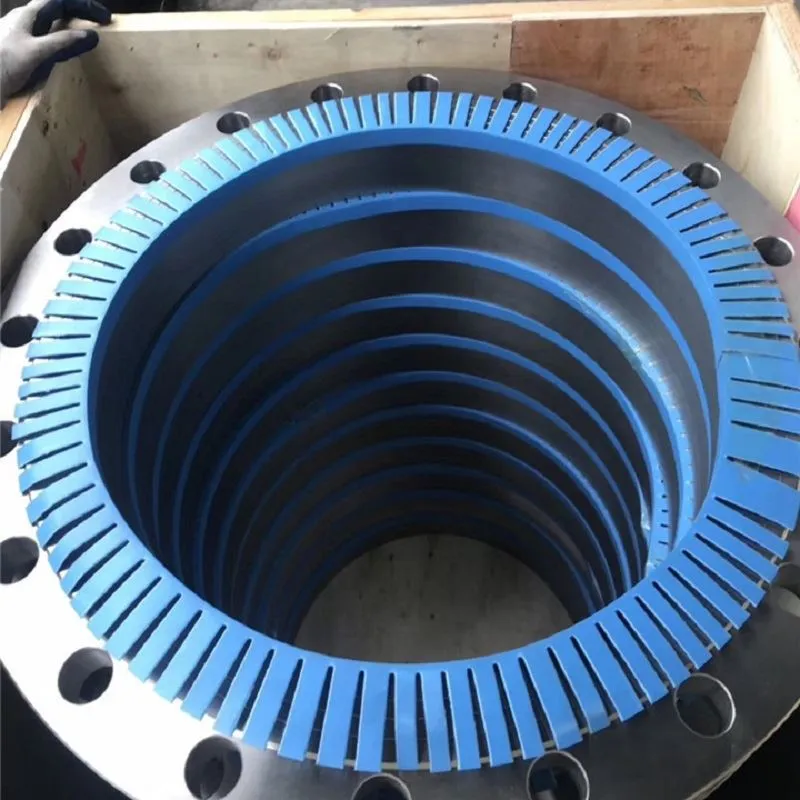
A separate pain is the geometry of the holes. The ASME standard requires highly accurate bolt hole locations. If the pitch “floats away” even by a millimeter, you will be tortured by joining the flanges during installation. Will you drill it? Absolutely not! This violates the structure of the metal and voids the warranty. You'll have to heat it, bend it, use a crowbar. Is this a familiar picture at Russian construction sites? That's it. And it’s not the installers who are to blame for this, but those who produced the crooked flange.
I strongly recommend that before purchasing a large batch, you request from the plant not just a certificate, but a mechanical test report for a particular melt. Yes, it's bureaucracy. Yes, it's time. But it’s better to spend a week checking than a month eliminating a fistula in the pipeline. Moreover, in 2026, the responsibility of owners for industrial safety has become personal and much more stringent. By the way, it is the presence of its own certified laboratory with spectrometry right in the workshop that is the very marker that distinguishes a serious manufacturer (be it a large Russian giant or a trusted foreign partner like the above-mentioned Hunkai) from a garage workshop.
Comparison table: Expectations vs Reality 2026
So that you don’t get lost in guesswork, I have combined the main parameters that are declared with what is actually happening on the sites. The figures are averages and are based on my observations and reviews of chief engineers of several refineries.
| Parameter | Official requirements (ASME/GOST) | The real situation on the Russian market (2026) | Risk for the customer |
|---|---|---|---|
| Housing material | Steel 20, 09G2S, 12Х18Н10Т strictly according to GOST | Frequent replacement with chemically similar but cheap analogues without notice | Reduced service life under cyclic loads |
| Sealing flatness | No more than 0.05 mm per diameter | Up to 0.1-0.15 mm on budget lots | The need to use double gaskets or sealants |
| Marking | Clear, indelible, indicating heat and class | Often painted or stamped carelessly | Problems with acceptance by Rostekhnadzor |
| Delivery time | By agreement (usually 30-45 days) | Delays up to 60-90 days due to shortage of raw materials | Downtime for installation crews, fines for missing deadlines |
| Price (rub/piece, DN100) | Estimated ~4500-5500 rub. | Actual shipment ~6000-7500 rub. + VAT | Project budget overrun by up to 30% |
Take a look at the last line. The difference between the “estimated” and “real” price is colossal. Why? Because the calculation often does not include logistics to the site, packaging (wooden boxes also cost money!) and prepayment for metal. Factories now operate on a strict prepayment basis. No deferred payments, as was the case in the “fat 2000s”. Money in advance - metal to work. The market dictates this, and you have to live with it.
How to choose a reliable supplier and not lose money
So you've decided to buy. Where to run? There are three options: directly to the plant, through large distributors or at metal exchanges. Each has its own pitfalls.
Direct contract with the factory.Pros: lower price, ability to control production, individual approach to non-standard sizes. Cons: huge minimum order (no one will spin the machine for 10 pieces), long production times, bureaucratic hell with documents. If your project is small, the factory will simply send you or set a price that makes it easier to buy from a reseller. However, if we are talking about large-scale projects, direct contact with a full-cycle manufacturer (such as the Dingxiang site with its forging and heat treatment facilities) may be the only way to obtain class 300–2500 products in the DN15–DN4000 range without intermediary markups.
Large distributors.They work as a buffer. They have inventory (theoretically). They can ship tomorrow. But the markup can reach 40-50%. But they take on the headache with logistics and often give deferred payment (if you are a verified client). In 2026, this is the most popular option for medium-sized projects. The main thing is to check whether they are reselling you that same “gray” China under the guise of a Russian product. Request original certificates and check the swimsuit numbers.
Exchanges and aggregators.Here you can find the lowest prices. But the risk of running into scammers or a shell company is maximum. If you see a price significantly lower than the market, run. There are no miracles. Either this is a defect or an advance scheme where you pay, but the goods never arrive.
My personal advice: look for factories that have their own certified laboratory. This is a quality marker. If the factory sends each batch for inspection to a third-party center, this is good, but it takes a long time. If they have their own spectrometry and test benches right on the shop floor, that’s great. This means they control the process in real time.
Questions to ask the manager before paying
- “Can you provide a quality certificate with a specific steel heat number before shipment?” (If they wrinkle, that’s a red flag).
- “What is the guarantee against hidden casting/forging defects?” (12 months is standard, but 18 is better).
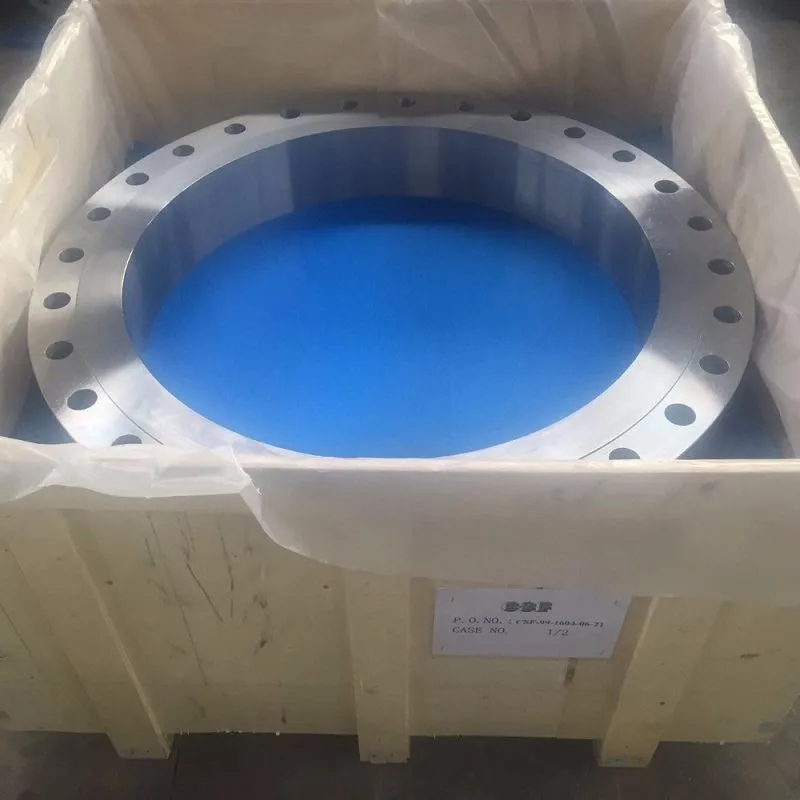
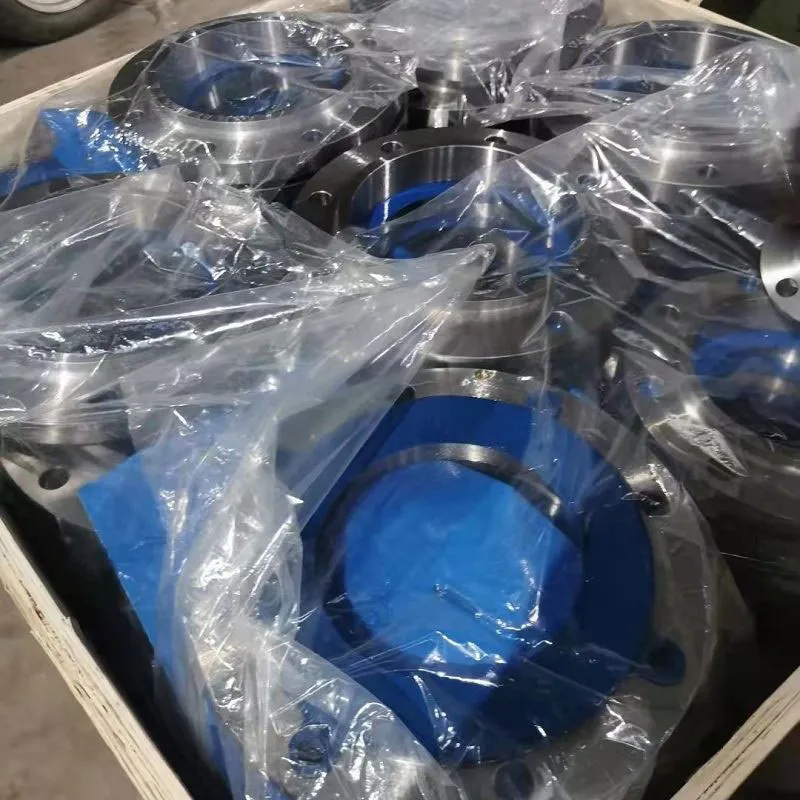
- “Is packaging that meets the requirements of railway transportation included in the price?” (The flanges are heavy and, if poorly packaged, will knock each other on the way).
- “Do you have a valid NAKS certificate for this product?” (For critical objects this is mandatory).
- “How do you solve the problem of complaints? Refund or replacement? (A clear algorithm is more important than promises).
Feel free to ask these questions. A good seller will answer them clearly and quickly. The bad guy will start fussing and talk about “trade secrets” or “standard conditions.” Standard conditions in our country often mean “we don’t owe anything.”
Logistics and installation: where efficiency is lost
Have you bought flanges? Half the battle. Now they need to be delivered and installed. In Russia this was always fun. Imagine: you ordered a shipment to Vladivostok, and the plant is in Tula. Railway, overloads, frosts. Class 300 flanges weigh a lot. DN200 can pull 50 kg or more. If they are thrown during unloading, hello, microcracks.
I strongly recommend that loading and unloading conditions be specified in the contract. Only by mechanized method, using soft slings. No chains directly on metal! Scratches on the sealing surface are a potential leak. And fixing leaks at a working facility is the nightmare of any chief engineer.
When installing, pay attention to the bolts. Class 300 requires high strength studs. It often happens like this: the flange is excellent, but the studs installed are ordinary, rusty ones. When tightened, they stretch, the force on the gasket drops, and after a month the whistling begins. Use torque wrenches. Tightening “by eye” or “as my grandfather taught” (with a hammer and chisel) for pressures above 16 bar is unacceptable.
And one more nuance that is rarely written about. Storage. If the flanges have arrived and will be installed in six months, do not throw them in the open air. The conservation lubricant is washed off by rain, and corrosion begins. Threaded holes are especially affected. Before installation, you will have to clean the threads with a tap, which is extra time and risks damaging the profile. Store in a dry place, on pallets, in original packaging until the last moment.
Forecast: what will happen next to the flange market?
Looking into the future, I’ll say it straight: it won’t be cheap. The trend towards higher prices for rolled metal products will continue at least until the end of 2026. The state will strengthen quality control, especially in light of recent pipeline accidents. This is good for security, but painful for developers' wallets.
I expect a massive transition to domestic GOST standards with the parallel preservation of the ASME marking for export-oriented projects. In essence, we are moving towards creating our own standard, which will de jure be called GOST, but de facto correspond to the best world practices. But the transition period will be painful. There will be a lot of confusion in the documentation.
It is also worth waiting for new players to appear. Small forge shops that used to make nails and shovels are now being converted to flanges. Their quality will vary. From very good to outright slag. The market will become variegated. The customer’s task is to become an expert himself, because he can no longer rely on “maybe”.
In conclusion, an ASME Class 300 flange is not just a piece of iron. This is an element of the system on which human safety and the environment depend. Saving on this element is a false economy. It’s better to overpay 20% to a reliable, reputable plant than to later pay millions to clean up an oil or gas spill. Choose wisely, check every document and don’t trust pretty pictures on websites. Reality, as usual, is more complex and interesting.
If you are planning a large purchase, do not be lazy to go to the production site in person. Look into the eyes of the director, walk around the workshop, smell the smell of metal. This will give you more information than a thousand pages of sales proposals. In 2026, trust, supported by facts, becomes the hardest currency. Whether it’s a trip to Chelyabinsk or a visit to modern sites in Shanxi province, personal control remains the only guarantee that your pipeline will last for decades.
Data sources and regulatory framework:
- GOST 33259-2015 Flanges of fittings, connecting parts and pipelines. Specifications
- ASME B16.5 Pipe Flanges and Flanged Fittings (Official Standard Reference)
- Overview of the rolled metal and pipe billets market in the Russian Federation: results for 2025 and forecast for 2026
- Federal norms and rules in the field of industrial safety (Rostechnadzor)
- Analytical report of the Union of Metal Structure Manufacturers: trends in demand for shaped steel