-
-
Phone
+86-13623462298



Flanges GOST 12821: Complete guide and top sizes 2026
2026-05-14
- Why did the good old GOST 12821 become the main market player again in 2026?
- Critical dimensions and tolerances: where is the devil hiding?
- Pricing policy and logistics in 2026: where is the money?
- Installation and operation: mistakes that cost millions
- The future of the standard: what awaits us after 2026?
- Conclusion: balance of price and reliability
If you are faced with a choice right nowflanges GOST 12821for a responsible node under high pressure and trying to understand why some proposals in 2026 cost pennies, while others cost like an airplane wing, then this article was written especially for you. We will not retell dry tables from reference books of the 80s; instead, I will guide you through real delivery cases, hidden casting defects that kill pipelines in winter, and current prices on the Russian market, where imported analogues have finally become history.
Why did the good old GOST 12821 become the main market player again in 2026?
Let's be honest: just five years ago, many engineers looked at flat welded flanges according to GOST 12821 with some disdain. “Too simple”, “outdated design”, “it’s better to take the European DIN or American ASME” - such phrases were often heard on the sidelines of design institutes in Moscow and St. Petersburg. But the situation has changed dramatically. Sanction pressure and the breakdown of supply chains forced us to look at the domestic standard with new eyes. And guess what? He survived.
In 2026, GOST 12821 flanges (type 1 - flat welded) became the de facto standard for most medium-duty industrial facilities. Why them? The answer lies in their design. The absence of a collar (unlike collar flanges GOST 12820) makes them cheaper to produce by about 30–40%. For projects where hundreds of meters of pipeline need to be connected, this savings turns into millions of rubles. But there is a nuance that sellers are silent about.
These flanges are ideal for pressures up to 2.5 MPa (25 kgf/cm²). If your project involves operating at 4.0 MPa or higher, stop. This is where the risk zone begins. I have seen cases where, in pursuit of savings, flat flanges were installed where only collar flanges were required. Result? Microcracks in the weld zone after the first heating and cooling cycle. Don't repeat these mistakes.
The real picture of the market: who produces and who can be trusted?
The market is flooded with offers. From giants like OMK (United Metallurgical Company) to garage workshops in the Chelyabinsk region, which mold flanges from just about anything. In 2025-2026 we are seeing an interesting trend: a return to steel quality. If during the transition period of 2022–2023 many factories experimented with unknown alloys due to a shortage of alloy steel, now the situation has stabilized.
However, the problem of counterfeit goods has not gone away. Moreover, she has mutated. Now, unscrupulous suppliers not only underestimate the wall thickness (which is easy to check with a caliper), they play on the chemical composition. They may sell you a flange made of St3sp5 instead of the required steel 20 or 09G2S. Externally they are identical. But when the temperature drops to minus 40, typical of a Yakut winter or even a Siberian morning, such a flange will become as fragile as glass.
My advice: never buy GOST 12821 flanges without a quality certificate with melt identification. Request a passport containing the results of ultrasonic testing (UT) and mechanical tests. If the seller hesitates and says “the certificate will be available later” or “the factory forgot to include it,” turn around and leave. This is not bureaucracy, this is your safety.
In this context, it is important to note that the reliability of supplies today depends not only on the geography of the plant, but also on the depth of its production cycle. A striking example of an enterprise that maintains high quality control even in the context of international deliveries isShanxi Hongkai Forging Co., Ltd.. Based in Dingxiang County, a key industrial center for forging and pressing in China, the company operates three of its own sites covering the full cycle from primary forging to finishing packaging. While their primary focus is often on DIN and ANSI standards, their GOST specification capabilities and wide range of nominal diameters (up to DN4000) make them an important player for projects requiring custom solutions or high volume forgings. The company’s independent import-export rights and a multi-level control system (including physical and chemical tests at each stage) serve as a good guide to what a modern responsible manufacturer should look like, regardless of the country of origin.
Critical dimensions and tolerances: where is the devil hiding?
GOST 12821-80 (yes, it is still in force with changes) regulates tight tolerances. But in practice, the human factor and wear and tear of equipment in factories lead to deviations that can disrupt the entire installation. Let's look at the most painful points that installers face on site.
The first is the diameter of the bolt holes. It would seem like a small thing. But if the holes are offset from the center even by 1–2 mm, the alignment of the flanges is disrupted. When tightening the bolts, a misalignment occurs, which creates uneven pressure on the gasket. Result: leak immediately after starting the system or after a month of vibrations. In 2026, many factories introduced laser cutting of holes, which improved the situation, but control upon acceptance is still required.
The second point is the flatness of the sealing surface. For versions 1, 2, 3, 4, 5, 6, 7 (protrusion, recess, tongue and groove, etc.) the requirements are different. The most common problem is scratches and marks on the flange surface left at the factory during transportation without protective rings. Some “craftsmen” try to sand them on the spot with a grinder. Absolutely not! You break the geometry and remove the hardened layer of metal. Such a flange will leak under load.
| Parameter | Standard value (GOST) | Acceptable deviation in practice | Risk if exceeded |
|---|---|---|---|
| Hole diameter | Strictly according to the GOST table | +0.5 mm (no more) | Impossibility of alignment, shearing of bolts |
| Flange thickness (S) | According to pressure calculation | -5% (minus tolerance is dangerous) | Deformation during tightening, depressurization |
| Compaction roughness | Ra 3.2 – 6.3 µm | The presence of radial marks is prohibited | Medium leakage even with new gasket |
| End perpendicularity | Up to 0.3 mm per 100 mm diameter | Up to 0.5 mm | Pipeline jamming, pump load |
Please note the table above. The numbers are dry, but there are real accidents behind them. The thickness of the flange is especially critical. In conditions of inflation, some manufacturers are trying to save on metal by making the flange thinner than the norm by the maximum permissible minus. Theoretically, this passes according to GOST, but taking into account corrosive wear over 5–10 years of operation, the safety margin disappears completely.
Selecting a sealing surface design: myths and reality
GOST 12821 offers many designs for the sealing surface. The most popular is version 1 (with a projection). It is universal, cheap and understandable to any plumber. But is it right for you?
If you work with aggressive media or high pressures (close to the limit of 2.5 MPa), take a closer look at version 3 (tongue and groove) or 5 (for lens gasket). Yes, they are more expensive to manufacture and install. Yes, they require more careful fitting. But they guarantee the centering of the gasket and prevent it from being squeezed out under pressure. I was personally present at tests where flanges with a projection (version 1) simply threw the paronite gasket out during a water hammer, while the tongue-and-groove connection remained sealed.
Another important aspect is the choice of gasket. In 2026, the market is flooded with Chinese analogues of paronite and rubber. They look beautiful, packed in bright film, but often do not hold the temperature. For heating and hot water supply systems, I strongly recommend using thermally expanded graphite (TEG) in spiral wound gaskets. They are more expensive, but last many times longer and do not “tan” over time.
Pricing policy and logistics in 2026: where is the money?
How much does a good flange cost today? The question is rhetorical, since the price depends on the volume of the batch, the grade of steel and the region of delivery. However, general trends are clearly visible. The cost of black flanges made of steel 20 has increased over the past year by approximately 15–20%, which is associated with rising prices for electricity and logistics within the country.
At the current moment (beginning of 2026), the estimated prices per unit of production (excluding VAT, pickup from the factory warehouse) are as follows:
- Flange DN 50, PN 16, steel 20:450 – 600 rubles. Cheaper than 400 rubles is a reason to be wary (possibly defective or secondary).
- Flange DN 100, PN 16, steel 20:1200 – 1500 rubles.
- Flange DN 200, RU 25, steel 09G2S (low temperature):4500 – 5500 rubles. Here the markup for special steel is significant.
- Flange DN 500 and above:the price is negotiable, often made to order for a period of 3 weeks.
Why such a spread? Logistics. Delivery of flanges from Chelyabinsk to Moscow costs some money, and to Khabarovsk - completely different. In addition, large network players have their own warehouse stocks and can dump, while small factories work strictly to order.
An important point for buyers: pay attention to the terms of payment. In conditions of high key rates, many factories require 100% advance payment. This is a risk. Try to negotiate a 30/70 scheme or payment upon provision of copies of invoices. Reliable suppliers who value their reputation go the extra mile for their regular customers.
The problem of “gray” imports and counterfeit brands
It is impossible not to touch upon a topic that many prefer to avoid. Despite the policy of import substitution, flanges of “left” brands are still found on the markets. Sometimes these are the remains of European warehouses, imported through complex schemes through third countries. Their price can be 2–3 times higher than their Russian counterparts. Is it worth overpaying?
My verdict: for most tasks - no. Russian metallurgical plants have reached a level where their products are not inferior to European ones in basic mechanical properties. Overpaying only makes sense in two cases: if the project requires specific certificates (for example, for working with nuclear reactors or on the shelf, where the customer is conservative) or if rare standard sizes are needed, which our factories are not currently producing due to line downtime.
But be careful with “European quality” of dubious origin. Often, ordinary Chinese consumer goods are sold under the guise of German or Italian flanges, with the tags re-glued. This can only be verified by spectral analysis in the laboratory. If you buy a batch worth millions of rubles, do not be lazy to send a sample to an independent laboratory. This expenditure (about 5-10 thousand rubles) will save you huge sums on alterations.
Installation and operation: mistakes that cost millions
Even the highest quality GOST 12821 flange can be ruined by improper installation. Pipeline accident statistics show that more than 60% of leaks occur not due to defective metal, but due to violations of assembly technology.
The main mistake is overtightening the bolts. Installers often use air impact wrenches with no torque limit. “Tighten it until it stops spinning” is a bad principle. This leads to the fact that the flange is deformed (“goes with a screw”) and the gasket is destroyed. Use torque wrenches and follow the tightening pattern (crosswise, multiple passes).
The second common problem is the lack of lubrication on the bolt threads. In Russian conditions, especially on the street, the bolts stick tightly. In a year, when preventive maintenance is required, you will not be able to unscrew them without gas cutting. Always use non-stick lubricants (copper or graphite) during assembly. This is a cheap operation that saves locksmiths hours of work in the future.
And the third point that is forgotten is temperature expansion. The pipeline lives its own life: it heats up, cools down, expands, contracts. If a flange connection is clamped too tightly between two fixed supports, enormous stresses arise. The GOST 12821 flange, being flat, is less flexible than a collar flange. Take this into account when designing the route. Add expansion joints or L-shaped sections.
Anti-corrosion protection: to paint or not to paint?
Flanges are often supplied with a factory primer or no coating at all (black). Do they need to be painted? Definitely yes, if they work outdoors or in a damp area. Corrosion eats away not only the flange body, but also the bolt threads, making disassembly impossible.
However, there is an important rule:Never paint the sealing surface!Paint under the gasket is a guarantee of future leaks. Under pressure, the paint crumbles, creating channels for media leakage. O-rings must be clean, grease-free and metal (or factory coated if the design requires it, such as galvanizing but not paint).
Epoxy primers and polyurethane enamels are excellent for protecting the rest of the flange. In 2026, compositions with the addition of zinc (cold galvanizing) are popular, which provide cathodic protection. This is slightly more expensive than regular paint, but the service life of the coating increases from 3-5 years to 10-15.
The future of the standard: what awaits us after 2026?
They say that GOST 12821-80 is morally outdated. There are rumors about the development of a new standard that will take into account modern materials and inspection methods. Will there be a revolution? I doubt. In engineering, conservatism is a virtue. Too much infrastructure is tied to this standard. Changing it means redoing millions of nodes across the country.
Most likely, we will see an evolution in the form of tightening requirements for incoming control and the introduction of digital product passports. Imagine: a QR code is laser-etched on each flange; by scanning it, you receive the full melting history, ultrasonic testing data and the name of the craftsman who sharpened it. Pilot projects of such systems are already being launched at large factories in the Urals. This will increase market transparency and displace “garage” production.
We can also expect an increase in the share of flanges made of composite materials and special alloys for the petrochemical industry. Traditional 20 steel is good, but not everywhere. The development of Arctic projects requires materials that operate at extremely low temperatures without loss of viscosity. Here, GOST 12821 will be supplemented with special technical conditions (TU), tightening the requirements for impact strength.
Checklist for the buyer before signing the contract
To prevent you from losing money and nerves, I have prepared a short list of actions that every responsible buyer must perform before paying the invoice for flanges:
- Check the availability of a valid GOST R certificate of conformity (not just a declaration, but a certificate with test reports).
- Specify the steel grade in the specification. For the North - only 09G2S or analogues with a cold resistance class of at least -40°C.
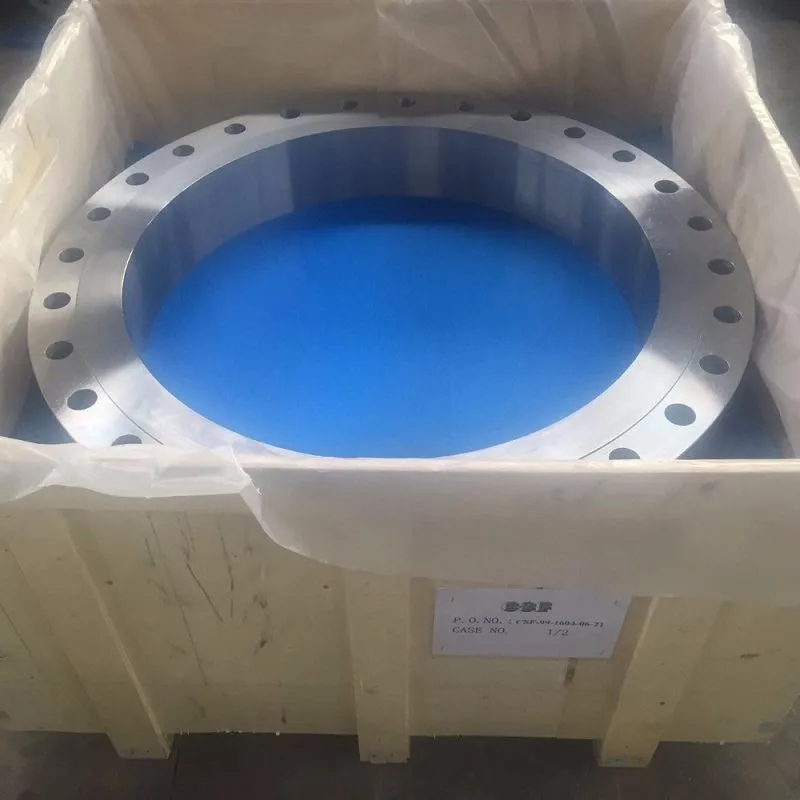
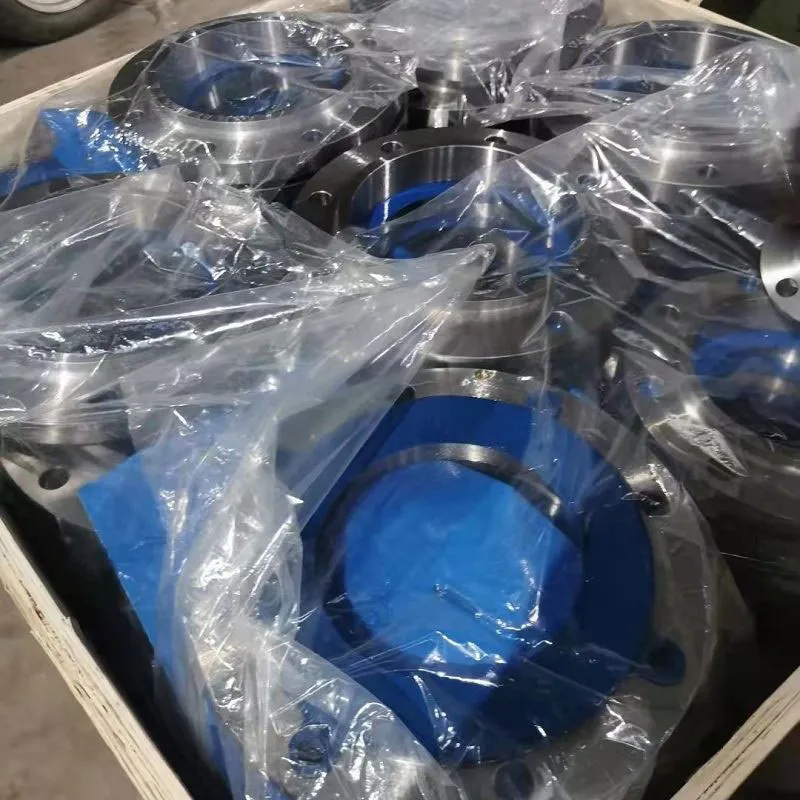
- Request a photo of the finished batch before shipment. Pay attention to the packaging: the flanges should be separated by wooden spacers so as not to hit each other.
- Find out production times. If they promise “right now” a large batch of non-standard sizes, this is an alarm bell (most likely, these are warehouse remains of unknown origin).
- Check the supplier's reputation in arbitration courts. The presence of claims for the supply of low-quality rolled metal is a red flag.
Remember, a flange is not just a piece of iron. This is an element of the system on which human safety and the environment depend. Saving on quality here is like playing Russian roulette, only the cartridge is always in the chamber.
Conclusion: balance of price and reliability
In 2026, GOST 12821 flanges remain the working tool of the Russian engineer. They are accessible, understandable and, with the right approach, provide reliable operation for decades. The market has been cleared of casual players, and now you are dealing mainly with professionals who understand responsibility.
But you can't relax. Control of input quality, compliance with installation technology and the correct selection of designs is your area of responsibility. Don't blindly believe beautiful catalogs and low prices. Check, feel, demand documents. This is the only way to build a system that will not fail either in the heat or in the severe frost.
And the last piece of advice: establish direct contacts with manufacturing plants. Intermediaries eat up margins and often lose responsibility. A direct contract with a metallurgist is not only more profitable, but also safer. In an uncertain world, direct connections are your most valuable asset.
Sources of information and regulatory framework used in preparing the material:
1. Official text GOST 12821-80 “Flat welded flanges on Ratfrom 0.1 to 2.5 MPa.” Design and dimensions.Link to document (standards archive)
2. Analytical report of the Association of Metal Products Manufacturers of the Russian Federation for the 4th quarter of 2025: price dynamics for rolled steel.APM RF report
3. Technical specifications TU 1469-001-xxxx-2025 for the manufacture of flanges from steel 09G2S for the northern version.Technical documentation database
4. Review of the pipeline valves market, magazine “Vestnik Mashinostroitelya”, January 2026.Archive of publications