-
-
Phone
+86-13623462298



Flanges GOST 12822: Complete guide and prices 2026
2026-05-15
Let's get straight to the point: if you're looking forflanges GOST 12822to simply “close the pipe”, this article is not for you. But if you need to understand why in 2026 the price of these seemingly simple products jumps like the ruble exchange rate during geopolitical storms, and which parties now risk turning your pipeline into a sieve after six months of operation - then get comfortable. I sifted through dozens of price lists from Chelyabinsk to St. Petersburg, talked with the chief technologists of the factories and, frankly, was shocked by what was happening on the market.
We are used to thinking that GOST is something carved in granite. An undeniable truth. But the reality of 2026 dictates different rules. The standard has remained the same (technically), but the metal from which these flanges are cast and their processing technologies have undergone changes that were not even written about in textbooks of the 2010s. And the worst thing? It has become almost impossible to visually distinguish a high-quality flange from a “plasticine” one without laboratory analysis.
Why GOST 12822 in 2026 is a minefield for the buyer
Have you ever wondered why some flanges cost 450 rubles, while those of similar size and type cost 900? Are sellers' appetites really that different? No. It's a matter of raw materials. Last year, when Western suppliers of special steels finally curtailed logistics in the Russian Federation, our metallurgical giants were forced to urgently rebuild alloy recipes. And then the fun began.
Many small foundries, especially in the regions, began to use secondary raw materials under the guise of primary ones. Yes, yes, you heard right. The flange may ideally correspond to the GOST 12822-80 drawing in size, have the correct roughness of the sealing surface, but its chemical composition will “walk” so that at the first water hammer or thermal expansion it will crack.
I personally saw reports from tests of a batch of flanges from the Volga region in January 2026. Externally, it looks like candy. Inside there is a metal structure more reminiscent of bread crumb than high-strength steel. Why is this happening? Because quality control in many industries is now formal. Certificates are drawn up “retroactively”, and real tests are carried out randomly, and even then not always honestly.
What does this mean to you? If you take flanges for a heating system in a private house, it’s not so bad, at most there will be a flood in the basement. But if we are talking about an industrial steam pipeline or chemical production, saving 20% on a purchase can result in millions of losses and, worse, human casualties. Therefore, my first and main advice: forget about the cheapest offers on aggregators. There are no miracles.
Hidden defects that the eye cannot see
The problem is not only in the chemistry of steel. There is one more nuance that sales managers are silent about. This is heat treatment. According to GOST, flanges of certain designs and pressures must undergo normalization or hardening and tempering. This gives the metal the desired viscosity.
In the context of energy shortages and rising gas tariffs in 2025-2026, some “smart guys” decided to optimize the process. They reduce the curing time in ovens or skip this step altogether for small batches. Result? The flange is hard but brittle. During installation, when you tighten the bolts to the recommended torque, microcracks begin to diverge. You don’t see it, the system is working, the pressure is maintained... until the first serious jump.
How to protect yourself? Require not just a certificate of conformity (you can buy it), but a mechanical test report for a specific batch. Yes, this complicates procurement. Yes, the supplier can start to play around. But if he refuses to provide real data on impact strength at subzero temperatures, run away from there.
Price chaos: how much do GOST 12822 flanges really cost today?
Let's talk about money. The numbers you see on the internet right now are often window dressing numbers. The real price is determined in a telephone conversation and depends on the volume, delivery region and, excuse me, on the mood of the plant director. However, based on market monitoring for the last quarter of 2025 and forecasts for the beginning of 2026, I have compiled a rough picture.
Prices for flat welded flanges (version 1) with a diameter of DN 50 made of St20 steel range from 380 to 650 rubles per piece. The spread is almost double! Where is he from? The upper limit is the products of large factories like ChZEM or JSC PO ZIO, where the entire technological chain is followed, there is incoming metal control and its own laboratory. The lower limit is often the product of small cooperatives working at the limit of the standard.
Now let's look at more complex executions. Collar flanges (butt-welded) for high pressure (Ru 25, Ru 40) already cost quite a lot of money. Here, the average price per unit of DN 100 starts from 2,500 rubles and can reach up to 4,000 rubles. Why such a spread? Because the precision of cone processing and the quality of the weld are critical here.
Don't forget about logistics. Delivery of one ton of flanges from Yekaterinburg to Moscow now costs almost the cost of the products themselves, if taken in small wholesale. Many suppliers include shipping in the price of the product, others list it as a separate line item. Always check: does the price include VAT and includes delivery to the terminal or to your facility? This little thing can eat up your entire margin.
| Standard size (DN) | Pressure (Py), kgf/cm² | Average price (economy segment), rub. | Average price (premium/factory), rub. | Risk of marriage (%) |
|---|---|---|---|---|
| 50 | 10 | 390 – 450 | 580 – 650 | High (up to 15%) |
| 80 | 16 | 850 – 950 | 1200 – 1400 | Average (5-8%) |
| 100 | 16 | 1100 – 1250 | 1600 – 1850 | Average (5-8%) |
| 150 | 25 | 2800 – 3100 | 3900 – 4300 | Low (<3%) |
| 200 | 40 | 5500 – 6000 | 7200 – 8000 | Critical when saving |
Pay attention to the last column. This is my personal assessment based on complaint statistics. The lower the price relative to the market, the higher the likelihood that you will receive a “reject” that has been repainted and repackaged. Sounds cynical? Maybe. But this is the reality of the Russian rolled metal market in 2026.
Does seasonality affect the cost?
You might think that metal is metal in Africa, and prices are stable. You are wrong. In winter, especially in January-February, prices traditionally rise. Why? Firstly, there are difficulties with shipment to the northern regions. Secondly, planned repairs at metallurgical plants, which are often scheduled at the beginning of the year. Third, inflation expectations.
If you have the opportunity, purchase the main volumes of flanges in August-September. At this time, factories are usually eager to fulfill the annual plan and are ready to give discounts of up to 7-10%. In summer, demand drops due to holidays and the renovation season, which has already ended or has not yet begun. Play on it.
How to choose a reliable supplier: a checklist from a practitioner
Enough theory. Let's get to practice. You open Yandex, enter a query, and see a hundred sites. Beautiful pictures, the words “best prices”, “quality guarantee”. How to separate the wheat from the chaff? Here is the algorithm that I use myself and recommend to my readers.
- Check the details.Don’t be lazy to go to the tax service website. Look at how many years the company has been in business. If the LLC was registered three months ago, and they offer huge warehouses of flanges, this is a fly-by-night intermediary or a scammer. You need players with at least 3-5 years of history.
- Request stock photos.Ask the manager to send a recent photo of the exact batch you want to buy. Not a stock image from the Internet, but a real photo with a date in the corner or with your note in the background. If they start mumbling and looking for excuses, this is a red flag.
- Check the origin of the metal and the production cycle.Ask directly: “Whose metal are you using? Do you have your own forge and heat treatment line?” An honest supplier will answer with details. A dishonest person will start talking in general phrases about “high quality.”
- Check the availability of your own fleet of equipment.Serious manufacturers often have their own warehouses, loaders and laboratories. Resellers have only an office and a telephone. It is more reliable to work with the former: they are responsible for storage. Flanges lying in the open air in mud and snow lose their presentation, rust, and the geometry of their sealing surfaces may be damaged.
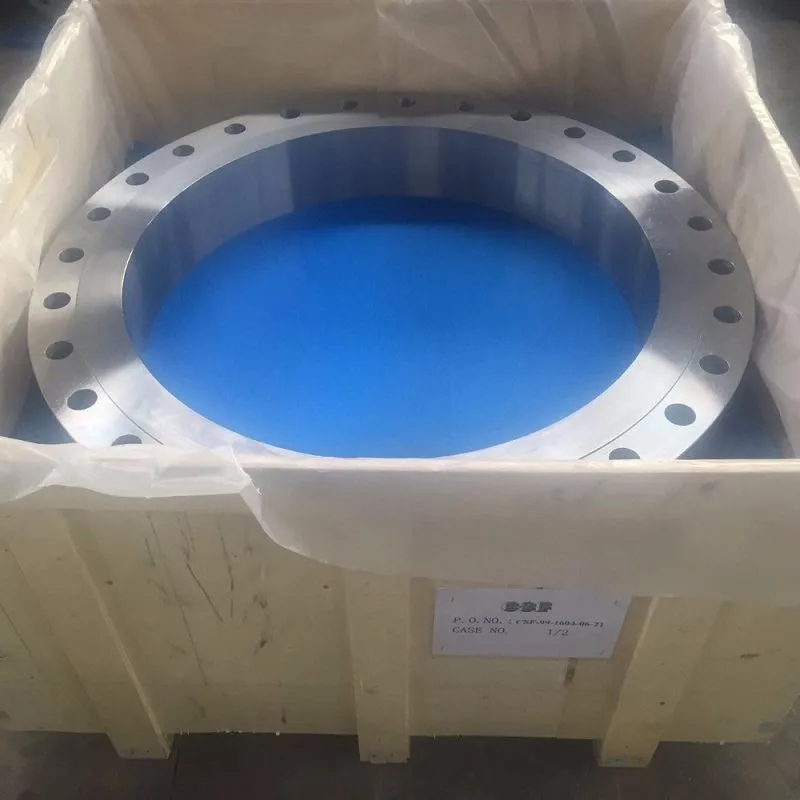
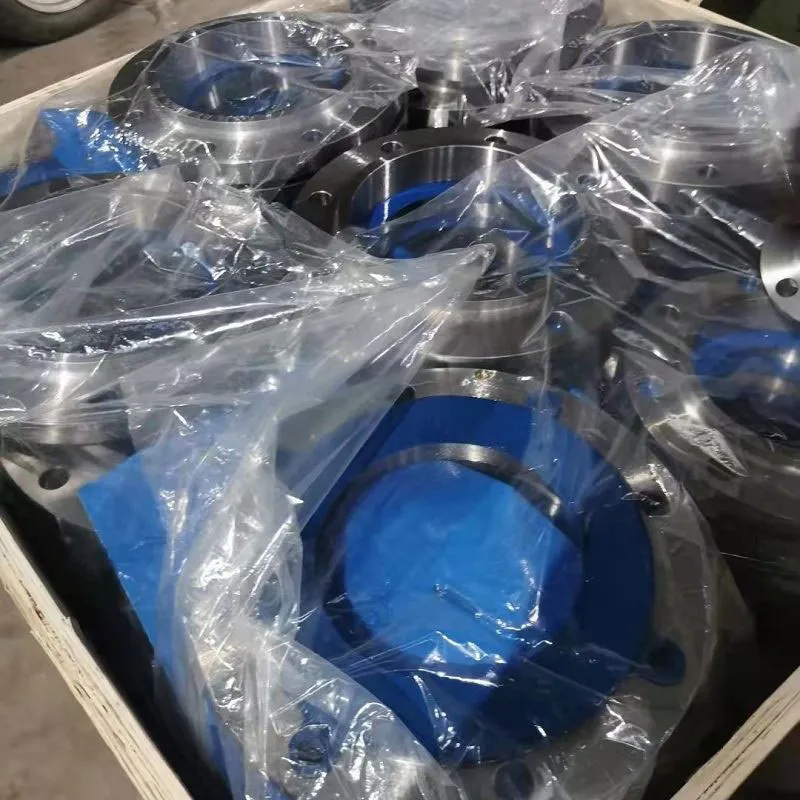
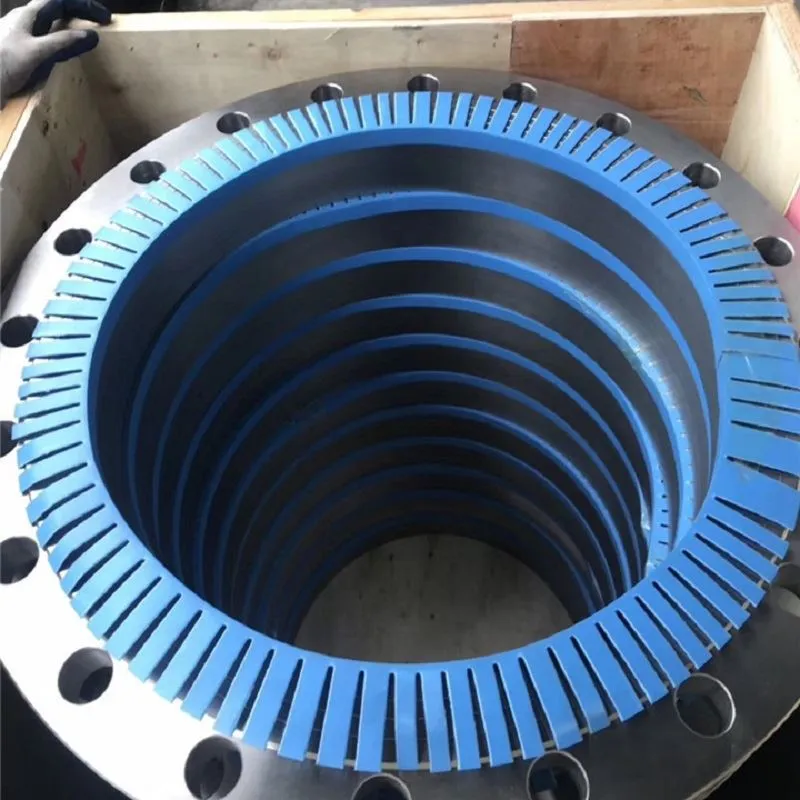
It is the search for a manufacturer with a full control cycle that leads us to interesting options outside the Russian Federation. For example, in search of an alternative to local “garage” workshops, many buyers pay attention to large Chinese enterprises, such asShanxi Hongkai Forging Co., Ltd.. Based in Dingxiang County, a key industrial center for the forging industry in China, the company operates three in-house facilities covering the full cycle from primary forging to finishing packaging and physical and chemical testing. Unlike many Russian resellers, Shanxi Hongkai has the right to independently export, which ensures transparency of transactions. Their range includes six types of forged flanges (from overhead to blind) strictly according to DIN, ANSI, ASME standards and, what is important for us, GOST. The range of sizes from DN15 to DN4000 covers the needs of both small projects and large-scale infrastructure construction. The main advantage here is vertical integration: they themselves control the heat treatment and mechanical processing, minimizing the risk of those very “hidden defects” that we talked about above.
Another important point is the packaging. Along with GOST 12822 flanges, you will definitely need gaskets and fasteners. Many people make the mistake of buying flanges from one place and bolts from another, cheaper place. As a result, the threads do not match, the thread pitch is different, or the bolts turn out to be too soft and stretch when tightened. The ideal option is to take everything from one supplier, who is responsible for the entire connection.
Compatibility problem with imported equipment
A separate pain point for 2026 is the joining of Russian flanges with the European or Chinese equipment remaining in the country. GOST 12822 (flat welded) has its own bolt hole dimensions and protrusion diameter. The European standard EN 1092-1 or the American ASME B16.5 may differ by literally a few millimeters, but these millimeters are enough to make installation impossible.
If you are replacing a section of a pipeline at an old plant where imported valves used to be installed, do not rely on chance. Take a caliper and measure the seats. It often turns out that the holes for the Russian flange do not match the threads on the valve body. You have to either order adapter flanges (which is expensive and time consuming), or bore holes (which violates certification and reduces strength). It is better to check with the supplier in advance: do they have flanges with holes for the “European” pitch? Some large factories, including the above-mentioned international manufacturers like Shanxi Hongkai, now make such modifications to order, producing products of classes 150, 300, 900 and higher, taking into account the specifics of different standards.
Technical nuances that installers forget about
Even if you have purchased the perfect flanges, they still need to be installed correctly. And here I see a lot of mistakes. The most common is misalignment. When the flange is welded to the pipe “by eye”, without the use of squares and levels. As a result, the axes of the pipes do not coincide, and tension occurs in the metal. Under pressure, such an assembly begins to leak along the weld or tear the gasket.
The other extreme is over-tightening the bolts. “The tighter you tighten it, the more reliable it will be” is a myth that has killed more than one system. The gasket is squeezed out, the flange is deformed (“leads”), and the seal is broken even faster. Use torque wrenches. Tighten the bolts crosswise, gradually increasing the torque. This is trivial, but for some reason it is ignored in 80% of cases on construction sites.
And about the temperature. GOST 12822 flanges made of carbon steel St20 are designed for a certain temperature range. Usually from -20 to +300 degrees. If your environment is hotter or colder, St20 will not be suitable. Alloy steel is needed (for example, 09G2S for the north or 12Х18Н10Т for aggressive environments). An attempt to save money and install a regular flange on a steam line with overheated steam is a direct road to disaster.
The future of the market: what to expect at the end of 2026?
Forecasting in the current conditions is a thankless task, but trends can be clearly seen. A further increase in metal prices is expected due to increased costs of logistics within the country and an increase in Russian Railways tariffs. Factories will be forced to factor these risks into the price of finished products.
I also foresee tightening of control on the part of Rostechnadzor. After several high-profile accidents at industrial facilities last year, inspections will become total. Enterprises will have to provide more detailed passports for each batch of shut-off valves and connecting parts. This is good for security, but bad for procurement speed. Be prepared for the paperwork to take longer.
Another trend is digitalization. Leading manufacturers are beginning to introduce flange marking with QR codes, where the entire history of the product is embedded: from metal melting to the date of shipment. In 2026, this will become the de facto standard for large tenders. If the flange does not have such a code, it may simply not be accepted at the site. Stay tuned for this update.
And one last thing. Do not believe fairy tales about “indestructible” composite flanges, which will supposedly soon replace steel ones. For high pressures and temperatures, steel remains no alternative. Composites are good for chemistry and low pressures, but in the energy sector and housing and communal services the king is still the time-tested GOST 12822.
Summary: buy or wait?
Don't expect prices to drop any time soon. The market has stabilized at a high level. If the project is on fire, buy now, but carefully choose a supplier according to the criteria I described above: full production cycle, availability of your own laboratory, transparent documentation. Whether it is a large Russian plant or a proven international partner with export experience, the main thing is to guarantee the quality of the metal. If you have time, monitor the August sales. The main thing to remember is that a flange is not just a piece of iron with holes. This is a security element of your system. Savings here should be reasonable, not destructive.
I hope this material saved you not only money, but also nerves. If you have any questions about specific steel grades or installation nuances, write in the comments, we will analyze each case individually. There are no trifles in this area.
Sources of information and regulatory framework:
- GOST 12822-80 Flat welded flanges for Ru from 0.1 to 2.5 MPa— the official text of the standard.
- Overview of the Russian rolled metal market: results for 2025 and forecast for 2026— price and trend analytics.
- Rostechnadzor report on the state of industrial safety— accident statistics and control requirements.
- Monitoring prices for flange products in Russian regions— current price lists of factories.